


What is the most beautiful and easiest Camino de Santiago?
18 March, 2025
Guide to the most beautiful and easiest Camino de Santiago, recommending the most accessible and picturesque routes for those seeking a less demanding experience, such as the Portuguese Way or the Winter Way, with tips on the stages, the landscape, and the level of difficulty to enjoy the route without major physical challenges.

We know that many of you will find yourselves immersed in a sea of doubts when deciding which route of the Camino de Santiago to take. ¿Which is the most beautiful Camino? ¿And the easiest? If I am a beginner, ¿which one should I start with? And the truth is… ¡any Camino seems the most beautiful! Any experienced pilgrim will undoubtedly affirm that all the Jacobean routes are worth it. It is no wonder, as all the Caminos have a special charm. High mountains, green valleys, rugged coasts, paradise beaches, countless architectural and cultural elements, the people who inhabit them… In the end, it will all depend on the tastes and preferences of each pilgrim.
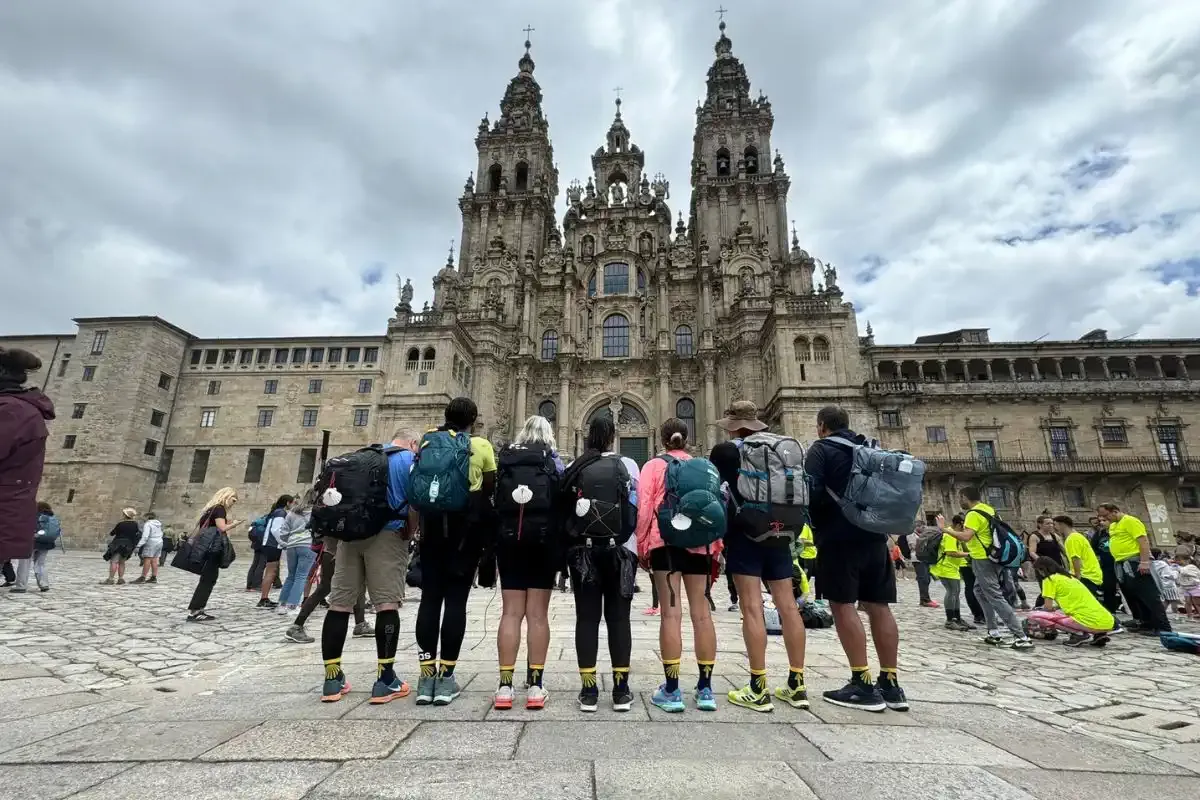 Pilgrims after finishing their Camino in the Obradoiro square, in front of the facade of the Cathedral of Santiago
We help you decide on the Camino that may enchant you the most
We, who know all the routes, want to help you. In this article, we will attempt to break down the strengths of the main routes to assist you with the first step, choosing the most beautiful Camino de Santiago. Start planning your vacation and decide how many days you have available, because we are going to do the Camino de Santiago.
The French Way, the best choice for beginners
We begin with the classic among the Jacobean routes: the French Way. After crossing the Pyrenees, at the border with France, it starts in Roncesvalles and reaches Santiago de Compostela after more than 700 km.
A varied combination of regions, landscapes, climates, heritage, gastronomy, and architecture characterizes this route, the most traveled in history and in our days. This makes it a route generous in accommodation, dining, information, and signage. It can be undertaken at any time of the year (not recommended for high mountain sections in winter) and you will always find many pilgrims like you.
As you traverse different landscapes, you will encounter high mountains but also wide plateaus, with broad rivers and small streams. It is suitable for any pilgrim, especially for beginners, although one must always take into account the physical limitations and available time of each individual. The first thing you should consider is that if you complete it in full, you will be walking for approximately a month.
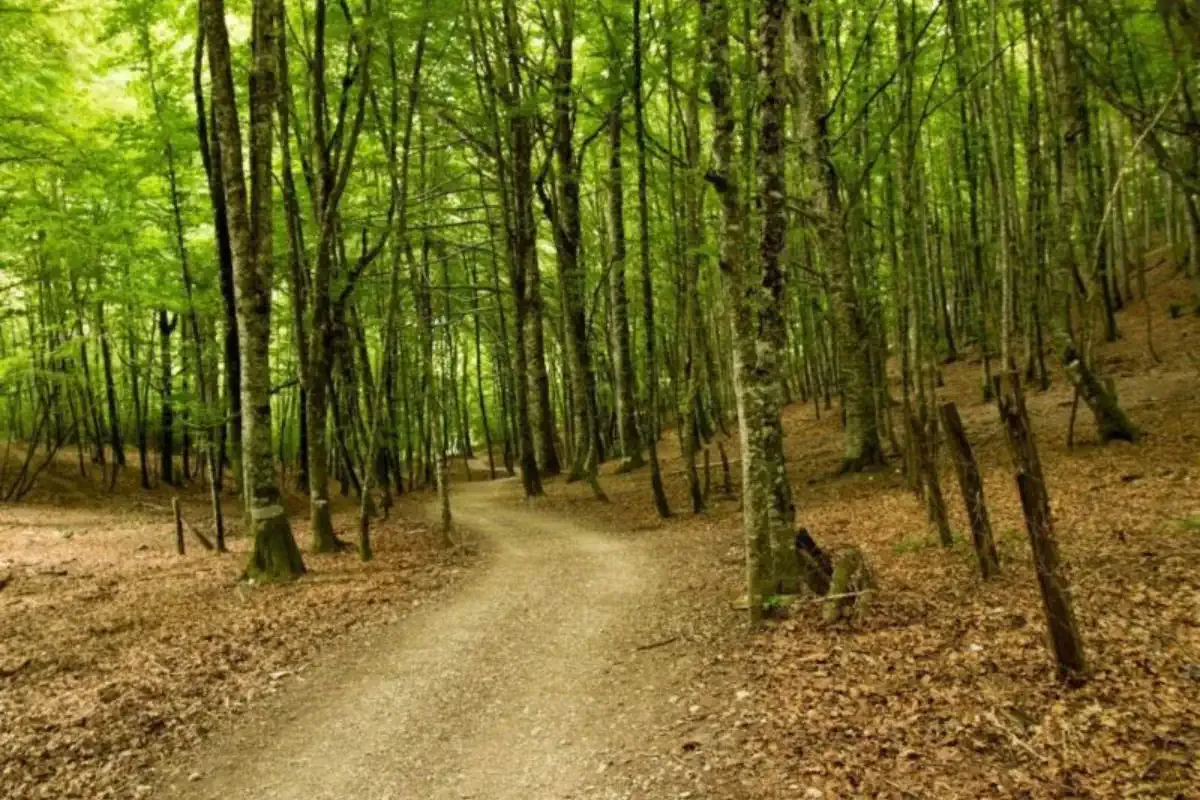 The French Way is considered by many to be the most beautiful Way
However, you can always do a shorter section, such as the last 100 km from Sarria. Why? This distance allows you to obtain the desired Compostela, the document that certifies that you have completed the Way. Not only that, it will offer you idyllic paths without significant elevation changes, which is what makes this section one of the most beautiful and easiest.
You will be able to see the Miño River in Portomarín, visit the pre-Roman settlement of Castromaior, or savor the famous octopus from Melide and the cheese from Arzúa. Furthermore, you will feel the joy of the ancient pilgrims when they first glimpse the towers of the Cathedral of Santiago from Monte do Gozo.
The Portuguese Way, for repeat pilgrims
The Portuguese Way is the main route coming from Portugal, another historic path that begins in Lisbon and has 620 km ahead. The main incentive of this route is to walk and enjoy the landscapes and culture of our neighboring country.
It is a route that does not offer significant elevation changes or slopes, so it can be undertaken at any time of the year. In this regard, it is highly recommended to do it between August and September, when you can attend the grape harvest of the Rías Baixas. You will continuously pass through small villages and urban centers, so it has all the services and good signage. The landscapes will gift you beautiful panoramas, crossing large rivers such as the Miño and you will not be far from the Atlantic Ocean.
You can also walk shorter sections, such as the stretch from Porto or the last 100 km from Tui, already in Spain. In fact, in this last locality begins its most crowded part and best equipped in services. In addition to the Compostela, you can obtain the Pedronía in Padrón, another of the pilgrim certificates. Its mild temperatures encourage walking and, once you reach the end of the stage, rest and enjoy all the gastronomic delights that northern Portugal and southern Galicia have to offer.
The Portuguese Way of the Coast, a gift for the senses
The Portuguese Way by the Coast is a variant that runs parallel to the Atlantic coast and begins in Porto. It joins the Portuguese Way in the town of Redondela, and adds up to a total of 194 km.
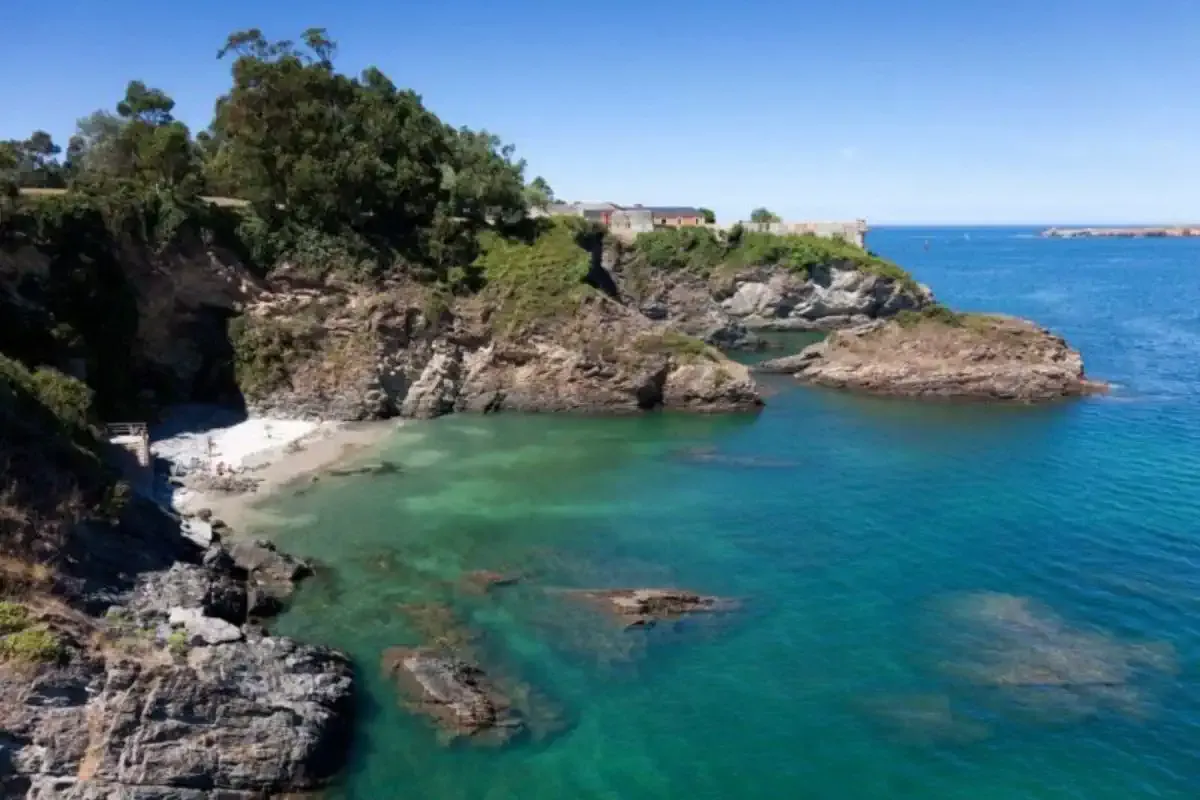 The Portuguese Way of the Coast offers dreamlike views
Many pilgrims are drawn to this route by the beauty of the maritime landscapes, dunes, and beaches, a constant in northern Portugal. During the journey, you will pass through incredible coastal villages that will offer you their best cuisine, as well as cliffs, ancient settlements, mountains, forests, and estuaries that will surprise you. It can be undertaken at any time of the year, and it does not present a demanding terrain. If you wish to try it, you can start with the last 100 km from A Guarda and obtain your pilgrim passport.
The Camino to Finisterre and Muxía, the Epilogue
The Camino to Finisterre and Muxía is the only Jacobean route where Santiago de Compostela is the starting point and not the destination. This is why it is referred to as the "Epilogue", and many pilgrims continue along this route upon reaching Santiago. With a total of 120 km, it is the most mystical and spiritual Camino, where everyone who undertakes it is amazed upon reaching the End of the Roman World, the Finis Terrae. Its wild nature, its history, its legends, its sunsets, and the stunning landscapes of the Galician Costa da Morte will captivate you.
Well marked, with many services, and suitable all year round, it is a relatively easy route that we highly recommend to every pilgrim. Upon reaching the ends of the Earth, you will find the two "kilometers 0" of the Camino de Santiago: in Muxía and in Finisterre. Additionally, in both locations, you can obtain your certificate, the Muxiana and the Finisterrana.
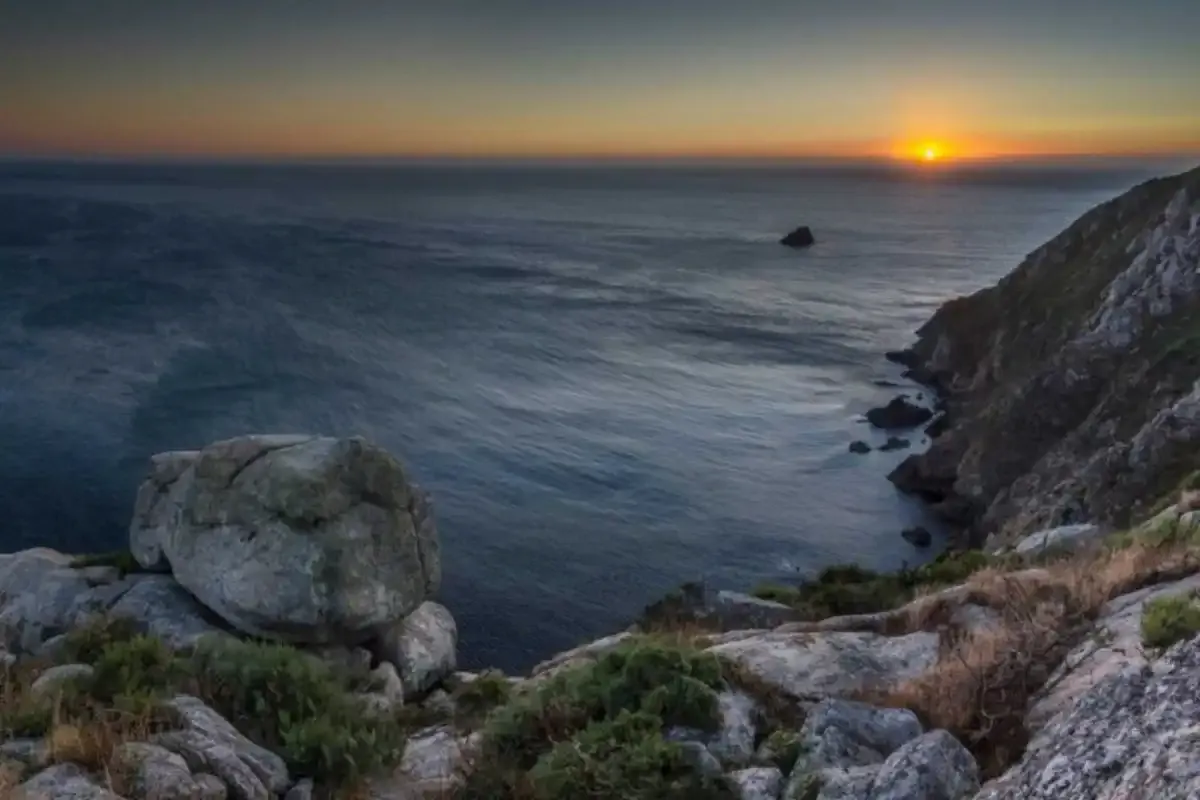 Mystical landscapes make the Camino to Finisterre and Muxía one of the most beautiful
The English Way, because the Camino is addictive
Indeed, the Camino is addictive, and "camino addicts" often decide to discover this route that is slowly but steadily growing. The English Way is the shortest route to Santiago on the mainland, and it only runs through one province. Starting in both A Coruña and Ferrol, we recommend completing the last 100 km from Ferrol to obtain the Compostela.
With good signage and gradually more services, it is a simple route suitable all year round. You will discover the north of Galicia, as well as historic towns like Pontedeume and Betanzos, where you should not forget to try their famous potato omelette.
The Northern Way, expanding the pilgrim curriculum
The Northern Way is the longest route of all, with 820 km from Irún to Arzúa, where it converges with the French Way. If you already have several Caminos under your belt, this is a very good option.
It mainly develops along the coast of the Cantabrian Sea, passing through areas of mountains, valleys, and forests of great beauty. There is no doubt that it is one of the most exciting and attractive routes of all that exist. But despite its great scenic richness, it is also one of the most difficult.
The stages are long, with many elevation changes and mountain passes where you will need to exercise caution. For this reason, it is not recommended year-round, although the last 100 km from Villalba will not present as many difficulties and will reward you with the Compostela. On the other hand, it has fewer infrastructures, something that will be even more appealing to many pilgrims as they walk through practically untouched and little urbanized landscapes. In short, this route is completely different from any other Jacobean route.
The Primitive Way, returning to the origins
The Primitive Way is the oldest route of all. Originating in Oviedo, it spans a total of 268 km to Melide, where it connects to the French Way. It follows in the footsteps of the first pilgrim, King Alfonso II the Chaste, who made the pilgrimage in the 9th century from Oviedo to certify the discovery of the Apostle's tomb.
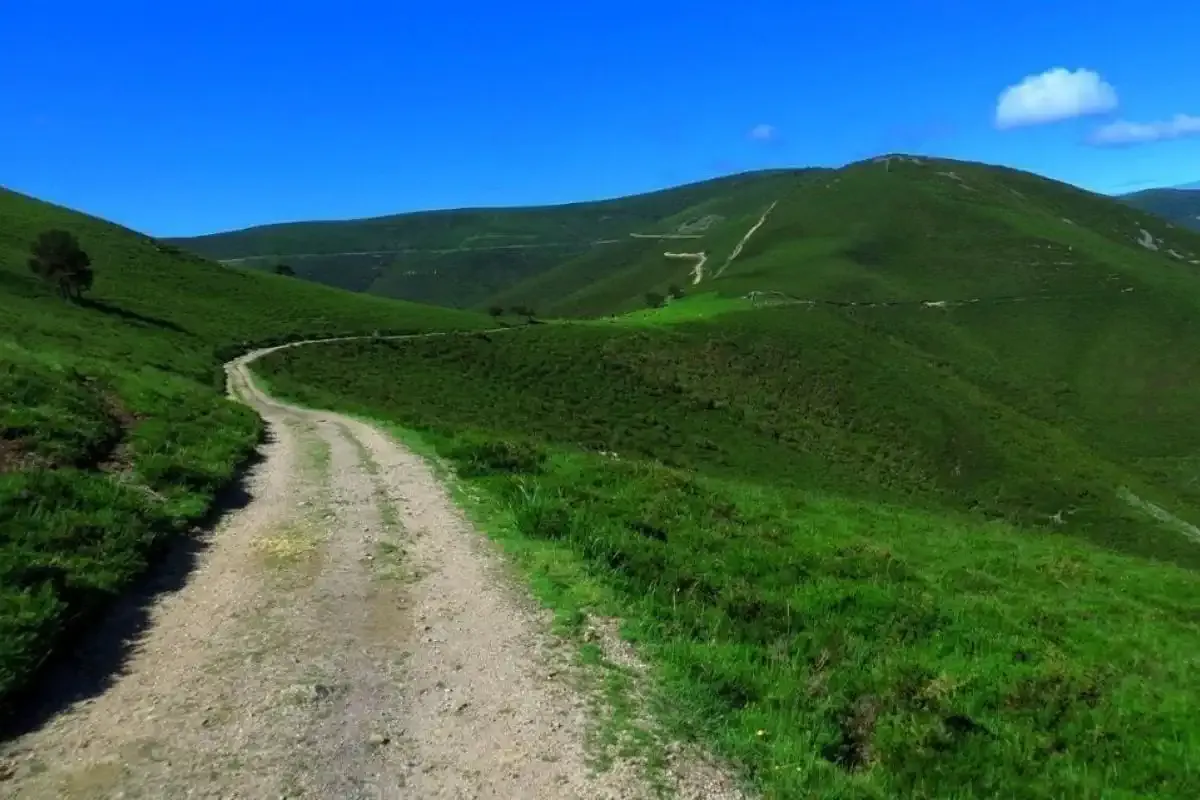 The immensity of the high mountains elevates the spirit of any pilgrim
The main attraction of this route is its scenic splendor and its great ethnographic richness. For many, the most beautiful Camino. You will walk with complete tranquility, passing through small towns and villages, falling in love with the hospitality and simplicity of its people. It is also, like the Northern Way, a route with greater difficulty, not suitable for novice pilgrims or people who are not too accustomed to physical activity.
It is characterized by long stages, with steep and pronounced slopes, ascents and descents over several kilometers, which many walkers refer to as "leg-breakers". Furthermore, it is not advisable at any time of the year, as it reaches high mountain altitudes that make it dangerous in winter. However, the last 100 km from Lugo do not present much difficulty, as they run through the gentle Galician hills, allowing you to celebrate your Compostela.
Plan and choose your ideal Jacobean route
As you can see, there are many routes of the Camino de Santiago, all very special. If you are still undecided, consider your experience as a pilgrim and the time you have available. With our tips for doing the Camino, you are sure to choose the most beautiful route for you.
If it is your first time, we recommend that you complete the last 100 km, specifically from the French Way or the Portuguese Way. If you do not have much time, with a one-week route you will return home enriched with all the good from the Camino de Santiago.
Consider, moreover, that you can do the Caminoby bike, with your dog or accompanied by an organized group. And now the hot potato is in your hands: choose the best time to do the Camino and enjoy an unforgettable journey that you will surely repeat.
Comments (50)
vicky
Viajes Camino de Santiago
Esther
Antonio
ELENA
CaminoSantiago
María Jesús
ELENA
CaminoSantiago
CaminoSantiago
Javier
Raquel
Romina
CaminoSantiago
Mikel
CaminoSantiago
jose mari
Antonio
CaminoSantiago
Víctor
patricia
CaminoSantiago
CaminoSantiago
Lupe Escriche
CaminoSantiago
Marta Trius
Marta
CaminoSantiago
Antonio Luna Garcia
CaminoSantiago
Juan Antonio GUTIERREZ
CaminoSantiago
Pablo
maria
CaminoSantiago
Teresa
Diana Di Gesualdo
CaminoSantiago
MARIA DEL VALLE
CaminoSantiago
Catalina
CaminoSantiago
Claudia
CaminoSantiago
Zorayda Borrero A
CaminoSantiago
Maria
CaminoSantiago
Javier
CaminoSantiago
Elia Herrera
CaminoSantiago
Aura
jose
Vicky
CaminoSantiago
Jeannette
CaminoSantiago
Anna
CaminoSantiago
Cristina
CaminoSantiago
Laura
CaminoSantiago
Roberto
Francisco
Domingo Vera Guerra
CaminoSantiago
Lucia Blazquez sedeño
Margarita
CaminoSantiago
Sílvia
CaminoSantiago
Marina
CaminoSantiago
Jose M.
Carmen
MCarmen
CaminoSantiago
Marcela
CaminoSantiago
Pablo
CaminoSantiago
María
Laura Flores
CaminoSantiago
Leave a comment