


Spiritual Variant of the Camino Portugués: Stages, Map and Where to Start
The Spiritual Variant of the Camino Portugués (Variante Espiritual in Spanish, which many call the Camino Espiritual) branches off the Camino Portugués at Pontevedra to recreate the Traslatio, the journey that, according to tradition, brought the Apostle’s remains by sea and up the Ulla River to Padrón. It skirts the estuary to Combarro, climbs to Armenteira Monastery, descends along the Ruta da Pedra e da Auga (Stone and Water Route) to Vilanova de Arousa and follows the Ulla on foot to Padrón, where it rejoins the Camino Portugués for the last stage. Our route covers 105.7 km (66 miles) in 4 stages from Pontevedra, on foot from start to finish.
Start with the number of days you have: the selector shows the stages from your starting point, the distance and the walking days. If you want more days on the Camino, start before Pontevedra, with the Camino Portugués from Tui or the Camino Portugués from Vigo. If you’d rather go straight from Pontevedra to Santiago, follow the Portuguese Camino; to compare it with the other routes, see all the Camino de Santiago routes.


- 4 stages · full route
- 105.7 km
- At your own pace · flexible start points and stages
Our Camino Portugués Spiritual Variant Tours
Accommodation booked for you and support along the route. Luggage transfer included or optional, depending on the tour.
1 tours to choose how you do the Camino.
-
 6 days / 5 nights
Services we offer on the Camino de Santiago
-
Included in all our routes
-
Accommodation booking
selected according to your budget.
-
Practical information
of the Camino de Santiago in a detailed guide.
-
Telephone assistance on the trail
for any questions or incidents, we are by your side.
-
Travel insurance
with comprehensive coverage.
-
-
On group routes
-
Accompanying guides
professional guides throughout the Camino.
-
Support vehicle
available during the stages.
-
-
Optional services
-
Luggage transport
between stages.
-
Meals and diets
Breakfast or half board option.
-
Private transfers
from/to the point you need.
-
Camino Portugués Spiritual Variant Map
The map of the Spiritual Variant of the Camino Portugués shows a 70 km route divided into 4 stages (one of them by boat), starting in Pontevedra and ending in Santiago de Compostela, passing through landmark places such as Combarro, Armenteira, Vilanova de Arousa and the crossing of the Ría de Arousa to Pontecesures and Padrón.

Camino Portugués Spiritual Variant Elevation Profile and Sections
Altitude (m) vs. distance from Pontevedra (km) · 105.7 km · 4 stages
Hover over or tap a stage on the profile to see its details; the number takes you to its row in the table.
- End of stage
- Hardest stages
- Alternating sections
The Camino Portugués Spiritual Variant, Section by Section
Monasteries and O Salnés
See the 2 stages in this section →Two days, 45.9 km, that leave the Camino Portugués to cross the O Salnés area to the Ría de Arousa. From Pontevedra you skirt the estuary to Combarro, in Poio, and climb to the Cistercian monastery of Armenteira via the Mirador do Loureiro, the climb that shapes the route’s profile. This is the section of the monasteries, Poio and Armenteira, and the one with the most nature: the next day you descend along the Ruta da Pedra e da Auga, past mills and waterfalls, and the Rías Baixas PDO vineyards lead you to the Ría de Arousa and Vilanova, the hometown of the writer Valle-Inclán.
The Traslatio Along the Ulla
See the 1 stages in this section →A single day, but the one that gives the Variant its meaning: the Traslatio, the voyage of the boat that, according to tradition, brought the Apostle’s remains by sea and sailed up the Ulla to Iria Flavia, today Padrón. On our tour it is recreated on land: 35.5 km on foot from Vilanova de Arousa through Vilagarcía, the Torres de Catoira (Catoira towers) and Pontecesures, almost all flat, following the estuary and the river. It’s the longest stage of the route, so set off early. In Padrón you’ll find the pedrón, the stone where, according to legend, the boat was moored, and the Pedronía (Padrón’s pilgrim certificate).
Shared Section: Padrón to Santiago
See the 1 stages in this section →At Padrón the Spiritual Variant rejoins the Camino Portugués, and the last stage, 24.3 km long, is the same one walked by pilgrims arriving on the Central Route or the Coastal Route, which share the same path from Redondela. Set off early to make the most of your day in Santiago. Along the way you pass Iria Flavia, whose collegiate church was the first cathedral in Galicia, and the last hamlets and built-up areas of Teo and Ames, a sign that the finish is near. If you’d rather split the arrival, the day can be divided at Rúa de Francos, at the gates of Santiago.
All Stages of the Camino Portugués Spiritual Variant
The 4 stages from Pontevedra to Santiago de Compostela: 105.7 km in total. Each stage links to its full page (route, profile, where to sleep and what to see); “to Santiago” is the distance left at the end of the stage, and the difficulty is a guide for an average walker with a light backpack.
Daily stages of 22.7 to 35.5 km. The longest: Vilanova de Arousa – Padrón (35.5 km). Factor in the terrain and conditions as well. See in the table
Daily stages of 22.7 to 35.5 km. The longest: Vilanova de Arousa – Padrón (35.5 km). Factor in the terrain and conditions as well. See in the table
Daily stages of 24.3 to 35.5 km. The longest: Vilanova de Arousa – Padrón (35.5 km). Factor in the terrain and conditions as well. See in the table
Daily stages of 24.3 to 24.3 km. The longest: Padrón – Santiago de Compostela (24.3 km). Factor in the terrain and conditions as well. See in the table
From Pontevedra to Santiago · 4 stages
- Section distance
- 105.7 km
- Walking one stage a day
- 4 days
- Plus travel there and back
- 6 days
From A Armenteira to Santiago · 3 stages
- Section distance
- 82.5 km
- Walking one stage a day
- 3 days
- Plus travel there and back
- 5 days
From Vilanova de Arousa to Santiago · 2 stages
- Section distance
- 59.8 km
- Walking one stage a day
- 2 days
- Plus travel there and back
- 4 days
From Padrón to Santiago · 1 stage
- Section distance
- 24.3 km
- Walking one stage a day
- 1 day
- Plus travel there and back
- 3 days
We count one day per stage and add two days for travel. Rest days aren’t included; you may need more days if you split stages. Nights and services depend on the tour you choose.
From Pontevedra
Pontevedra, for many one of the most beautiful cities in Galicia, is where the Spiritual Variant begins: to Santiago it’s 105.7 km in 4 stages, 6 days and 5 nights counting the arrival day and the night in Santiago. Both routes of the Camino Portugués, the Central Route and the Coastal Route, joined since Redondela, reach Pontevedra; here the Variant leaves them toward Combarro, Armenteira and the Ría de Arousa, and rejoins them at Padrón. We organize it, on foot from start to finish, as the Camino Portugués: Spiritual Variant.
Arrive in time to explore its old town: the ruins of Santo Domingo, the Basilica of Santa María la Mayor and the Church of the Peregrina, the city’s symbol. For the Compostela, our route covers 105.7 km on foot, more than the 100 km the Pilgrim’s Office requires; if you want a comfortable margin, combine it with the Camino Portugués from Tui or the Camino Portugués from Vigo: you only need a few more days.
From Vilanova de Arousa
Vilanova de Arousa, the seaside town where Valle-Inclán was born and the port of the legendary Traslatio by sea, is the starting point for those who have only a few days and want to experience the Traslatio stage: from here it’s 59.8 km in 2 stages to Santiago. The first is the longest of the route, 35.5 km through Vilagarcía, the Torres de Catoira and Pontecesures to Padrón; the second is the stage shared with the Camino Portugués, all the way to the Obradoiro.
With less than 100 km it doesn’t qualify you for the Compostela, but in Padrón you can collect the Pedronía. To do it with your accommodation booked, design your route and see the price instantly.
| # | Stage | Distance | To Santiago | Difficulty |
|---|---|---|---|---|
| Monasteries and O Salnés Pontevedra → Vilanova de Arousa · 2 stages · 45.9 km | ||||
| 1 | Pontevedra – A Armenteira Stage summaryFirst stage and first change of scenery: you leave Pontevedra toward the estuary and follow the shore to Combarro, in Poio, one of the prettiest fishing villages in Galicia, with more than 60 hórreos (raised granaries) lined up along the water and cruceiros (stone crosses) all over its old town. Go in through the Plaza de Chousa and take the chance to have lunch before the climb: afterwards, the path leaves the coast and climbs via the Camino Vilar and the Mirador do Loureiro to the Cistercian monastery of Santa María de Armenteira, the end of the stage, a haven of peace among woods with centuries of history. Our tours: What to see and do in the towns on this stage | 23.2 km | 82.5 km | Moderate |
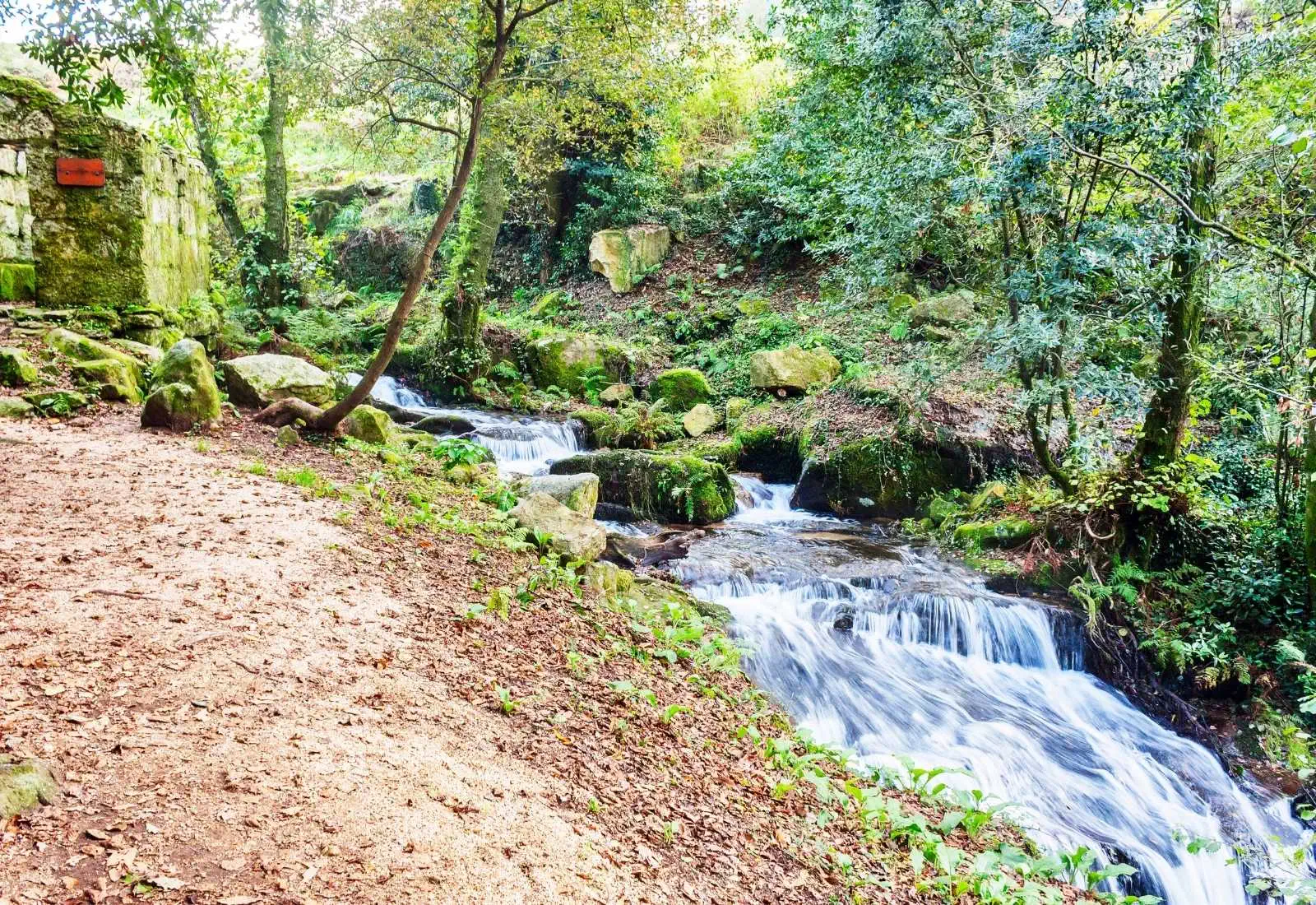
| 2 | A Armenteira – Vilanova de Arousa Stage summaryThe stage with the greatest natural beauty on the whole Variant. As soon as you leave the monastery, the Ruta da Pedra e da Auga (Stone and Water Route) begins, a trail of about 8 km that follows the Armenteira river through lush vegetation, small waterfalls, bridges and dozens of old watermills. Then you cross the inland part of the O Salnés area, and the vineyards herald the Ría de Arousa. Vilanova de Arousa, the seaside town where Valle-Inclán was born and the port of the legendary Traslatio by sea, awaits you with its beaches for a well-earned rest. What to see and do in the towns on this stage | 22.7 km | 59.8 km | Easy |
| The Traslatio Along the Ulla Vilanova de Arousa → Padrón · 1 stage · 35.5 km | ||||
| 3 | Vilanova de Arousa – Padrón Stage summaryThe Traslatio stage and the longest of the route: 35.5 km on foot that recreate on land the voyage of the boat that, according to tradition, brought the Apostle’s remains. From Vilanova de Arousa you pass through Vilagarcía and follow the Ulla upstream. The most impressive moment is the Torres de Catoira (Catoira towers), where tradition places the arrival of the Vikings in Galicia. After Pontecesures you cross into Padrón, land of peppers, with the pedrón in the Church of Santiago Apóstol, where according to legend the boat was moored, and the Rosalía de Castro House-Museum. Set off early: here you can collect the Pedronía. What to see and do in the towns on this stage | 35.5 km | 24.3 km | Hard |
| Shared Section: Padrón to Santiago Padrón → Santiago de Compostela · 1 stage · 24.3 km | ||||
| 4 | Padrón – Santiago de Compostela Stage summaryThe last stage: leave Padrón early to make the most of your day in Santiago. You soon pass through Iria Flavia, whose collegiate church was the first cathedral in Galicia and in whose cemetery, under an olive tree, lies the humble grave of Camilo José Cela. Then come the last hamlets and more and more built-up areas, through the municipalities of Teo and Ames, a sign that the finish is near, until you reach the Praza do Obradoiro and the Cathedral. You collect the Compostela at the Pilgrim’s Office; don’t miss the pilgrims’ Mass. | 24.3 km | 0 km | Easy |


Why Choose the Spiritual Variant of the Camino Portugués?
A route where spirituality and nature will win your heart.
The Spiritual Variant is the ideal route for a first experience of the Camino de Santiago, away from the crowds and bustle of other routes. It’s a trip on which you’ll have the chance to discover wonderful fishing villages of the Rías Baixas, beautiful coastal scenery and exquisite cuisine based on fish and seafood. You’ll also be able to enjoy a pleasant sea-and-river crossing that seeks to recreate the arrival in Galicia of the body of the Apostle Saint James, after his martyrdom in Jerusalem.
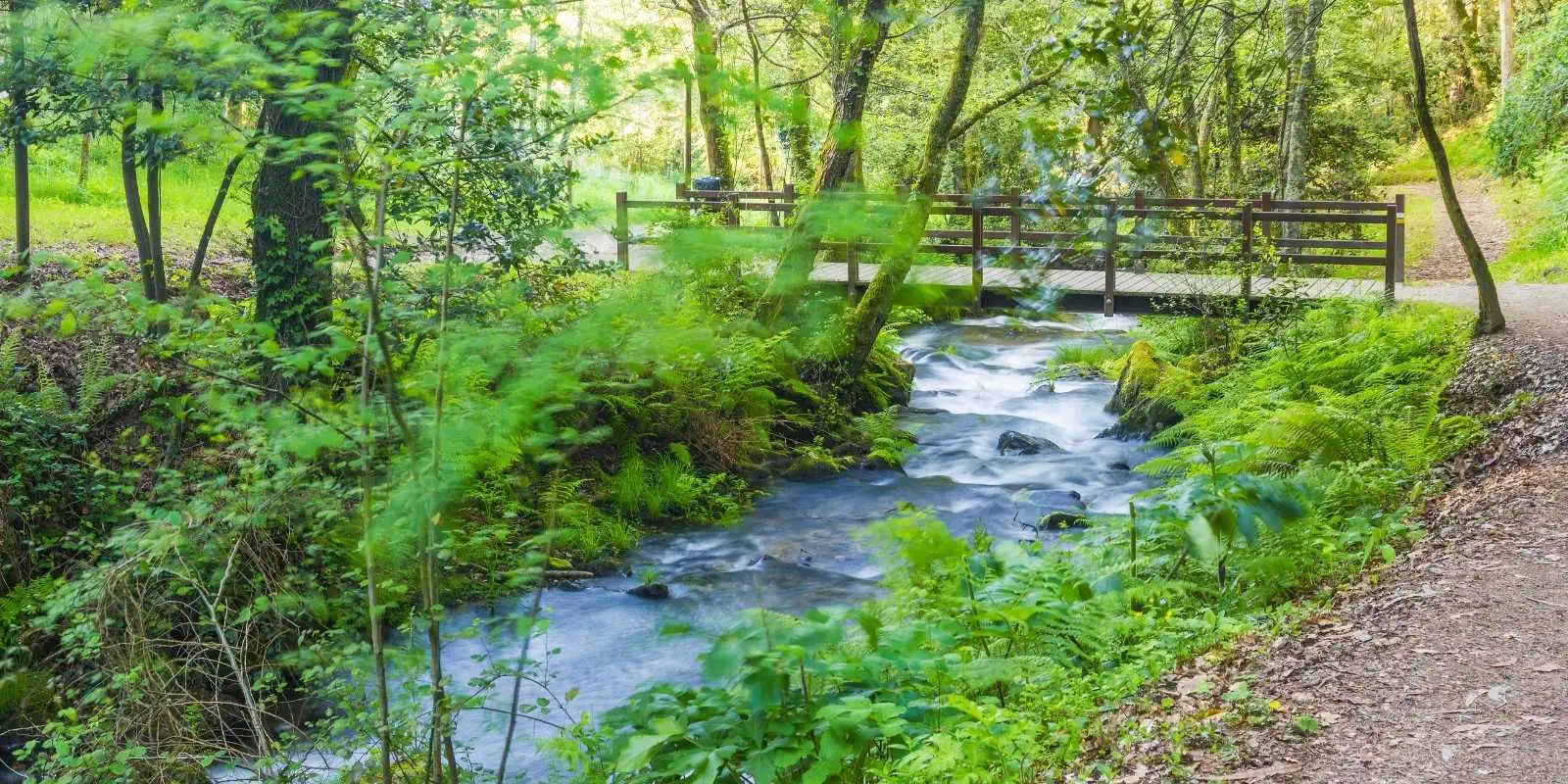
But beyond the experience at sea, pilgrims who venture onto this variant will discover beautiful monuments and landscapes, such as Armenteira Monastery or the Ruta da Pedra e da Auga, a lovely 8 km trail known for its dozens of watermills surrounded by dense vegetation.
Bear in mind that the Spiritual Variant is not an official route, so on its own it doesn’t qualify you for the Compostela. That’s no problem, because you can get it if you combine this route with the last 100 km of any other Portuguese route, such as the Camino Portugués from Tui or the Camino Portugués from Vigo: you only need a few more days for your trip.
Even so, on this route pilgrims can always get the Pedronía, which the town council awards to pilgrims who reach Padrón and visit its Church of Santiago Apóstol.
What to See and Do on the Spiritual Variant
Native woodland, old mills, the richest ría (estuary) in Galicia and imposing monasteries await you on this route.



What to Plan Before You Go
Adjust how you split the stages to the way you walk, the time of year and the accommodation available.
Terrain: One Climb and One Very Long Day
The Spiritual Variant has moderate elevation changes, with one point that stands out: the steep climb to Armenteira Monastery via the Camino Vilar and the Mirador do Loureiro, at the end of Pontevedra–A Armenteira (23.2 km). Then come gentle descents through woods and vineyards along the Ruta da Pedra e da Auga, on A Armenteira–Vilanova de Arousa (22.7 km).
What weighs most is the distance of Vilanova de Arousa–Padrón (35.5 km), more than 11 km longer than any other stage of the route. It’s almost all flat, following the estuary and the Ulla River, but set off early, carry water and something to eat, and break it up in your head at Vilagarcía, Catoira and Pontecesures. If you add luggage transfer, you’ll walk with just a light backpack, and that day you’ll notice it.
When to Go and What Time to Set Off
The Spiritual Variant is a quiet route, away from the crowds of other routes: a good option for a first experience of the Camino. Galicia can be rainy in spring and fall too, so don’t count on dry weather; in summer, the beaches of Vilanova de Arousa invite you for a swim at the end of the second stage.
The last two days call for an early start: the Traslatio stage because of its length, and the stage from Padrón to Santiago to make the most of your day in the city. In winter there are fewer hours of daylight, which you’ll notice on a 35.5 km stage, and the services available change: don’t assume all accommodation is open.
Getting to Pontevedra and Back from Santiago
Our tour starts with your arrival in Pontevedra on the first day and ends after the night in Santiago: that’s 6 days and 5 nights for 4 stages. If you want to start further south, Pontevedra is 53.7 km from Tui (3 stages on the Camino Portugués) and 35 km from Vigo (2 stages on the Coastal Route). As an optional service, we arrange private transfers to or from wherever you need.
The last stage ends in Santiago and the tour includes that night: you’ll have time for the pilgrims’ Mass and to see the city before heading home. If you want more days in Pontevedra or in Santiago, you can add an extra night.
Where to Sleep and Luggage Transfer
The stage pages list albergues (pilgrim hostels) in Armenteira, Vilanova de Arousa and Padrón, and in Santiago, the one at the Seminario Menor; use the albergue directory to locate the stops. On our tour you choose between a private albergue and a private room in guesthouses, rural houses and small hotels.
Luggage transfer isn’t included: it can be added as an optional service, with one bag per person of up to 15 kg, and it’s especially welcome on the Traslatio stage. Breakfasts, half board and the single room supplement are also optional. Your quote should show what you’ve chosen.
History of the Spiritual Variant: The Traslatio
Legend has it that Finis Terrae, or Finisterre, was the farthest place the Apostle Saint James reached while preaching the word of God. That is why, when he died, it was decided that his remains would rest in those distant lands. Tradition holds that his disciples Theodore and Athanasius placed Saint James’s remains in a stone boat and sailed the seas until they reached the coast of Galicia; the vessel sailed up the Ulla River until it reached Iria Flavia, the place we know today as Padrón.
According to the legend of Queen Lupa, after setting them a series of trials, she allowed the disciples to bury the apostle’s remains in “Campus Stellae”, today’s Santiago de Compostela. Later, the tomb was discovered by the hermit Pelayo in the 9th century.
This variant is a recently created route that seeks to re-enact the journey of the remains of Saint James the Apostle, known as the Traslatio. Pilgrims will board a boat to sail up the Ulla River and disembark at Pontecesures, from where they will continue on foot to Santiago de Compostela to re-enact this important episode in the story of Saint James.
Frequently asked questions about Camino Portugués Spiritual Variant
-
Why is it called the Spiritual Variant?
Because of its link to the legend of the arrival of the body of Saint James the Apostle in Galicia: the Traslatio, the journey that, according to tradition, his disciples made through the Ría de Arousa and up the Ulla River to Padrón when they brought his remains. On our tour, that section is recreated on foot, following the Ulla from Vilanova de Arousa to Padrón. We tell the legend in the Traslatio of Saint James the Apostle.
-
How many days does the Spiritual Variant take?
4 days of walking, one stage a day. Our tour lasts 6 days and 5 nights: on the first day you arrive in Pontevedra and on the last, after the night in Santiago, you head home. If you split the last stage at Rúa de Francos or want an extra night, add a day. If you combine it with the Camino Portugués from Tui or from Vigo, add the 3 or 2 stages it takes to reach Pontevedra.
-
What is the Spiritual Variant of the Camino de Santiago?
It’s the Spiritual Variant of the Camino Portugués, also known as the Camino Espiritual: an alternative route that branches off the Camino Portugués at Pontevedra, passes Armenteira Monastery, Vilanova de Arousa and Padrón, and recreates on foot the Traslatio, the journey that, according to tradition, brought the Apostle’s remains through the Ría de Arousa and up the Ulla River. It’s 105.7 km in 4 stages to Santiago; the last one is shared with the Camino Portugués.
-
What are the stages of the Spiritual Variant?
There are 4 stages: Pontevedra – A Armenteira (23.2 km), A Armenteira – Vilanova de Arousa (22.7 km), Vilanova de Arousa – Padrón (35.5 km), the Traslatio stage, and Padrón – Santiago (24.3 km), which is already the last stage of the Camino Portugués. Each stage can be split or combined to suit your pace and where you can sleep.
-
How long is the Spiritual Variant?
As we organize it in our stage pages, 105.7 km (66 miles) from Pontevedra to Santiago de Compostela, all on foot; our tour rounds it to 106 km. The distance changes if you add sections before Pontevedra: from Tui, on the Camino Portugués, it’s 159.4 km, and from Vigo, on the Coastal Route, 140.7 km.
-
Where does the Spiritual Variant start?
In Pontevedra. That’s where the Variant leaves the Camino Portugués, which brings in both the Central Route, from Tui, and the Coastal Route, which joins it at Redondela. It skirts the estuary to Combarro, climbs to Armenteira Monastery, crosses O Salnés to Vilanova de Arousa and follows the Ulla to Padrón, where it rejoins the Camino Portugués for the last stage to Santiago.
-
Is the Spiritual Variant done by boat?
Not on our tour: the Variant is done on foot from start to finish. Stage 3, from Vilanova de Arousa to Padrón (35.5 km), recreates on land the voyage of the boat that, according to tradition, brought the Apostle’s remains: it passes through Vilagarcía, follows the Ulla upstream, takes in the Torres de Catoira and, after Pontecesures, crosses into Padrón. That’s why our route adds up to 105.7 km. We tell the legend in the Traslatio of Saint James the Apostle.
-
Can you get the Compostela on the Spiritual Variant?
The Pilgrim’s Office requires 100 continuous km on foot toward Santiago (200 km by bike). Our route covers 105.7 km on foot from Pontevedra, from start to finish and with no boat section. If you want a comfortable margin, combine it with the Camino Portugués from Tui or the Camino Portugués from Vigo: you only need a few more days. In Padrón you can also collect the Pedronía, the certificate Padrón Town Council gives to those who reach the town and visit its Church of Santiago; it doesn’t replace the Compostela. See the Compostela requirements.
-
Is the Spiritual Variant difficult?
It’s a route with moderate elevation changes and two points worth preparing for. The first is the steep climb to Armenteira Monastery via the Mirador do Loureiro, at the end of Pontevedra – A Armenteira; after that, the Ruta da Pedra e da Auga descends gently through woods and vineyards. The second, and the most demanding stage, is Vilanova de Arousa – Padrón: 35.5 km, more than 11 km longer than any other stage of the route, almost all flat beside the estuary and the Ulla. That day you need to set off early and carry water and something to eat. The other three stages are no longer than 24.3 km.
-
What is the most beautiful stage of the Spiritual Variant?
Every pilgrim has their own favorite, but the one with the greatest natural beauty is the second, A Armenteira – Vilanova de Arousa: it starts with the Ruta da Pedra e da Auga, about 8 km along the river past mills, bridges and small waterfalls, and ends at the Ría de Arousa. Also worth mentioning are Combarro and its more than 60 hórreos (granaries) by the water, on the first stage, and the Torres de Catoira, the most impressive moment of the Traslatio stage.
-
When is the best time of year to walk the Spiritual Variant?
Any time, with some nuances: it’s a quiet route, away from the crowds of other routes. Galicia can be rainy in spring and fall too, so don’t count on dry weather; in summer, the beaches of Vilanova de Arousa invite you for a swim at the end of the second stage. In winter there are fewer hours of daylight, which you’ll notice on the 35.5 km stage to Padrón, and services change: not all accommodation is open.
-
How much does it cost to walk the Spiritual Variant?
It depends on your dates and the accommodation: on our tour you choose between a private albergue, the most affordable option, and a private room in guesthouses, rural houses and small hotels. It includes accommodation for the 6-day, 5-night trip, the pilgrim passport (credencial), travel documents, travel insurance and phone assistance on the trail; luggage transfer, breakfasts or half board and a single room are added separately. For your dates, design your route and see the price instantly.
-
Can you walk the Spiritual Variant from Tui or via the Coastal Route?
Yes: the Variant starts in Pontevedra, which both routes reach. From Tui, on the Camino Portugués, it’s 3 stages and 53.7 km to Pontevedra, via O Porriño and Arcade; with the Variant, that makes 159.4 km in 7 stages to Santiago. From Vigo, on the Coastal Route, it’s 2 stages and 35 km, via Arcade; with the Variant, 140.7 km in 6. To organize it with your accommodation booked, design your route and see the price instantly.
All the Camino de Santiago routes
-

Camino Francés
33 Stages 769 KmsFrom Saint-Jean-Pied-de-Port to Santiago de Compostela. Follow the most recommended route of the Camino.
view route -

Camino Portugués
27 Stages 620 KmsFrom Lisbon to Santiago de Compostela. Enjoy a Camino through the basins of the Tagus, Douro, and Miño rivers.
view route -

Camino Portugués Coastal Route
12 Stages 273 KmsFrom Porto to Santiago de Compostela. The Atlantic Ocean will guide your steps along the Portuguese and Galician coastline.
view route -

Camino Portugués Spiritual Variant
4 Stages 106 KmsFrom Pontevedra to Padrón. Relive the final stretch of the Apostle Saint James’s posthumous journey.
view route -

Camino Finisterre and Muxía
5 Stages 120 KmsFrom Santiago de Compostela to Muxía. A mystical and spiritual journey to the ends of the Earth.
view route -

Camino del Norte
36 Stages 833 KmsFrom Irún to Santiago de Compostela. An unforgettable experience with breathtaking landscapes.
view route -

Camino Primitivo
14 Stages 317 KmsFrom Oviedo to Santiago de Compostela. It follows the first Camino de Santiago, tracing the footsteps of Alfonso II.
view route -

Camino Inglés
5 Stages 117 KmsFrom Ferrol to Santiago de Compostela. Immerse yourself in the naval and historical heritage of a truly unique Camino.
view route -

Camino Sanabrés
14 Stages 367 KmsFrom Granja de Moreruela to Santiago de Compostela. Cross the region of Sanabria and the mountains of Ourense.
view route -

Camino de Invierno
11 Stages 256 KmsFrom Ponferrada to Santiago de Compostela., through the regions of Valdeorras and Ribeira Sacra.
view route -

Ruta del Padre Sarmiento
8 Stages 190 KmsThe Father Sarmiento Way links Pontevedra to Santiago de Compostela, offering a scenic journey through beautiful landscapes.
view route -

Camino dos Faros
8 Stages 200 KmsFrom Malpica to Finisterre. A 200-kilometre journey along the coast and through the wildest nature.
view route
