


The Muxiana and the Fisterrana: Where can I get them?
14 October, 2025
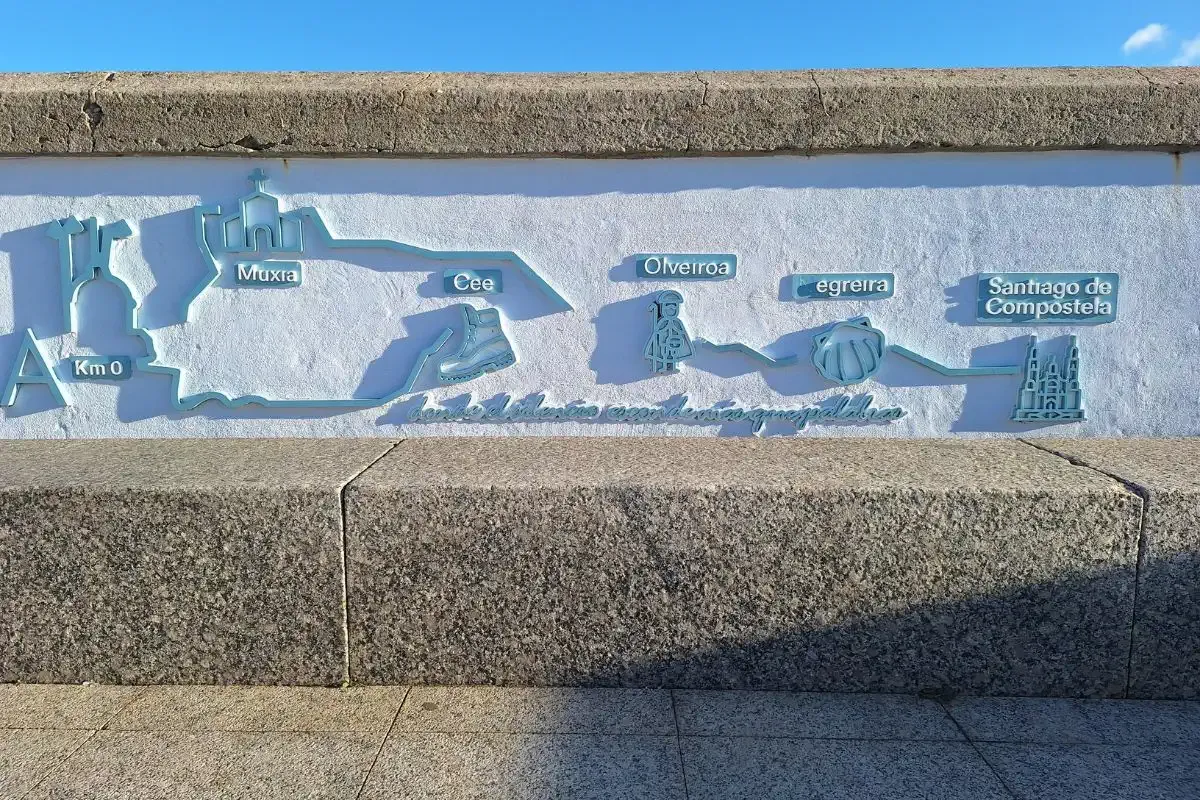
The Camino de Finisterre and Muxía, considered the epilogue of the Camino, allows you to obtain the Fisterrana and the Muxiana. This route symbolizes the spiritual continuation to the “end of the world,” offering a unique and transformative experience.

Many pilgrims who have completed the Camino de Santiago get hooked on this healthy habit and often return to do another jacobean route. Almost all of them eventually end up doing the Finisterre and Muxía Way. Why? Considered the epilogue of all the Caminos, this route has a lot of history and tradition linked to the apostle James and is recognized as an official route.
Can you imagine holding in your hands, in addition to the Compostela, some of the most special Jacobean certificates and souvenirs of the Camino de Santiago? Yes, by doing the Camino to Finisterre and Muxía, you can receive the Fisterrana and the Muxiana, two treasures that every pilgrim wants to obtain. And you might ask, where can I get them? Keep reading, and we will guide you through your final steps to receive these two pilgrim documents.
Since the 1990s, when the pilgrimage from Santiago to Finisterre and Muxía was made official, both routes have had their own accreditation. And if you do the journey in reverse, from these two places to Santiago de Compostela, you will receive the Compostela.
 In Finisterre, you will get the Fisterrana, and in Muxía, the Muxiana, but it is not required to reach both points to get one or the other. Many pilgrims finish in Finisterre or Muxía, but most complete the entire route, thus obtaining both certificates.
The Fisterrana is requested at the Finisterre Tourist Office, located on Real Street. Just like with the Muxiana, you will need your pilgrim credential with the corresponding stamps. Occasionally, it has also been issued at the public pilgrim hostel.
To request the Muxiana, you must go to the Muxía Tourist Office, located in Concello Square. You need to present your pilgrim credential, stamped at key points along the Camino. Occasionally, it has also been issued at the public pilgrim hostel.
Where the sun dies is where the apostle preached, among other places in Galicia. Legends like that of the Virgin of the Boat in Muxía have the apostle as a protagonist, and his figure is closely related to it. Also, the mythical town of Duio, near Finisterre, is associated with Queen Lupa and other legends.
 Still, you must not miss the sunset at Cape Finisterre, one of the most magical moments of the journey. It is undoubtedly the perfect ending to a very special pilgrimage.
Tourists and pilgrims visit the three holy stones, Abalar, Cadrís, and Timón, which represent three parts of the Virgin's boat: hull, sail, and rudder. Popular legend said that on the Abalar stone, a rocking stone, one could enjoy all kinds of magical and healing properties. The Cadrís stone, shaped like a sail, has an underside space through which one can pass, and doing so repeatedly, one also enjoyed healing properties.
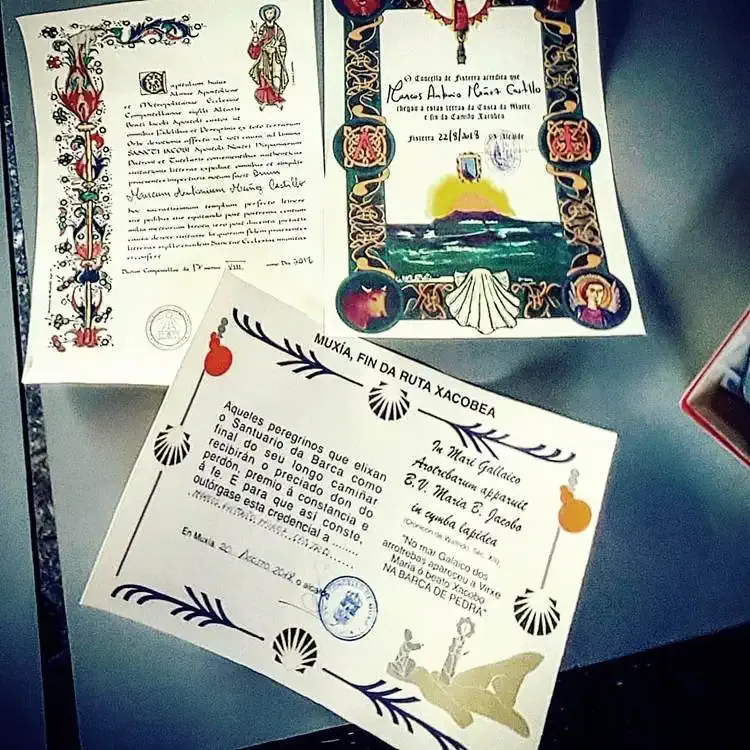
 Obtaining the Muxiana and the Fisterrana is more than a physical achievement; it is a testament to the inner journey and personal transformation. Both certificates symbolize the effort and dedication of completing the Camino de Santiago and continuing to the ends of the earth.
 Now that you know where and how to get these precious souvenirs, are you ready to start the Camino to Finisterre and Muxía? Remember, every step you take will lead you not just to a destination, but to a personal discovery you will treasure forever. Buen Camino!
Can you imagine holding in your hands, in addition to the Compostela, some of the most special Jacobean certificates and souvenirs of the Camino de Santiago? Yes, by doing the Camino to Finisterre and Muxía, you can receive the Fisterrana and the Muxiana, two treasures that every pilgrim wants to obtain. And you might ask, where can I get them? Keep reading, and we will guide you through your final steps to receive these two pilgrim documents.
Map of the Camino to Finisterre and Muxía
Let's get to the important part: What are the Muxiana and the Fisterrana?
The Muxiana and the Fisterrana are certificates given to pilgrims who reach Muxía and/or Finisterre. They are similar to the Compostela received in Santiago, but with a special touch.Since the 1990s, when the pilgrimage from Santiago to Finisterre and Muxía was made official, both routes have had their own accreditation. And if you do the journey in reverse, from these two places to Santiago de Compostela, you will receive the Compostela.
Where to get the Muxiana and the Fisterrana?
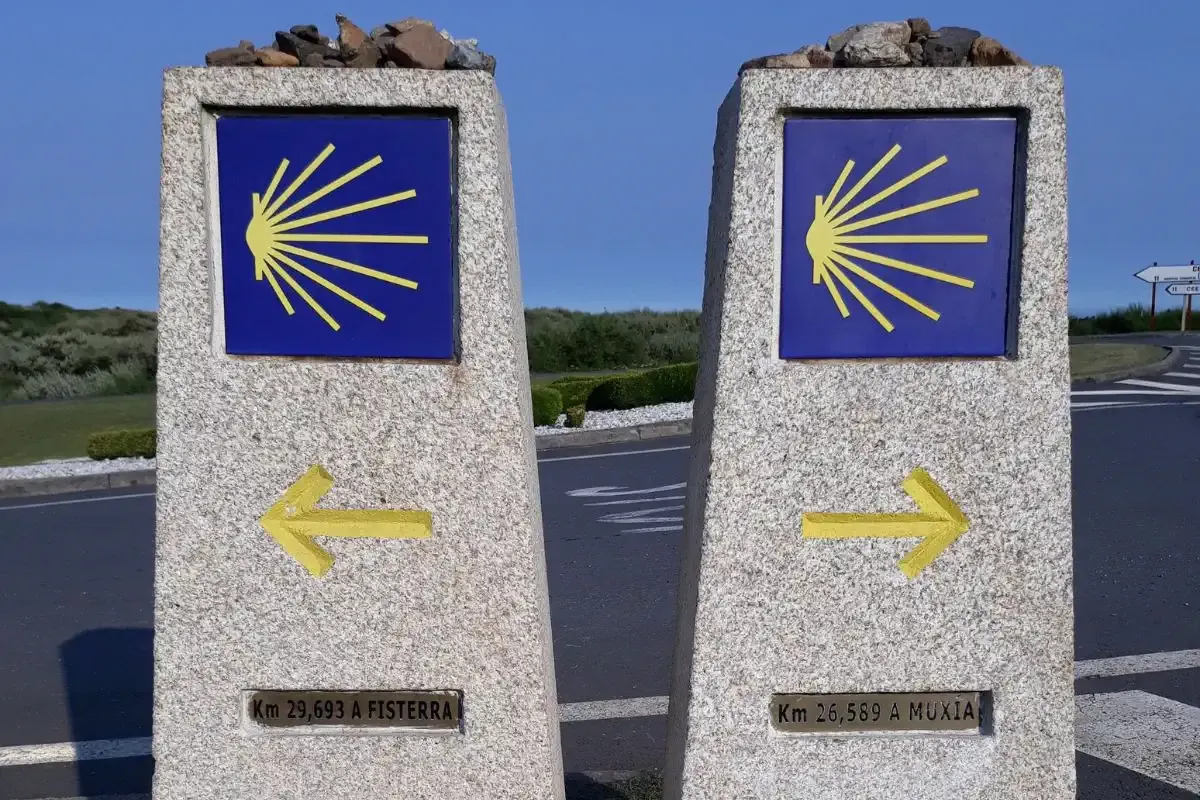
As you know, this Camino, starting in Santiago, has a fork in the village of Hospital, with its two milestones or markers. There, you will have to decide whether to go to Muxía or Finisterre.The two milestones at the fork in Hospital, on the Camino to Finisterre and Muxía
Fisterrana
The Fisterrana is obtained in Finisterre, the point considered the end of the world in ancient times. To receive it, pilgrims must complete the route from Santiago de Compostela to Finisterre, about 90 kilometers.The Fisterrana is requested at the Finisterre Tourist Office, located on Real Street. Just like with the Muxiana, you will need your pilgrim credential with the corresponding stamps. Occasionally, it has also been issued at the public pilgrim hostel.
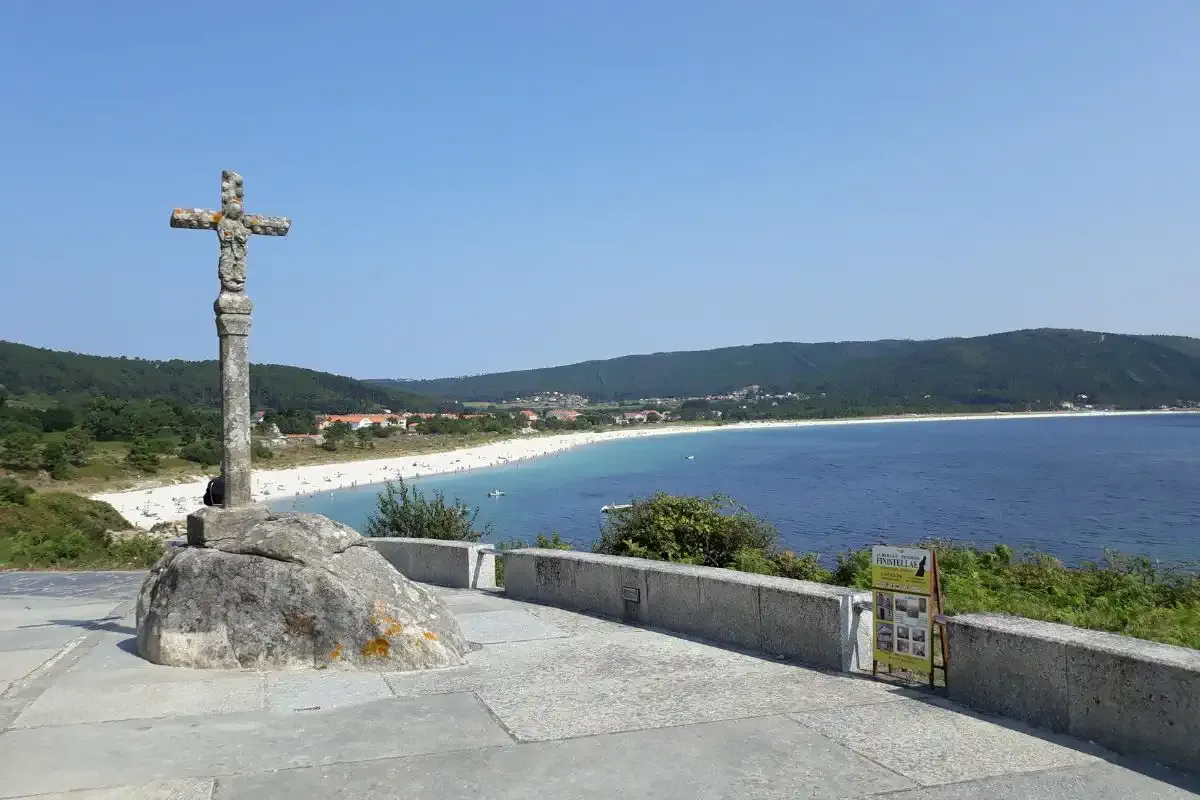
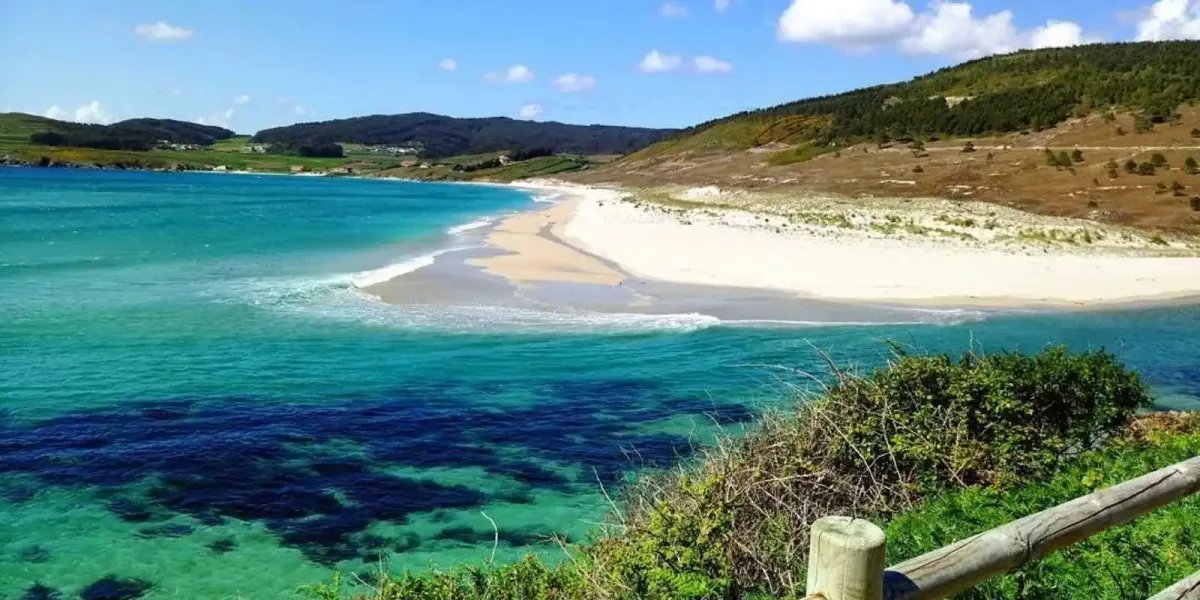
Langosteira Beach, on the way to Finisterre
Muxiana
The Muxiana is obtained upon finishing the Camino in Muxía. It is a recognition to the pilgrims who walk approximately 86 kilometers from Santiago de Compostela to this picturesque coastal town.To request the Muxiana, you must go to the Muxía Tourist Office, located in Concello Square. You need to present your pilgrim credential, stamped at key points along the Camino. Occasionally, it has also been issued at the public pilgrim hostel.
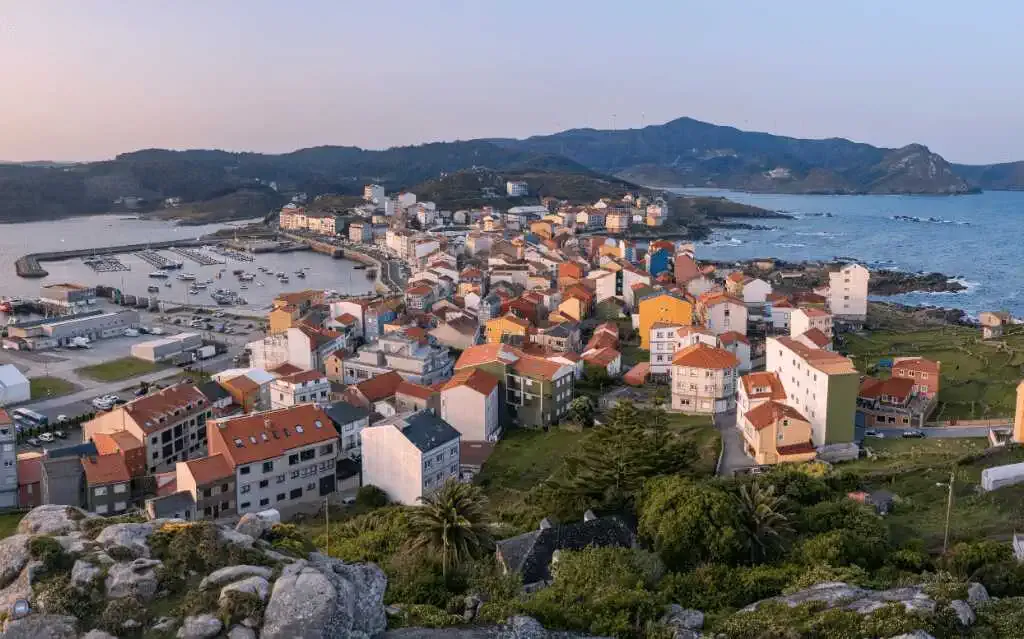
View of Muxía
Everything you need to know about the Camino to Finisterre and Muxía
The Finisterre and Muxía Way is an extension of the Camino de Santiago, and is actually called the Epilogue. The stages would be as follows:- From Santiago to Finisterre: about 90 km, usually done in 4 stages.
- From Santiago to Muxía: about 86 km, usually also done in 4 stages.
Between Muxía and Finisterre, you will pass through the beautiful Lires estuary
The symbolism of the Camino to Finisterre
The Camino to Finisterre has deep symbolism for pilgrims. It represents the continuation of the spiritual journey beyond Santiago, to the end of the known world.Where the sun dies is where the apostle preached, among other places in Galicia. Legends like that of the Virgin of the Boat in Muxía have the apostle as a protagonist, and his figure is closely related to it. Also, the mythical town of Duio, near Finisterre, is associated with Queen Lupa and other legends.
Traditions in Finisterre
In Finisterre, many pilgrims keep the tradition of burning a piece of clothing or the boots used during the Camino. This act symbolizes rebirth and the beginning of a new stage in their lives. However, today this is strictly prohibited, as it is a protected environment.Pilgrim enjoying the sunset in Finisterre
Traditions in Muxía
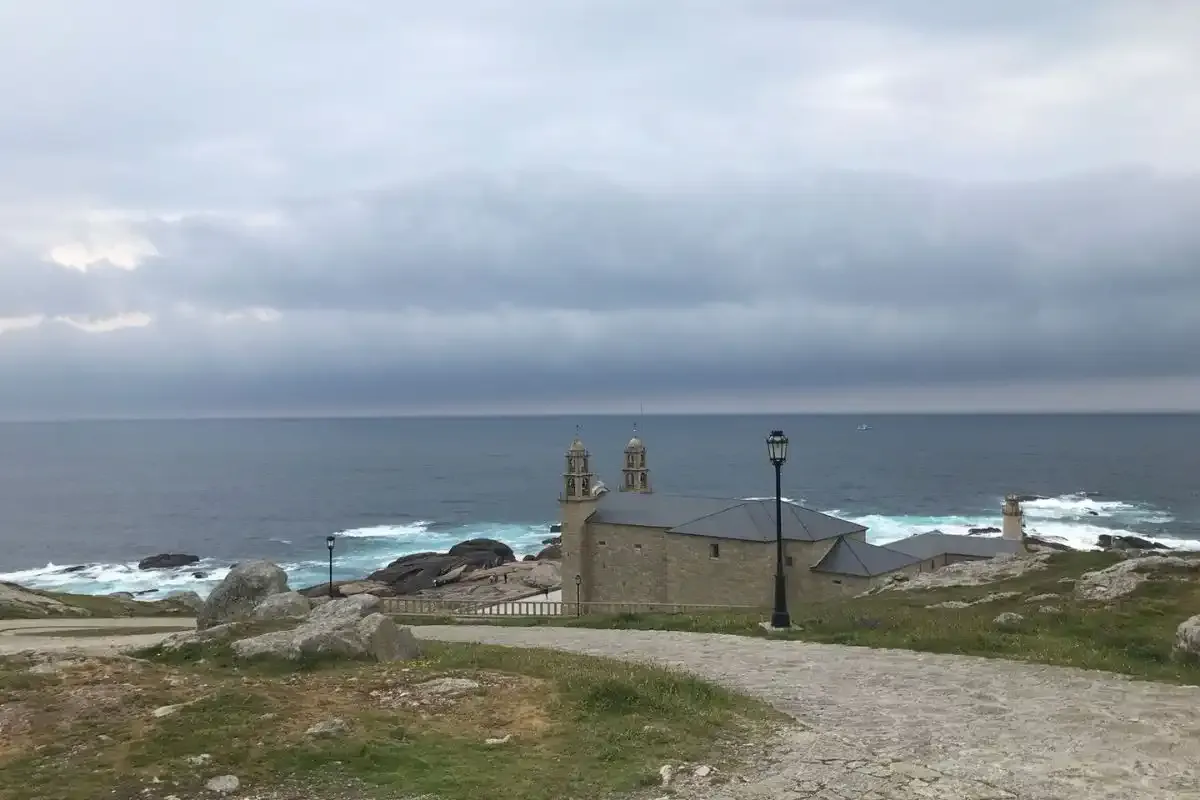
In Muxía, pilgrims usually visit the Sanctuary of the Virgin of the Boat. Legend says that the Virgin Mary arrived at this place in a stone boat to encourage the apostle Santiago in his preaching.Tourists and pilgrims visit the three holy stones, Abalar, Cadrís, and Timón, which represent three parts of the Virgin's boat: hull, sail, and rudder. Popular legend said that on the Abalar stone, a rocking stone, one could enjoy all kinds of magical and healing properties. The Cadrís stone, shaped like a sail, has an underside space through which one can pass, and doing so repeatedly, one also enjoyed healing properties.
View of the Sanctuary of Virxe da Barca in Muxía
Muxiana and Finisterrana
Comments (7)
antonio
Jorge Severo Medina Martín
Fátima
Cristian Rodriquez
Araceli
Cristian Rodriquez
Adriana Sejas
Viajes Camino de Santiago
Adriana Suárez
Victoria DT
Margarita Lucia
Jorge Severo Medina Martín
Henry Martínez
Viajes Camino de Santiago
Jorge Severo Medina Martín
Dina Santos
Marian
Montserrat Valdés
Adrian Sanchez Valencia
Mallorquina 89
Leave a comment