Portuguese Way from Tui (5 stages)

Portuguese Way from Tui (5 stages) - Paquete turístico

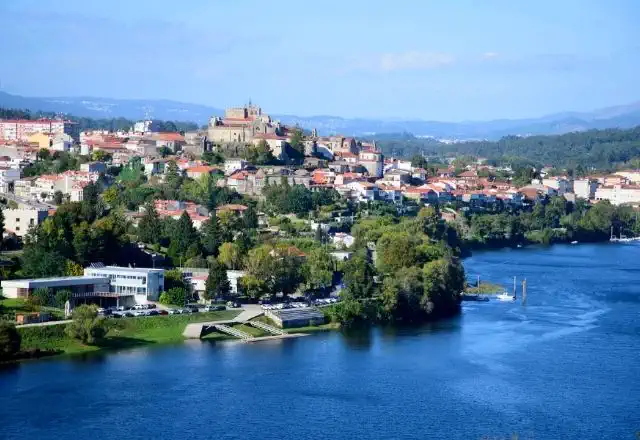
The town of Tui reflects on the tranquil waters of the Miño River. A border village chosen by thousands of pilgrims to begin their adventure on the Portuguese Way from Tui and reach Santiago de Compostela.

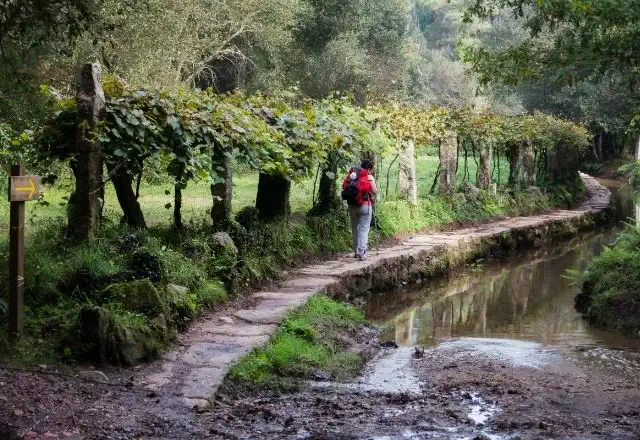
If you decide to become a pilgrim on this route, you will walk through small rural towns surrounded by vineyards and fields. Halfway along, you will find an encouraging travel companion, the Atlantic Ocean, which will guide you for a good part of the route, gifting you with stunning views of the rías of Vigo and Pontevedra. An ocean that will leave you to make way for beautiful medieval bridges, chapels, and spa towns.

The Portuguese Way from Tui is also a journey for the senses; you will discover reference points of Galician gastronomy. It is impossible to resist the famous oysters from Arcade, a serving of mussels paired with an unmistakable Albariño wine, or to find out if the true Padrón peppers are spicy… or not.

Photos

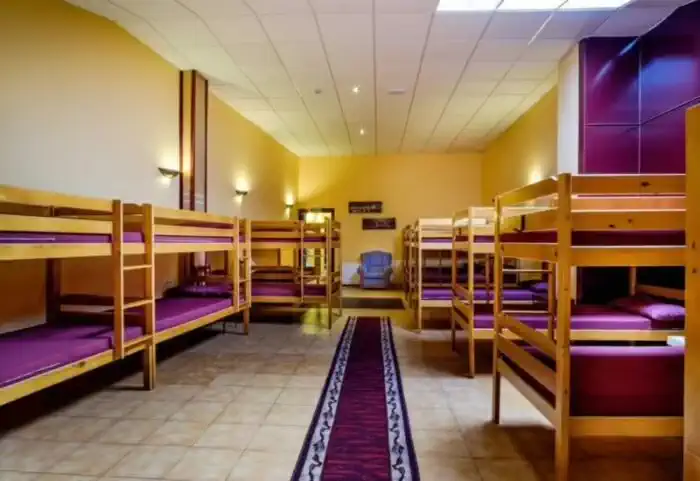
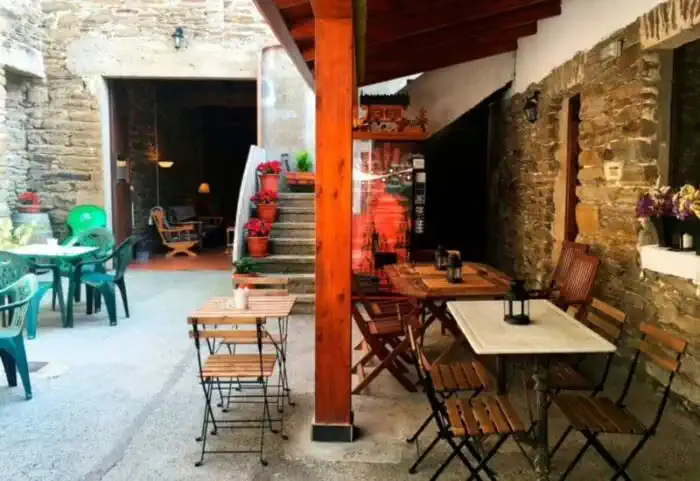
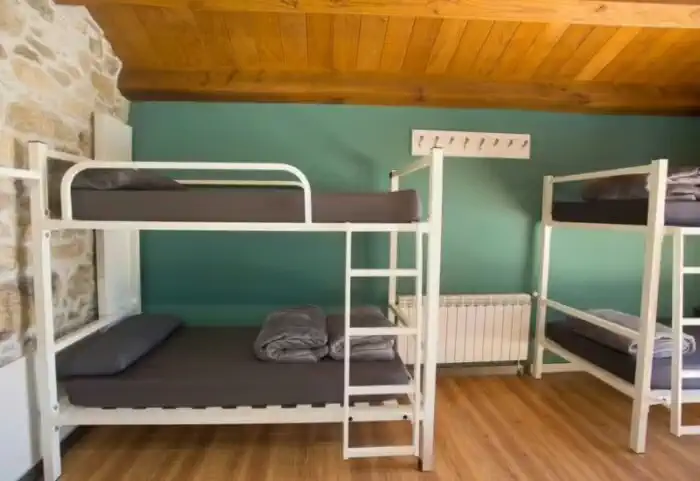
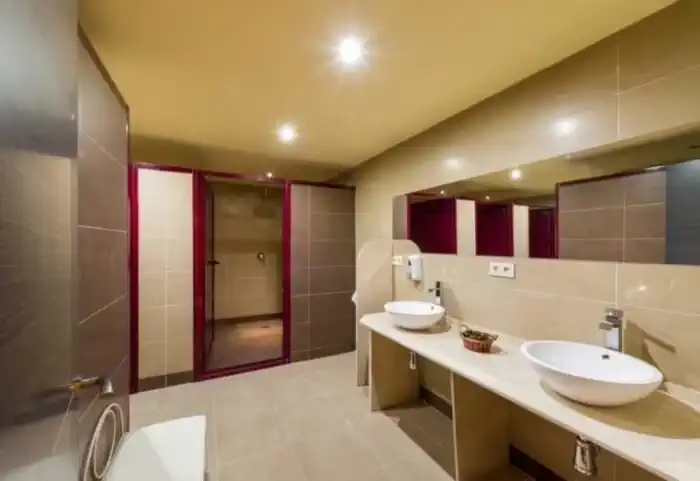
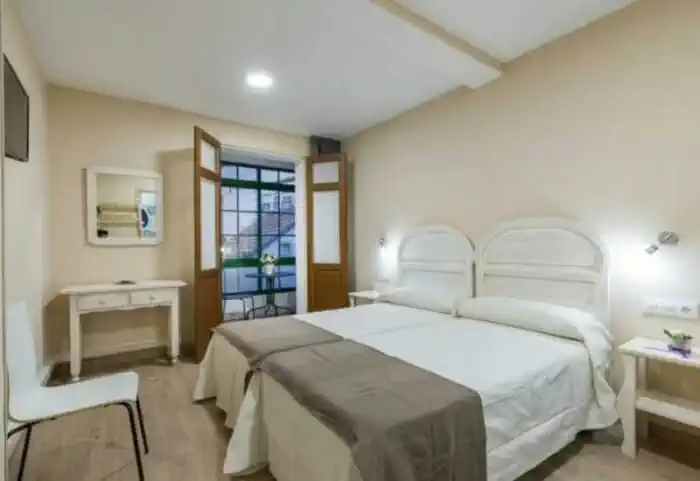
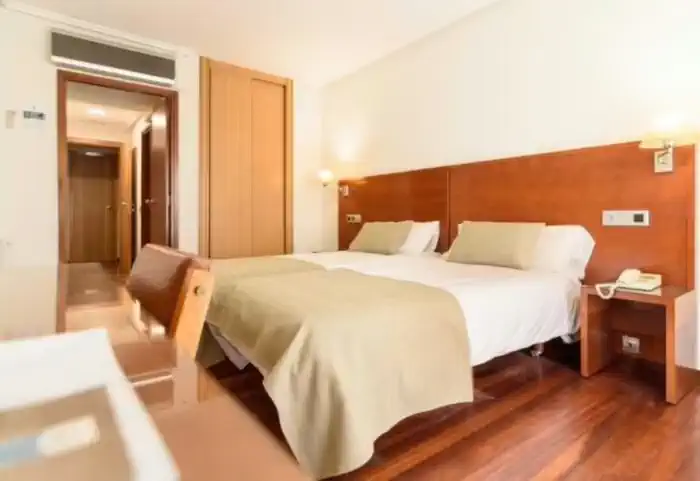
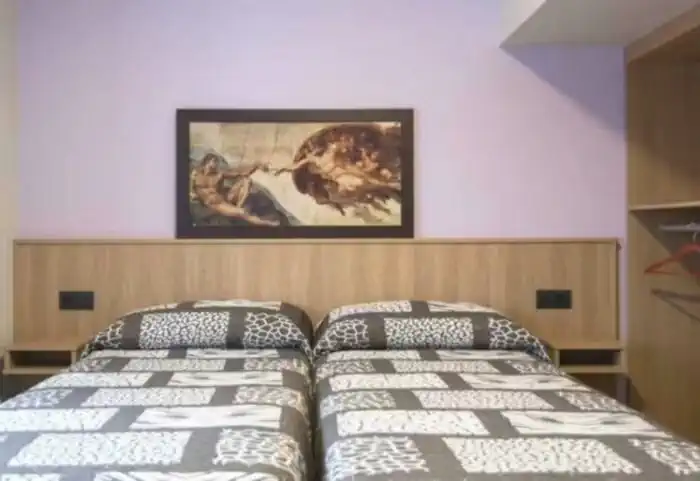
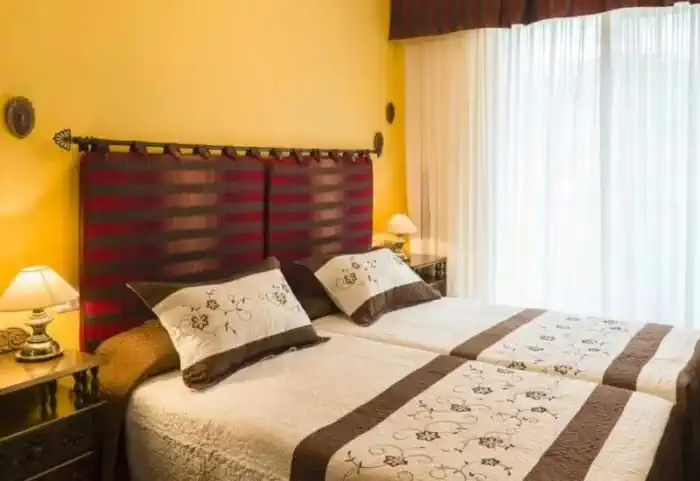
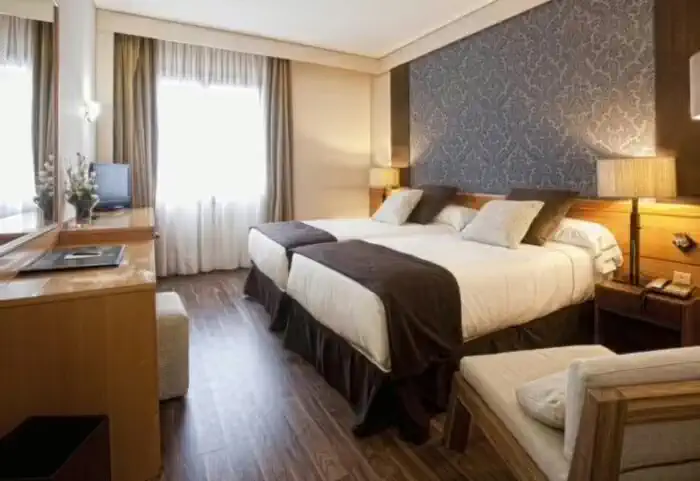
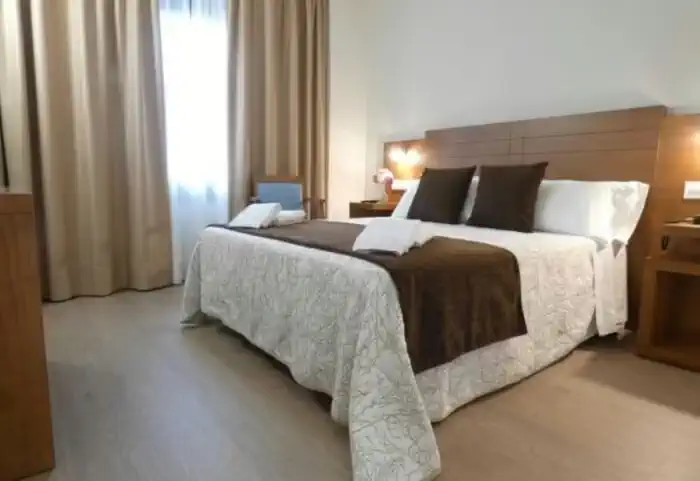
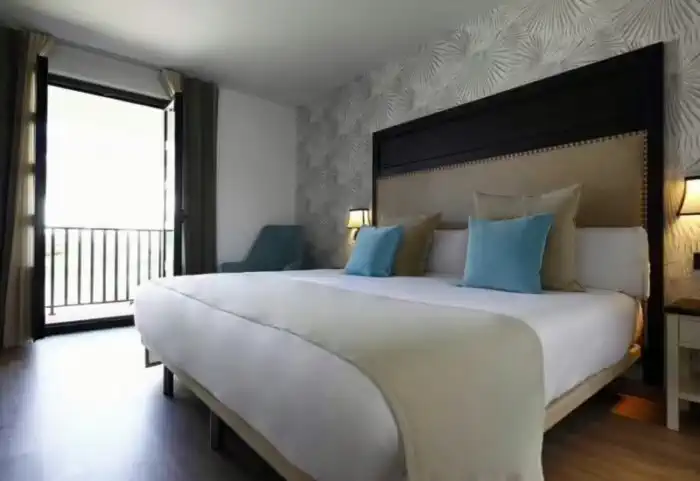
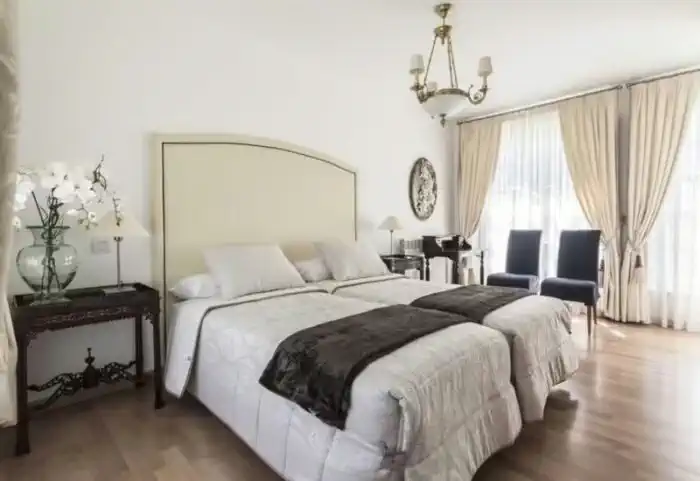
Accommodations

Services

Included in all our routes

  • Accommodation

    7 days / 6 nights

  • Complete documentation (Dossier and material for the Camino)

  • Luggage transfer during the stages. (1 piece per person max 15 kgs)

  • On-the-road emergency telephone assistance

  • Pilgrim's Credential

  • Travel insurance

Optional

  • Transfer from Vigo to Tui
  • Transfer from Santiago to Tui
  • Supplement for single room
  • Extra night in Santiago de Compostela
  • Breakfast
  • MP (Breakfast and dinner)
  • Cancellation Insurance

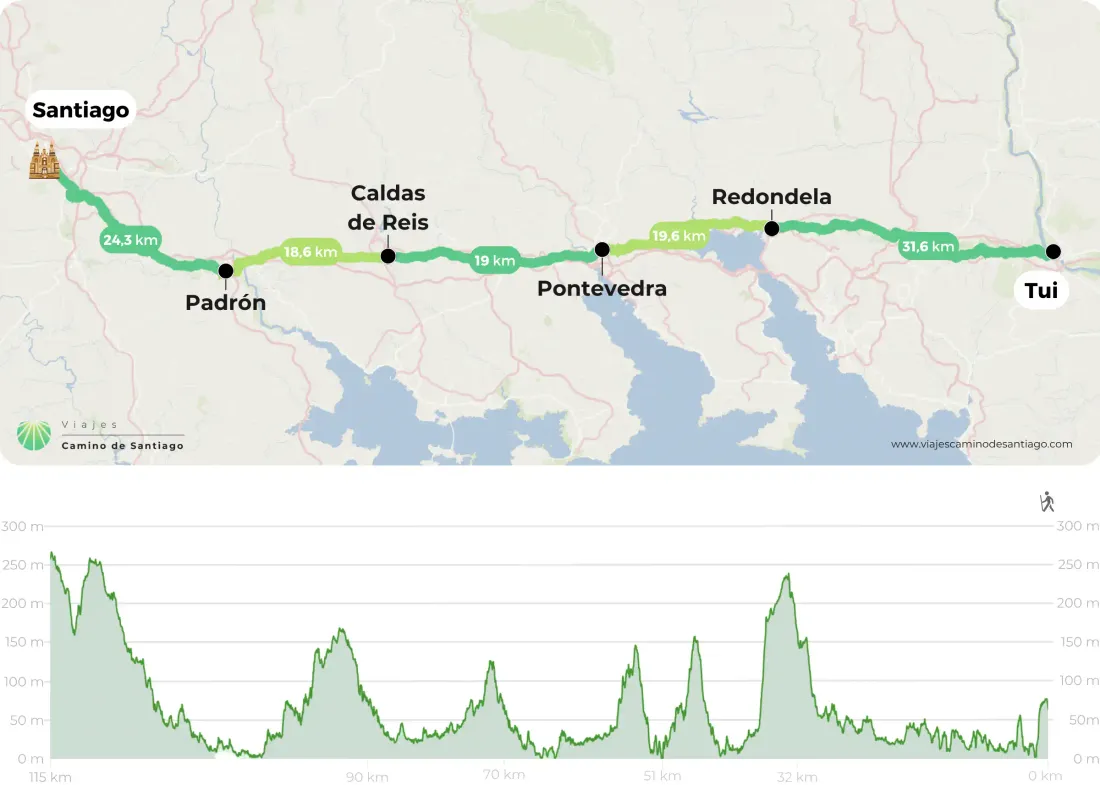
Map of the Portuguese Way from Tui (5 stages)
Mapa Tui 5 Etapas Jpg WqAMU

Stages

  • day 1

    Arrival at Tui

    Today we leave behind the tranquility of Rubiães to finish the stage in one of the liveliest points of the route, Tui. The first stretch of the stage is along the N-201 road, until we reach a signpost that shows us the way to the right on a cobbled street. Following this road we reach the village of Pecene, where we can visit the chapel of Nossa Senhora do Alivio and a few houses of typical Portuguese architecture from the 17th century.
    After walking a little further, the path takes us to another religious monument: the impressive Sanctuary of São Bento da Porta Aberta, dating from the 19th century. One of the most used constructive resources in Portugal are the tiles, and as it could not be otherwise, this Sanctuary presents some beautiful tile historical panels that are well worth knowing. From here the path continues along a beautiful tree-lined promenade until we reach Fontoura, where we can visit the church of São Miguel.

    Nature will continue to be our travel companion until we reach the outskirts of Valença, where we will begin to notice how the landscape is changing and acquiring urban tones.

    From Valença do Minho you can't leave without visiting its Fortress, we assure you that it is spectacular. You can walk along its bastion and contemplate the international bridge over the river Miño and Tui in the background, a picture postcard view. Once you've wandered around the Fortress, all you have to do is walk down to the international bridge. Crossing this bridge is one of the most significant experiences on the road, there are two pedestrian crossings located on both sides of the road. We enter Tui through the Avenida de Portugal and our path continues straight on until we come across a sign on the right hand side that guides us through the historic centre of the town to the imposing Cathedral of Santa Maria de Tui.
    Tui preserves one of the most extensive historical centres in Galicia, as well as an endless number of heritage elements to visit. It is also a meeting point for many pilgrims who start their journey from here and those who come walking from Portugal.

    To consider

    Tui is home to the natural area of Monte Aloia. This space was the first to be declared a Natural Park in Galicia. In addition to beautiful natural spots, the park preserves archaeological remains of forts and cyclopean walls that testify to the ancient occupation of Tui. As you can see, Tui has a lot of things worth knowing, so we recommend that you go for an early morning walk from Rubiães, or if you wish you can add an extra day here.

    Places of interest

    • Sanctuary of São Bento da Porta Aberta
    • Fortaleza - Valença do Minho
    • Church of Santa Maria dos Anjos
    • International Bridge
    • San Telmo Church
    • Cathedral of Santa María de Tui
    • Mount Aloia

    Typical dishes

    • Picanha
    • Bacalhau natas, broa o brás
    • Sanfins kid
    • Anho no Forno
    • Lamprey
    • Eels
    • Egg yolk cake
  • day 2

    Stage 1. Tui - Redondela (31.6 km)

    Let's go for the first day as pilgrims! We say goodbye to Tui through the natural space of As Gándaras and the Louro river in the parish of Ribadelouro. We recommend taking this stretch of the path to O Porriño along the natural route of the Louro, as the other option runs through an industrial estate. After crossing the municipality of O Porriño, you will face the hardest climb of the day that leads to the chapel of Santiaguiño in Mos. Redondela is a place of ancient population, surrounded by places filled with thousands of experiences and important historical events such as the Island of San Simón, which you should visit if you have the opportunity. Additionally, if you're lucky and the weather is nice, you can enjoy a peaceful day at Cesantes Beach.
  • day 3

    Stage 2. Redondela - Pontevedra (19.6 km)

    The stage begins by entering Arcade through the parish of Cesantes, along its beautiful Camiño Real. After passing through Arcade, you will cross one of the most important bridges in Galicia historically, Ponte Sampaio. It is a colossal stone bridge that spans the Verdugo River and where, during the War of Independence, a battle took place that led to the withdrawal of French troops in Galicia. After crossing the bridge, you will wander through villages, pazos, hórreos, and cruceiros until you reach the Brea Vella da Canicouva, an evocative path of large slabs that was part of the Roman road XIX. Pontevedra is for many one of the most beautiful cities in Galicia, and rightly so. A stroll through its cobbled streets and squares will make you realize the special charm it hides. After Santiago de Compostela, Pontevedra is the place on the Portuguese Way from Tui with the most heritage elements. You will be able to visit among other things, the Ruins of Santo Domingo in the Provincial Museum of Pontevedra, the Royal Basilica of Santa María la Mayor, and the symbol of the city: the church of the Peregrina.
  • day 4

    Stage 3. Pontevedra - Caldas de Reis (21 km)

    Today's stage is a gentle and not very long stage, which does not present any difficulty. We will leave Pontevedra behind, leaving the city through its iconic Plaza de la Peregrina and after leaving the zigzag of streets and squares in the centre of Pontevedra, we will head towards Caldas de Reis, heading towards the Puente do Burgo.
    Once we cross the river Lérez, we leave the urban landscapes to enter fully into a beautiful rural environment. First, we will walk along a stretch next to the road until we reach the village of Alba, where we can visit the chapel of San Cayetano. From here the good part begins, the path takes us into the stretch of maximum natural splendour of the stage. We will walk in the shade of centenary oaks until we reach Pozo Negro, after passing the village of Cerponzóns.
    Once we have passed this idyllic natural spot, we must take extreme precautions when crossing the railway line to enter the municipality of Barro, through the parish of San Amaro. Here there is a formidable rest area where we can stop for a while to rest our legs.

    We continue between asphalted areas, roads and small rural villages until we arrive at Portas.

    From here we recommend making the effort to take a detour to visit the waterfall of the Barosa River. We assure you that it is worth it. After a refreshing break in the waters of the Barosa, we will continue our way through the villages of Briallos, Arcos da Condesa (we can stop to visit the chapel of Santa Lucia) and Tivo.
    From Tivo we are only 2 kilometres away from Caldas de Reis, our goal for today. Are you ready to discover the long thermal tradition hidden in the small town of Caldas de Reis?
    Fervenza of Segade Caldas de Reis
    A place that dates back to prehistoric times, Caldas de Reis is nowadays a village widely visited for the medical properties of its thermal waters. In fact, one of its main attractions lies in the water route, a circular route 9 km long where you can see several waterfalls and waterfalls in a beautiful natural environment. In addition to the waters, Caldas has an infinity of heritage monuments that are worth visiting.

    To consider

    It will be worth the detour of 400 meters to visit the Cascades of the Barosa River, inside the Ria Barosa Natural Park. The access is very easy; between A Portela and Briallos, just where the road meets the national road, we have to cross it to take the access road to the waterfalls.

    Places of interest

    • Church of Santa Maria -Caldas de Reis
    • Park - Botanical Garden of Caldas de Reis
    • Church of Santo André de César
    • Water route
    • Church of Santo Tomás Becket - Caldas de Reis
    • The Fountain of Las Burgas - Caldas de Reis
    • Segade Bridge - Caldas de Reis

    Typical dishes

    • Chocos
    • Game meats
    • Empanadas (there are cockles, lamprey, cod... but the one that stands out the most is the one with sardines).
    • Trout and eels
    • Cornbread
    • Red Ribeiro wine
  • day 5

    Stage 4. Caldas de Reis - Padrón (18.6 km)

    We leave Caldas de Reis by the rúa de San Roque, looking for the company of the N-550 road, and after walking a few meters to the side of the road, we will find a detour on the right hand side that will take us through a rural path towards the concello of Padron. We will notice how the slope of the path is slightly ascending, until we reach the parish of Carracedo. Carracedo is a perfect place to take a break and rest.
    Shortly after resuming the route, we will have the opportunity to visit the church of Santa Mariña, whose origins are uncertain. Again, we will meet the national road on our way to Valga. To get to Valga, we will have to cross the river Louro and then an overpass over the motorway. Once in San Miguel de Valga, we have the opportunity to visit its neoclassical church.

    Next we already enter in the concello of Pontecesures, natural neighbor of Padrón, of which it is only separated by the river Ulla.

    The first parish we will encounter is Condide. Afterwards, we arrive at the Infesta neighbourhood, where the restaurant A Mesa da Pedra is located, run by the Association of Friends of the Way. It might be a good option to stop here for lunch. This is an initiative that arises with the intention that all pilgrims can try different typical dishes of Galician cuisine at very low prices. In fact, there is no fixed price on the dishes, everyone contributes what he/she considers appropriate for the food received. Usually, people pay around 7€.
    Continuing our route, we will arrive at the centre of Pontecesures, a historic place that was once called "Port of Compostela", since this is where most of the goods that supplied the city used to enter. After passing the church of San Julián, we will notice that there is a detour to the right. This detour leads to the hostel of Herbón and takes a small detour on the way to visit the convent and the church of the place. To continue to Padrón, we will only have to go straight on following the N-550.

    Once we have crossed the bridge over the river Ulla, we will finally enter Padrón. Afterwards, we will cross a bridge again, this time over the river Sar, and we will find ourselves in the city centre. Apart from tasting the famous peppers, we can visit places like the food market or the church of Santiago. In the church of Santiago resides "el Pedrón" in which, according to the legend", the disciples of the apostle Santiago moored the boat that transported the mortal remains of the apostle once they arrived to the coasts of Padrón after sailing the river Ulla. This legend gave rise to what we know as the Spiritual Variant of the Portuguese Way.

    To consider

    This is the penultimate stage of the Portuguese Way before reaching Santiago de Compostela. It is advisable to leave early from Caldas de Reis and thus take the whole day to rest in Padrón, and go to bed early to start the last stage early and enjoy the day in Santiago.

    Places of interest

    • Convent of San Antonio Herbón
    • Church of Santa María de Herbón
    • Church of Santiago - Padrón
    • Bridge of Santiago - Padrón
    • Rosalía de Castro's House - Padrón

    Typical dishes

    • Herbón-Padrón peppers
    • Lamprey
    • Galician octopus
    • Tetilla cheese
    • Autochthonous apple
    • Almond and egg yolk cake
  • day 6

    Stage 5. Padrón - Santiago de Compostela (24.3 km)

    The first milestone of today's exciting journey towards Santiago de Compostela, we will find it in the monumental collegiate church of Iria Flavia, the first parish that we will set foot on after leaving the urban centre of Padrón. After stopping to contemplate this significant monument, our route continues through small villages and neighbourhoods that follow the course of the N-550 road and the railway line. On some occasions, you will have to cross the railway track, so you will have to be extremely careful.
    A Escravitude is the next landmark we will reach. Here, we can visit the Sanctuary built in the 16th century on the so-called "Fonte Santa". As in so many other places along the way, this place has a legend to tell. It is said that the waters of the "Fonte Santa" healed a pilgrim suffering from hypopresia, on his way to Compostela. After three days, the man was miraculously cured and exclaimed: "Grazas Virxe, por librarme da Escravitude do meu mal" (translated into Spanish as: thank you Virgin, for freeing me from the slavery of my evil); and this is where the toponym A Escravitude comes from. We continue our journey taking extreme precautions between the asphalt stretches and the crossings over the train tracks.

    The next enclave of reference is A Picaraña, where you can take the opportunity to make a technical stop for refreshments.

    After the short rest, the hardest part of the stage begins: the ascending slopes. We head towards Faramello and Teo along ascending paths. At this point we can make a small detour on the way to Castro Lupario, also known as Castro de Beca. It is believed that this castrexo settlement was the home of the mythical queen Lupa, who appears in the Codex Calixtinus.
    Home of Santiago de Compostela
    There is little left and the next point of our adventure brings us closer to the imminent end. We will pass through Osebe before entering O Milladoiro. Here we can already appreciate a strong change in the landscape that heralds the periphery of the urban space of Santiago de Compostela. Finally, we enter Santiago de Compostela by the hand of the mythical neighborhood of Conxo, a place that once constituted a municipal entity itself, until it was swallowed up and annexed by the growth of the Galician capital. At this point, you can stop to visit the church of Santa Maria, located in the alameda of the neighborhood.
    Dear friends, the end is already counted by the minute. We only have to walk along the streets of Sánchez Freire, García Prieto, Rosalía de Castro and Rúa do Franco to find ourselves in front of the imposing façade of the Cathedral of Santiago in the Plaza del Obradoiro.

    Congratulations pilgrim, you made it!

    You are in Santiago de Compostela, the city where rain is art. After having stamped the credential at each stage and having collected your Compostela, after all the effort it's time to enjoy the city, you've earned it. We hope you enjoy strolling through the old town, enjoying a fresh beer accompanied by a delicious tapa, dancing and singing in a foliada, or tasting some of its traditional liqueurs, among a thousand and one other things that this small but great city has to offer.

    To consider

    Don't forget to pick up your Compostela at the Pilgrim's Welcome Office in Santiago is located in Rúa Carretas, which is accessed from the Plaza del Obradoiro by Rúa Costa do Cristo, and although it is open from 12:00 to 16:00, we recommend going for a walk early from Padrón and go with time to avoid queues.
    The pilgrim's mass is celebrated every day at 12:00 and 18:00.

    Places of interest

    • Collegiate Church of Iria Flavia
    • The Cathedral of Santiago de Compostela
    • San Martín Pinario Monastery - Santiago de Compostela
    • Saint Dominic of Bonaval - Santiago de Compostela
    • Abastos Market - Santiago de Compostela
    • Faculty of Geography and History - Santiago de Compostela
    • Hostel of the Catholic Monarchs - Santiago de Compostela

    Typical dishes

    • Zorza
    • Raxo
    • Lacón with turnip tops
    • Fish and seafood
    • Galician veal meats
    • Denomination of Origin Wines
    • After-dinner liqueurs: coffee liqueur, herbs, white marc, cream...
  • day 7

    End of the Camino

    After arriving... End of the Camino

Frequently Asked Questions

  • How can I get to the start of the Camino de Santiago route?

    Depending on the route and starting location you choose, you will have different options. Many times it will be a combination of plane, bus, train, and even taxi. Of course, you can also arrive in your private car.

    If you are going to do the Camino de Santiago with us and want to know how to get to Sarria, how to get to Tui, or how to get to Roncesvalles, among other starting points, contact us and we will help you start your adventure.

  • What are the hardest stages of the Portuguese Way?

    In all the routes and stages of the Camino de Santiago there is a lot of beauty, nature and heritage. Of course, all this, between dozens of kilometers, with sections and stages that are easier to travel and others that are more complicated. The latter are characterized, above all, by having large slopes and, sometimes, accumulating many kilometers of ascent. Below we want to inform you of the most commented stages and climbs due to their physical demands on the Portuguese Way. Some of them, for many, are part of the hardest stages of the Camino de Santiago.
    • Codesal – Alto da Portela Grande de Labruja
    If the Portuguese Way is quite flat and accessible for any pilgrim, it is not exempt from some climbs. In Portugal, on stage number 20 between Ponte de Lima and Rubiães, walkers face the Alto de A Portela Grande in Labruja. In 4.2 km of distance you climb about 300 m between forests and beautiful landscapes in a short stage but with a demanding challenge.
    • Barcelos - Ponte de Lima
    This is one of the longest stages (34.5 km) of the Camino Portugues and without a doubt one of the hardest. The section between Barcelos and Ponte de Lima is famous for its length and steep slopes, especially near Portela. The unevenness and length of the stage make this journey a real challenge, even for the most experienced pilgrims.
  • What are the most beautiful stages of the Portuguese Way?

    Some stages of the Portuguese Way stand out for their natural beauty, historical richness and cultural significance. Below, I present a selection of the most beautiful stages of the Portuguese Way:
    • Tui - O Porriño
    This stage marks the entrance to Galicia from Portugal, crossing the Tui International Bridge. Here, the Camino takes you through lush forests and quiet country lanes. The city of Tui, with its cathedral fortress, offers spectacular panoramic views of the Miño River and is a perfect place to start this beautiful stage.
    • Pontevedra - Caldas de Reis
    One of the most beautiful stages of the Portuguese Way, this section combines the best of Galician nature. You will pass ancient stone bridges, green valleys and crystal clear rivers. Furthermore, upon arrival in Caldas de Reis you are rewarded with its natural hot springs, perfect for relaxing your muscles after a day of walking.
    • Valença do Minho - Tui
    Although this stage can be considered part of the border between Portugal and Spain, it offers spectacular views along the Miño River. Valença do Minho, with its impressive fortress, is a place of great beauty and historical value. Crossing the International Bridge to Tui is an experience that many pilgrims describe as magical.
    • Redondela - Pontevedra
    This stage takes you through lush eucalyptus forests and green fields, offering a charming contrast to the small villages you will find along the way. In addition, Pontevedra is one of the most beautiful cities in Galicia, with a well-preserved historic center and a vibrant cultural life.
    • Caldas de Reis - Padrón
    Known for its tranquility and natural beauty, this stage takes you through the greenest landscapes of the Portuguese Way. The journey between Caldas de Reis and Padrón is a delight for the senses, with numerous streams and old mills that line the road. Padrón is famous for being the place where, according to tradition, the boat that transported the remains of the Apostle Santiago arrived.
    • Padrón - Santiago de Compostela
    The last stage of the Camino Portugues is one of the most exciting and moving. As you approach Santiago de Compostela, the landscape becomes increasingly spectacular. The Galician hills accompany you throughout the journey, culminating in the majestic Cathedral of Santiago, where many pilgrims complete their trip with a mix of emotions. Among all of them, choosing the most beautiful stage can be subjective and very personal, since it depends on the tastes and preferences of each pilgrim. However, one of the most valued stages and that is frequently highlighted for its natural, scenic and historical beauty is the one that goes from Pontevedra to Caldas de Reis. Among the reasons why it is considered the most beautiful, we highlight:
    • Natural Landscapes: This stage crosses lush Galician forests, trails surrounded by vineyards and agricultural fields. The tranquility and greenery of the surroundings provide a comforting experience deeply connected to nature.
    • Medieval Rivers and Bridges: Along the way, pilgrims cross crystalline rivers on ancient stone bridges, such as the famous Lérez River Bridge, which adds a historical and picturesque touch to the journey.
    • Galician Villages: The route passes through small villages that preserve the traditional Galician essence, where pilgrims can enjoy the local hospitality and the rich gastronomy of the region.
    • Hot Springs in Caldas de Reis: The stage ends in Caldas de Reis, known for its natural hot springs, which have attracted visitors since Roman times. It is the perfect place to relax after a day of walking.
  • How do I determine if I'm physically prepared for the Camino de Santiago?

    First of all, it's important to understand that embarking on the Camino de Santiago doesn't require being an elite athlete or being accustomed to long daily walking. It's an achievable journey for everyone, including you.

    If you are considering this trip and you are not sure about your physical condition, don't worry. You are going to walk an average of 20 kilometers a day. If you find yourself unable to do so, you have two options: start training, do shorter stages, or join an organized group trip which has a support vehicle.

    If you're interested in training but unsure where to start, we recommend checking out our article on Training for the Camino de Santiago.

  • How do I make a reservation?

    To make a reservation, you can follow these steps:

  • Through our website: Select the route you want and follow the steps indicated in the form. Provide your personal information and that of your companions, choose the type of accommodation, room distribution, meals, transfers, bike rental, etc.
  • By email: If you prefer to make the reservation by email or need a personalized trip, you can send us an email to info@viajecaminodesantiago.com. We will provide you with the necessary information to complete the reservation via email.
  • It is important to note that if the routes or services available on the website do not meet your specific needs, you can request a personalized quote by sending an email to info@viajescaminodesantiago.com.

  • Can I change or cancel my booking before the start of the trip?

    If you have any doubts about cancelling or modifying your reservation. We recommend you to visit our General Booking Conditions.

  • What services are included in the Camino de Santiago on your own?

    The Camino de Santiago at your own pace includes the following services:

    • Accommodation for resting.
    • Luggage transport so you do not have to carry it.
    • An informative dossier with details about the stages.
    • The Pilgrim Passport.
    • A 24-hour assistance phone number available at all times.
    • A travel insurance for your peace of mind.

    Additionally, you have the option to customize your experience by adding extra services:

    • You can choose whether to include breakfast or half board.
    • We offer private transfers to take you to the start of the stage from Santiago de Compostela, from its airport, or any other point.
    • We can take your vehicle from the starting point to the end of your Camino.
    • You have the option to book extra nights at the beginning or end of your trip.

    Unlike group trips, we do not include a guide or support vehicle between stages. However, we provide you with a 24-hour assistance phone number to resolve any issues or unforeseen events you may encounter on your journey.

  • How can I get to Tui?

    Tui is one of the most popular starting points of the Portuguese Way, and getting there is quite simple.

    From Madrid:

    • Train, plane, or bus to Vigo.
    • From Vigo, there are several daily buses to Tui (less than an hour journey).

    From other points in Spain or abroad:

    • The most practical option is to fly to Vigo, the nearest airport, although you can also fly to Santiago de Compostela: from there, there are frequent trains (approximately every hour) to Vigo, and from Vigo, you can connect by bus to Tui.

    At the end of your Camino, it is common to return by train or plane from Santiago de Compostela.

    👉 More info: /en/pilgrims-useful-information/how-get-to-tui/

Portuguese Way from Tui (5 stages)

From 300 €

Reviews from our users (10)
Calculate your budget
Request a quote
Organised Trips
Rafael Sánchez López - Kaufmännischer Leiter - Agentur Viajes Camino de Santiago