


Discover the coast of Galicia through its beaches
09 August, 2026
Discover the best beaches in Galicia and plan your visit to this natural paradise in northern Spain. The article covers notable sandy areas, characteristics of each region, and practical tips for choosing a destination according to your preferences and enjoying the Galician coastal environment.

As you may know, Galicia is very coastal, with the Cantabrian Sea to the North and the Atlantic Ocean to the West. According to the INE, it has around 1498 kilometers of coastline divided among its three coastal provinces, namely, Lugo, A Coruña, and Pontevedra, making it the leading region in Spain in this regard. Furthermore, this coastline differentiates the Rías Altas, from Ribadeo to Finisterre, and the Rías Baixas, from Finisterre to A Guarda. Beyond the tranquil rías, in Galicia you will find wild cliffs, and, of course, some of the best and most fabulous beaches.
In this article, we will recommend the best beaches in Galicia to visit along the different stages of the Camino de Santiago, many of which will offer you more than just a good swim. For this selection, which is not easy, we will travel from North to South.
Beach of the Cathedrals (Ribadeo, Lugo)
Its real name is Playa de Augas Santas, but due to its characteristic morphology that resembles the arches and naves of a cathedral, it is known as the Beach of the Cathedrals, the best in the A Mariña lucense region. A true work of art, it is actually declared as a Natural Monument and is a Site of Community Interest. Located shortly after entering Galicia from Asturias, facing the Cantabrian Sea, it is about 10 kilometers from Ribadeo, the city and capital of the municipality to which it belongs in the Province of Lugo, and one of the key locations of the North Way. This beach is one of the most visited places in Galicia, and in fact, during the high season, due to the large influx of tourists, it is necessary to reserve, free of charge, if you want to visit it (note, make sure the tide is low, otherwise, you will not appreciate it as it deserves).
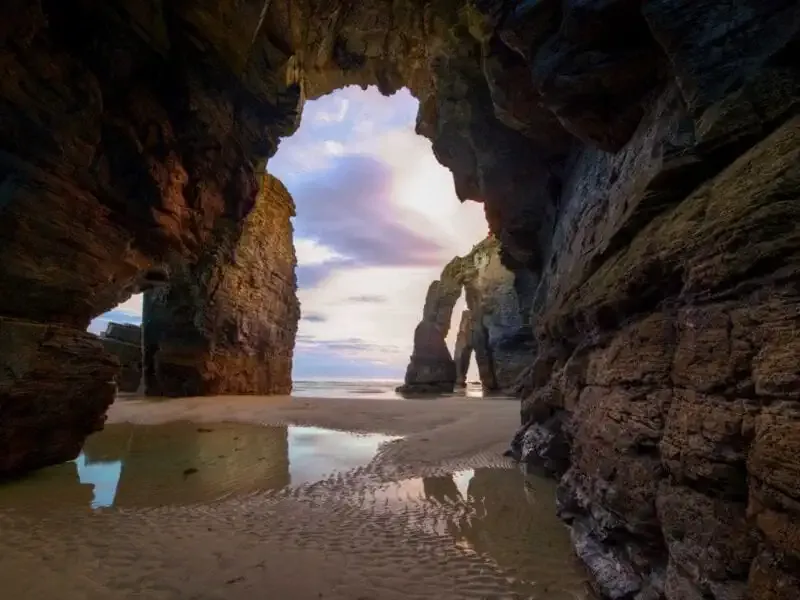
Natural arch at the Beach of the Cathedrals
Beach of Covas (Viveiro, Lugo)
This is an urban beach, very close to the urban center of Viveiro, the city and capital of the municipality of the Province of Lugo to which it belongs. With around 1.5 kilometers of fine sand and shell-shaped, it sees quite a tourist influx during the high season. Various rock formations dot its cove within the Ría de Viveiro, called "castelos" (castles in Galician), where several ships once sank; the most famous case was that of the Frigate Magdalena, which succumbed to a strong storm in 1810, resulting in the death of a father and son from the crew, and since then, the Navy prohibited two members of the same family from traveling on the same ship.
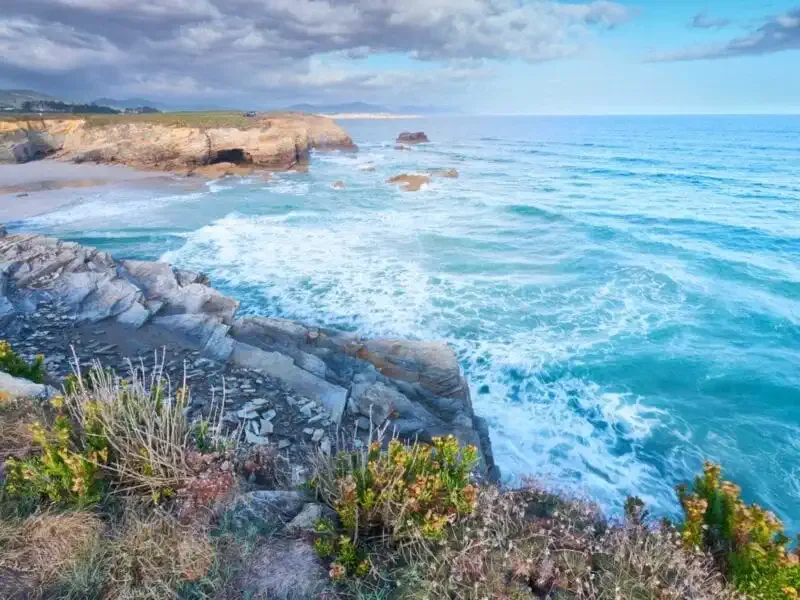
Covas Beach
A Frouxeira Beach (Valdoviño, A Coruña)
In the town and municipal capital of Valdoviño, in the Ferrolterra region and Province of A Coruña, this fabulous sandy area extends for about 3.5 kilometers in length. A Frouxeira Beach is a protected natural space, with its namesake lagoon of great ornithological importance. Furthermore, it is a surfing mecca, as national and even international championships are held there. In fact, in the urban center, you can visit the only museum dedicated solely to surfing in Spain, the Océano Surf Museum.
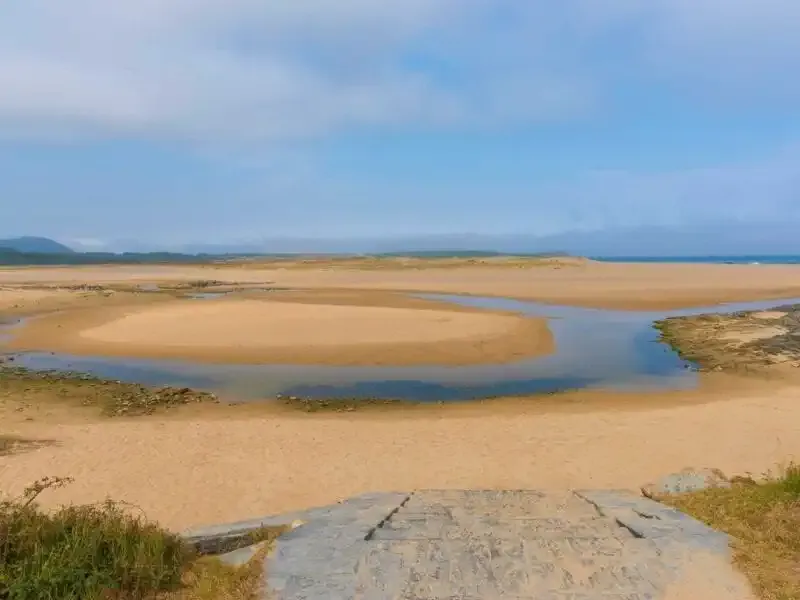
Frouxeira Beach
Trece Beaches (Camarinas, A Coruña)
No list of beaches would be complete without mentioning some of the beaches of the Costa da Morte, and we highlight the fabulous set formed by the Trece Beaches, belonging to the municipality of Camarinas, on the Way of the Lighthouses. A virtually untouched natural environment, facing the Atlantic Ocean, between the dunes of Monte Branco and the Cemetery of the English and Punta do Boi, where among various shipwrecks, the British torpedo cruiser HMS Serpent stands out from 1890. A protected environment of wild nature, where you can choose any corner as you will likely be alone on its sandy shores.
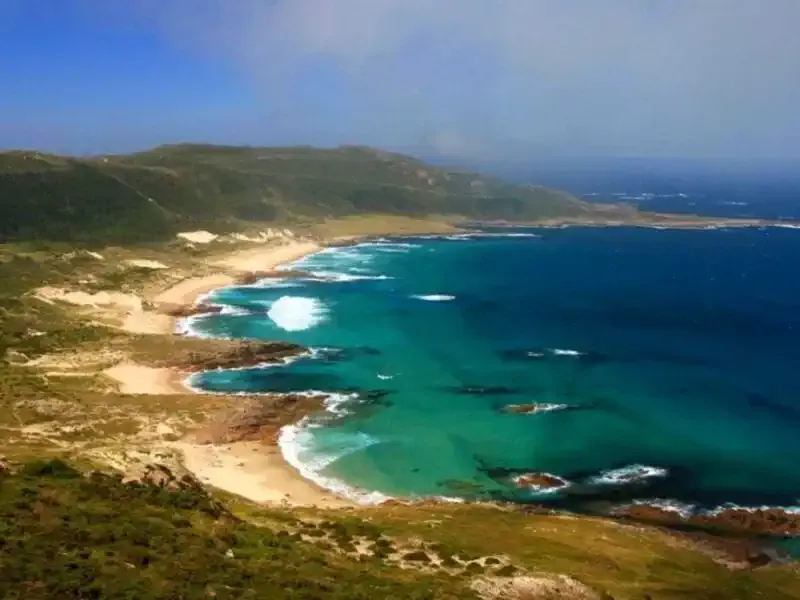
Playa del Trece
Carnota Beach (Carnota, A Coruña)
With its 7 kilometers of sandy beach, it is considered one of the longest in Galicia. Located in the bucolic village of Carnota, the capital of the homonymous municipality in the Province of A Coruña, it has a semi-moon shape and is only interrupted by a stream that flows into the sea. A protected area of great environmental value, to the north it is bordered by the large granite mass of Monte Pindo, the Celtic Olympus, followed by the famous Ézaro Waterfalls. In the village of Carnota, after swimming, you can enjoy a snack and appreciate one of the longest hórreos in Galicia.
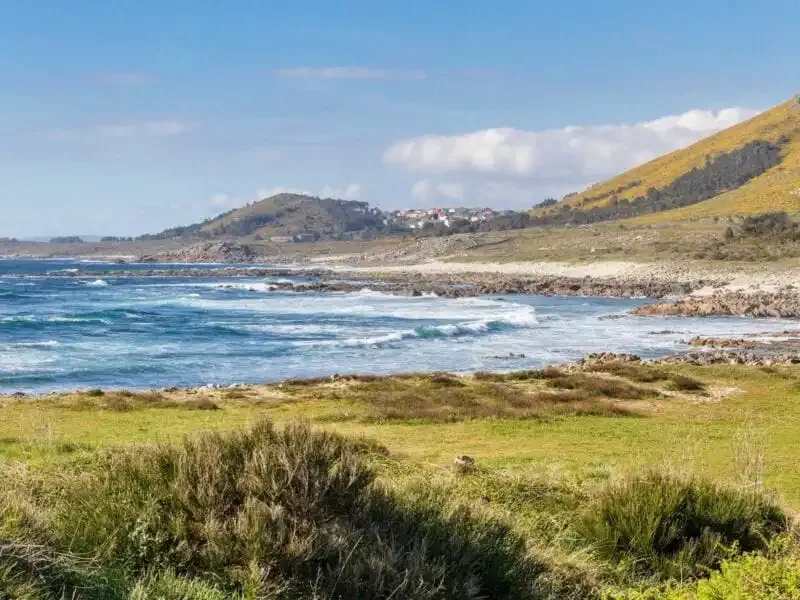
Carnota Beach
Baroña Beach (Porto do Son, A Coruña)
With a length of about 500 meters, this beach, also known as Area Longa, is located in the municipality of Porto do Son, a small fishing village in the Province of A Coruña. With moderate waves and not too much crowd, you may find nudists there. It is bordered at its northern end by the fabulous Castro de Baroña, a castro settlement on a peninsula and in very good condition. Near the beach, you have parking and bar and restaurant services.
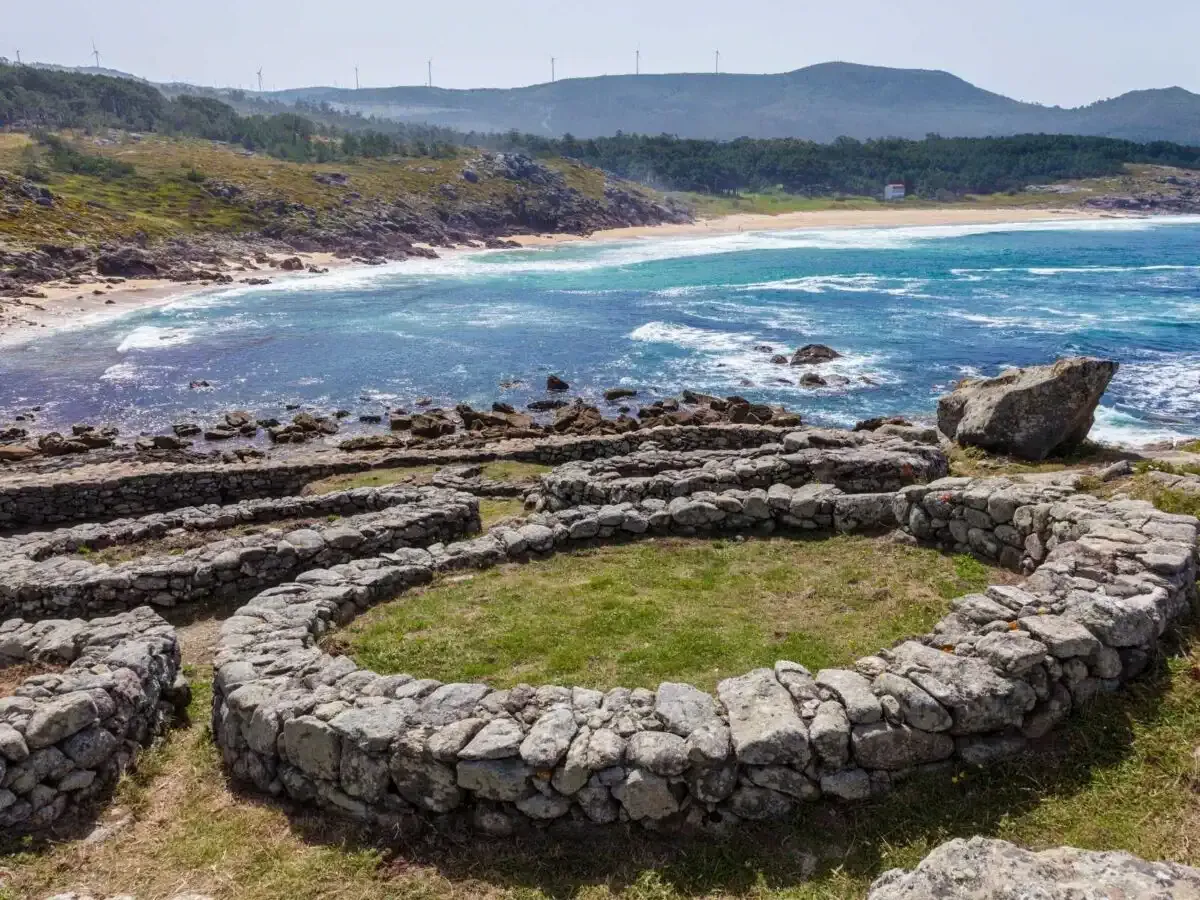
Baroña Beach
A Lanzada Beach (O Grove, Pontevedra)
This sandy beach of almost three kilometers is a regular recipient of the blue flag. Close to the village of O Grove, the capital of the homonymous municipality in the Province of Pontevedra, it is one of the most famous beaches in Galicia, with exceptional views in a protected area. Here you can practice water sports and immerse yourself in the history of the area, as at its southern end you can visit the Tower, the Castro, and the Hermitage of Our Lady of A Lanzada, which will tell you timeless legends.
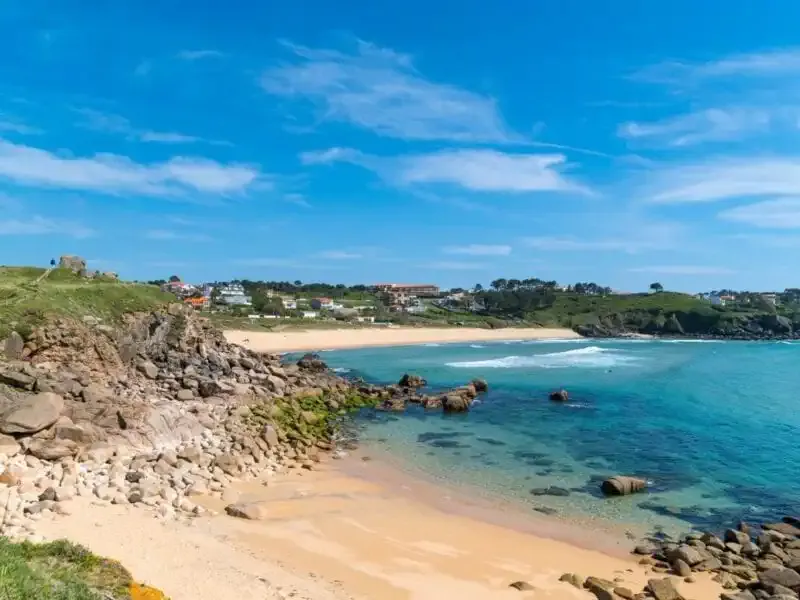
A Lanzada Beach
Rodas Beach (Cíes Islands, Pontevedra)
Perhaps one of the best beaches in Spain and Europe, when you visit it you will understand why it is called "the Caribbean." As part of the City Council of Vigo, in the Province of Pontevedra, this beach is located in the Cíes Islands, which are part of the Natural Park of the Atlantic Islands, at the mouth of the Ría de Vigo and overlooking the vast Atlantic Ocean. The beach, with a length of more than one kilometer, connects two of the islands, Monteagudo to the North and Faro to the South. To access them, you must reserve a spot, and then subsequently book the ferry that can be taken from various ports in the Ría de Vigo. The area offers basic services such as a bar and restaurant, and you can enhance your visit with small hiking routes always surrounded by the sea and even go scuba diving. Without a doubt, one of the main tourist destinations in Galicia.
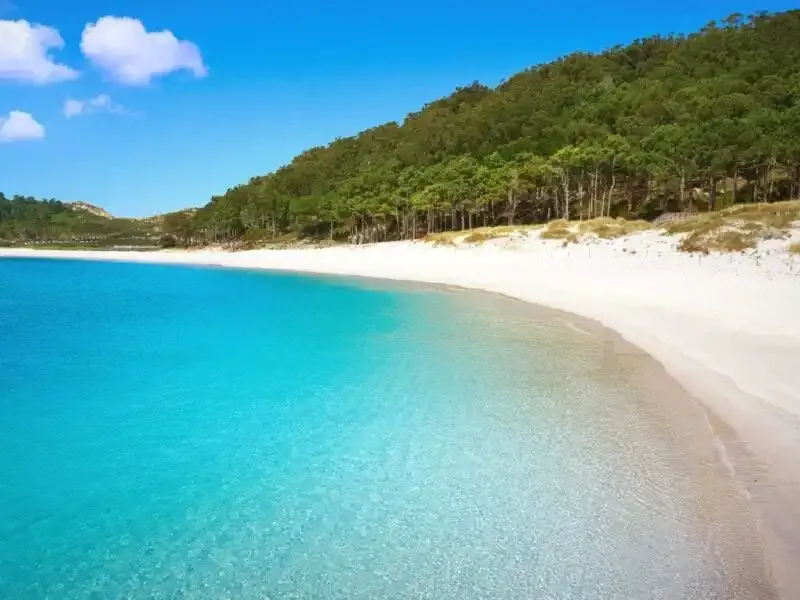
The beach of Rodas
A characteristic of the more than 700 beaches in Galicia is the low overcrowding and occasional overdevelopment that can be found in its surroundings, with some exceptions. Additionally, Galicia usually registers several blue flag beaches each year, which certifies the quality of its waters, sands, and services. Furthermore, as we have seen, many of them are protected ecosystems and of great ornithological importance. Therefore, it is everyone's responsibility to respect and care for them. Are you coming to take a dip with us?
Comments (2)
José Manrique
Viajes Camino de Santiago
José Manrique
Leave a comment