


The Portico of Glory
29 March, 2026
The Portico of Glory, a Romanesque jewel of the Cathedral of Santiago, was for centuries the entrance for pilgrims. Its restoration, completed in 2018, restored its splendor and polychromy, making it an essential visit at the end of the Way.

The Obradoiro Square, kilometer 0 of the Camino de Santiago, hides behind its imposing Baroque façade this Romanesque jewel: the Pórtico de la Gloria. A masterpiece of European Romanesque art, the original west portal of the cathedral has been a witness to the arrival of pilgrims for centuries. Although later protected by the current façade, this did not prevent its gradual deterioration: dampness, dirt, and inappropriate interventions tarnished the portal. Let’s break down what it is, what its restoration involved, and how the future looks.
 In 1168, Master Mateo received the commission to complete the works of the cathedral, by express order of King Ferdinand II of León and Galicia. He began by finishing the works at the end of the basilica’s naves and then continued with the construction of the crypt, that is, the lower floor on which the Pórtico de la Gloria stands. Twenty years later, on April 1, 1188, he placed the lintels where the tympanum would rest, then continuing with the sculptural ensemble, narthex, gallery, façade, and towers. Finally, around the year 1211 the temple was consecrated with the royal presence of Alfonso IX.
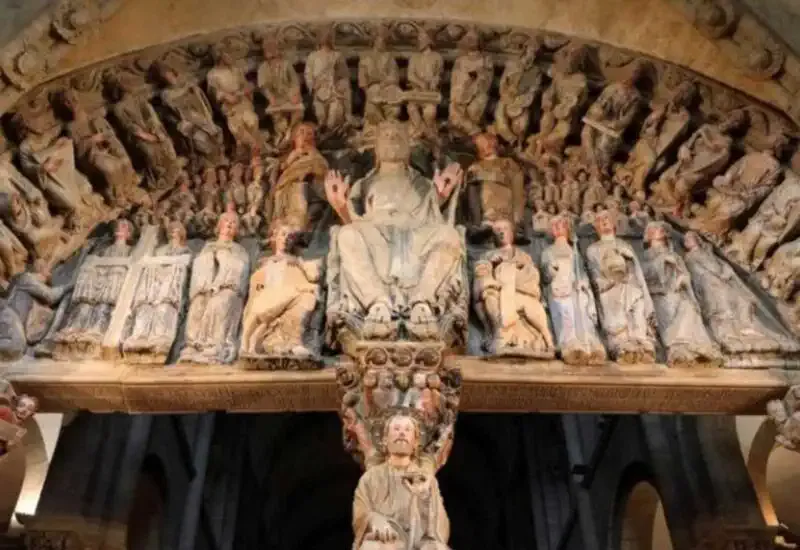
 The Pórtico de la Gloria, made of granite and marble, is an example of this—and what a beautiful example. At the lower level, monsters and beasts remind us of the fate of those who live outside the faith, while the side arches represent the Old and New Testament (left) and the Final Judgment (right). An example of teaching about sins, for instance, can be seen in the right side arch, where we can observe a figure eating an empanada, representing the sin of gluttony.
The great central arch, presided over by Saint James the Apostle, shows the Tree of Jesse or the genealogy of Christ, the Evangelists, the righteous, and a fine choir of angels, above whom the elders of the Apocalypse are skillfully depicted. All of them maintain heavenly conversations while preparing their instruments to announce Glory.
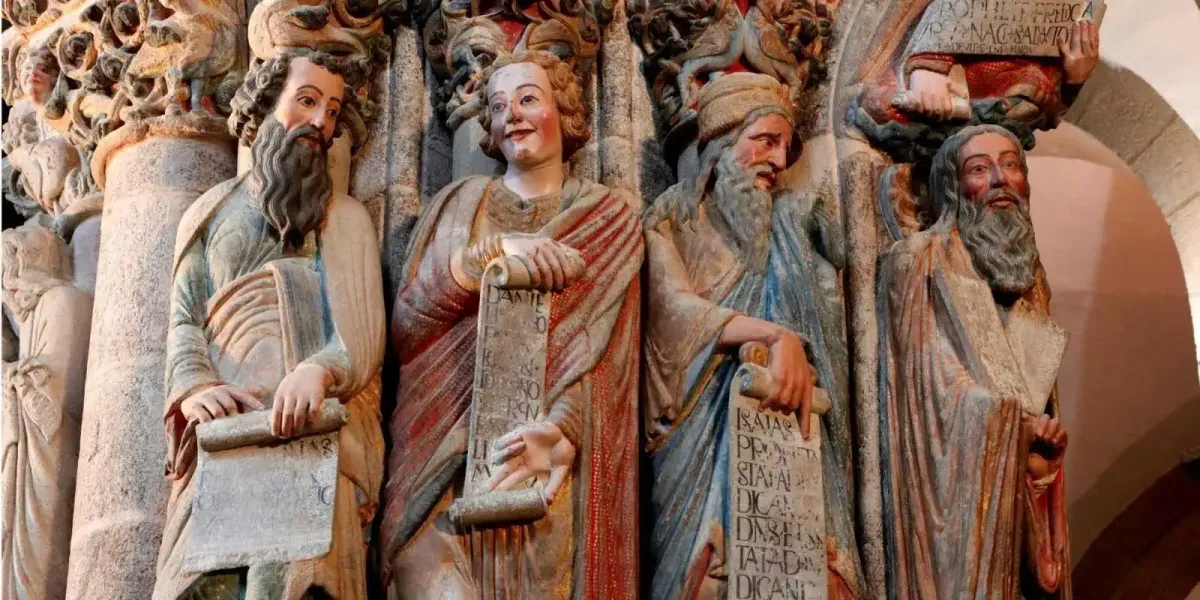
 The restoration program of the Santiago Cathedral was promoted by the Santiago Cathedral Foundation and the Barrié Foundation, with the collaboration of the Xunta de Galicia and the Government of Spain. Since 2009, the comprehensive cleaning works of the Santiago Cathedral prevented pilgrims and visitors from enjoying the Pórtico de la Gloria. Finally, on June 28, 2018, the Santiago Cathedral presented the completion of the restoration and conservation works of this magnificent piece as well as its surroundings—a long-awaited announcement that yielded excellent results, such as the recovery of the polychromy of the images.
What is the Pórtico de la Gloria and why is it so important
The Pórtico de la Gloria is one of the great wonders of the Santiago Cathedral and one of the most outstanding works of European Romanesque art. For centuries, it was the monumental entrance through which pilgrims accessed the Compostela temple, becoming one of the great symbols of the final destination of the Camino de Santiago.Getting to know the Pórtico de la Gloria
The Pórtico, an architectural structure composed of three arches and accompanied by an elaborate sculptural ensemble, was the original west entrance of the Santiago Cathedral. This was the case from its completion at the beginning of the 13th century until the construction of the current Obradoiro façade in the 18th century, the most well-known image of the cathedral and a symbol of the completion of the pilgrimage.Tympanum and entrance of the Pórtico de la Gloria
A Bible in stone
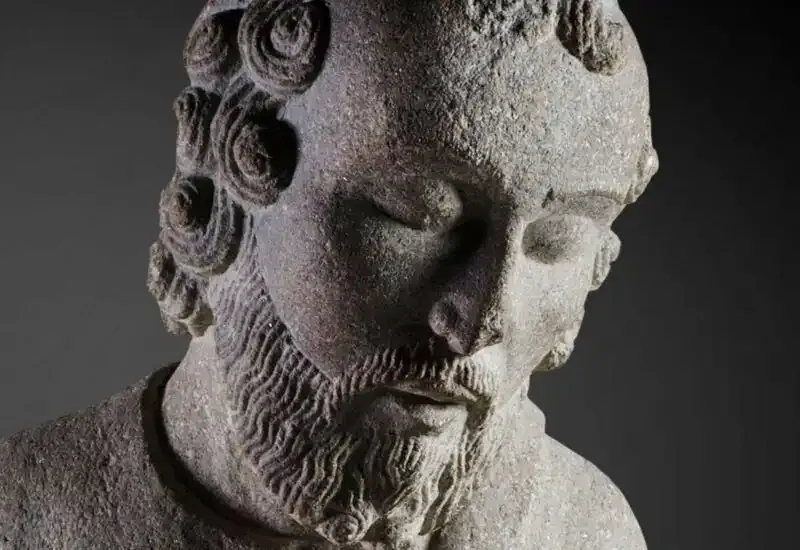
The work of Master Mateo, popularly known for his representation at the back of the Pórtico as the “saint of the head bumps”, represents, with didactic and doctrinal purposes, Redemption and Salvation. As you may know, the common people were almost entirely illiterate, and the Word of God was learned through church sermons and religious sculpture. Romanesque art thus served as a Bible in stone, allowing the faithful to understand religious doctrine through its images.The sculptures of the Pórtico de la Gloria have very natural and human expressions
The great central arch, presided over by Saint James the Apostle, shows the Tree of Jesse or the genealogy of Christ, the Evangelists, the righteous, and a fine choir of angels, above whom the elders of the Apocalypse are skillfully depicted. All of them maintain heavenly conversations while preparing their instruments to announce Glory.
The recent restoration of the Pórtico de la Gloria
The protection of this complex and magnificent work, thanks to the construction of the Baroque façade we see today—by Fernando de Casas y Novoa and Domingo de Andrade—did not prevent time, dampness, and successive interventions from deteriorating it. Its state of conservation more than ten years ago was critical, with constant material detachments and complex physicochemical processes gradually degrading the material, which led to a long closure to the public in order to carry out its restoration.Detail of a sculpture of the Pórtico de la Gloria