


Symbols of the Camino de Santiago
10 August, 2026
Exploration of the symbols of the Camino de Santiago, such as the scallop shell, the cross of Santiago, and the yellow arrows, explaining their historical significance, their importance in guiding the pilgrims, and their connection to the Jacobean tradition along the route.

When undertaking the Camino de Santiago, every pilgrim must be aware of the symbols that identify this ancient route. The symbols of theCamino de Santiago have their historical explanations and meanings, and in some cases, even a function, sometimes very important. In the following article, we analyze what the main symbols you will find on the Jacobean routes are, their meanings, and their practical utility.
Do you know what they are? Do you want to know what they represent and how they can assist you in your Jacobean experience? Take note so you don't miss anything and enjoy every detail of your pilgrimage to Santiago!
What are the most popular symbols of the Camino de Santiago?
Whether you are a beginner pilgrim or already experienced, knowing the symbolic elements of the Camino de Santiago is almost a necessity. In addition to enriching your experience, by learning curiosities about the history of the Camino de Santiago, you will know how to interpret some symbols that will be useful while walking.
The scallop shell
Perhaps, the quintessential symbol of the Camino de Santiago, which has many interpretations and some functionality. The scallop, a bivalve mollusk protected by a flat shell and a convex one, is also known as Venera or Pecten jacobaeus.
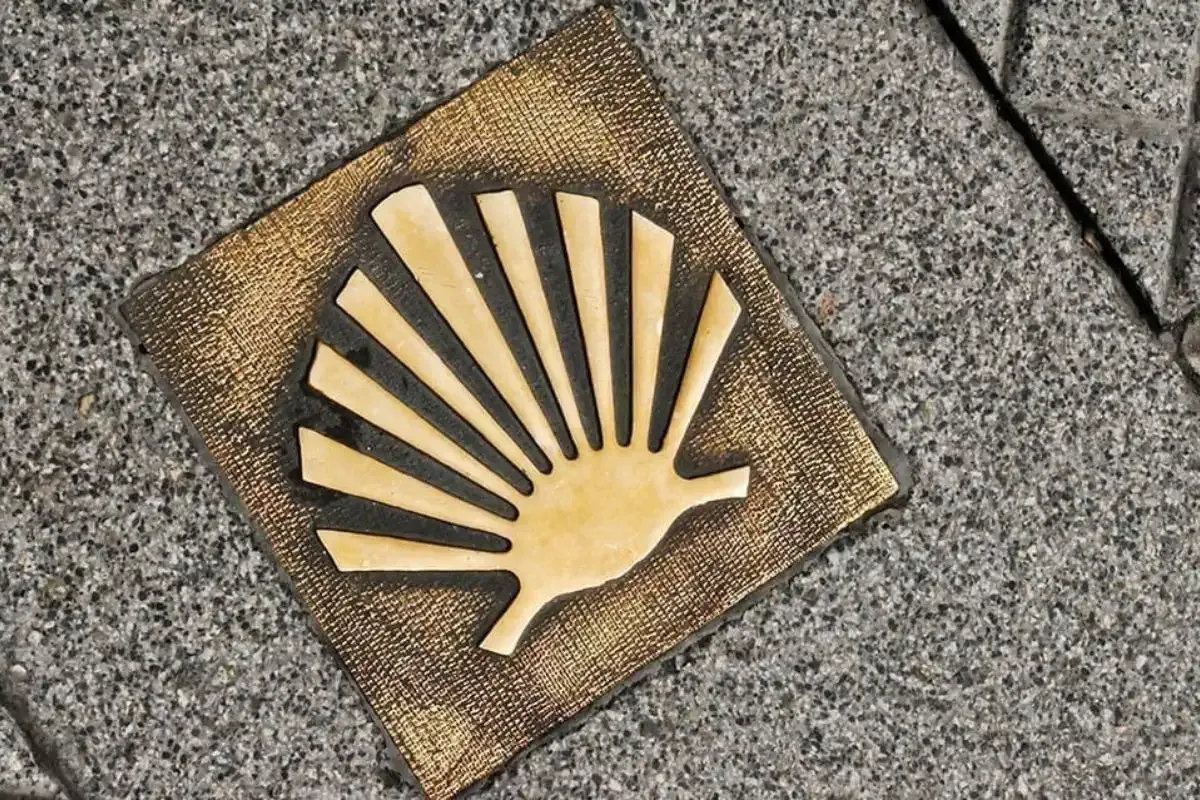
The scallop shell, a classic symbol of the Camino de Santiago
In relation to this last term, its connection with the Jacobean universe is more than obvious. Very abundant on the coasts of Galicia, in the origins of the Camino de Santiago it represented the proof that the pilgrim had traveled to Santiago. It functioned, thus, as a witness of the pilgrimage, and therefore, it was like the certificate of the Compostela today. Moreover, the curved shape of its lower shell served as a scoop for drinking water and even eating.
Already mentioned in the 12th century in the Calixtine Codex, they were given to the pilgrims, who placed them on their garments. In fact, there was even a guild of scallop sellers, the concheiros: evidence of this is the street that still exists today in Santiago de Compostela.
A key element in the miracles of Santiago, regarding its symbolism, there are different interpretations of its meaning:
- the birth of a new man after the pilgrimage and redemption of sins;
- the Jacobean routes converge in Santiago, just as all the rays of both shells converge at a single point.
The Cross of Santiago
No less important than the previous one, it symbolizes the role of the Apostle Santiago as a knight and soldier. This cross of peculiar appearance is characterized by being a Latin cross of gules. Its red color represents the blood of the apostle Santiago in his martyrdom, which was by decapitation with a sword. In fact, its shape simulates that of a sword that has the shape of a fleur-de-lis at the hilt and arms.
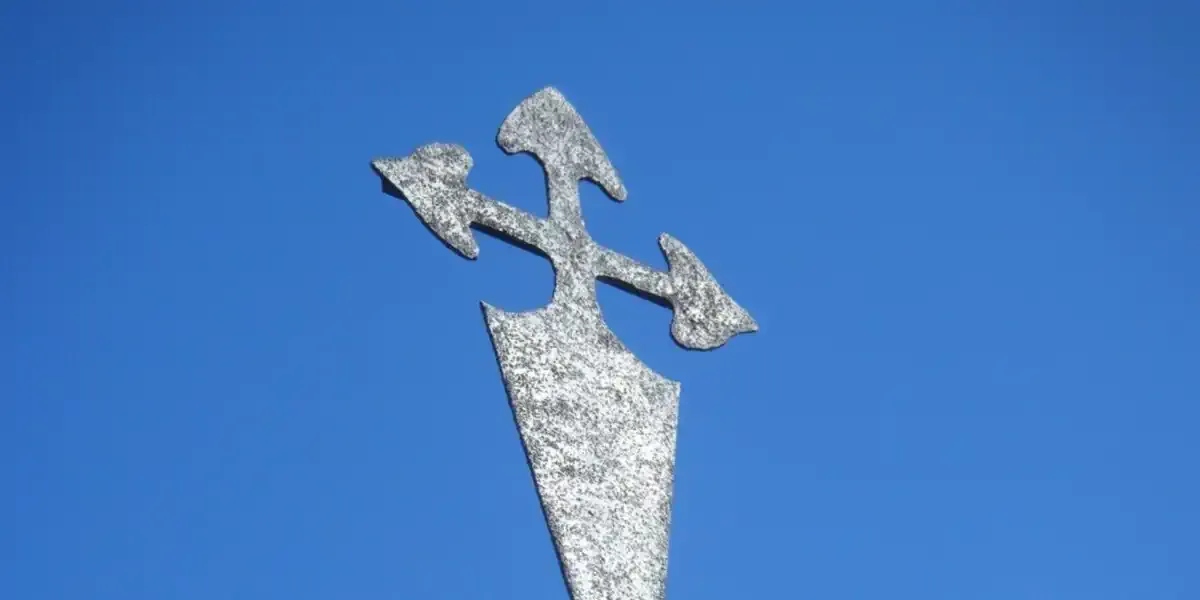
The Cross of Santiago, a classic symbol of the Camino de Santiago
Its historical origin is linked to the Order of the Knights of Santiago, defenders of the pilgrims against Saracens and other dangers. The aforementioned red color could also represent the blood of these knights shed in defense of Christians.
Nowadays, we can find it decorating the delicious Santiago cakes, a sweet from Galician cuisine that you must try on your pilgrimage.
The yellow arrow
Perhaps, the most recognizable symbol of the Camino de Santiago, and the most useful, as it is the main signaling element on the Jacobean routes. These iconic yellow arrows are visible on walls, trees, stones, and floors, generally at crossroads, to inform of the direction to take.
This orientation system was implemented in the early 1980s by the initiative of Elías Valiña Sampedro, parish priest of O Cebreiro. The signaling project was born out of the need to facilitate the transit of pilgrims along the French Way. However, as early as 1974, the section between Zubiri and Larrasoaña was marked by a historic pilgrim, a collaborator of Don Elías along with other volunteers.
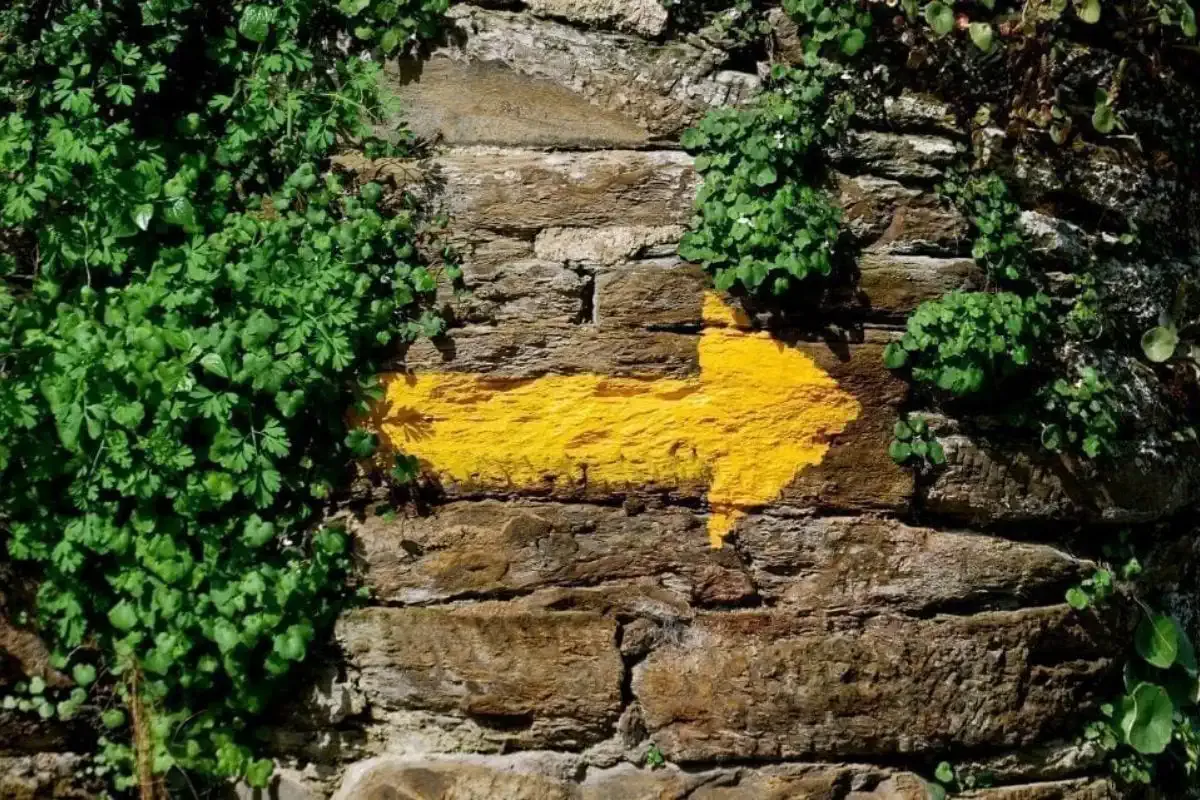
The yellow arrow is essential on the Camino
The milestones
The milestones, markers, or stone posts are another classic element of the Camino de Santiago, as well as an unmistakable sign of being on it. Born between 1986 and 1987, the first ones were placed in the province of Lugo along the French Way. In 1989, the same was done in the province of A Coruña, thus marking the entire Galician French Way with milestones.
Since the year 2015, the Galician government has projected to replace the old markers and install new ones on all official routes in Galicia. Now standardized, these are trapezoidal granite milestones that indicate the direction to Santiago with an engraved yellow arrow. They also include a tile with the scallop shell, as well as the kilometric point of the remaining distance to Santiago de Compostela.
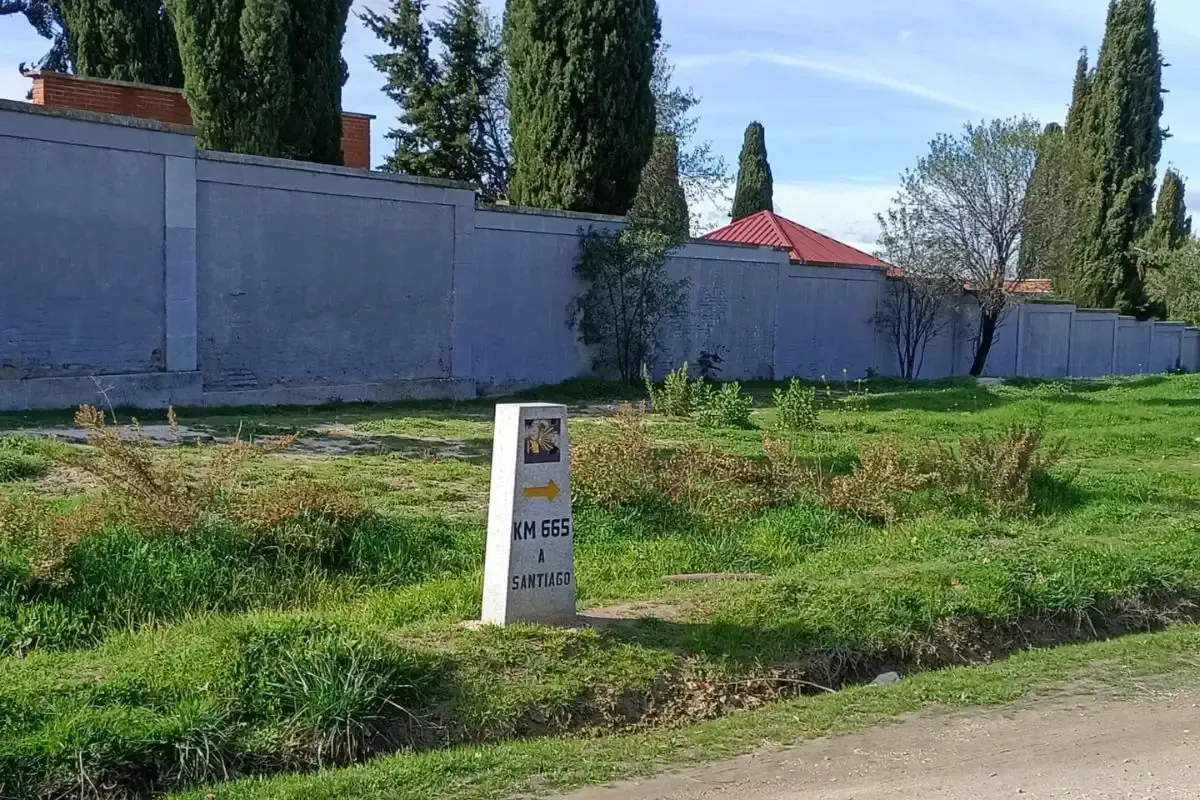
A milestone on the Camino de Santiago de Madrid
The Staff
Popularly known as a walking stick, it is one of the typical accessories for any pilgrim, although not everyone uses it. This extra support will be very useful to reduce the impact on ankles and knees, especially on descents. However, it will also serve as a support point on ascents and rugged areas.
In the past, it was also used to hang tools, pick fruit from trees, and protect oneself from wild animals that could be encountered on the Camino. Gradually, this traditional staff has been replaced by popular trekking poles. However, if you are a pilgrim in the old-fashioned way and a romantic, this is undoubtedly your best option.
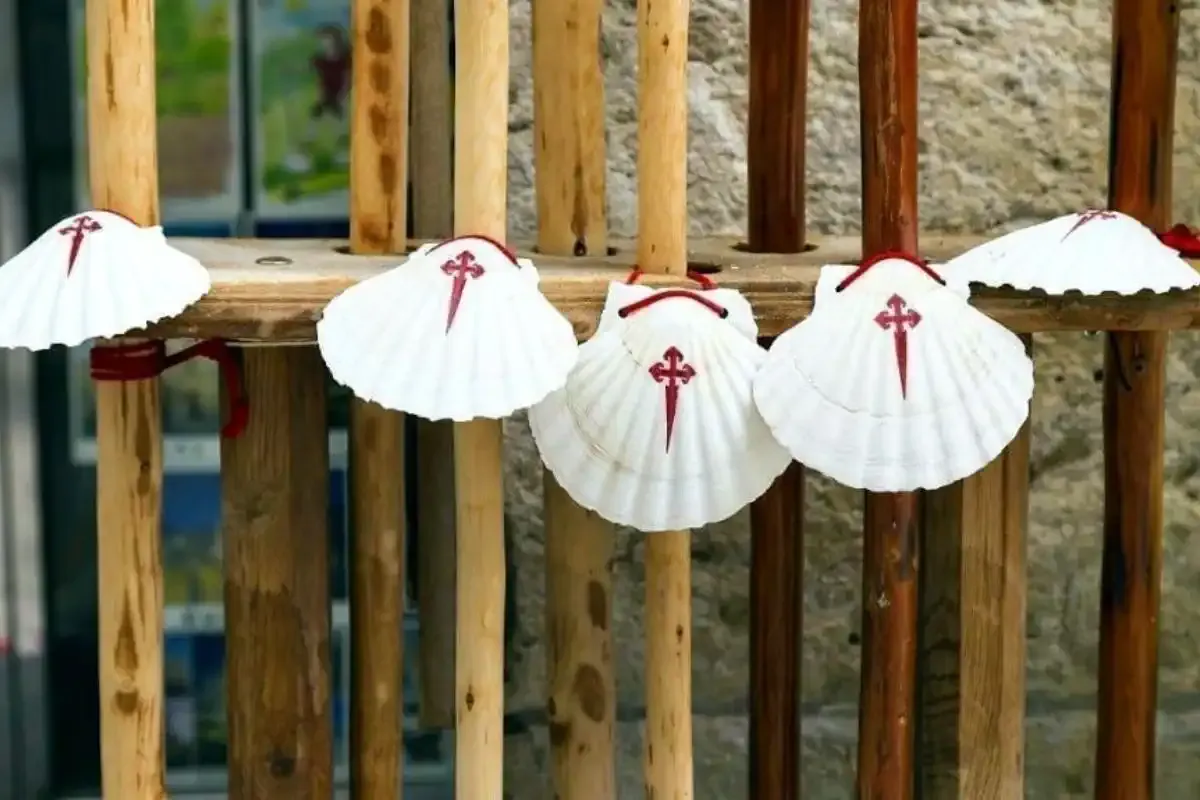
The staff is a help for the pilgrim
The Gourd
The gourd emerged, just like the staff, as a method to facilitate the life of pilgrims. In the past, it was used as a practical and economical way to transport liquids and keep them cool. Nowadays, it lacks practical value, but it carries a strong symbolic weight. It is common to see pilgrims adding this accessory to their outfit or still hanging it from the staff as in the past.
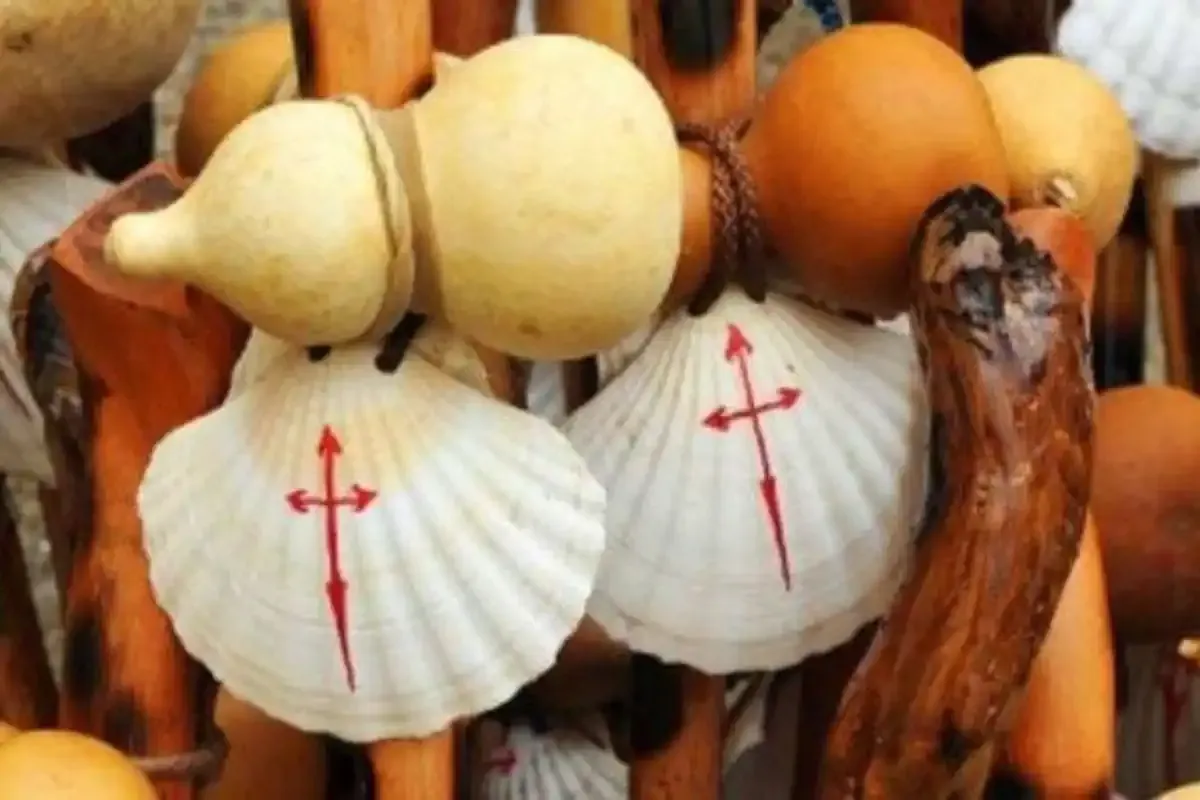
The gourd is a symbol that was once very useful for pilgrims
The Pilgrim Passport and the Compostela
The Pilgrim Passport, also known as the pilgrim's passport, is the essential document that every traveler must carry. It is a personal booklet for each pilgrim that has spaces for stamps throughout the Way.
This document serves to certify the distance traveled and at the same time allows obtaining the Compostela upon arrival in Santiago, as a recognition of the completed Way. To obtain it, one must cover at least 100 km if walking on foot, or 200 km if choosing to do the Camino by bicycle.
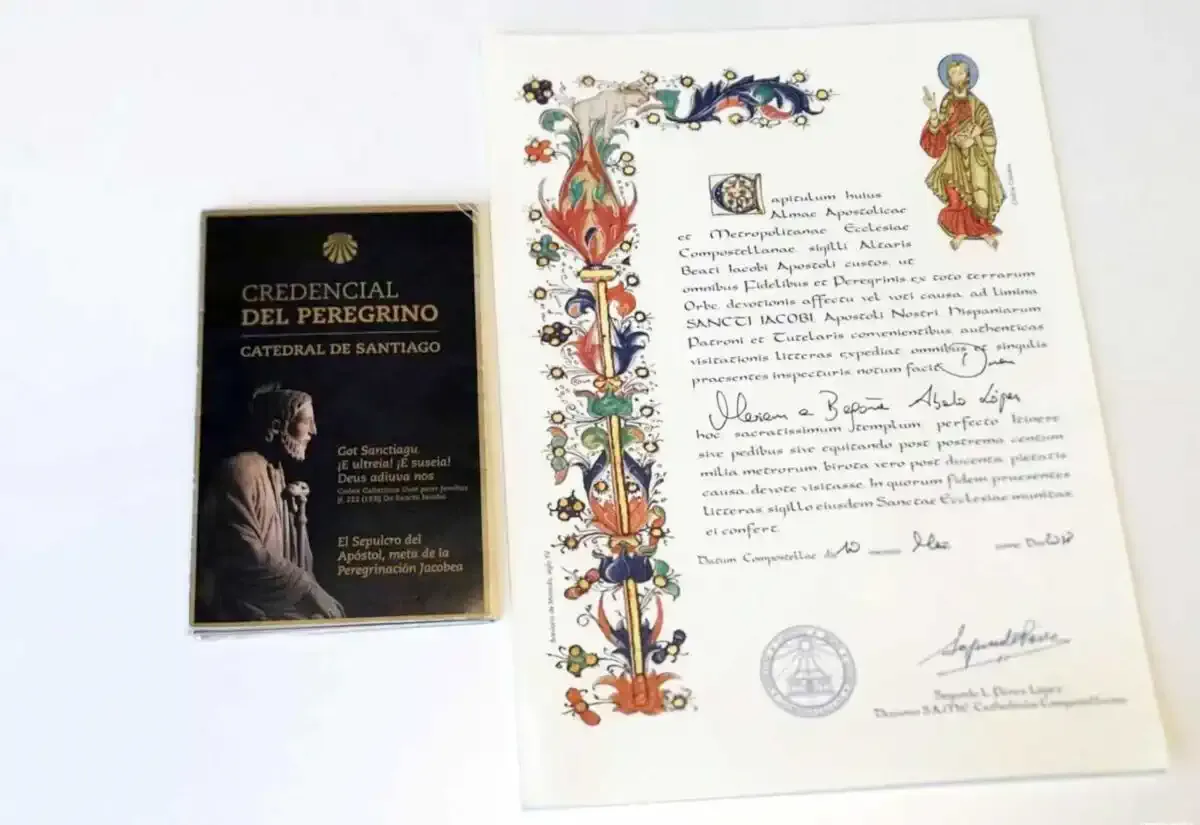
A Pilgrim Passport and its corresponding Compostela
The Botafumeiro
Finally, upon arriving in Santiago, every pilgrim wishes to see this enormous censer fly through the transept of the Cathedral. Its existence has been known since the 14th century, and its use is justified for two reasons:
- functional: to enhance the atmosphere of the Cathedral, as in the past, pilgrims slept inside it, and the smell was sometimes unbearable;
- religious: just as the smoke rises high, so too should the prayers of the faithful.
The Botafumeiro operates free of charge on specific days of the year, when liturgical celebrations take place in the apostolic temple. However, pilgrims can request it with a prior donation to the Cathedral.
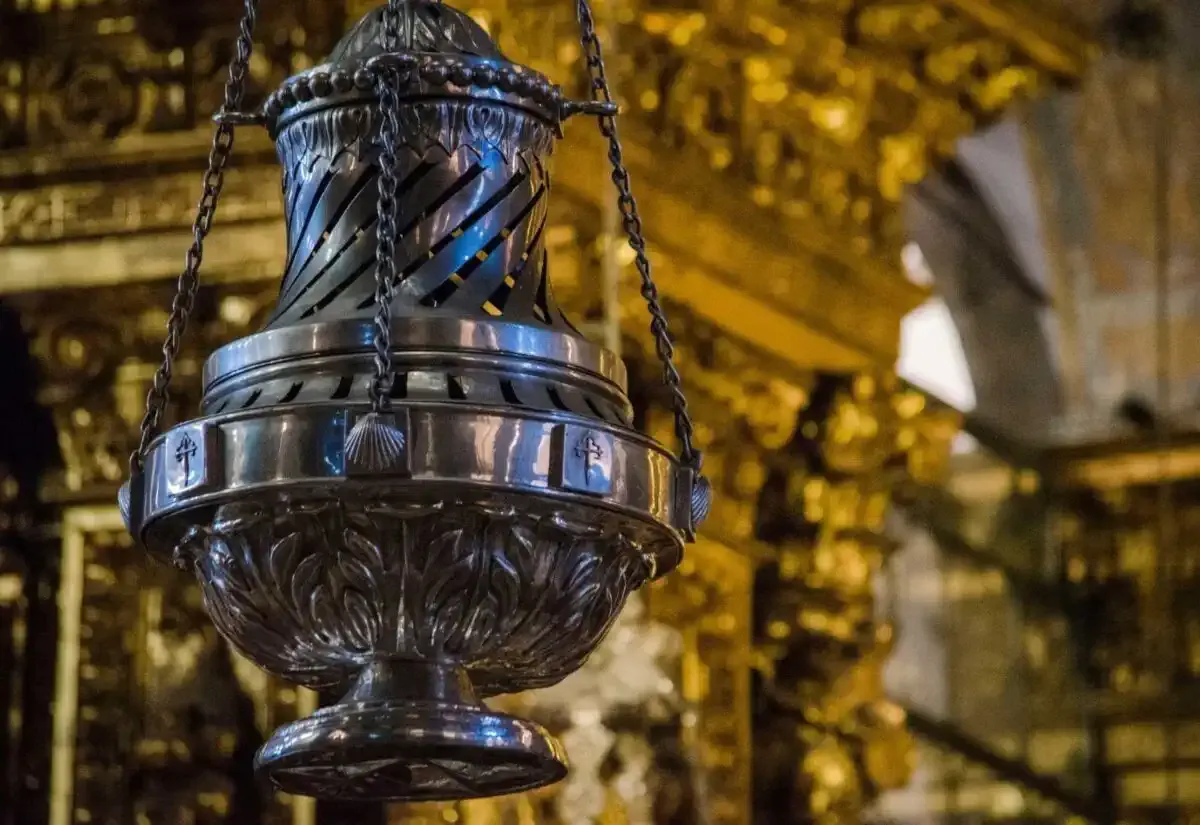
The Botafumeiro, an icon at the end of the Way
Symbols of the Way: tradition, utility, and souvenirs
Some additional elements could be cited as symbols of the Way, as they represent the pilgrimage and its protagonists, the pilgrims: backpack, hat, etc… Many have origins in tradition and religiosity, and they also are of great utility. And of course, in many cases, many become souvenirs and memories of the pilgrimage, whether real or small-scale reproductions.
In any city along the Way, and especially in Santiago itself, you can obtain some of them, whether to decorate, use, or gift. So now you know, now that you are much more familiar with the Jacobean universe and its symbols, it is time to embark on your adventure on the Camino de Santiago.
Comments (1)
VIVIANA ROLON ROSADO
Leave a comment