


Faculty-Led Camino Programs
Transform scholarship into journey—one step, one story, one Camino at a time.
The Camino is ready to teach. Are you ready to lead the way?
I want the guide!
Lead, Learn, and Walk: Faculty-Led Study Abroad on the Camino de Santiago
Custom Programs for U.S. Colleges & Universities
Teach beyond the classroom. Inspire beyond the syllabus.
Viajes Camino de Santiago partners with university faculty to deliver transformative international experiences that combine academic depth with cultural immersion—set along one of the world’s most iconic walking routes.
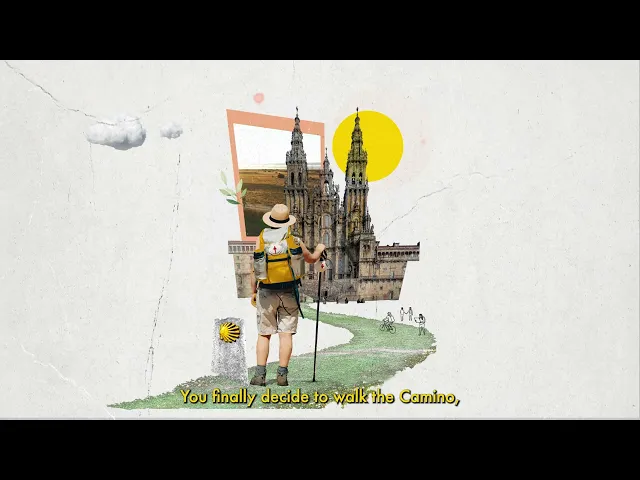

Why the Camino is a Powerful Learning Environment
The Camino de Santiago is more than a pilgrimage—it’s a dynamic platform for interdisciplinary, experiential education. As students walk ancient paths and engage with real-world challenges, their learning becomes active, personal, and lasting.
Enhanced cognitive focus. Daily walking and digital disconnection improve mental clarity, concentration, and emotional wellbeing—ideal conditions for reflection and academic growth.
Applied, place-based learning. The Camino naturally supports coursework in history, religion, sustainability, health sciences, Spanish language, and beyond.
Workforce-ready skills. Students develop adaptability, intercultural fluency, self-leadership and collaborative problem-solving—critical assets in a global job market.
Holistic development. The journey encourages self-awareness, resilience, and empathy, all within a safe and structured group setting.
What We Provide—Comprehensive, Customizable Support
Turnkey Camino logistics. Lodging, route mapping, luggage transfers, airport pickup, travel insurance, on-call assistance—we handle it all.
Comfort for faculty leaders. Enjoy thoughtfully selected accommodations with private rooms and flexible support to prepare each teaching day.
Dedicated program coordinator. A single point of contact to align academic, safety and travel logistics from start to finish.
Custom enhancements Add intensive Spanish courses, Ireland/UK Camino mileage, extra field visits or guest lectures tailored to your discipline.


Outcomes for Your Campus Community
For Faculty
Effortless program management with full logistical support
A rewarding teaching experience that extends learning outside the classroom
Increased study abroad participation and institutional prestige
For Students
Deep experiential learning that ties academic content to personal challenge
Global competencies: communication, cultural agility, and ethical decision-making
Stronger personal and academic confidence in preparation for careers and graduate study

Program Snapshot — Camino Inglés (Sample Itinerary)
| Academic Framework | Field Component | Cultural Immersion |
|---|---|---|
|
|
|
|
|
|
|
|
|
Why Choose Viajes Camino de Santiago?
Proven experience. Over a decade organizing meaningful Caminos for groups of all ages—with consistent 5-star feedback.
Academic alignment. We understand the needs of faculty-led programs: credit structures, learning outcomes, risk management, and student engagement.
Ethical travel. We partner with locally owned hostels, inns and guides—supporting sustainable tourism in Galicia.
Reliable support. Licensed Spanish travel agency (XG-942) with U.S. contact, clear documentation, and responsive coordination before, during and after your program.


Ready to Design Your Camino?
Let's create a custom faculty-led experience that inspires your students and meets your academic goals.
- Contact: Michelle Yalch, MA, Business Development Manager
- Email: michelleyalch@viajescaminodesantiago.com
- U.S. tel: +1 323 283 8593

"The Camino is ready to teach. Are you ready to lead the way?"
Our Most Popular Travels
-
 7 days / 6 nights
 -
 8 days / 7 nights
We love the Camino de Santiago — a life-changing experience.
We believe the benefits of the Camino de Santiago are truly extraordinary — it’s a travel experience that goes far beyond just walking. It’s a chance to reconnect with your spirituality, enjoy nature, art, and local cuisine, and above all, meet incredible people who make this journey truly one of a kind.
All the routes of the Camino de Santiago
-

The French Way
124 Stages 768 KmsFrom Saint-Jean-Pied-de-Port to Santiago de Compostela. Follow the most recommended route of the Camino.
view route -

The Portuguese Way
45 Stages 620 KmsFrom Lisbon to Santiago de Compostela. Enjoy a Camino through the basins of the Tagus, Douro, and Miño rivers.
view route -

The Portuguese Way along the coast
39 Stages 194 KmsFrom Porto to Santiago de Compostela. The Atlantic Ocean will guide your steps along the Portuguese and Galician coastline.
view route -

Portuguese Way: spiritual variant
7 Stages 81 KmsFrom Pontevedra to Padrón. Relive the final stretch of the Apostle Saint James’s posthumous journey.
view route -

Route to Finisterre and Muxía
19 Stages 120 KmsFrom Santiago de Compostela to Muxía. A mystical and spiritual journey to the ends of the Earth.
view route -

Northern Way
58 Stages 820 KmsFrom Irún to Santiago de Compostela. An unforgettable experience with breathtaking landscapes.
view route -

The Primitive Way
30 Stages 268 KmsFrom Oviedo to Santiago de Compostela. It follows the first Camino de Santiago, tracing the footsteps of Alfonso II.
view route -

The English Way
13 Stages 113 KmsFrom Ferrol to Santiago de Compostela. Immerse yourself in the naval and historical heritage of a truly unique Camino.
view route -

The Sanabrian Way
15 Stages 265 KmsFrom Granja de Moreruela to Santiago de Compostela. Cross the region of Sanabria and the mountains of Ourense.
view route -

The Winter Way
0 Stages 120 KmsFrom Ponferrada to Santiago de Compostela., through the regions of Valdeorras and Ribeira Sacra.
view route -

Father Sarmiento Way
9 Stages 142 KmsThe Father Sarmiento Way links Pontevedra to Santiago de Compostela, offering a scenic journey through beautiful landscapes.
view route -

Way of the Lighthouses
9 Stages 200 KmsFrom Malpica to Finisterre. A 200-kilometre journey along the coast and through the wildest nature.
view route

Frequently Asked Questions about Faculty-Led Camino Programs
-
Are there hostels with private rooms?
The hostels on the Camino de Santiago, as such, usually do not offer private rooms, they are always shared rooms with other pilgrims.
However, there are some hostels that also function as inns or guesthouses and, in that case, they can offer both shared dormitories and private rooms.
-
Can I cook in the hostels of the Camino de Santiago?
Yes, in the hostels of the Camino de Santiago you can cook. Both public and private hostels have kitchens equipped with basic utensils, which allows you to prepare your own meals.
However, you must be aware that the kitchens are shared spaces, so it is important to respect the time and space of other pilgrims.
-
What are the opening and closing hours of the shelters?
The schedule of the hostels on the Camino de Santiago usually varies, but most open around 1:00 PM and close between 9:00 PM and 10:00 PM. After closing, entry and exit are not allowed to ensure the rest of all pilgrims.
These hours may change slightly between public and private hostels, so it is advisable to check the specific hours of each hostel before arriving.
-
Are there accessible hostels for people with reduced mobility?
Yes, on the Camino de Santiago there are accessible hostels for people with reduced mobility. Accessible hostels usually have access ramps as well as adapted bathrooms and rooms for people with mobility difficulties.
It is advisable to get information in advance about the adapted hostels at each stage, as accessibility varies depending on the route and location.
-
Are the hostels open all year round?
A priori, all public hostels on the Camino de Santiago remain open all year round, especially on the main routes. However, some private hostels close in the low season, such as in autumn and winter, when the flow of pilgrims is lower.
It is important to check in advance if the hostel, whatever it may be, is operational, as availability may vary depending on the season and location.
-
What are the rooms like in the hostels of the Camino de Santiago?
The rooms in the hostels of the Camino de Santiago are shared and are usually equipped with bunk beds and personal lockers. Generally, there is no segregation by sex, so men and women share the same space. The bathrooms are also shared.
The capacity of these can vary from 8 to 20 or more beds per room.
-
What should I bring to stay in a hostel?
To stay in a hostel on the Camino de Santiago, it is advisable to bring, in addition to what is necessary for any trip:
- a lock to secure your belongings,
- a sleeping bag;
- flip-flops for the shower;
- a towel for the shower;
- earplugs and an eye mask, if you find it necessary;
- a power strip to charge multiple devices, if you find it necessary.
Additionally, keeping your backpack organized with your belongings in cloth bags will help you find what you need quickly and avoid making noise in common areas during the night or morning.
-
Can I stay more than one night in the same hostel?
In the public hostels of the Camino de Santiago, generally it is not allowed to stay more than one night, unless there is a justified reason such as illness or injury. This is because public hostels prioritize the rotation of pilgrims.
In private hostels, on the other hand, you can stay more than one night if you wish, as they operate on a reservation system and usually do not have the same restrictions.
-
¿Cuál es la diferencia entre albergues públicos y privados?
The difference between public and private hostels on the Camino de Santiago lies in their management and services:
- Public hostels are managed by public entities, do not allow reservations and are more economical, offering basic services.
- Private hostels are managed by individuals or companies, allow advance reservations and usually offer more amenities, such as bedding, Wi-Fi, and additional services, although at a higher cost.
-
What services do hostels offer on the Camino de Santiago?
The hostels on the Camino de Santiago offer the following basic services for pilgrims:
- Beds or bunks in shared rooms.
- Common bathrooms with showers and access to hot water.
- Equipped kitchens.
- Laundry service available in some cases.
- Common areas to rest or socialize.
- Blankets in certain hostels (although it is recommended to bring a sleeping bag).
In addition, private hostels usually offer more amenities, such as:
- Free Wi-Fi.
- Facilities for bedding.
- Possibility of advance reservations, unlike public hostels.


