


The Last 100 Kilometers/62 miles of the Camino de Santiago
22 April, 2025
Guide to the last 100 km of the Camino de Santiago, the minimum stretch required to obtain the Compostela. The article explains where to start according to the route, which stages it includes, and offers practical advice for planning this accessible and highly popular experience among pilgrims.

Have you ever wondered where the Camino de Santiago begins? In response to this question, you are likely thinking of Roncesvalles and the French Way, although there are more Jacobean routes with other starting points. Once you have decided which Camino to take, it is time to decide from where, and walking the last 100 kilometers of the Camino de Santiago is usually the winning option. Why? Because it is a stretch that can be completed in less than a week, either walking or by bike, arriving in Santiago. We can tell you that the last 100 kilometers of the routes to Santiago are within Galicia. With this option, pilgrims will traverse this magical region, with its landscapes, its people, and its exquisite gastronomy, and in addition, they will receive their Compostela.
The French Way from Sarria (115 km)
The quintessential route among all the Ways to Santiago, the French Way, which year after year breaks its own records. Crossing the provinces of Lugo and A Coruña, you will pass through Portomarín, Palas de Rei, Melide, Arzúa, and O Pedrouzo. A traditionally very busy route, as it gathers a large number of origins, both from Spain and Europe, and also the best equipped in services. The last 100 kilometers of the French Way from Sarria is the most comfortable and straightforward option, perfect for beginners and meeting new people.
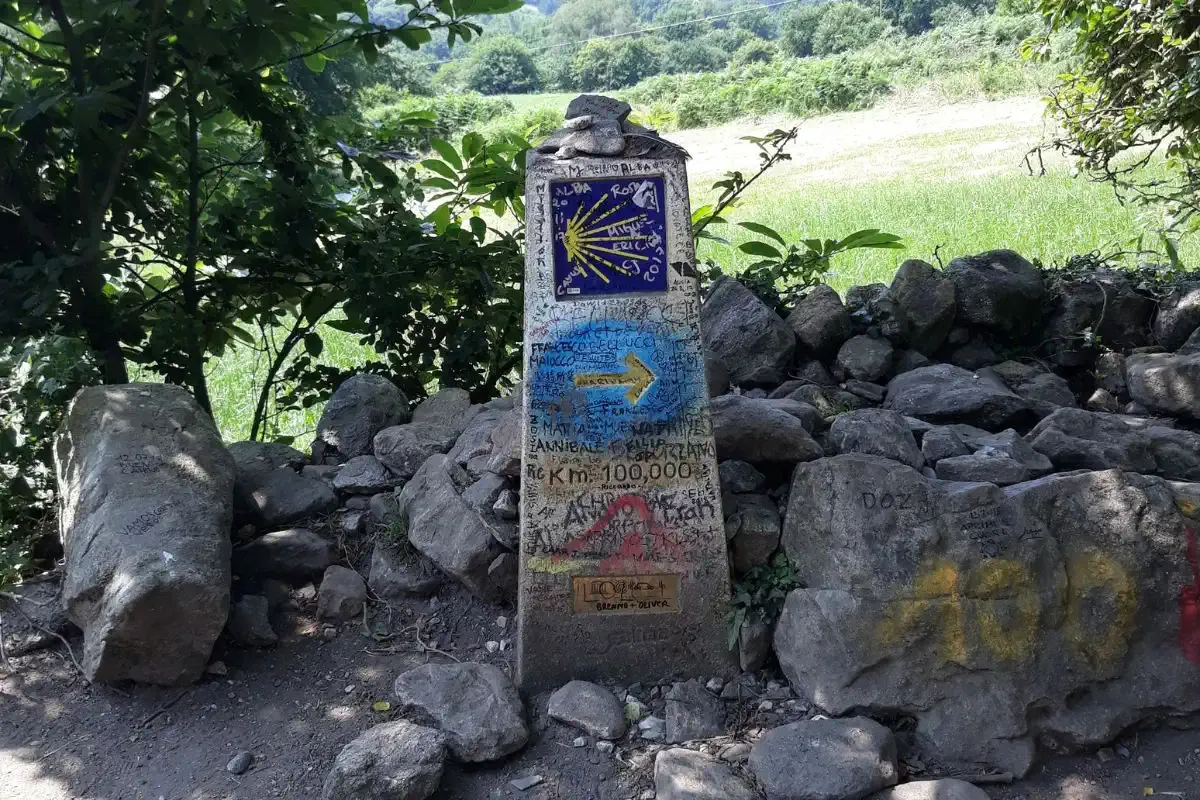
The classic milestone Km. 100,000 of the last 100 km of the French Way from Sarria
The Portuguese Way from Tui (120 km)
The Portuguese Way is the second most traveled route, and its name is due to its origin from the Portuguese country. In fact, the last 100 kilometers of the Portuguese Way from Tui begin at the border with Portugal, traversing the provinces of Pontevedra and A Coruña. It passes through the towns of O Porriño, Redondela, Arcade, Pontevedra, Caldas de Reis, and Padrón. A large part of its route follows the ancient Roman road XIX, which connected Bracara Augusta (Braga, Portugal) with Lucus Augusta (Lugo). With a combination of inland and coastal scenery at some points, in addition to the Compostela, you can obtain the Pedronía, a similar certificate issued in Padrón.
The Portuguese Way by the Coast from Vigo (100 km)
The Portuguese Way by the Coast is a growing route and is usually the third most traveled. The last 100 kilometers of the Portuguese Way by the Coast from Vigo traverse the provinces of Pontevedra and A Coruña. In Redondela, it joins the Portuguese Way coming from Tui, and it is a wonderful alternative to enjoy due to its proximity to the sea.
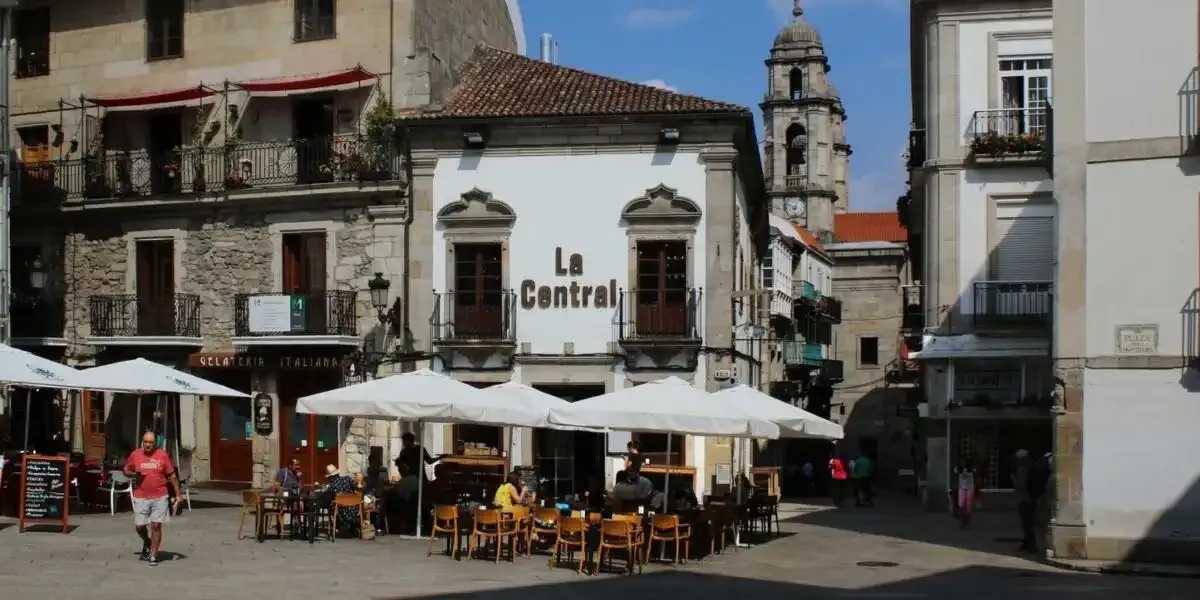
Historic center of Vigo, in the last 100 km of the Portuguese Way by the Coast
The English Way from Ferrol (113 km)
The English Way is the route that the English and people from northern Europe took to avoid the long and dangerous French route. These pilgrims embarked from the south of England and arrived at ports in northern Galicia, where they continued walking. You can start from A Coruña, with 73 km, or from Ferrol, with 113 km to Santiago. Passing through the towns of Neda, Pontedeume, Betanzos, Hospital de Bruma, and Sigüeiro, this Way combines the waters of the Rías Altas with rural landscapes. Interestingly, this route, which is experiencing moderate annual growth in pilgrims, runs entirely through a single province, A Coruña. In fact, if you walk the last 100 kilometers of the English Way from Ferrol, you are completing the full route.
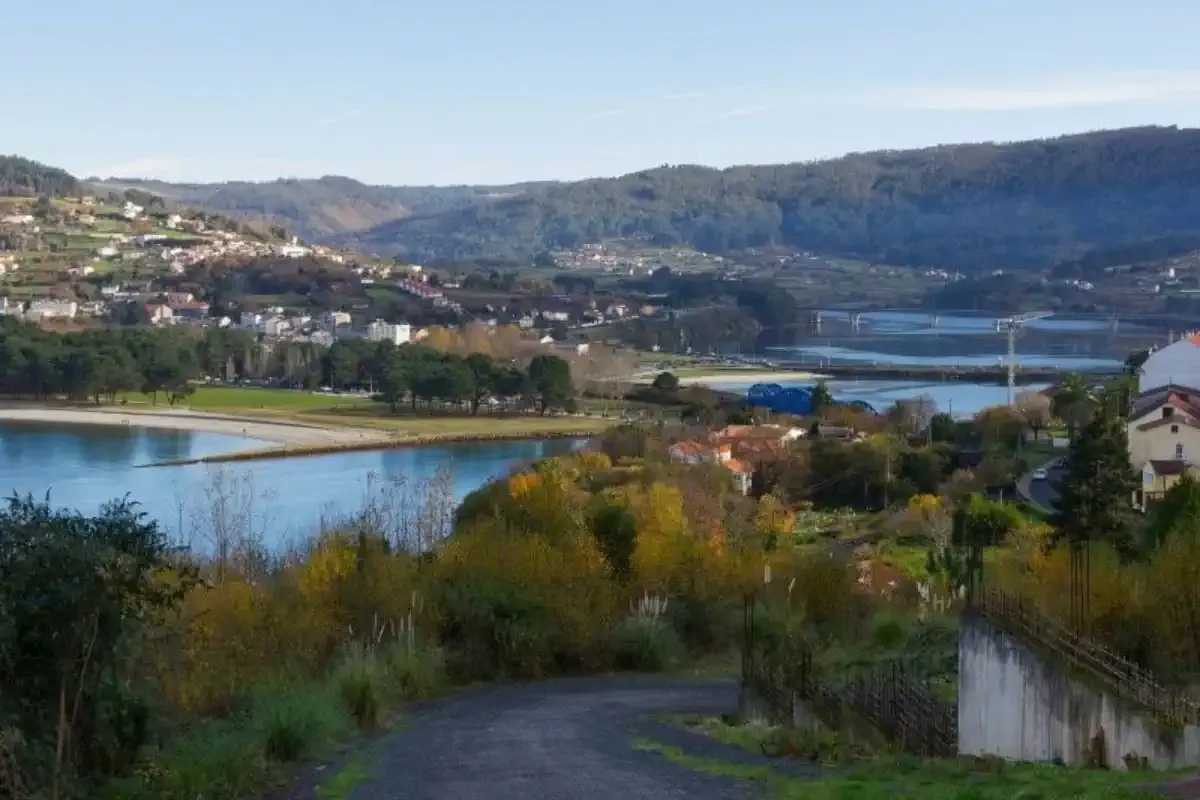
The beach of Cabanas, in the last 100 km of the English Way from Ferrol
The Northern Way from Vilalba (120 km)
The Northern Way runs along the entire Cantabrian coast and crosses, in Galicia, the provinces of Lugo and A Coruña. By walking the last 100 kilometers of the Northern Way from Vilalba, you will pass through Baamonde, Miraz, Sobrado dos Monxes, Arzúa, and Pedrouzo. Although at the beginning it traverses a rural environment without large cities, it features monuments of great value, such as the Monastery of Santa María de Sobrado dos Monxes. It is a little-traveled route but is experiencing moderate growth, although upon reaching Arzúa, it converges with the French Way and the number of pilgrims increases.
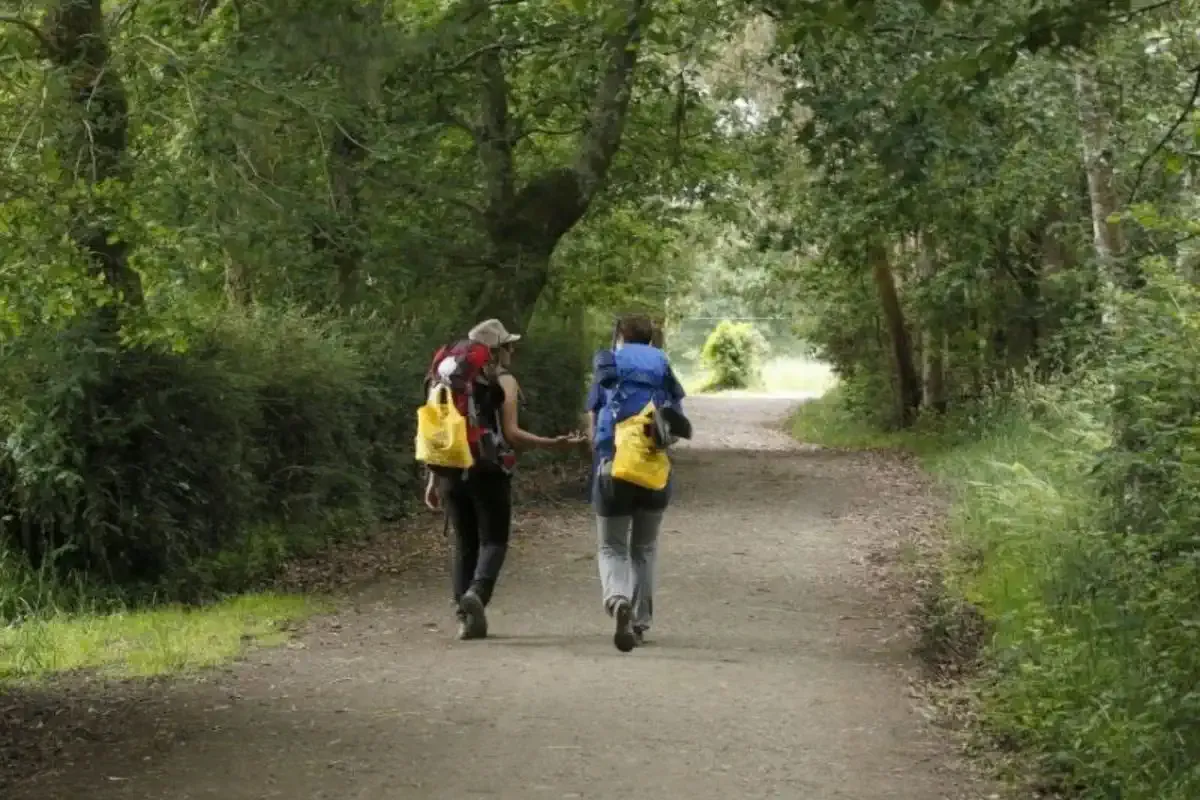
Female pilgrims in the last 100 km of the Northern Way from Vilalba
The Primitive Way from Lugo (102 km)
The Primitive Way is the first of the routes. The history of the Primitive Way recounts the first pilgrimage to Santiago, that of the Asturian king Alfonso II "the Chaste", to officially recognize the discovery of the Apostle's tomb. Little frequented but slowly growing, the last 100 kilometers of the Primitive Way from Lugo traverse the provinces of Lugo and A Coruña. You will pass through Ponte Ferreira, Melide, Arzúa, and O Pedrouzo, and as happens with the Northern Way, it converges with the French Way in Melide.
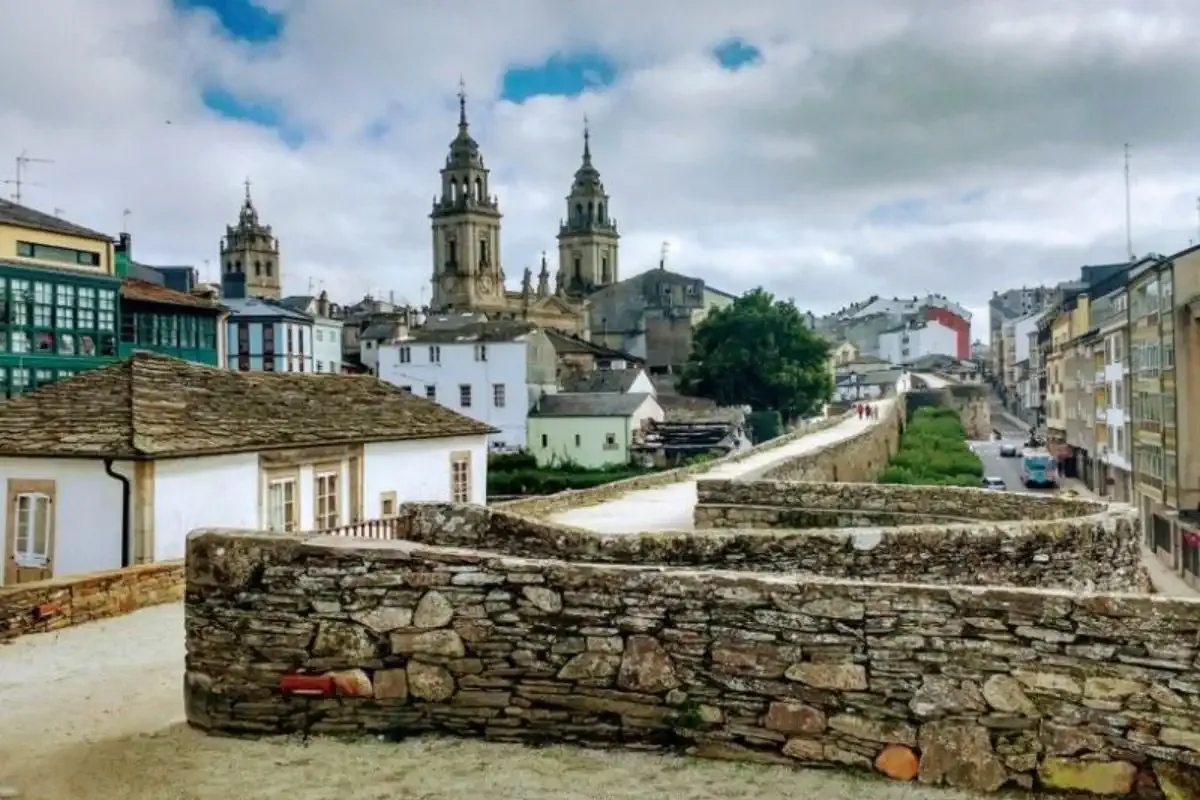
In the last 100 km of the Primitive Way, you can enjoy the Roman wall of Lugo
The Sanabrés Way from Ourense (110 km)
The Sanabrés Way is an alternative route to reach Santiago from the Silver Way, which also connects through Astorga and the French Way. The last 100 kilometers of the Sanabrés Way from Ourense, a little-traveled route, allows you to discover this beautiful thermal capital with a Roman past. Crossing the provinces of Ourense, Pontevedra, and A Coruña, it passes through Cea, Lalín, Bandeira, and Santa Cruz de Rivadulla.
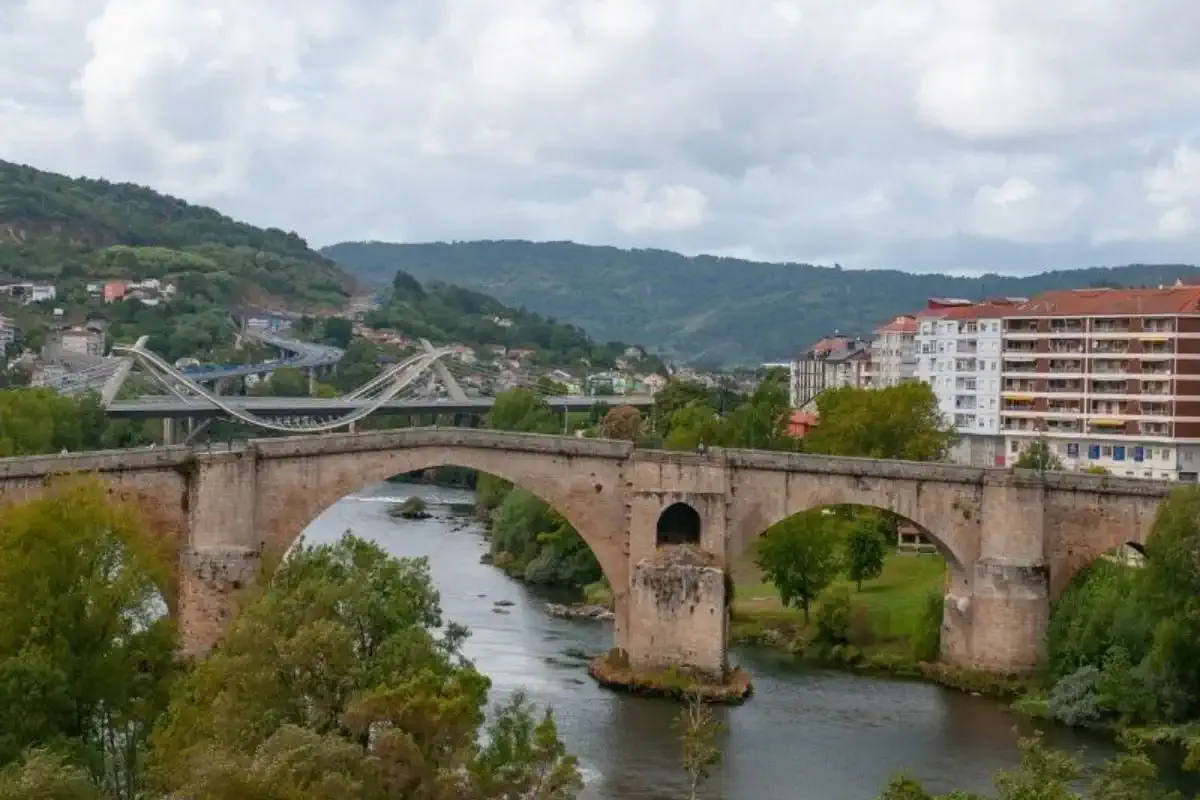
Roman bridge of Ourense, in the last 100 km of the Sanabrés Way
The Winter Way from Chantada (108 km)
The Winter Way is a little-traveled route that runs through the provinces of Ourense, Pontevedra, Lugo, and A Coruña. The last 100 kilometers of the Winter Way from Chantada cross Rodeiro, Lalín, and Ponte Ulla, an alternative to the French Way to avoid high mountains. On this route, you must not miss trying the famous cocido de Lalín to combat the cold winter, a delight of Galician cuisine.
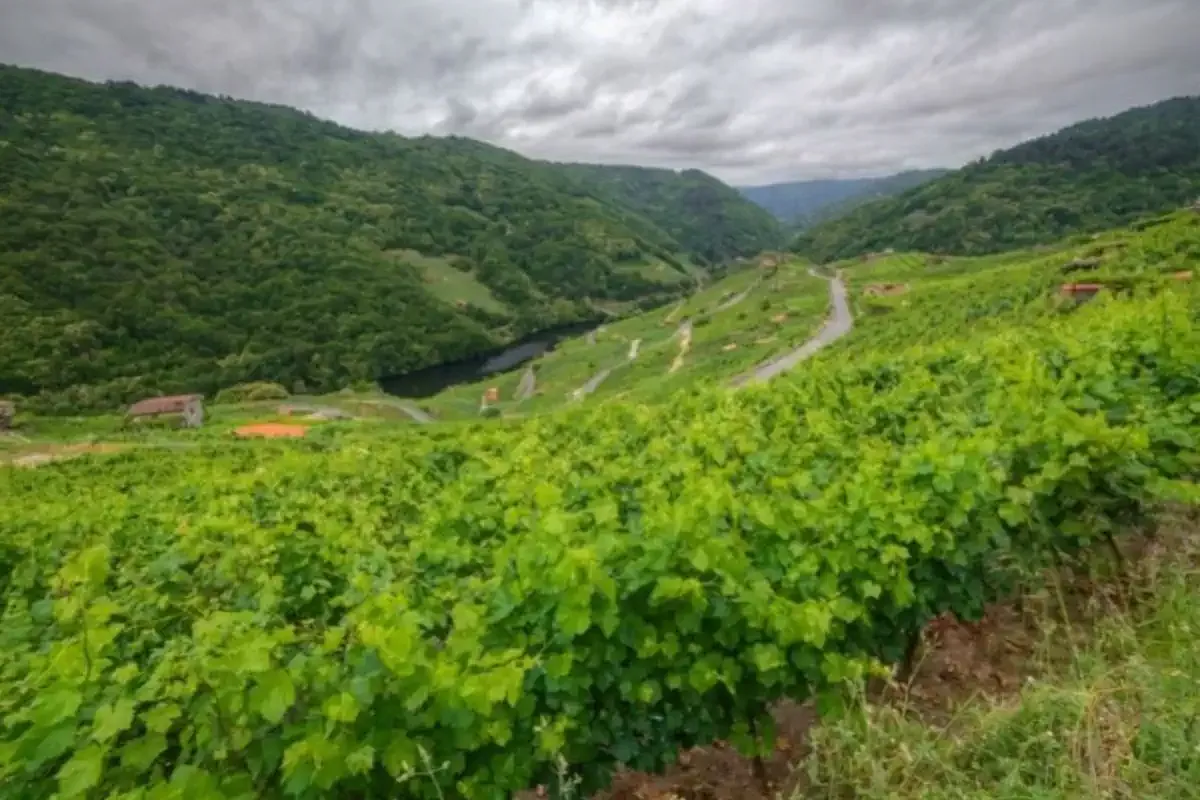
In the last 100 km of the Winter Way, there are some spectacular landscapes
Get your Compostela with us
And not only that! In addition to the Compostela, which you will obtain by completing any of these easy and beautiful routes, you will take home unforgettable memories from your pilgrimage experience. We can help you, whether you want to do the Camino alone or enjoy the company of new friends on a group organized Camino. However you choose to do it, we guarantee that walking the last 100 kilometers of the Camino de Santiago will be a transformative and unforgettable experience.
