


The shadow of the pilgrim in Santiago de Compostela: the mysterious legend of the Plaza de A Quintana
02 April, 2026
The shadow of the pilgrim in the Plaza de A Quintana is an iconic figure of Santiago, created by a play of light. Around it, multiple legends have emerged, from wandering souls to tragic stories, which reinforce the mystery and symbolism of the Way.

Every night, when darkness falls over Santiago de Compostela, a silent figure is drawn against one of the walls of the cathedral. With a wide-brimmed hat, a staff, a gourd, and a cloak, the shadow of the pilgrim has become one of the most enigmatic and photographed images of the city. It is not surprising that, with the extensive history of Compostela and the multitude of people who have walked its streets, the city of the apostle is a never-ending source of legends, tales, and myths.
Although this ghost is nothing more than the result of a coincidence that causes the shadow of a granite pillar located in the Plaza de A Quintana to project its figure when night falls and the lights are turned on, it is true that numerous stories have emerged around it. Many of them delve into a magical and supernatural territory that goes far beyond this natural and logical explanation.
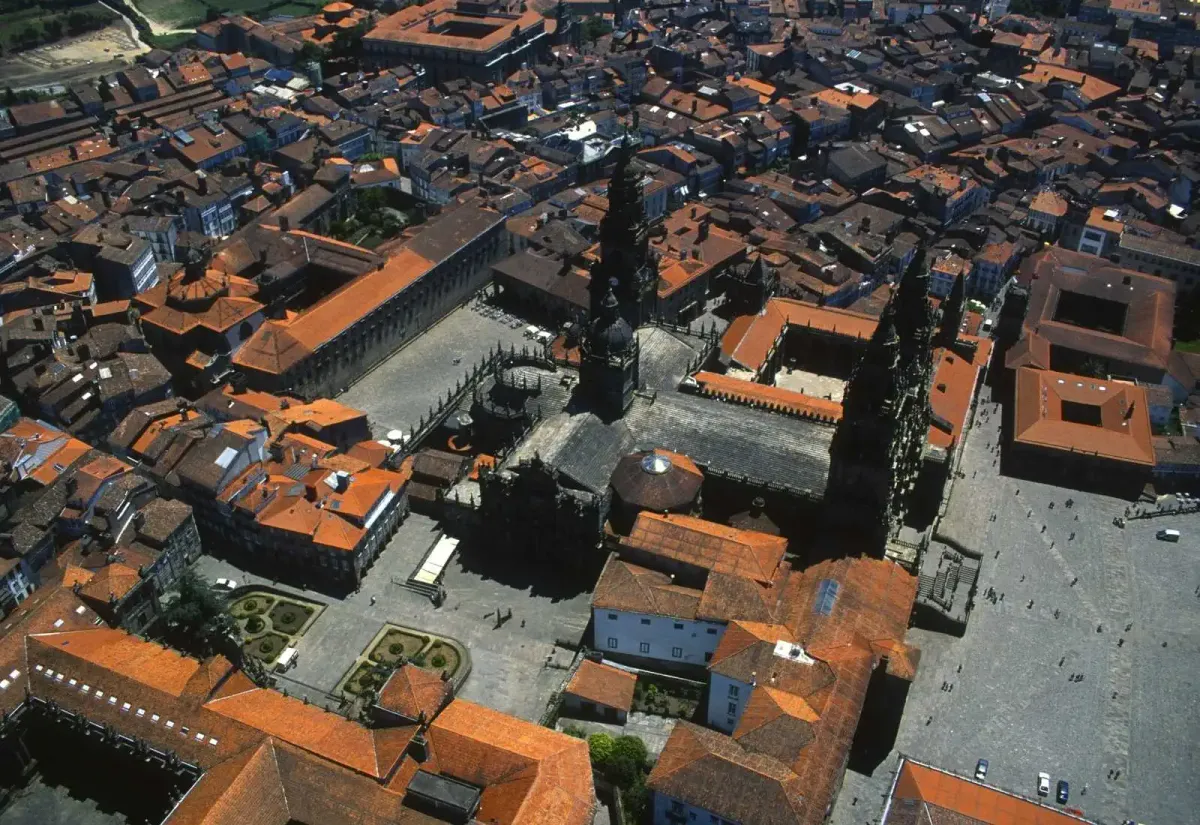
Aerial view of the cathedral of Santiago and the Plaza de A Quintana
Different versions of the legend of the Plaza de A Quintana
There are not just one or two: several versions about the origin of this mysterious vision have reached us. Some have been part of the popular imagination of Compostela for generations; others are stories that have gained diffusion over time.
Quintana de Vivos and Quintana de Mortos
The first of them is related to the use that the Plaza de A Quintana had in ancient times. This esplanade next to the cathedral is divided into two levels, separated by a staircase that splits its surface in two. The upper area is called Quintana de Vivos. The lower area, on the other hand, is known as Quintana de Mortos (of the dead).
And it is that the old public cemetery was located in the lower part. For this reason, many say that the shadow of the pilgrim is the manifestation of the wandering soul of one of those who rested there. Another popular interpretation links this appearance to darker times in religious history, claiming that the shadow would belong to the soul of some unfortunate person executed after an inquisitorial trial.
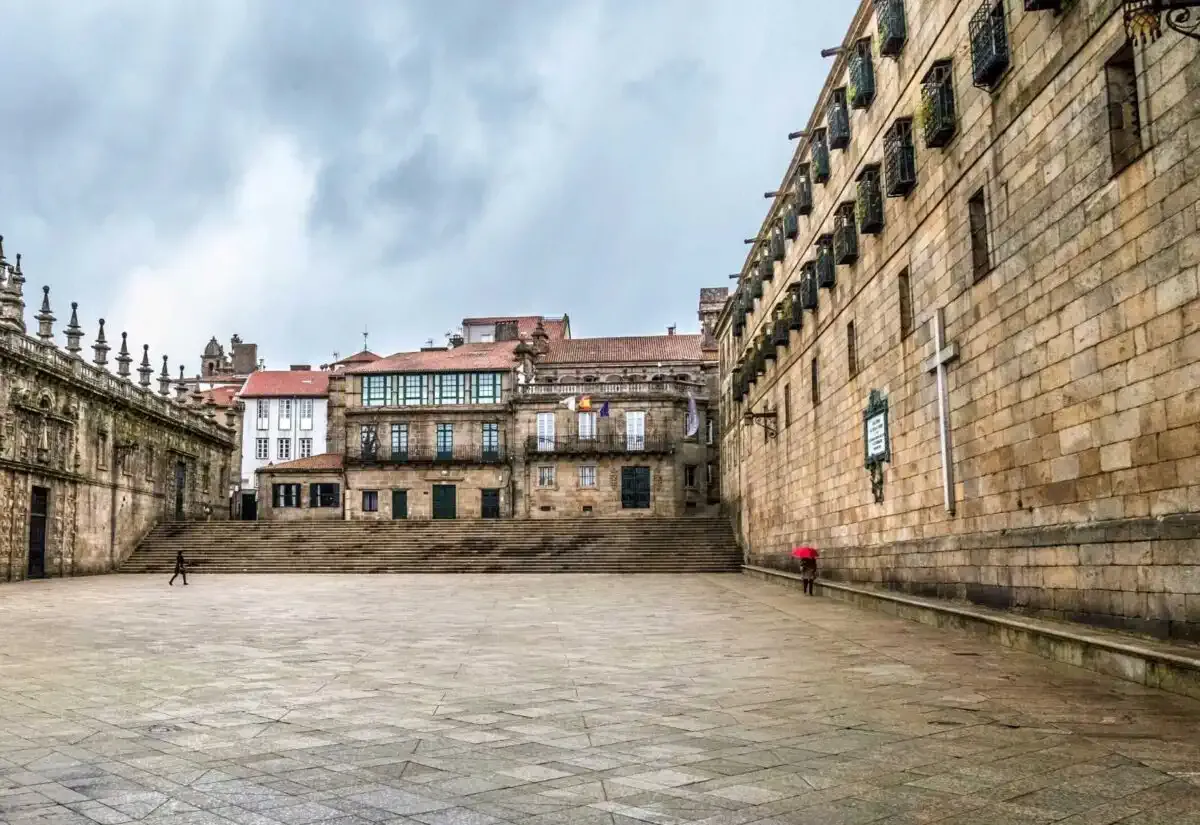
The Plaza de A Quintana in Santiago de Compostela
Leonard du Revenant
Another of the stories associated with this shadow is that of Leonard du Revenant, son of a wealthy nobleman from Paris. According to this version, Leonard murders his father in the hope of inheriting his fortune. After being judged by the Duke of Burgundy, instead of being executed, he is ordered to make the Camino de Santiagoas penance.
During his journey along the French Way, he falls in love with a young innkeeper who was already engaged. Blinded by obsession, he kills the fiancé, kidnaps the young woman, rapes her, and also ends her life.
Fearful of being sentenced to death, Leonard poses as a Franciscan monk to go unnoticed. He arrives in Santiago, but all the inns are full, so he decides to sleep on the street, next to the Cathedral.
That night, in his dreams, his father appears to him and tells him that he has forgiven the parricide, but that he will still have to answer for the other lives he took. To achieve absolution, Leonard will have to wait in Compostela for the souls of his victims to grant him their forgiveness.
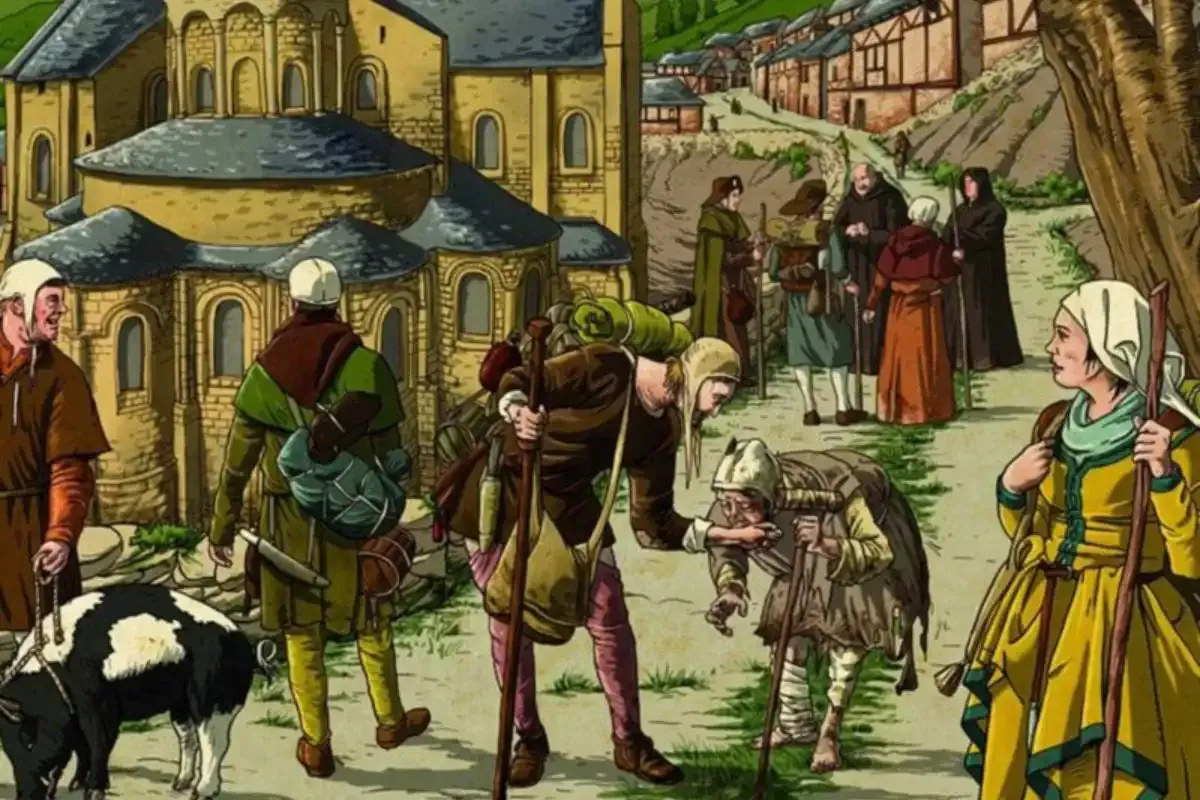
The Camino de Santiago has been the setting for many legends throughout its history
Frightened, Leonard tries to attack his father in the dream, but his father kills him first. Since then, according to this lesser-known and more recently spread version, Leonard appears night after night in the Plaza de A Quintana, waiting for the souls of the young people to forgive him in order to obtain definitive absolution.
The priest and the nun
Finally, the version that most will hear when passing through the plaza is that of the priest and the nun. Legend has it that a cleric from the cathedral and a nun from a convent in San Paio de Antealtares, on the other side of the plaza, were having a secret romance. The priest, tired of hiding his love, proposed to his beloved to flee from Santiago, away from censorious gazes.
So he arranged to meet her one night in the plaza dressed as a pilgrim to avoid drawing attention. It is said that he waited for her for hours, but she never appeared. The shadow, in this case, would represent the disguised priest, who never resigned himself to losing his beloved and returns every night to wait for her.
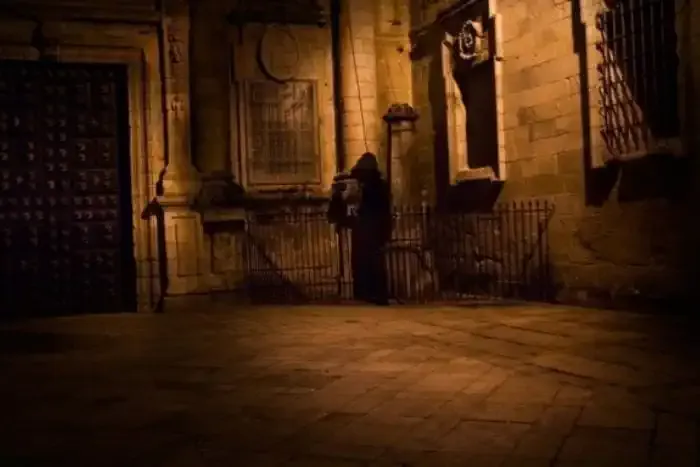
The famous shadow of the pilgrim
In reality, the shadow of the pilgrim in the Plaza de A Quintana is just one of the numerous legends of the Camino de Santiago and of the city of Compostela itself. In fact, Santiago is full of corners laden with symbolism, history, and mystery, as you can also discover in this article about hidden secrets of Santiago de Compostela or in this summary about what to see in Santiago.
If you visit the city at dusk, you can approach the Plaza de A Quintana and contemplate this silhouette against the facade of the cathedral, one of those images that turn a simple stop in Santiago into an unforgettable memory.
It is said that the shadow symbolically accompanies the pilgrim throughout the Camino, although it can only be seen on the facade of the cathedral when night falls. Whatever story one prefers to believe, the truth is that this figure has undoubtedly become an icon of the city and one of its most popular images.
If you are encouraged to walk the Camino de Santiago, you will not only experience a unique adventure, but you will also immerse yourself in stories as fascinating as that of the shadow of the pilgrim in the Plaza de A Quintana. Every step will bring you closer to Santiago, where history, emotion, and legend intertwine in every stone. Dare to make the Camino de Santiago and discover an experience full of history, mystery, and redemption!