


The Lebaniego Way
05 June, 2026
Discover the Lebaniego Way, a historical route that connects the Camino de Santiago with the monastery of Santo Toribio de Liébana. This article explains its course, stages, and cultural and natural appeal, helping you to plan a unique experience between sea and mountain.

Those of us who are passionate about the Camino de Santiago and about accumulating Jacobean routes in our boots know that the pilgrim always finds something new that surprises them. For example, who would have told you that in Cantabria there is a Jacobean route of its own, independent of the Northern Way? And what if I told you that it even has its own holy year? Indeed, dear pilgrims, in this post we want to introduce you to one of the most magical and hidden paths of all: the Lebaniego Way. Continue reading attentively, we assure you that it is worth discovering more about this unique itinerary.
History of the Lebaniego Way
Perhaps more than what the history of the Lebaniego Way is, we should ask ourselves: why do people pilgrimage to Liébana? The reason for the pilgrimage to this place lies in its main monument, the monastery of Santo Toribio de Liébana, which stands as one of the four holy places of Christianity, along with Jerusalem, Rome, and Santiago de Compostela. What makes this place exceptional is that it houses the largest known relic of the Lignum Crucis (wood of the cross, in Latin), that is, the largest fragment of wood known to be from the cross of Christ, specifically the piece belongs to the left arm of the cross.
And now you are probably wondering how this relic ended up in the monastery of Liébana. Well, history says that Saint Toribio was responsible for protecting the relics of Jesus Christ in Jerusalem. However, upon his return to the Iberian Peninsula, this saint moved them to Astorga and later, due to the Muslim invasion, the Christians took them to Liébana to protect them from possible attacks.
Upon learning of the existence of this relic in the monastery of Santo Toribio, the faithful began to pilgrimage to it, forming what we now know as the Lebaniego Way.
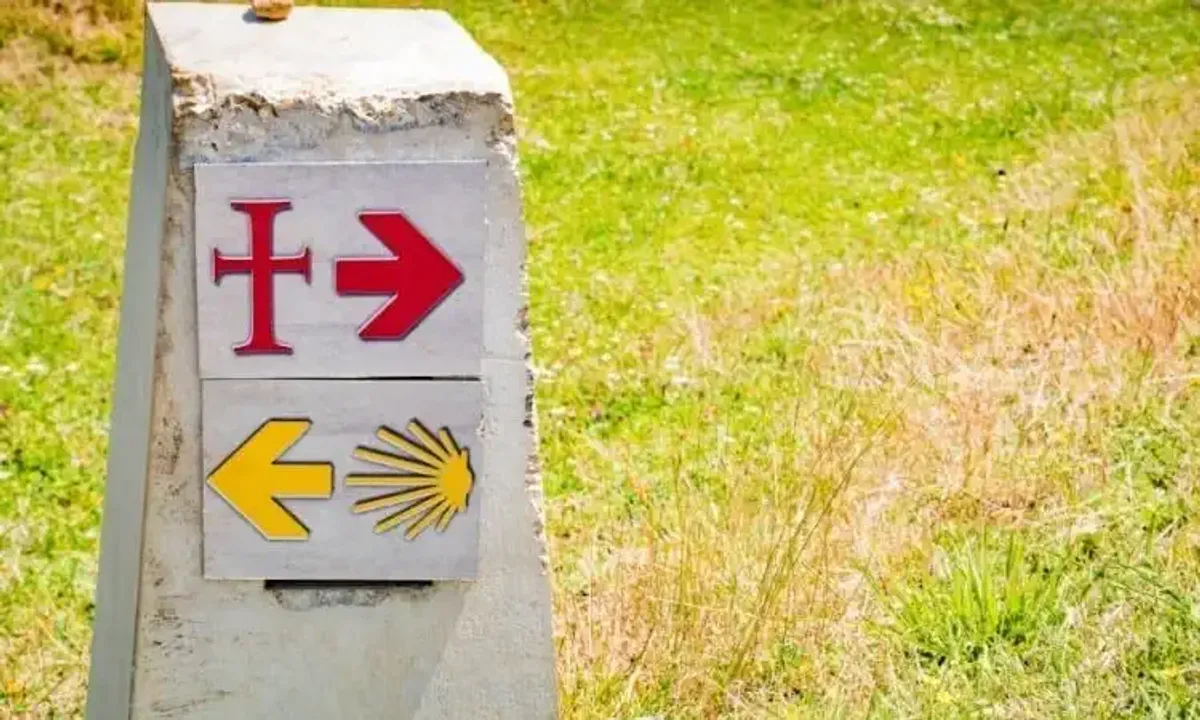 Milestone of the Lebaniego Way
The Holy Year of Lebaniego
This is undoubtedly one of the most peculiar and interesting aspects of this route: the Lebaniego Way has its own Holy Year. This privilege dates back more than five hundred years, when Pope Julius II issued a papal bull granting the monastery of Santo Toribio the privilege to celebrate its own holy year. From that moment, it was established that pilgrims who walked to the monastery during the holy year would obtain the plenary indulgence.
Thus, the Holy Year of Lebaniego occurs when the feast day of the saint, April 16, falls on a Sunday, which happens with a cadence of six, five, six, and eleven years, depending on leap years. And to obtain the Lebaniego Jubilee, just like the Jacobean, there are two requirements:
- To pray the Our Father, the Creed, and a prayer for the Pope.
- To confess and attend mass at the monastery on April 16 or fifteen days before or after.
And just as with the Jacobean Holy Year, it is not mandatory to pilgrimage or pass through the Holy Door (or Door of Forgiveness, in the case of Lebaniego), which only opens in Holy Year. There is an inscription in Latin that says: "Aperitur his quae clausa sunt", which means "Things that are closed are opened".
Stages of the Lebaniego Way
The Lebaniego Way, for walkers who are undertaking the Northern Way, begins at a fork from San Vicente de la Barquera to reach Santo Toribio de Liébana. It is located in a natural environment geographically delimited by the Cantabrian mountain range and the Picos de Europa, and studies support the existence of more pilgrimage routes to the monastery of Liébana. These routes are marked as small route paths (PR).
On its route, this itinerary crosses the municipalities of San Vicente de la Barquera, Val de San Vicente, Herrerías, Lamasón, Peñarrubia, Cillorigo, Potes, and Camalego. It is a beautiful journey of 73 km, divided into 3 stages, in which the pilgrim walks from the coast to the interior of Cantabria.
Stage 1. San Vicente de la Barquera – Cades (28.5 km)
This stage has a length of 28.5 kilometers, which may feel a bit long for those who have never practiced hiking. Before departing from San Vicente, it is recommended to visit the Church of Our Lady of the Angels, in Gothic style, as well as the Castle of the King and the Convent of San Luis. The route begins heading towards Serdio and continues through Muñorrodero. After passing through the riverside path of the Nansa, one arrives at Camijanes. Subsequently, the path runs through Cabanzón, where it is essential to stop and admire its medieval tower. Finally, the stage culminates in Cades.
 San Vicente de la Barquera
Stage 2. Cades – Cabañes (30.53 km)
In this second stage, we will have to walk a little more. We leave Cades and head towards Lafuente, where we can find the Church of Santa Juliana, in Romanesque style and declared a Cultural Heritage Site. Passing through Buriño and the Collado de la Hoz, we will descend to Cicera. From Cicera, we will head to Lebańa where we will cross an ancient oak forest, highly recommended for mushroom lovers. From this place, we will head to Santa María de Lebańa, pass through Allende, and ascend to Cabañes, where we will finish the stage.
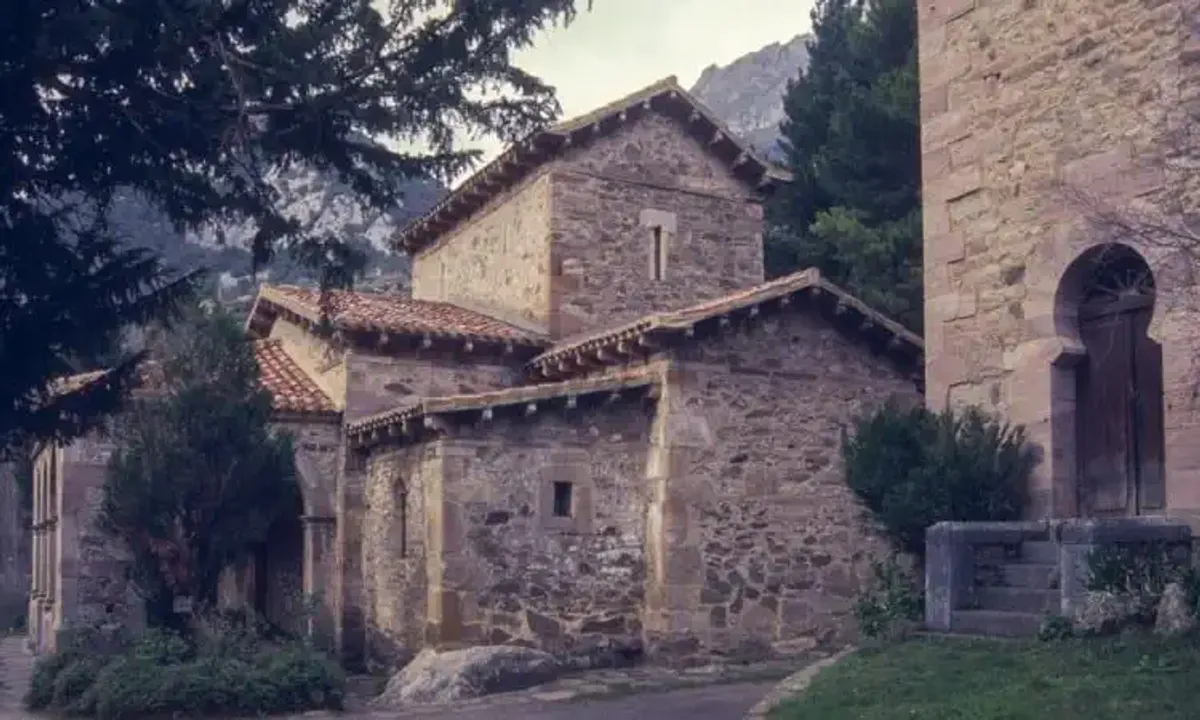 Santa María de Lebańa
Stage 3. Cabañes – Santo Toribio (13.7 km)
This stage is the shortest, which is quite convenient as it is the last of the journey. We leave Cabañes and head towards Tama, where we will encounter its Romanesque church. Along the Campaña path, we can avoid going on the road, with the Picos de Europa in the background. From Potes, we will head directly to the Monastery of Santo Toribio de Liébana.
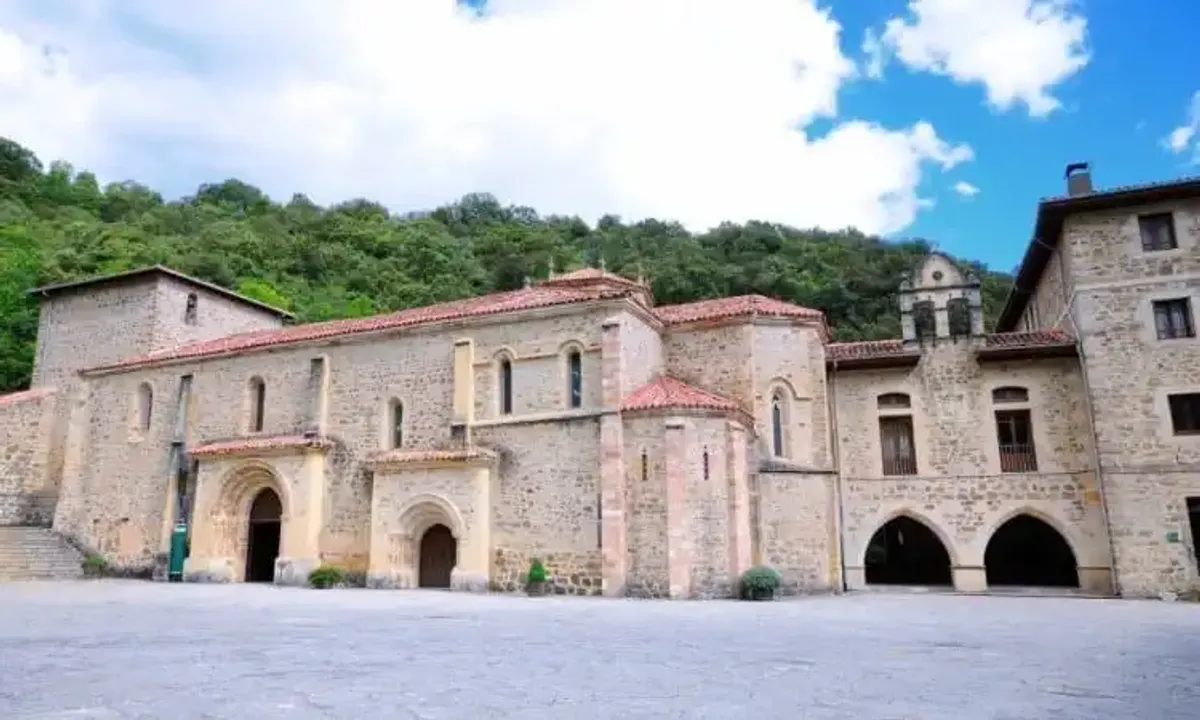 Monastery of Santo Toribio
The pilgrim passport and the certificate: the Lebaniega
This itinerary also enjoys its own pilgrim passport, which you must obtain if you wish to use the public shelters along the route and if you want to obtain the certificate of completion of the pilgrimage, the Lebaniega. There are different places where you can get it: at the parish of El Cristo in Santander, at the church of Our Lady of the Angels in San Vicente de la Barquera, or at the tourist offices of the various municipalities in the area.
What are the infrastructures and signage like?
Clearly, due to the nature of its route, the Lebaniego Way is not as straightforward as the French Way or the Portuguese Way. However, there is a lot of signage work and action by the Cantabrian government to make it accessible. In addition to the route signage, there is a wealth of information available on the official website of the route, with maps, photos, and directions. Regarding accommodations, the Lebaniego Way does not have as many options as other routes, but by planning your journey in advance and making reservations, you will have no problem.
What can be seen and done on the Lebaniego Way?
The Lebaniego Way is a path full of nature, history, culture, and gastronomy. Along the route, one can see spectacular landscapes, such as the Picos de Europa, the Deva River, the Hermida Gorge, or the sequoia forest of Cabezón de la Sal. Charming villages can also be visited, such as Muñorrodero, Cicera, Potes, or Mogrovejo, where you can learn about their artistic and architectural heritage, including Romanesque churches, mountain mansions, and medieval towers. Additionally, one can enjoy the typical gastronomy of the area, such as lebaniego stew, picón cheese, sobaos, or orujo.
A Way between two Jacobean routes
Once you have arrived in Liébana, you can resume the Northern Way by returning the way you came or by taking the so-called Asturian path. However, you can continue south and connect with the French Way in Mansilla de las Mulas, in León, following the Vadiniense Way, as well as other alternative routes such as the Leonese, Castilian, or Sahagún paths.
The Lebaniego Way allows you to enjoy the heart of Cantabria in a very special way, which is none other than undertaking this ancient pilgrimage full of mountain landscapes, green pastures, splendid cultural heritage, and exquisite gastronomy. If it coincides with the Lebaniego Jubilee Year, your experience on this historic route will be memorable.