


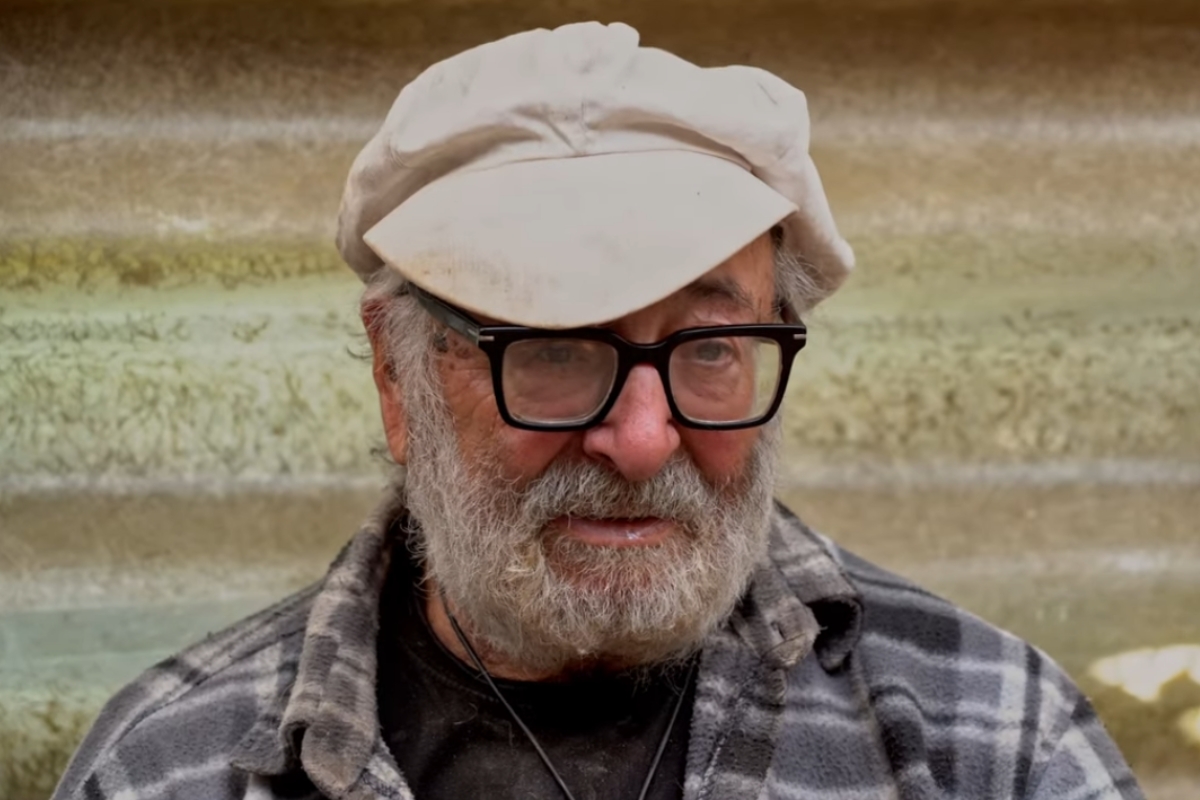
El Camino de Santiago is a little sadder. On the night of January 14 to 15, 2026, Tomás Martínez de Paz, better known to everyone as Tomás de Manjarín or the last Templar, passed away at the Hospital of Ponferrada. He was one of those characters who seem taken from a storybook, but whom many pilgrims actually met, up there, high on the French Way.
This text is not a full biography or a historical report. It is, above all, a small tribute to remember who Tomás was, what he did for the pilgrims, and why his name is now part of the legend of the Camino de Santiago.
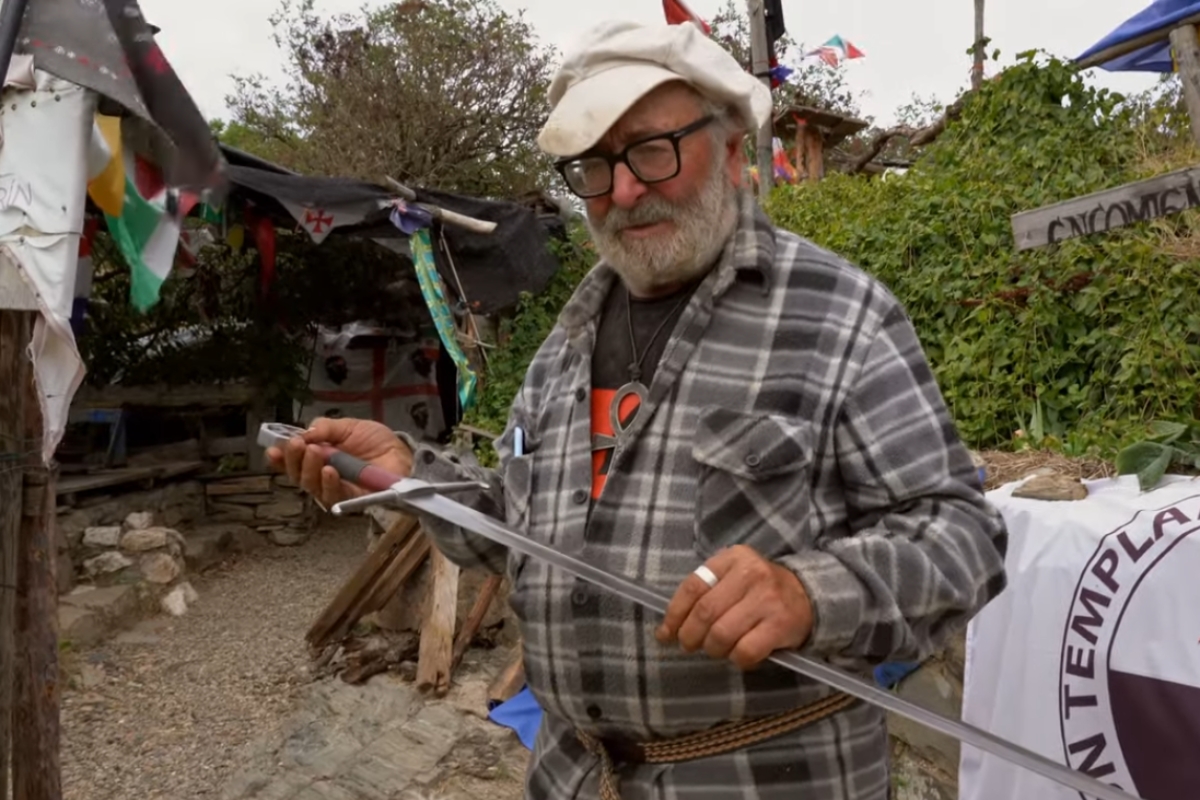
Tomás de Manjarín
A light at the top of the French Way
If you’ve walked the French Way, you might remember the stretch between Foncebadón and El Acebo. It’s a high, mountainous area where in winter the wind blows hard and snow can cover everything. Amid that landscape lies Manjarín, a nearly deserted Maragato hamlet, located around 1,500 meters above sea level, shortly after the Cruz de Ferro.
There, since 1993, Tomás created a very special refuge for pilgrims: the Templar Refuge of Manjarín. When he arrived, the place was practically in ruins. With patience, hard work, and a deep faith in the Camino, he brought life back to that corner: first a simple shed, then a refuge full of Templar symbols, flags, red crosses, and a famous wooden post with signs pointing to Santiago, Rome, Jerusalem, and other sacred places of the world.
Who was Tomás de Manjarín
Tomás was a simple and tough man. He had been a soldier and knew what it meant to endure cold, hunger, and fear. Before settling in Manjarín, he worked for years in the Ponferrada area. Life became increasingly difficult, and, as he himself told, he felt everything was falling apart. Then the Camino appeared.
One day he arrived at the abandoned village of Manjarín and felt the place calling him. He decided to stay there “as a Templar warrior at the service of pilgrims.” He learned the craft of hospitalero at the Ave Fénix hostel in Villafranca del Bierzo, where he discovered how to care for, listen to, and encourage walkers. From then on, he dedicated his entire life to welcoming others.
Though he lived in León and was known as a Maragato, Tomás also had a very strong bond with Abarán and the Region of Murcia. There he was considered a true ambassador of the town: he spoke of Abarán to pilgrims, participated in Jacobean events, and carried the name of his beloved land along the route. For many people from Murcia, Tomás was “their” hospitalero on the Camino.
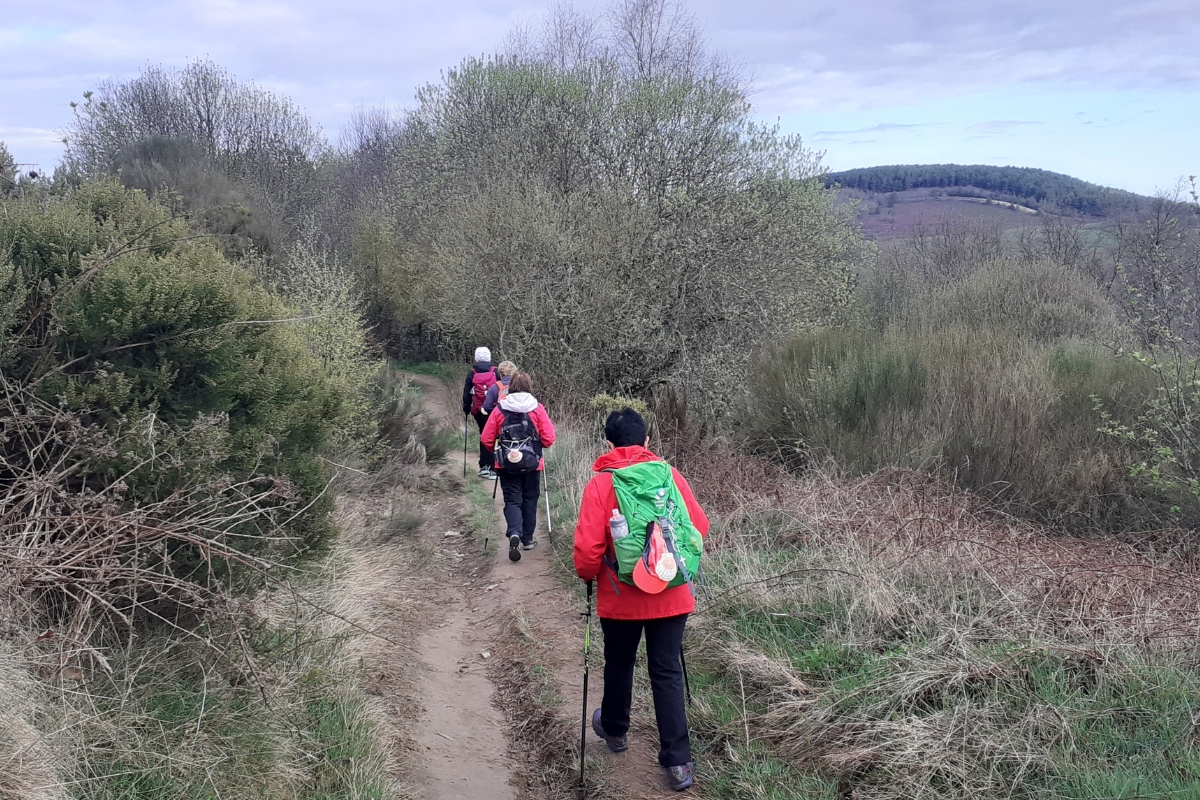
Pilgrims arriving at Manjarín
A Templar refuge in the mist
Tomás’ refuge was not a modern hostel. It had no luxuries: for a long time there was no running water or electricity, and power came only from a few solar panels. Inside, the floor was dirt or cement, the bunks were simple, and cold was fought with a stove and lots of hot coffee. Sleeping was “by donation”, meaning everyone left what they could or wished.
However, the place was full of magic. Tomás welcomed pilgrims in his white robe and red Templar cross, rang a bell when he saw someone arriving, and offered a chair, some broth, or a simple glass of water. Many remember how they sat by the fire as he listened to their stories, blessed the Camino ahead, and reminded them that what mattered was not the destination, but the spirit in which they walked.
Every day at eleven in the morning, he held a prayer for peace. It was a small ritual blending Templar tradition, simple faith, and a deep desire for brotherhood. He prayed with pilgrims in different languages and asked for peace in the world. For many, that moment was one of the most moving memories of their entire journey.
A Templar at the service of pilgrims
Tomás wasn’t interested in trendy tourism or in turning the Camino into a theme park. He defended an authentic Camino de Santiago, more spiritual than touristy. He criticized “three-star hostels” when they lost their simplicity and treated pilgrims like regular customers. In Manjarín, everything was different: you didn’t go there to occupy a bed, but to share an experience.
His connection with the Order of the Temple went far beyond a costume. In the nineties, he helped establish the Templar Circle of Ponferrada and saw himself as a modern guardian of the route. He didn’t protect the Camino with sword and armor, but with hospitality, listening, and a constant presence—winter after winter—when barely any pilgrims passed and the mountains were covered in snow.
He was also a bridge between places. From Manjarín, he spoke of the Maragatería, Ponferrada, the Region of Murcia, Abarán, and so many places he had traveled through. His refuge was like a small world square, where people from many countries, ages, and religions met—united by the same desire to reach Santiago.
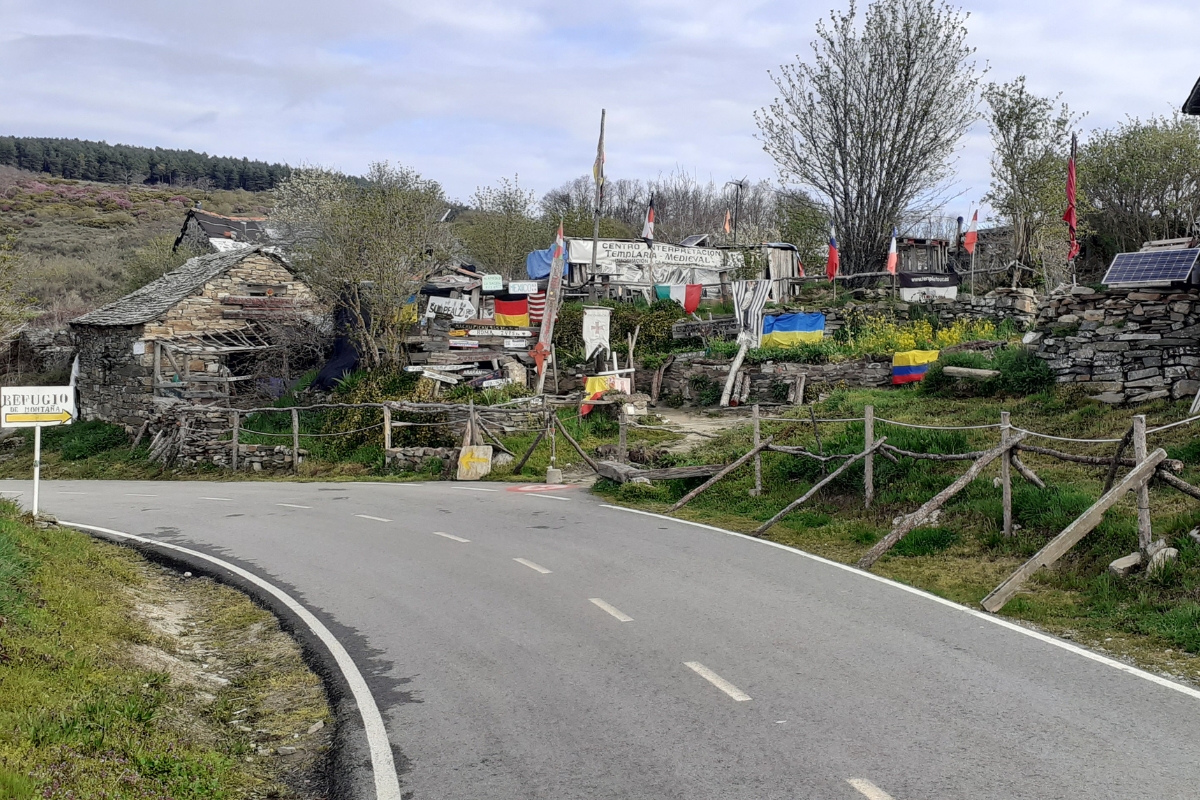
View of Tomás de Manjarín’s refuge
A legacy that lives on in every step
After his death, a funeral was held at the Basilica of La Encina in Ponferrada, and the family announced that his ashes would be scattered in Manjarín. It’s beautiful to think that, in some way, Tomás will continue to accompany pilgrims from that very place where he chose to live and serve.
Today the Templar refuge is silent, but his story lives on. Every time someone climbs toward the Cruz de Ferro and approaches Manjarín, they might imagine the bell ringing, smoke rising from the kitchen, and the figure of a bearded man in a white robe opening the door to offer something warm and a simple blessing.
If one day you walk by, you may want to stop for a moment, look at the landscape, and give thanks. I had the chance to meet him in 2022 while walking the French Way, and I was lucky enough to talk with him over his hot coffee and receive his stamp and all his humanity. Thank you, Tomás, for your hospitality and for reminding us that the Camino de Santiago is also about taking care of others. And for showing us that, sometimes, a small refuge in the mist can become one of the great treasures of the Camino.
Buen Camino, Tomás, and may the earth lie light upon you. Your spirit will keep walking with us.












Leave A Comment