


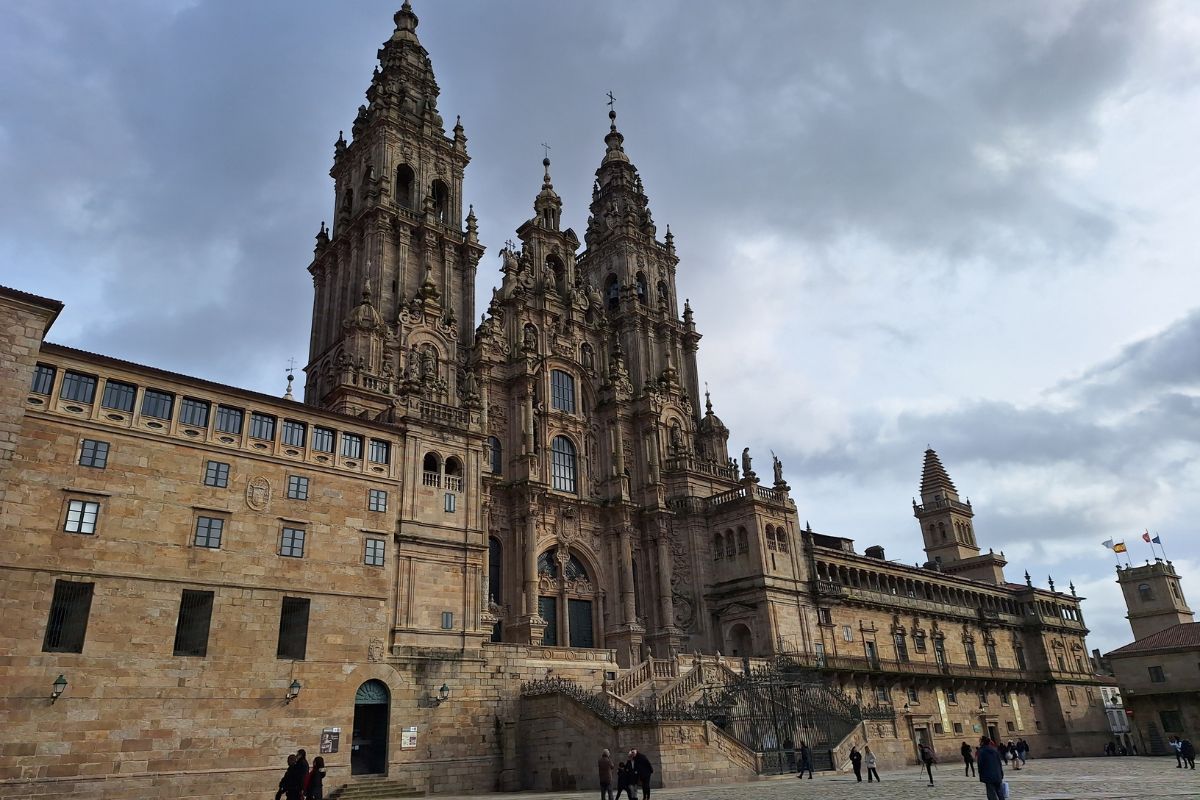
Santiago de Compostela is best understood on foot, and it’s no coincidence that it is the final destination of the Camino de Santiago. Stone, fine rain and the murmur of bells compose a unique music that accompanies you as you link solemn squares, arcaded streets, bustling markets and green corners just a step away from the old town. This guide invites you to look at the city at a relaxed pace: first the heart —the cathedral and its ring of squares—, then the heritage that surrounds it, the nature that breathes through it and, of course, its gastronomy, which here is all about honest, high-quality local produce.
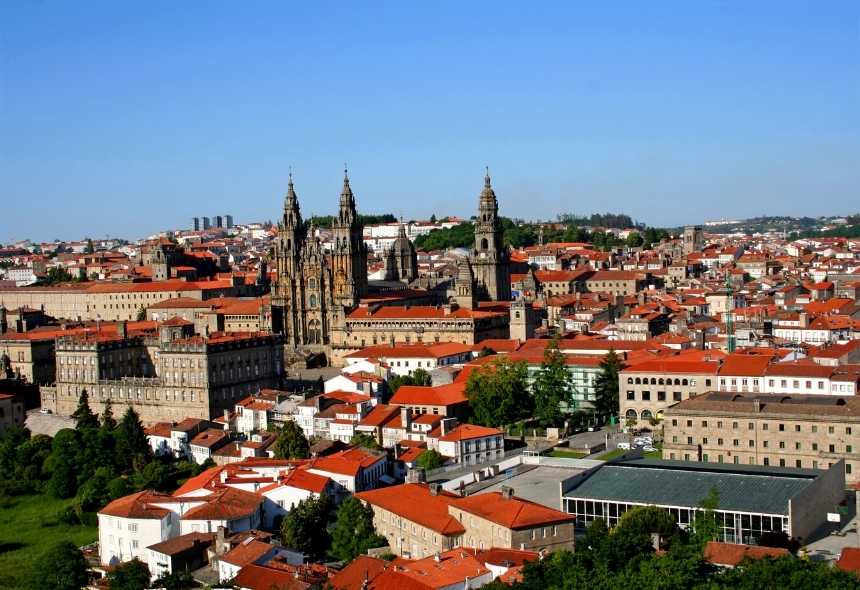
Aerial view of Santiago de Compostela
The cathedral and its squares
This is the nerve centre of Santiago. Here, history is carved in stone and the traveller finds the gesture that explains the city: arriving, stopping and looking. First we step inside the church to understand it from within; then, we complete the circle in the squares that embrace it, each with its own character.
The cathedral inside: time, light and silence
Entering the Cathedral of Santiago means matching your pace to a slower rhythm. Inside, the natural route begins in the Main Nave, where the Romanesque floor plan is clearly perceived and the Baroque style wraps altars and galleries. From there, your gaze is drawn towards the Presbytery and its golden baldachin: this is the liturgical heart of the church. Beneath it, in the Crypt, lies the tomb of the Apostle James, the devotional core that explains why routes have converged here for centuries. Behind the presbytery opens the ambulatory, a circular passageway that connects with the apsidal chapels and allows you to appreciate the architecture without interrupting the service. One of the best-known rituals is the embrace of the Apostle, a tradition carried out behind the high altar that sums up the sense of arrival felt by so many pilgrims. On special days and at specific masses, the great thurible, the Botafumeiro, crosses the nave in a flight that is both symbol and ceremony.
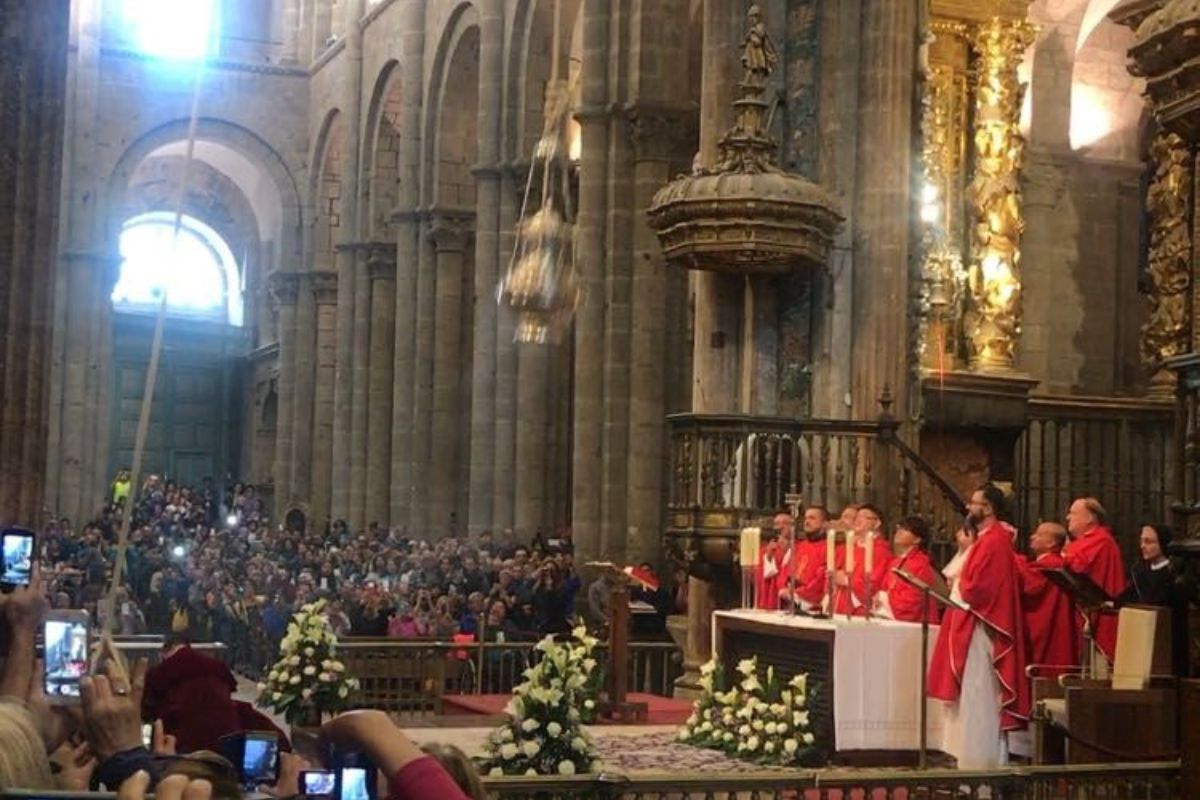
Flight of the Botafumeiro
If time allows, it is worth paying attention to the stone choir that survives in fragments, the historic portals integrated into the ensemble, and the reading of materials —granite, wood and gold leaf— which tell the story of the different building phases. When the visit is completed with the Portico of Glory and the museum spaces, the story comes full circle: the Romanesque sculpture gains context and the iconography becomes easy to understand at a glance in this Bible carved in stone.
If you want to delve deeper, check our guide so you don’t miss the essentials of what to see in the cathedral of Santiago and make the most of an in-depth visit.
The squares: Obradoiro, Azabachería, Platerías and Quintana
The surroundings of the cathedral are conceived as a whole: four squares that organise arrival, entrance and contemplation of the church. Each plays a different role in the visitor’s and pilgrim’s route:
- Praza do Obradoiro (Obradoiro Square): This is Santiago’s great urban hall and the symbolic end of the Camino. The Baroque façade of the cathedral acts as a backdrop, facing the Pazo de Raxoi, the Hostal dos Reis Católicos and the Colegio de San Xerome, now part of the University. This is where arrival is celebrated: photos, hugs and the first overall view before circling the church.
- Praza da Acibechería (Azabachería Square): Also called Praza da Inmaculada, it represents the arrival space of most Jacobean routes to the cathedral precinct; the gaiteiros (bagpipers) under the nearby arch of Gelmírez welcome the pilgrims, who from here make their way towards Obradoiro. Its name recalls the old jet-stone workshops that supplied medals and shells to those who arrived.
- Praza das Pratarías (Platerías Square): This is the only major exterior doorway that preserves the Romanesque style within the ensemble, with a sculptural programme that introduces visitors to the iconography of the church. The central fountain and the arcades create a sheltered space before entering the interior.
- Praza da Quintana: The Quintana de Vivos (upper part) and the Quintana de Mortos (lower part) are connected by the staircase. Here you will find the Holy Door, which is used in Jacobean Holy Years. At nightfall, the lighting projects the famous shadow of the pilgrim on the wall, a silhouette that sums up the quiet arrival of so many walkers.
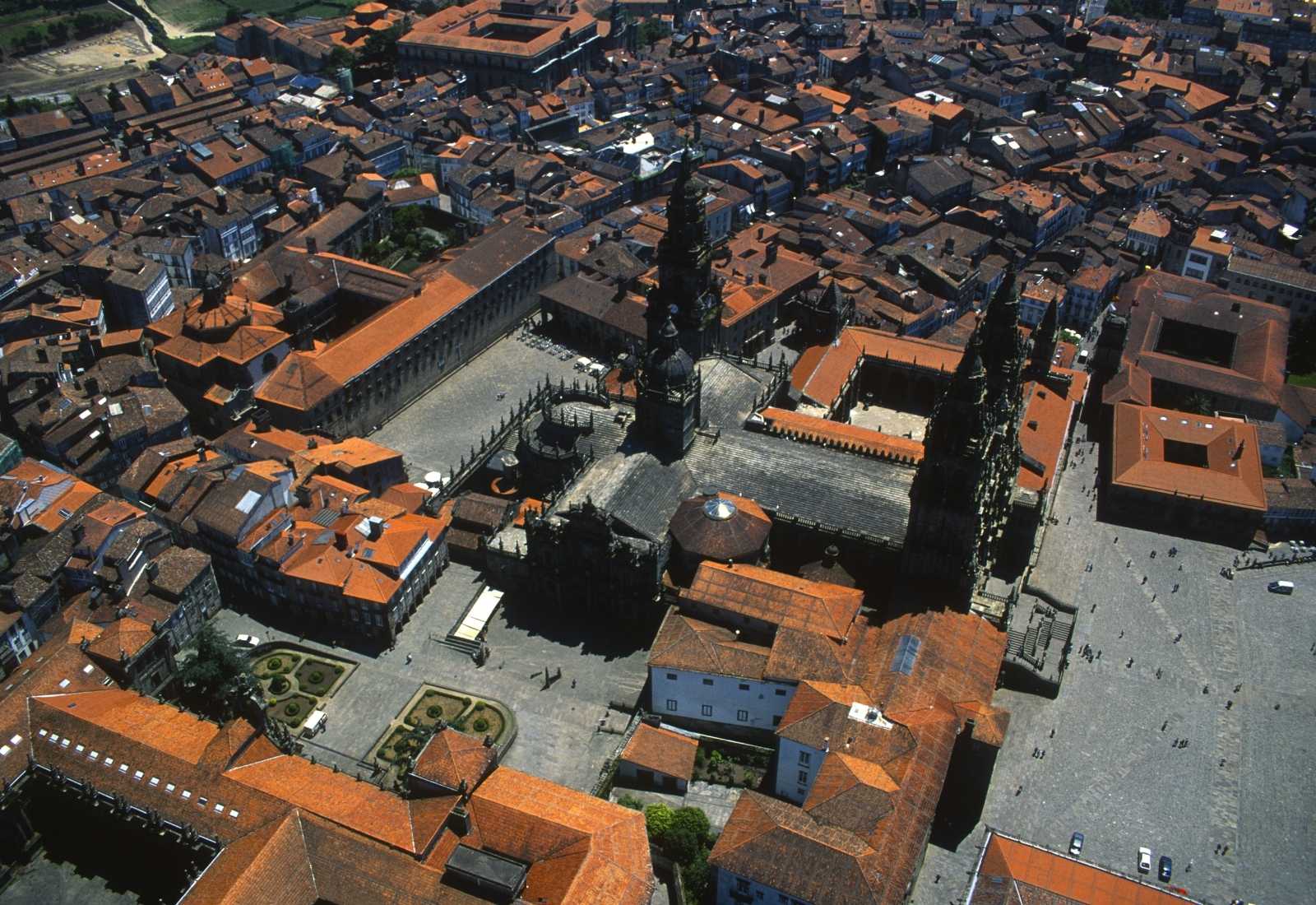
Aerial view of Santiago Cathedral and its squares
The city and its heritage
Beyond the church, Santiago unfolds a historic old town that is best enjoyed without rushing. Here, heritage is an everyday stage shared by locals, pilgrims and tourists. We suggest entering through its streets with soul, stopping by the museums that provide context and letting living culture surprise you at any corner.
Rúa do Vilar calls for a slow pace: shop windows with a craftsman’s touch, cafés that shelter you from the fine drizzle, and balconies that have seen centuries go by. Rúa Nova responds with a different energy, lighter and brighter, like a conversation that livens up in the afternoon. Between the two, a network of small streets leads to other lanes or opens into intimate squares where you will want to stay and listen to the city.
Museums that put history in order
When your body longs for the indoors or it is raining in the city (which happens fairly often), the museums help you put dates, names and meaning to your walk. Here, the story of the Camino becomes understandable at a glance: objects that explain why millions of people have come to this city, documents that mark key moments and rooms that allow you to read the architecture calmly before stepping back outside.
The logical starting point is the Cathedral Museum. Its collections introduce visitors to the construction of the church, display liturgical treasures and, through models and masterpieces, show how the building was erected and decorated over time. The visit is completed by the spaces linked to the Portico of Glory, where Romanesque sculpture can be appreciated up close and in context, in a very didactic way.
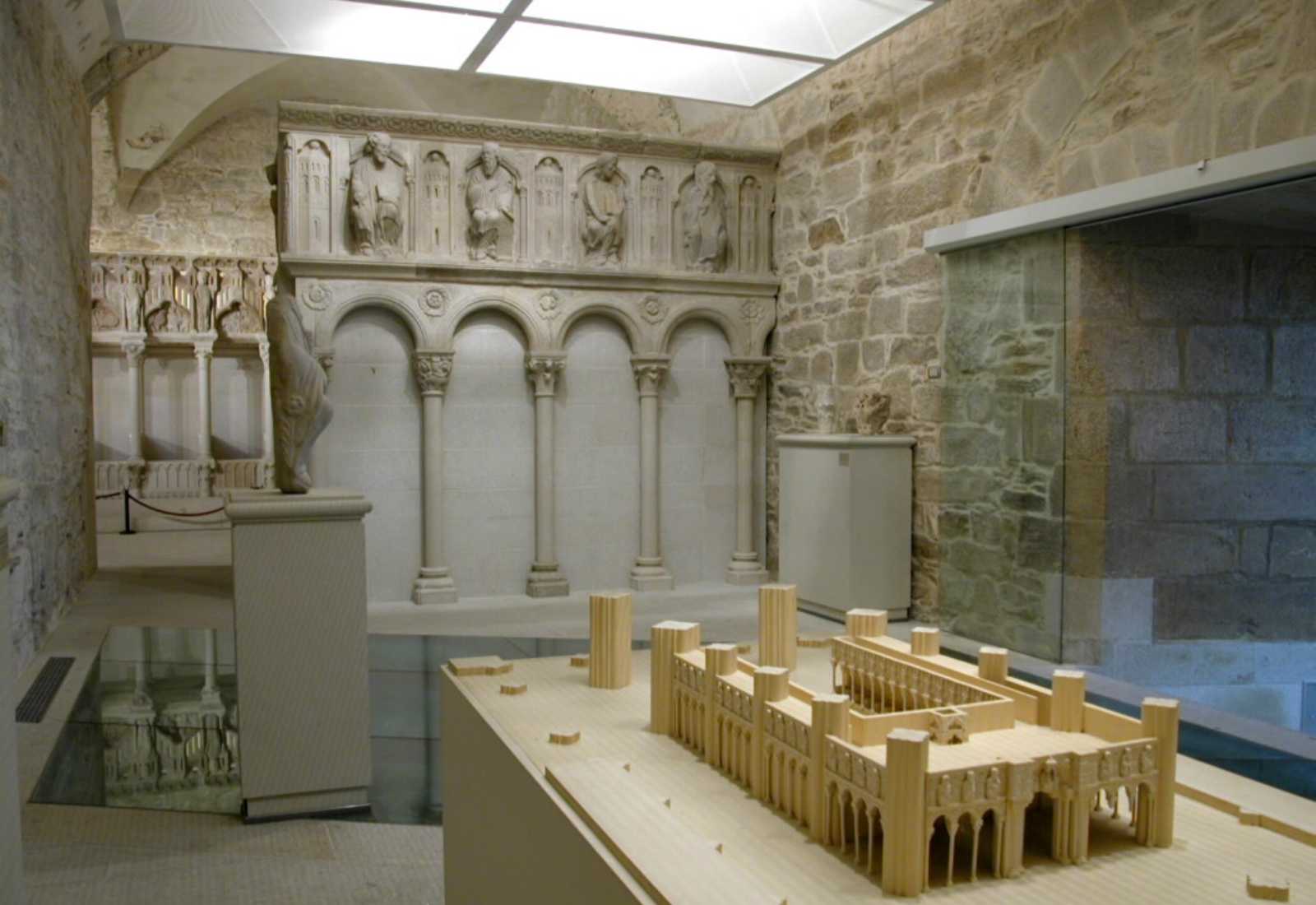
The Cathedral Museum of Santiago
To broaden the focus, the Museo das Peregrinacións e de Santiago (Museum of Pilgrimages and of Santiago) explains the Jacobean phenomenon from the Middle Ages to the present day: routes, credentials, symbols and the transformation of the city driven by pilgrims. It is a clear and very useful tour for those who want to understand the “why” and “how” of the pilgrimage beyond the emotion of arrival.
If you are interested in Galician cultural roots, the Museo do Pobo Galego (Museum of the Galician People) offers a broad reading of the region and its trades, with sections dedicated to daily life, music and the relationship with the sea and countryside. The museum’s famous triple helical staircase and the surrounding Bonaval park turn the visit into an architectural highlight in its own right.
The contemporary counterpoint comes with two complementary perspectives. At the CGAC (Galician Centre for Contemporary Art), temporary exhibitions and a permanent collection keep you up to date with the art scene, while the City of Culture (Gaiás), on the outskirts, combines contemporary architecture and cultural programmes to open another door onto today’s Galicia.
If you want to plan your visit with options and timetables, check our guide to the museums of Santiago.
Nature and surroundings
Just a step away from the old town, green spaces reclaim their place. Parks, viewpoints and gardens allow you to breathe differently without leaving the city. They are the perfect break between visits, or a calm ending to a day well spent.
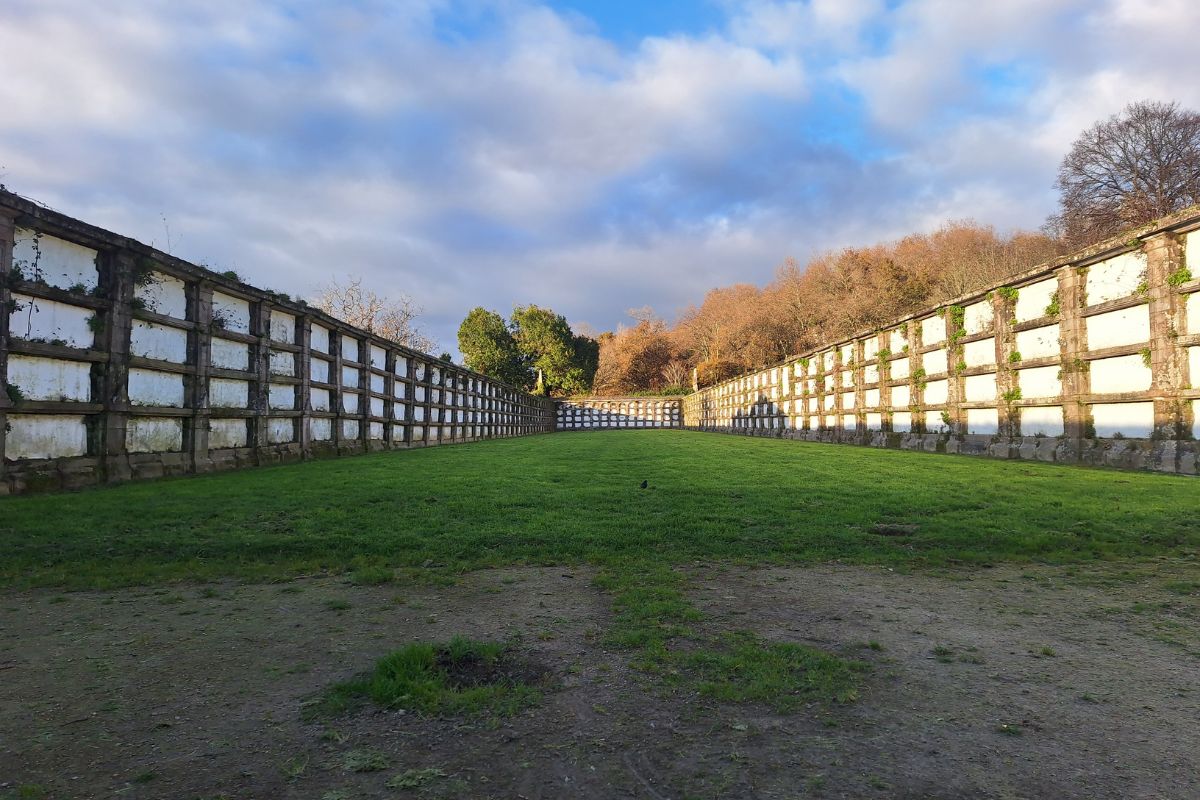
The Bonaval cemetery is a peaceful and beautiful place for a stroll
La Alameda: the view that always moves you
La Alameda offers the view everyone is looking for: the silhouette of the cathedral standing out as if it had been placed there just for your photograph. The promenade winds between trees and historic avenues, with benches inviting you to stop and take in the city at a glance. Here you will find three essential stops: the monument to Rosalía de Castro, linking the place to literary memory; the figure of Valle-Inclán, inviting you to sit beside him and talk about books; and the Two Marías —Maruxa and Coralia—, a popular icon recalling daily life in Compostela in the mid-20th century.
Very close to the centre, Belvís park opens a green fold of terraced land from which you can see the continuity between orchards, meadows and city. It is a place of transition: perfect for stretching your legs, sitting down to read or looking out over the slope that frames the rooftops of the old town. At sunset, the hillsides catch a soft light that explains why many locals choose it as their daily escape.
On the other side of the historic centre, Bonaval offers a park with its own character, laid out between the former cemetery, mature trees and peaceful spaces that dialogue with the Museo do Pobo Galego and the CGAC. Its paths play with gentle slopes, unexpected viewpoints and small clearings where the noise of the city fades. It is a walk that invites you to look both close-up —stone, grass, shade— and into the distance —domes and towers—, perfect for ending the day without straying far from the centre.
Gastronomy with a flavour of its own
You eat your way through Santiago by neighbourhoods, just as you visit it by squares: here, gastronomy is based on fresh Galician produce served in its many different bars and restaurants. Two main hubs concentrate the appetite: the market in the morning and the lively streets when evening falls.
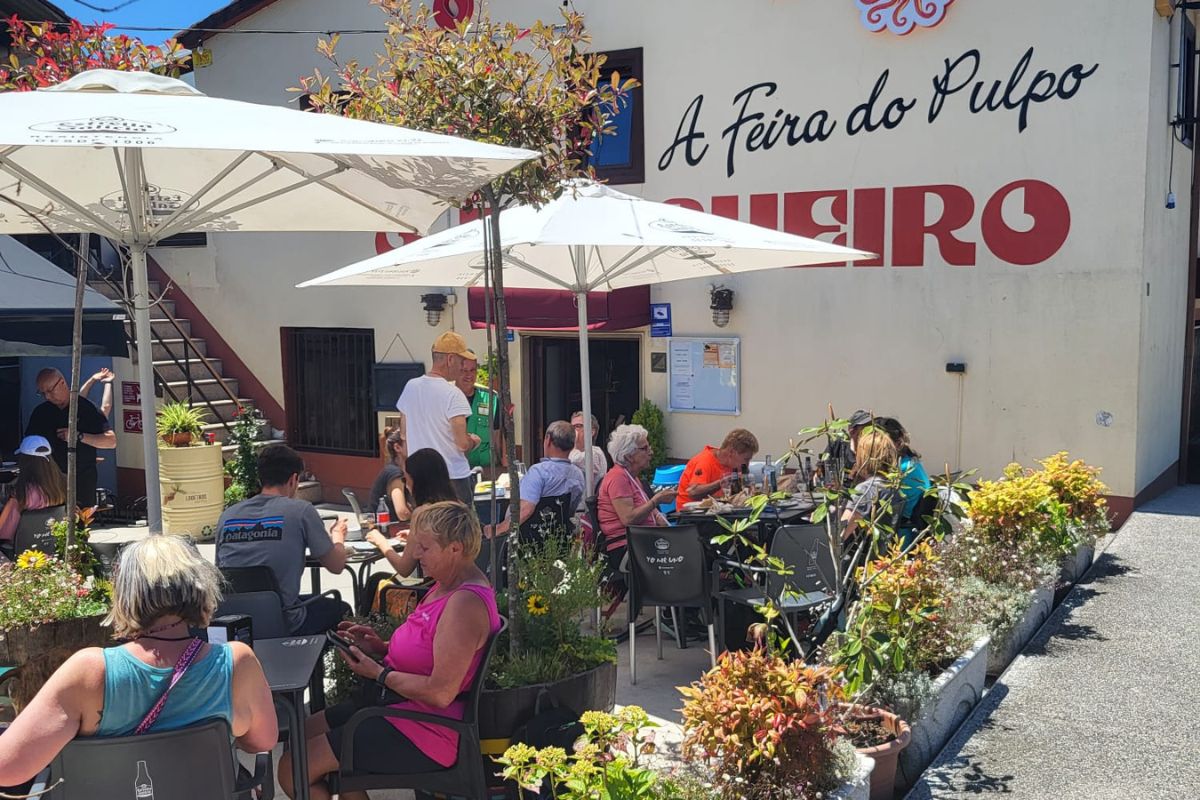
Pilgrims enjoying a gastronomic feast in Santiago de Compostela
Mercado de Abastos: the cathedral of produce
Morning at the Mercado de Abastos is a spectacle without artifice. Counters piled with seafood that smells of the open sea, vegetables with the memory of damp earth, cheeses that sum up entire regions and loaves of bread that crackle to the touch. You don’t need to buy to enjoy it: looking, asking and taking advice is already part of the journey. You soon understand why the local cuisine speaks plainly and why the product takes centre stage.
If you go with the idea of eating from the market itself, keep one useful detail in mind: some nearby restaurants offer to cook the ingredients you buy (this usually requires booking in advance and involves a charge per person or per dish). The mechanics are simple: you choose the product from the stalls, ask for it to be prepared for cooking (cleaned and packed) and take the bag to the partner restaurant at the agreed time. They will boil, grill or roast it and serve it with a basic garnish. Always ask about quotas and timetables, as weekends get very busy.
To get it right without overcomplicating things, follow three practical rules: season (ask what is at its best), origin (where it comes from and how it has been caught or grown) and preparation (how they recommend cooking it and whether it needs purging, in the case of shellfish). For fish, bright eyes and firm flesh are a good sign; for shellfish, look for smooth shells and a clean smell. If you are unsure about quantities, the stallholders will advise you according to the number of diners and the cooking method. With these guidelines, the market becomes a meal with a beginning and an end: choosing, cooking and enjoying just a few metres from where it all started.
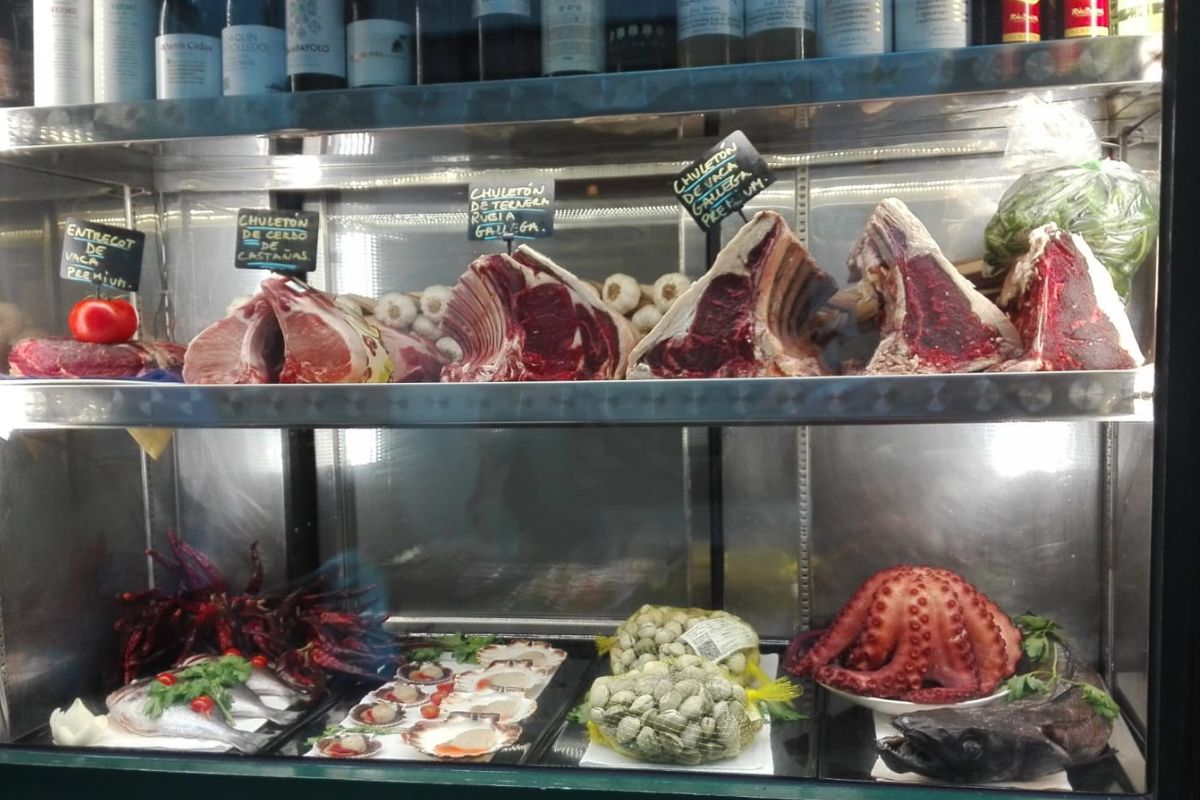
Take the chance to savour the best of Galicia’s varied gastronomy in Santiago de Compostela
Rúa do Franco and surroundings: eating amid the happy buzz of the bar
As the afternoon advances, Rúa do Franco lights up. The bars become corridor and counter all at once, tapas pass from hand to hand and the clinking of cups and glasses sets the rhythm of the street. The area is easily recognised by its product displays. You will see them from the street: gleaming seafood, whole fish ready for the grill or oven, Galician cheeses with their unmistakable shapes and octopus prepared for cooking. Peeking in, asking questions and deciding according to what “catches your eye” is all part of the fun.
Between one bar and the next, the street and its side alleys are lined with souvenir shops and small food stores: scallop shells for pilgrims, jet-stone jewellery, magnets and postcards sit alongside almond cakes or jars of local honey and jams. If you are looking for an edible gift, ask for tartas de Santiago (almond cakes) with an artisan seal and for cheeses (Tetilla, San Simón, Arzúa-Ulloa), which travel well and keep the flavour of your visit.
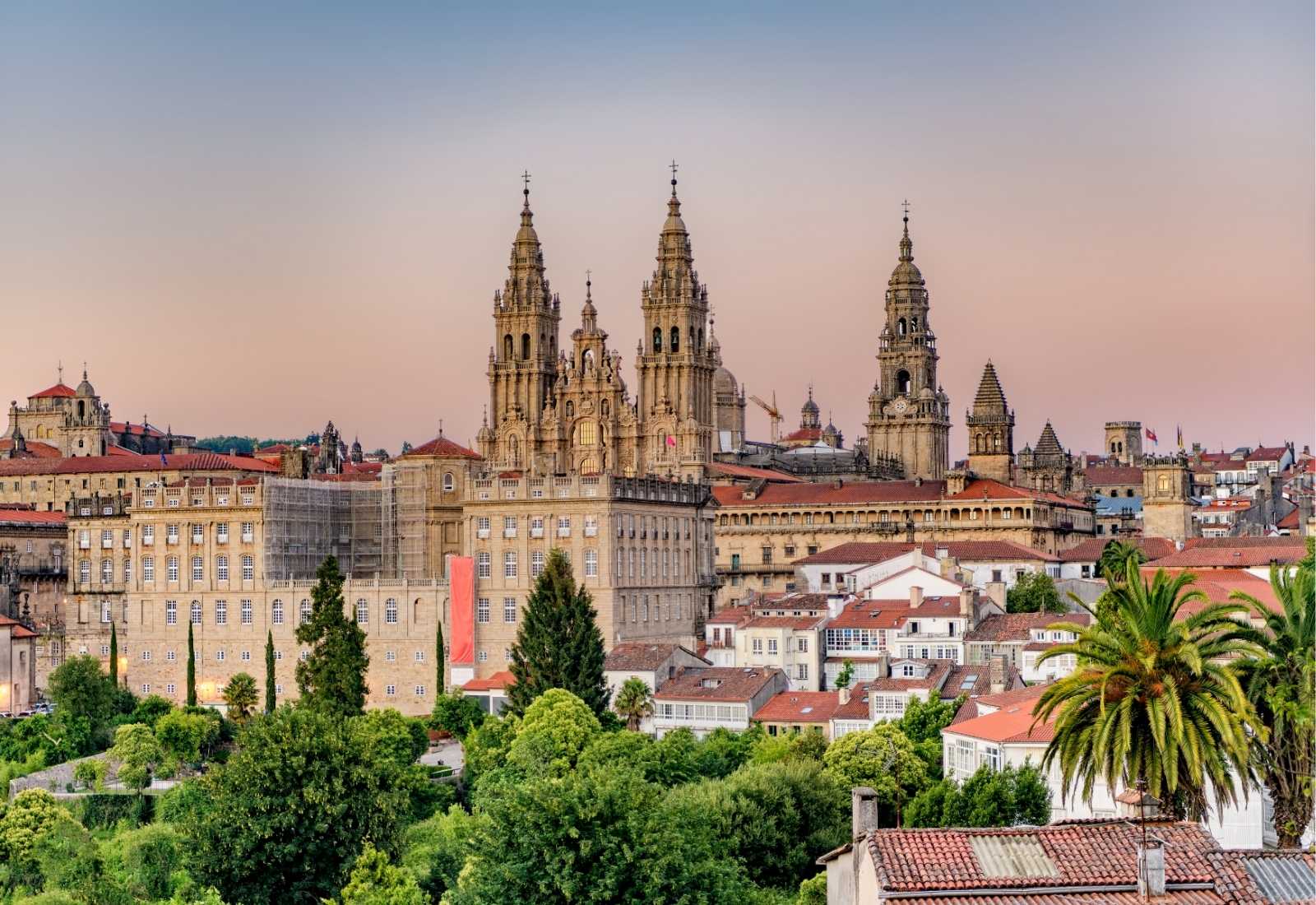
Views of Santiago Cathedral from the Alameda
Exploring Santiago de Compostela on foot lets you link, effortlessly, the landmarks that best explain the city: the cathedral and its ring of squares, the arcaded streets, the parks overlooking the historic centre and the table supplied by the Mercado de Abastos. In a couple of days, the itinerary organises itself and each area finds its moment: market mornings, museum middays, afternoon strolls and one last look from the Alameda.
What remains, above all, is a clear idea: Santiago is understood in layers. The monumental layer, best appreciated unhurriedly; the everyday layer, which appears at the bar, in the bookshop or on a bench in a square; and the natural layer, offering breaks just a few minutes from the centre. Santiago de Compostela offers a complete visit and leaves room to come back and see the city with fresh eyes next time. With this guide, from Viajes Camino de Santiago we encourage you to get to know Santiago de Compostela and discover all the hidden secrets which, along with this guide, will enrich your experience of the city.