


Napoleon Route winter closure: from November to March, you must go via Valcarlos
08 October, 2026
Every winter Navarre closes the Pyrenees crossing at Lepoeder. If you start the French Way in Saint-Jean-Pied-de-Port between November and March, your route is via Valcarlos.

If you're planning to start the French Way in Saint-Jean-Pied-de-Port between November and March, there's something you should know before you lace up your boots: the Napoleon Route is closed. Every winter, from 1 November to 31 March, the Pyrenees crossing at the Lepoeder pass is off-limits, and the only way to walk to Roncesvalles is through Valcarlos.
This isn't just advice, and it doesn't depend on the weather that day: the closure applies even if it dawns clear and sunny. Here's why it exists, what happens if you ignore it, and what the alternative route is like.
Which stretch is closed, exactly?
The first stage of the French Way, from Saint-Jean-Pied-de-Port to Roncesvalles, has two variants:
- Napoleon Route: the best known and the toughest. It climbs from 154 m in Saint-Jean up to 1,432 m at the Lepoeder pass, over 1,200 metres of ascent through high-mountain terrain, with no villages or shelters for much of the way. This is the one that's closed.
- Valcarlos Route: runs along the valley floor, next to the road, passing through Arnéguy and Valcarlos (Luzaide) up to the Ibañeta pass, at around 1,060 m, before dropping down to Roncesvalles. This is the one you need to take in winter.
Why does it close every winter?
In winter, the upper Pyrenees are easily blanketed in fog and snow, and the weather can turn in minutes. For years, emergency teams were called out again and again to rescue pilgrims who'd lost their way or got caught in snowstorms, many without the right mountain gear, and some of those rescues ended in tragedy.
That's why, since 2015, the Government of Navarre has closed this stretch every year, to protect both pilgrims and the rescue teams who risk their lives on every callout.
What happens if you ignore the closure?
Some people think that if the weather looks good, there's no harm in going up anyway. That's not a good idea, for three reasons:
- You could be fined: the Gendarmerie on the French side, and Navarre's regional police (Policía Foral) on the Spanish side, patrol the pass and can sanction you.
- You pay for your own rescue: if a team has to come looking for you, the costs are on you. Just one hour of helicopter time runs around 2,000 euros.
- The risk is real: there's no phone signal in many spots up there, snow covers the trail markers, and fog can leave you disoriented within minutes.
What the Valcarlos route is like
The good news is that the Valcarlos variant is a beautiful stage in its own right and well worth doing. It covers a similar distance to the Napoleon Route, around 24 to 25 kilometres, but with less elevation gain and always close to villages and the road, which is a comfort in winter.
The route leaves Saint-Jean, crosses the border at Arnéguy, follows the river to Valcarlos (a good place to stop for lunch, or even to spend the night and split the stage into two), and climbs through beech forests up to the Ibañeta pass. There, next to the chapel and the Roland monument, the final descent to Roncesvalles begins.
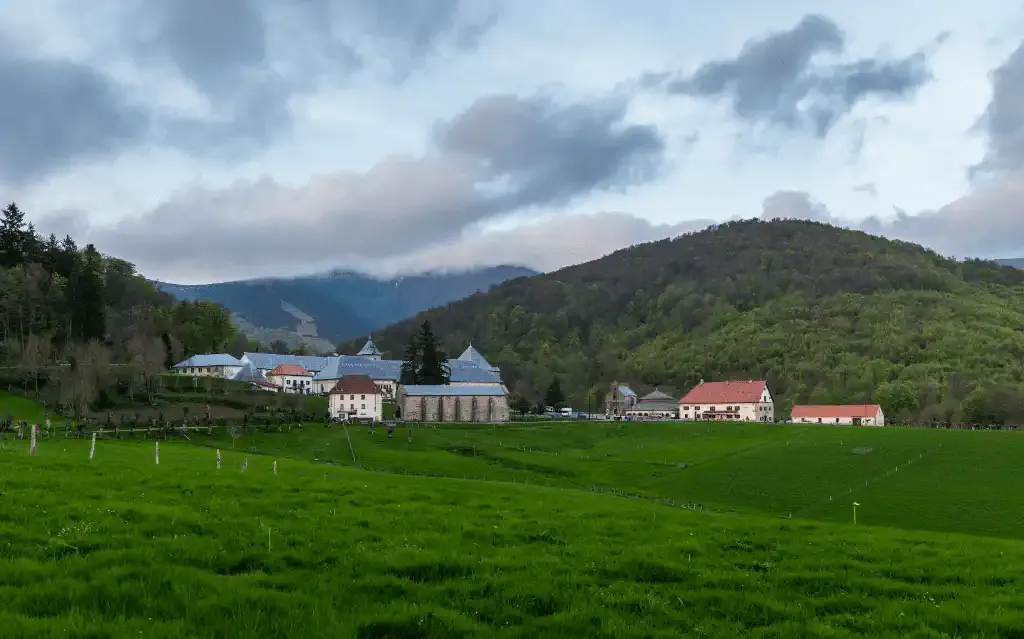
Roncesvalles, the end of the first stage of the French Way, whether you take the Napoleon Route or go via Valcarlos
The arrows are well marked, and the Pilgrim Office in Saint-Jean will confirm the route for you before you set off.
Tips for crossing the Pyrenees in winter
- Set off early: in winter it gets dark quickly, and the stage is long.
- Wear warm layers, a waterproof jacket, and waterproof footwear, even if you're walking through the valley.
- Check the weather forecast the day before, and if it's snowing, ask in Saint-Jean before you leave.
- Book accommodation in advance: many albergues and hotels in the area close for winter.
- Save 112 on your phone: it works on both sides of the border.
- Keep your phone charged and download one of the apps for the Camino de Santiago we recommend before you set off: they will help you follow the route.
If you're still planning your trip, take a look at our guide to walking the Camino de Santiago in winter. And if you'd rather skip the Pyrenees crossing and start directly in Roncesvalles, here's how to get to Roncesvalles.
Prefer another way to cross the Pyrenees?
The French Way isn't the only route that crosses the mountains. If the idea of starting in the Pyrenees with fewer crowds appeals to you, take a look at the Camino Baztanés (Baztán Way), which comes down from Bayonne through the Baztán valley to Pamplona.
And if what you really want is to walk the Napoleon stage with all its views, your best bet is to wait for spring: from April onward the pass reopens, and the Pyrenees look better than ever. You can start planning it now with the French Way from Roncesvalles.
Once your dates are clear, calculate the price of your Camino here and we will take care of the rest: accommodation at every stage, luggage transfer and everything else you need, so all you have to worry about is walking.