


The Camino de Santiago del Norte in full by bike, from the French border to Santiago along the Cantabrian coast. 805 kilometres through San Sebastián, Bilbao, Santander, Gijón and Ribadeo before turning inland into Galicia: the great coastal way by pedal.
We handle all the logistics so you only have to pedal: accommodation, your pilgrim's credential, full documentation and travel insurance, from 1221 €. The Cantabrian coast gives no respite: you can add the daily luggage transfer and take it on without panniers.
The Northern Way by bike from Irún is an itinerary organised by Viajes Camino de Santiago®.
Services
Included in all our routes
- Accommodation
18 days / 17 nights
- 18 days / 17 nights accommodation
- Complete documentation (Dossier and material for the Camino)
- On-the-road emergency telephone assistance
- Pilgrim's Credential
- Travel insurance
Optional
- Electric bike rental
- Bicycle rental (Max Comfort)
- Luggage transfer during the stages. (1 piece per person max 15 kgs)
- Supplement for single room
- Extra night in Santiago de Compostela
- Breakfast
- MP (Breakfast and dinner)
- Bicycle rental (Basic)
- Cancellation Insurance
Accommodations
- Most popular
Private comfort (Guesthouses, rural houses and small hotels)
1221 €
The perfect balance between charm and comfort. Guesthouses, B&Bs and country houses await you in the villages along the Camino with private rooms, private bathrooms, TV, and daily cleaning service. Simple and welcoming, they are the ideal place to truly rest and enjoy the peaceful rural essence that only the Camino can offer.
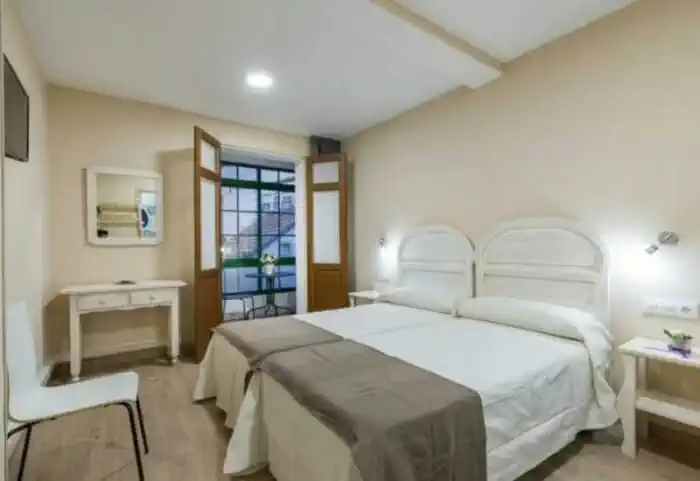
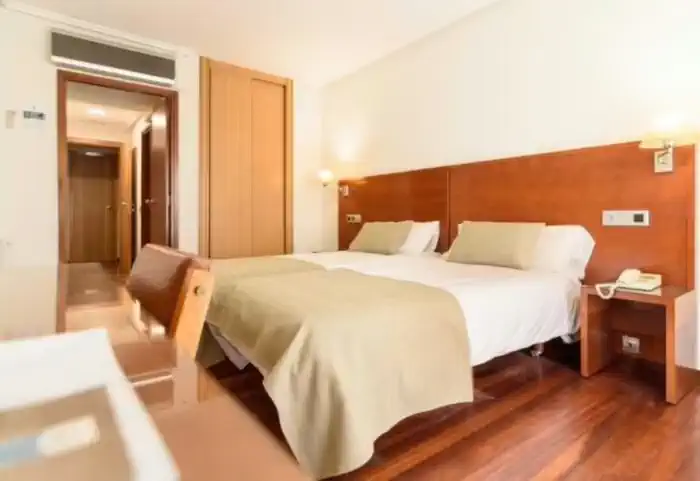
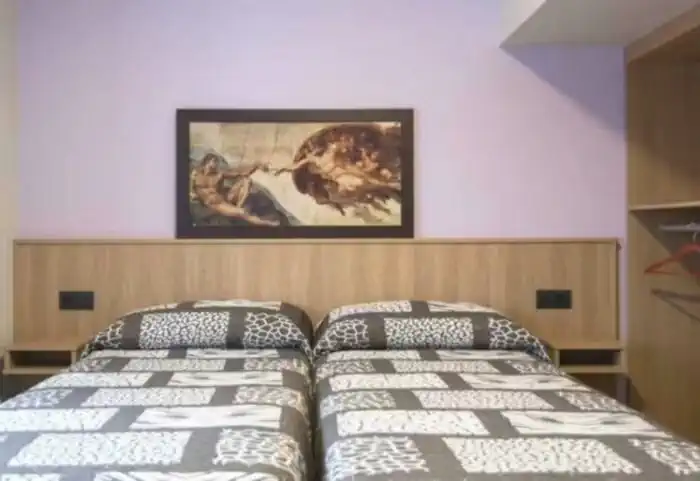
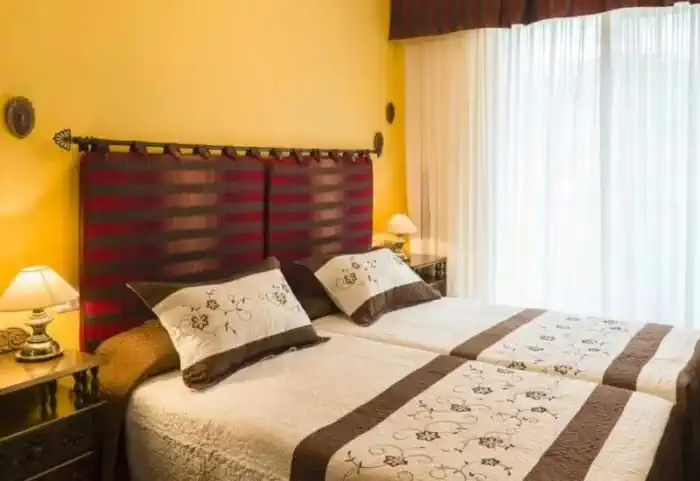
Photos
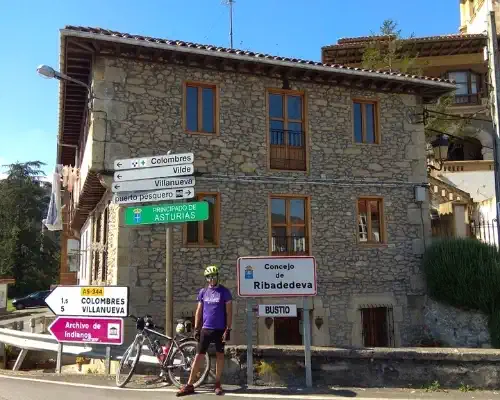
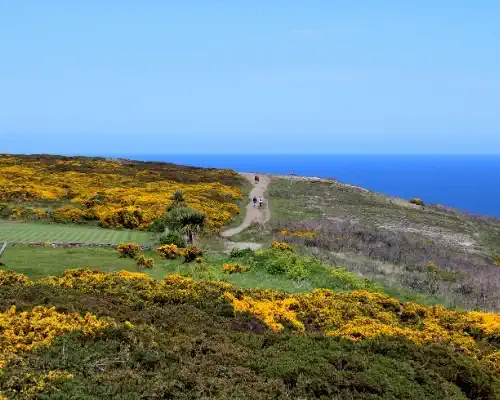
Map of the Northern Way by bike from Irun

Stages
- day 1
Arrival at Irún
- day 2
Stage 1. Irún - Zarautz (47 km)
First day on the bike: you leave Irún towards Hondarribia and warm up climbing Mount Jaizkibel on its southern side, between the towers of Erramuz and Santa Bárbara. You drop to Pasaia, where you cross the inlet by boat, and reach San Sebastián on a bike lane, with a compulsory stop at La Concha. The final stretch to Zarautz is demanding, but the queen of beaches makes up for it. - day 3
Stage 2. Zarautz - Markina (46 km)
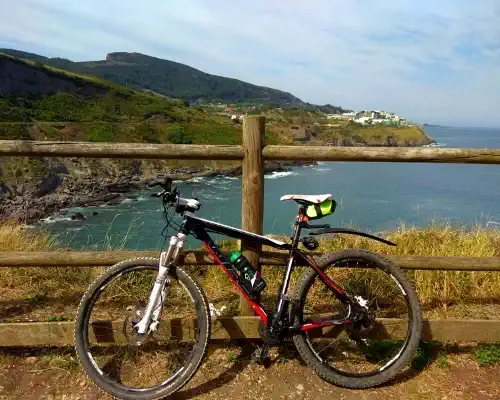
A stage of two halves: first pure coast, following the shoreline road through Zumaia, Deba, Mutriku and Ondarroa, with the Cantabrian Sea always beside you. Then the Camino turns inland and you leave the sea behind for a rural, mountainous Basque Country, among farmhouses and the odd climb, to Markina. Fewer kilometres than it seems, but with its share of hard work. - day 4
Stage 3. Markina - Bilbao (57 km)
A demanding day if you follow the original route, although there are alternative roads with little traffic. The Camino passes through Bolívar and Munitibar to Gernika, a good stop to see the Tree, and then tackles a hard climb to Larrabetzu and Zamudio. The last kilometres steepen and you may have to get off and push. In Bilbao a terrace and some well-earned pintxos await. - day 5
Stage 4. Bilbao - Laredo (65 km)
You leave Bilbao along the right bank of the estuary and cross to Portugalete on the gondola of the Vizcaya Bridge. Then a bike lane to the coast and a fairly hard stretch along the sea to Castro Urdiales, which appears like an oasis for the day's stop. From there the profile eases: Cérdigo, Islares and 20 kilometres that fly by to Laredo and its old quarter. - day 6
Stage 5. Laredo - Santander (35 km)
Now in Cantabria, you say goodbye to Laredo by taking the boat across to Santoña; the alternative via Colindres loses its charm among industrial estates. After sampling its famous anchovies, you continue calmly towards Güemes and Somo, where you choose again: cross the bay by boat to Santander or ride around it, adding 20 kilometres. A short, friendly stage to enjoy the Cantabrian coast. - day 7
Stage 6. Santander - Santillana del Mar (37.1 km)
A long day from city to medieval gem. You leave Santander westwards, among railway crossings and dual carriageway as far as Santa Cruz de Bezana, and cross the medieval bridge of Oruña over the river Pas. After Requejada, Barreda and Viveda you reach Santillana del Mar, one of the loveliest medieval ensembles in Spain. Today calls for a good rest. - day 8
Stage 7. Santillana del Mar - Colombres (57 km)
You leave Santillana del Mar heading for Comillas and continue towards Oyambre beach and San Vicente de la Barquera, with the sea always close by. Then comes a fun descent from Pesués to Unquera, where you have to try its famous puff-pastry corbatas. You cross into Asturias and the region greets you with a hard climb up to Colombres, the end of the stage. - day 9
Stage 8. Colombres - Ribadesella (55 km)
For many, the most beautiful stage of the Camino del Norte by bike. From Colombres you take a spectacular coastal path: Vidiago beach, the blowholes of Arenillas and the Ballota viewpoint before dropping down to Llanes. Then you return to the shore via Poo and Celorio, with detours to gems such as Gulpiyuri or Cuevas del Mar, and pedal on in high spirits to Ribadesella. - day 10
Stage 9. Ribadesella - Gijón (67 km)
Gijón lives with its face turned to the sea: San Lorenzo beach, the Cimavilla quarter perched on Santa Catalina hill, and Chillida's Elogio del Horizonte looking out over the Cantabrian Sea. The marina and the cider houses of the old town serve wonderful food, and pouring a cider is practically compulsory. - day 11
Stage 10. Gijón - Muros de Nalón (48 km)
The first kilometres leave Gijón beside the industrial estate, not the prettiest, and take you quickly to Avilés. From there you head for Salinas beach, with a stop at the Philippe Cousteau viewpoint, and the hard part begins: Asturian climbs that feel endless and slow the pace. The remaining kilometres leave you in Muros de Nalón, the end of the stage. - day 12
Stage 11. Muros de Nalón - Luarca (49 km)
You set off along tracks and back roads to Cudillero: go down to the harbour and take a stroll, it is one of the most typical postcards of Asturias. You continue past Concha de Artedo beach and Soto de Luiña, with a detour to the stunning Playa del Silencio, and stop at Cadavedo before the final stretch. You cross the river Canero and reach the lovely seafaring town of Luarca. - day 13
Stage 12. Luarca - Ribadeo (50 km)
Today you leave Asturias and enter Galicia. After leaving Luarca, some 20 kilometres of tracks and roads take you to Navia, a good spot for a second breakfast, and then to A Caridá. From there you follow a beautiful coastal path to Tapia de Casariego, with Santa Gadea beach as a bonus, and cross the Puente de los Santos into Ribadeo. - day 14
Stage 13. Ribadeo - Abadín (52 km)
The Camino leaves the sea behind and heads inland: 52 kilometres from Ribadeo across the Mariña of Lugo, through meadows, hamlets and a gradient that climbs steadily. You finish in Abadín, in the heart of the Terra Chá, a green landscape dotted with stone crosses and chapels. A transition stage, with less coastline and a lot more rural Galicia. - day 15
Stage 14. Abadín - Baamonde (39 km)
Thirty-nine comfortable kilometres through inland Lugo, between farmland, oak groves and the small villages of the Terra Chá. The destination is Baamonde, a quiet stop with just the essential services, where the church of Santiago and its 11th-century Romanesque bridge are well worth a look. An easy-rolling day, ideal for resting your legs before the final stretch. - day 16
Stage 15. Baamonde - Arzúa (63 km)
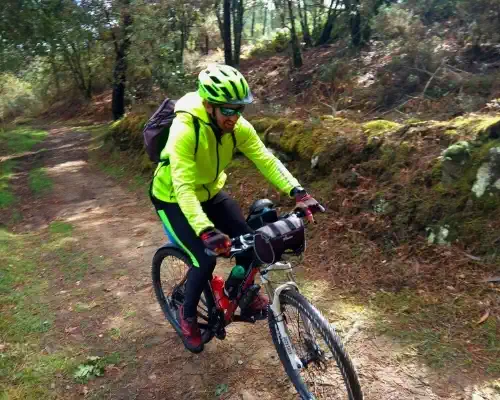
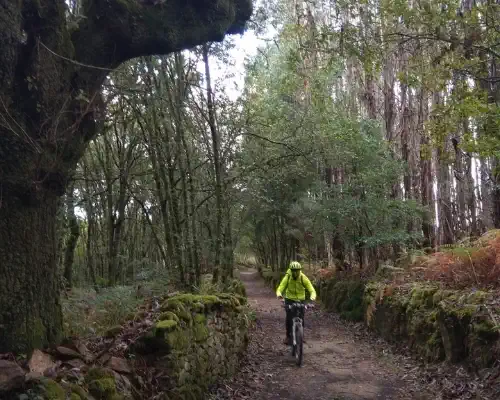
Sixty-three kilometres through inland Galicia linking the Camino del Norte with the Camino Francés. You ride between eucalyptus, oak woods and hamlets to Sobrado dos Monxes, whose Cistercian monastery deserves a stop, and continue via Boimorto to Arzúa. There you join the river of pilgrims on the Camino Francés, in the town famous for its Designation of Origin cheese. - day 17
Stage 16. Arzúa - Santiago de Compostela (38 km)
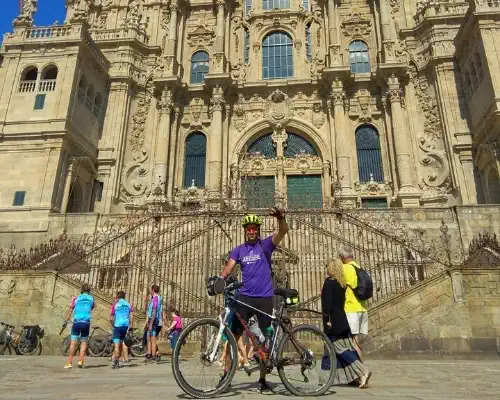
The final day is done in one go: 40 kilometres from Arzúa to Santiago de Compostela. The first half runs along long forest tracks between woods and meadows to O Pedrouzo; then come Amenal, Lavacolla beside the airport and Monte do Gozo, where the cathedral towers finally appear. The reward: rolling into the Praza do Obradoiro. - day 18
End of the trip
After your last night, you check out of your accommodation and your trip comes to an end.
Related Trips
 8 days / 7 nights
 11 days / 10 nights
 9 days / 8 nights
 8 days / 7 nights
 12 days / 11 nights
 7 days / 6 nights
Frequently Asked Questions
-
How many kilometres are cycled per day on the Camino de Santiago?
Doing the Camino by bike allows the ‘bicigrino’ to cover more kilometres per day than a pilgrim on foot, easily double. The number of kilometres cycled per day depends on several factors:- physical capabilities of each person;
- time available;
- route and section chosen (technical difficulty of the terrain);
- availability of accommodation.
-
Which are the most beautiful stages of the Northern Way?
Some of the most beautiful stages of the Camino del Norte are:- San Sebastian - Zarautz: Breathtaking coastal views and the promenade of Zarautz.
- Deba - Markina-Xemein: Green and mountainous landscapes with forests and meadows.
- Llanes - Ribadesella: Cliffs, beaches and hidden coves with a seafaring finish in Ribadesella.
- Ribadesella - Colunga: Contrast of mountains and sea, with Vega Beach standing out.
- Ribadeo - Lourenzá: Entrance to Galicia with landscapes of hills, forests and picturesque villages.
- Gijón - Avilés: Combines the Asturian coast with the rich architecture of Avilés.
-
Where does the Pilgrims' Route to Northern Way begin?
The Northern Way of Saint James begins in the city of Irun, located in the Basque Country, on the border between Spain and France. -
Is it easy to walk the Northern Way?
The Camino del Norte is not easy because of its 820 km of steep slopes, especially in the Basque Country and Asturias. Although it offers spectacular scenery, its mountainous and coastal terrain requires good physical preparation. -
How many kilometres is the Northern Way of the Camino de Santiago?
The total kilometres of the Northern Way are about 820 km from Irún. Keep in mind that this distance may vary depending on the possible variants or complementary and alternative routes that the pilgrim decides to take during the route. -
How many days to walk the Northern Way?
The Northern Way, with 820 km, is covered in 36 days, divided into 36 stages. The duration can vary according to the pace and physical condition of the pilgrim, with the possibility of adjusting the stages according to the needs. -
How many stages are there on the Northern Way?
The Northern Way of Saint James is divided into 36 stages. It starts in Irún and has ahead 820 kilometres to Santiago de Compostela. Keep in mind that this distance may vary depending on the possible variants or complementary and alternative routes that the pilgrim decides to take during the route. Each stage would be the distance you cover in one day, from the starting point to the end of the walk, where you will spend the night. The stages can vary in distance and difficulty, and it is important to note that they can be adjusted according to your pace and physical condition. Some pilgrims choose to divide certain long or hard stages, or lengthen those that are shorter or easier to walk. It all depends on having a place to sleep. -
What are the hardest stages of the Northern Way?
The hardest stages of the Northern Way are:- Irun - San Sebastian: Initial stage with constant ups and downs, especially on Mount Jaizkibel.
- Deba - Markina-Xemein: Mountainous terrain with narrow paths and the tough ascent of Mount Arno.
- Gernika - Lezama: Significant gradients and unpredictable weather in the Basque Country.
- Llanes - Ribadesella: Long coastal stage with rugged terrain and frequent changes in altitude.
- Ribadeo - Lourenzá: Entry into Galicia with demanding climbs, especially to O Fiouco mountain.
- Villaviciosa - Gijón: Long stage with the demanding climb to the Alto de la Cruz before descending towards Gijón.
-
Which Camino is harder: the Primitive or the Northern Way?
The Primitive Way is harder than the Northern Way because of its short but intense stages, with steep slopes and mountainous terrain. Although the Camino del Norte also presents challenges, it alternates mountainous sections with flatter stages along the coast. -
What kind of bicycles can I rent to do the Camino de Santiago?
We have high quality mountain bikes and electric bikes that you can rent during the whole Camino. Check the details here.
-
What services are included in the Camino de Santiago by bike?
The Camino de Santiago by bike includes the following services:
- Accommodation
- Dossier with information about the stages
- Pilgrim's credential
- On-the-road helpline
- Travel insurance
In addition, you can customize your trip by adding the following optional services:
- Luggage transport between stages
- Breakfast or half board
- Extra night at the beginning or end of the stage
- Bicycle rental
Unlike the group trips, no guide or support vehicle is included between stages. However, you will have a 24-hour hotline where you can contact us in case of any problem or unforeseen event, which we will solve quickly.
-
Can I bring my own bicycle for a trip on the Camino de Santiago?
Yes, you can do the Camino with your own bike. The important thing is that it is in good condition before starting to avoid problems. Remember that you can also rent a bicycle with us (MTB, e-Bike, etc., with equipment included) which you will find directly at your first shelter, and we will indicate where to return it at the end of your journey.
-
Where will I leave the bicycle each night at the accommodations?
Do not worry, most accommodations on the Camino have secure spaces for bicycles. They are usually garages or enclosed areas with security measures. When we organize your trip, we ensure that each accommodation guarantees this service. Additionally, if it is an e-Bike and you need to charge it overnight, the accommodations will provide you with a power outlet and electricity.
-
Can I do the Camino de Santiago by bicycle?
We have several routes prepared for cyclists, and the choice mainly depends on the number of days you have available. And, if you already have a bicycle, perfect, but if you do not have one, do not worry: you can rent with us either an MTB bicycle or an electric one.
Here you can see all the options:
From Irun
From 1221 €

Reviews
Luis Carcaño
MArta López
Ainhoa Berasategui Lertxundi
Jon Ander Elosegi Aramburu
Miren Odriozola Gabilondo
Gorka Zubizarreta Intxausti
June Agirre Etxaniz
Nahia Aizpuru Etxeberria