


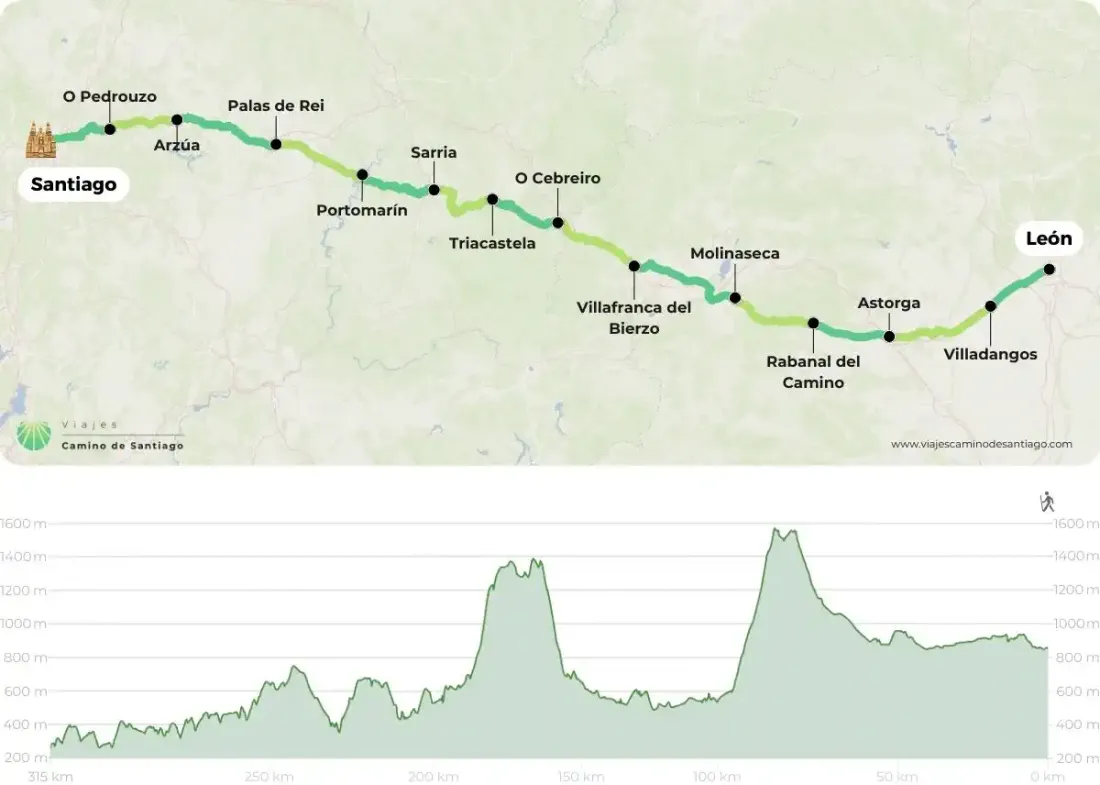
The Camino de Santiago by bike from León, the western half of the French Way on two wheels. 312 kilometres linking Astorga, Ponferrada, Villafranca, O Cebreiro and Sarria to Santiago, alternating the Maragatería, the Bierzo vineyards and the green of Galicia at pedalling pace.
We handle the logistics so you only have to pedal: accommodation, your pilgrim's credential, full documentation and travel insurance, from 338 €. If you'd rather ride without panniers, add the daily luggage transfer.
The French Way by bike from León is an itinerary organised by Viajes Camino de Santiago®.
Services
Included in all our routes
- Accommodation
8 days / 7 nights
- Complete documentation (Dossier and material for the Camino)
- On-the-road emergency telephone assistance
- Pilgrim's Credential
- Travel insurance
Optional
- Luggage transfer during the stages. (1 piece per person max 15 kgs)
- Supplement for single room
- Extra night in Santiago de Compostela
- Breakfast
- MP (Breakfast and dinner)
- Cancellation Insurance
Accommodations
- Most popular
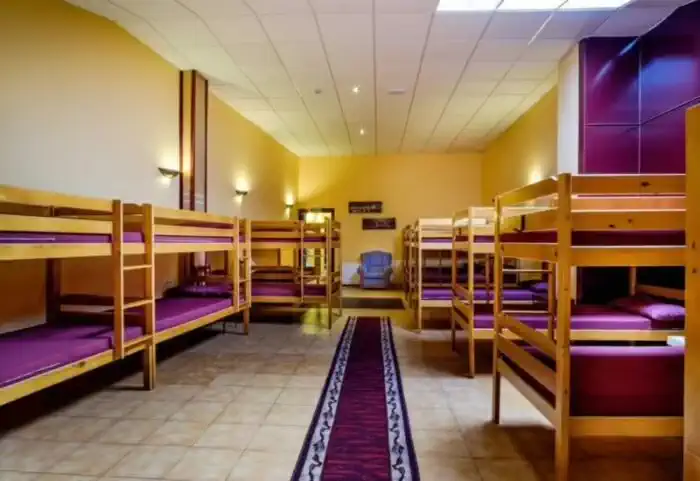
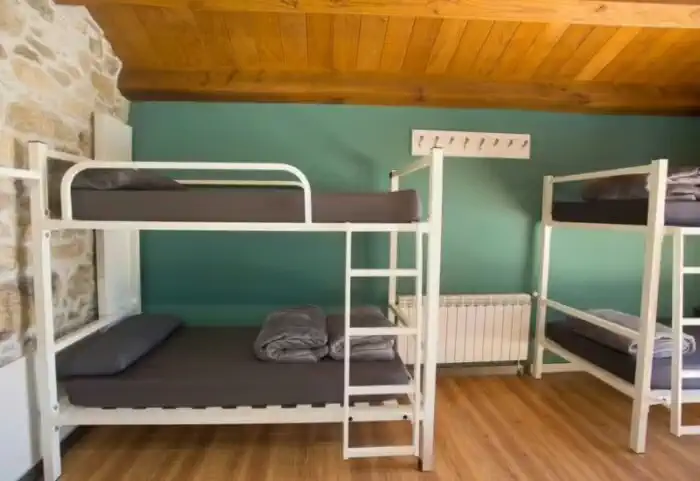
Basic accommodation (Private hostels)
338 €
The most authentic accommodation on the Camino. Hostels are the ideal option for those traveling on a tight budget, solo pilgrims, or anyone who wants to experience the Camino de Santiago in its purest form. They are the perfect place to socialize, share stages, and connect with fellow walkers along this ancient route.
- Most popular
Private comfort (Guesthouses, rural houses and small hotels)
550 €
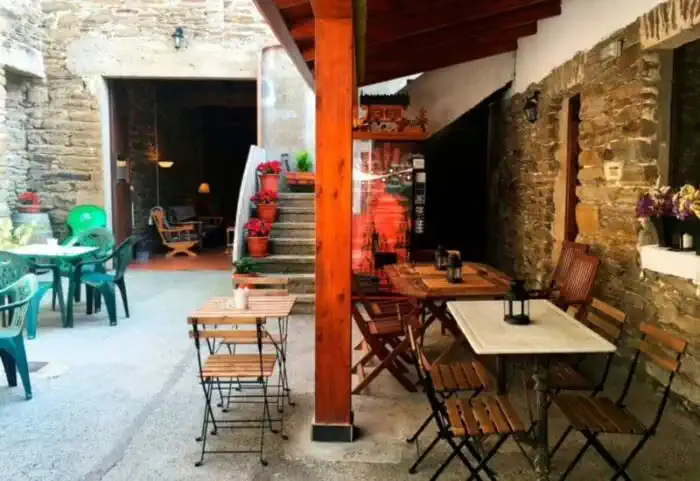
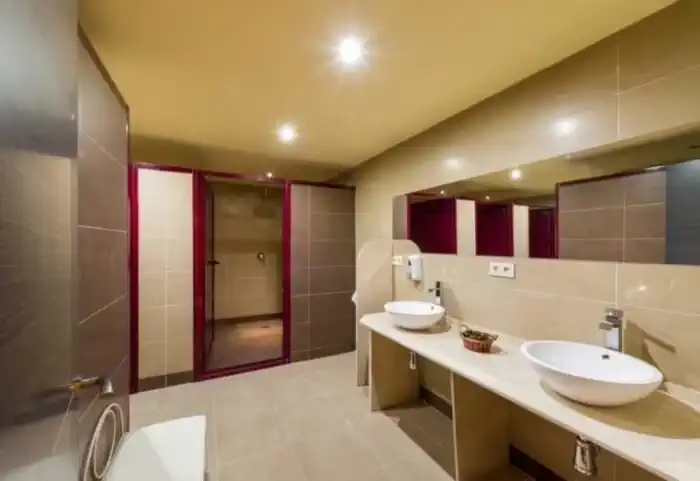
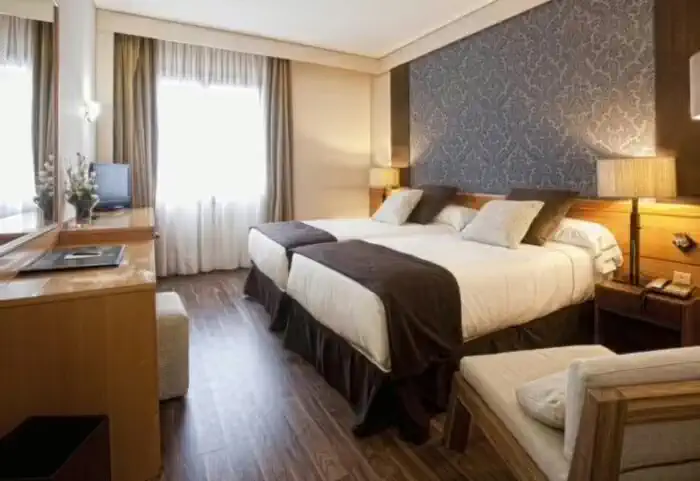
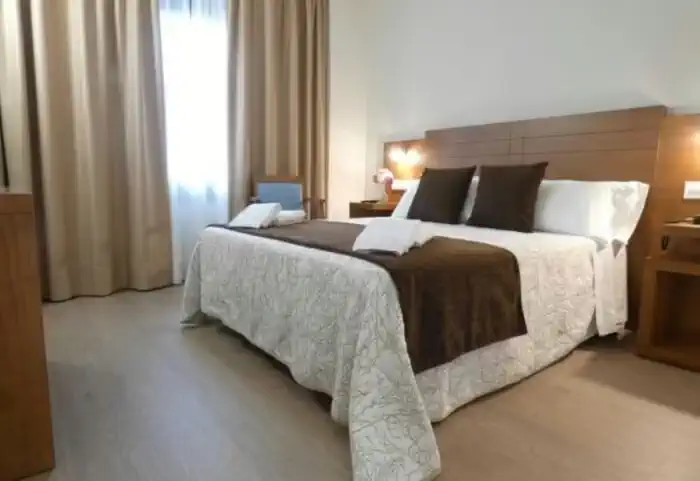
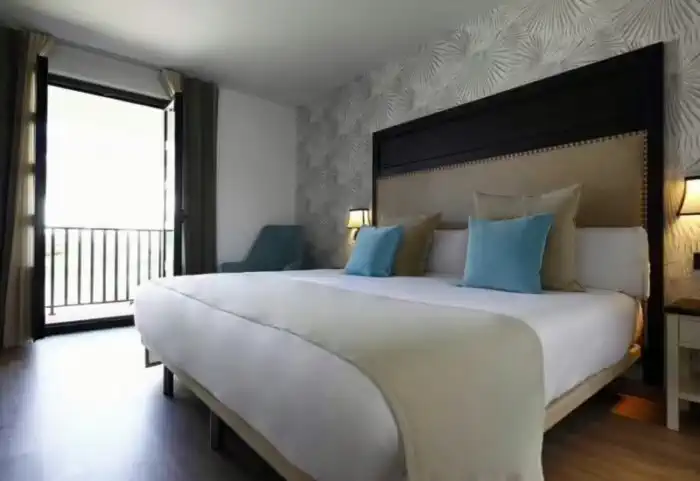
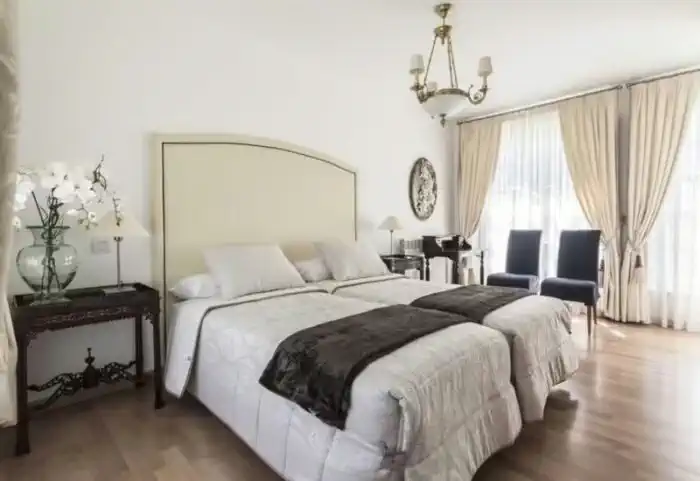
The perfect balance between charm and comfort. Guesthouses, B&Bs and country houses await you in the villages along the Camino with private rooms, private bathrooms, TV, and daily cleaning service. Simple and welcoming, they are the ideal place to truly rest and enjoy the peaceful rural essence that only the Camino can offer.
- Most popular
Superior accommodation (Charming hotels)
670 €
For those who want to reach each stage and recover in complete comfort. The best hotels and manor houses along the Camino de Santiago, featuring elevators, restaurants, private bathrooms, and quality services. Gardens, terraces, and swimming pools to end each day the way a pilgrim who values well-being deserves.
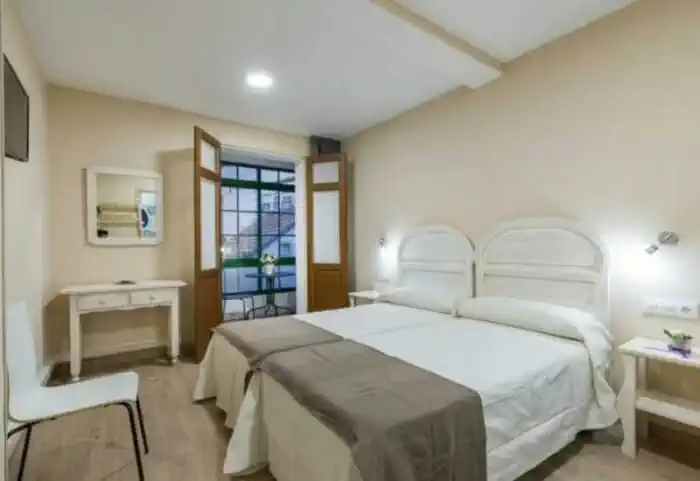
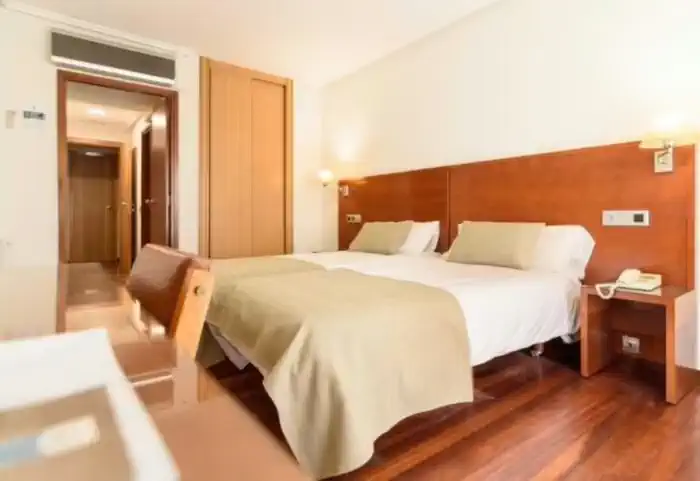
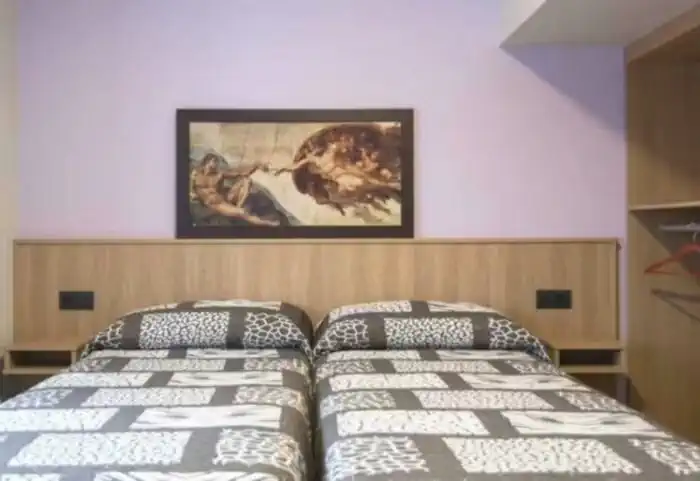
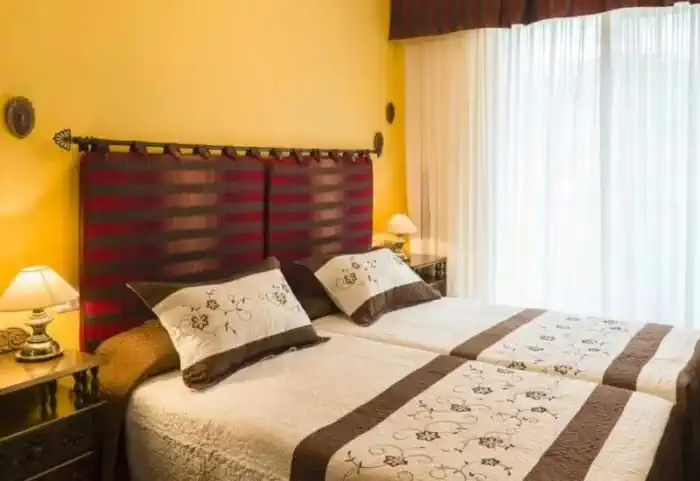
Photos
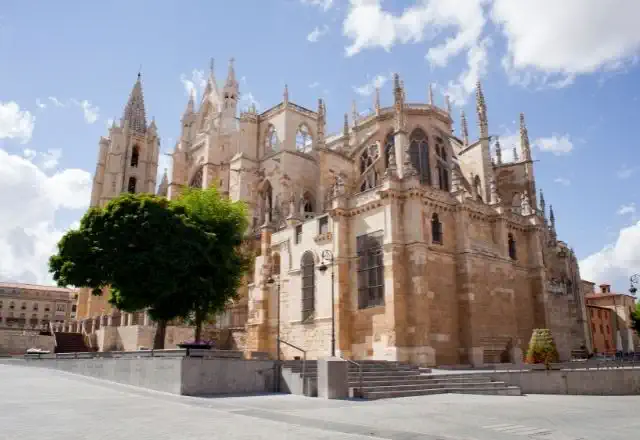
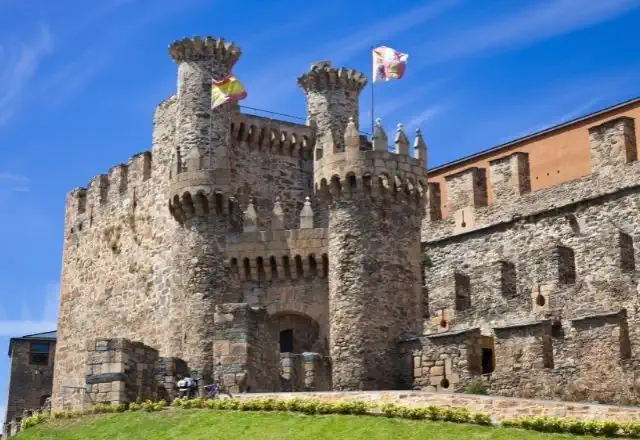
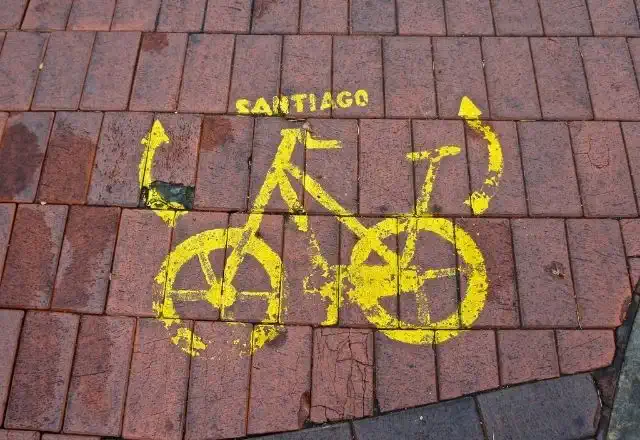
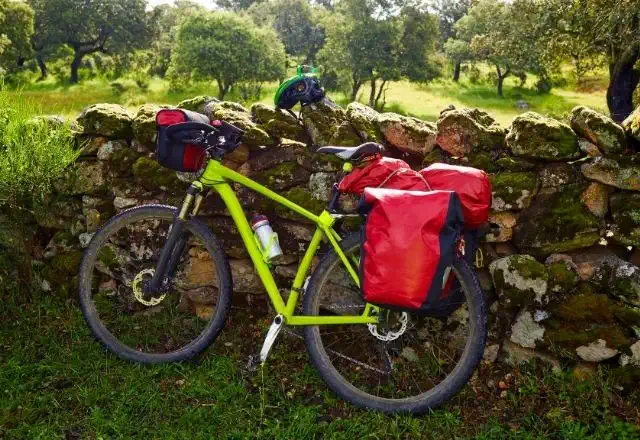
Map of the French Way by bike from León
Stages
- day 1
Arrival at León
- day 2
Stage 1. León - Astorga (49 km)
A long day that begins with a somewhat tedious departure from León, through industrial areas. But the reward arrives: the impressive medieval bridge of Hospital de Órbigo, setting of the Paso Honroso, and the panoramic views from the Cruz de Toribio. You finish in Astorga, a millennia-old crossroads of cultures, with its cathedral and the modernist Palacio de Gaudí as its jewels.
- day 3
Stage 2. Astorga - Ponferrada (54 km)
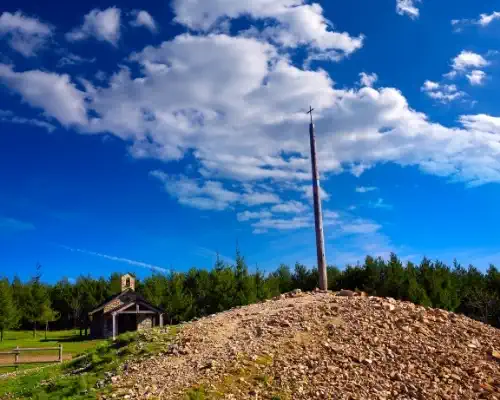
Mountain day: from Astorga you ride through the Maragatería, via Rabanal del Camino and Foncebadón, up to the Cruz de Ferro, the highest point of the Camino Francés. Then comes a long, stony and demanding descent through El Acebo and Molinaseca —brake sensibly— down into the Bierzo. Ponferrada, capital of El Bierzo, is dominated by its imposing Templar castle, one of the best-preserved of the order and almost entirely open to visitors. Nearby stand the Basilica de la Encina and an old town full of good terraces. The region is mencía wine, botillo and pepper country: the food here is excellent.
- day 4
Stage 3. Ponferrada - O Cebreiro (55 km)
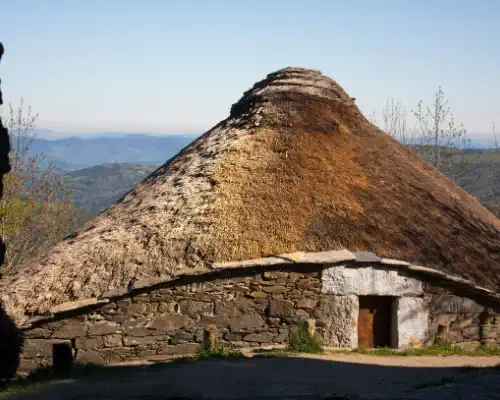
Get ready: today brings the toughest climb of the whole route. You cross the green Bierzo valley to Las Herrerías, and that's where things get serious: a demanding climb —better on asphalt— up to magical O Cebreiro. This village of thatched pallozas, with the oldest church on the Camino, is pure ethnographic and Celtic treasure: the best reward for recharging your batteries.
- day 5
Stage 4. O Cebreiro - Portomarín (62 km)
A long mountain day. You leave O Cebreiro behind with a pang of regret and crest two passes: the Alto de San Roque, with its statue of the pilgrim battling the wind, and the Alto do Poio, the highest point of the Camino in Galicia. You descend to Triacastela and continue —via San Xil or the monastery of Samos— to Sarria. The final kilometres, through hills and woodland, bring you to Portomarín.
- day 6
Stage 5. Portomarín - Arzúa (54 km)
You start with a tough warm-up climb and reach Palas de Rei, a good first stop. You continue to Melide, the day's big reward: there's no better place on the Camino for pulpo á feira, so grab a table at a pulpería. With a full belly you tackle the final kilometres, through woodland and the odd leg-breaking climb, to Arzúa, land of good cheese.
- day 7
Stage 6. Arzúa - Santiago de Compostela (38 km)
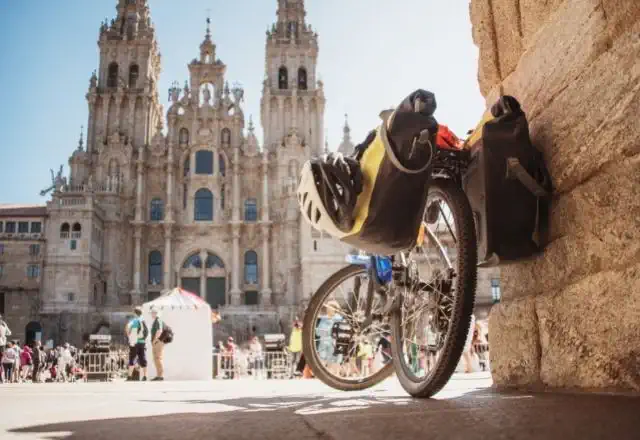
A long final day to Compostela. The high point comes at Monte do Gozo, with your first view of the cathedral towers. Shortly after, your triumphant arrival at Plaza del Obradoiro. You've completed your Camino and you're in Santiago!
- day 8
End of the trip
After your last night, you check out of your accommodation and your trip comes to an end.
Related Trips
 6 days / 5 nights
 15 days / 14 nights
 7 days / 6 nights
 7 days / 6 nights
 8 days / 7 nights
 7 days / 6 nights
Frequently Asked Questions
-
How many kilometres are cycled per day on the Camino de Santiago?
Doing the Camino by bike allows the ‘bicigrino’ to cover more kilometres per day than a pilgrim on foot, easily double. The number of kilometres cycled per day depends on several factors:- physical capabilities of each person;
- time available;
- route and section chosen (technical difficulty of the terrain);
- availability of accommodation.
-
What kind of bicycles can I rent to do the Camino de Santiago?
We have high quality mountain bikes and electric bikes that you can rent during the whole Camino. Check the details here.
-
What services are included in the Camino de Santiago by bike?
The Camino de Santiago by bike includes the following services:
- Accommodation
- Dossier with information about the stages
- Pilgrim's credential
- On-the-road helpline
- Travel insurance
In addition, you can customize your trip by adding the following optional services:
- Luggage transport between stages
- Breakfast or half board
- Extra night at the beginning or end of the stage
- Bicycle rental
Unlike the group trips, no guide or support vehicle is included between stages. However, you will have a 24-hour hotline where you can contact us in case of any problem or unforeseen event, which we will solve quickly.
-
Can I bring my own bicycle for a trip on the Camino de Santiago?
Yes, you can do the Camino with your own bike. The important thing is that it is in good condition before starting to avoid problems. Remember that you can also rent a bicycle with us (MTB, e-Bike, etc., with equipment included) which you will find directly at your first shelter, and we will indicate where to return it at the end of your journey.
-
Where will I leave the bicycle each night at the accommodations?
Do not worry, most accommodations on the Camino have secure spaces for bicycles. They are usually garages or enclosed areas with security measures. When we organize your trip, we ensure that each accommodation guarantees this service. Additionally, if it is an e-Bike and you need to charge it overnight, the accommodations will provide you with a power outlet and electricity.
-
Does the French Way from León entitle you to the Compostela?
Yes, definitely. From León it is about 300 km to Santiago, well above the minimum. It is the ideal option if you want a longer experience than the last 100 km without doing the complete Camino. -
What should I see in León before starting the Camino Francés by bike?
Save the afternoon you arrive for León Cathedral, whose stained-glass windows are considered among the most beautiful in Europe. Close by you have the Collegiate Church of San Isidoro, with Romanesque frescoes nicknamed «the Sistine Chapel of Romanesque art», the former Hospital de San Marcos with its great Plateresque façade, and Gaudí's Casa Botines.
For dinner, head to the Barrio Húmedo and the Barrio Romántico: heritage and tapas in equal measure before you get on the bike the next day.
-
What is it like leaving León by bike towards Astorga?
Leaving León is the least attractive part of the trip: residential and industrial areas with quite a lot of traffic. As far as Hospital de Órbigo you can follow the traditional route beside the main road or take a slightly longer alternative away from the traffic.
After the bridge at Hospital de Órbigo you choose again between road and countryside; the countryside option climbs to the Cruz de Toribio, with good views. To enter Astorga, instead of carrying your bike up the steps of the footbridge over the railway, stay on the main road.
-
Is it better to ride down from the Cruz de Ferro to Molinaseca by road or on the trail?
By road. On the Astorga–Ponferrada stage, after the Cruz de Ferro, an 18 km descent to Molinaseca begins. The walking trail has narrow paths, a stony surface, steep gradients and stretches along the edge of ravines, so we recommend the tarmac: the LE-142 road runs parallel to the trail.
Before the climb, stop to refuel in Rabanal del Camino, and save lunch for Molinaseca.
-
What is the stone ritual at the Cruz de Ferro?
The Cruz de Ferro is one of the great landmarks of the Camino Francés, and you ride past it on the Astorga–Ponferrada stage. Tradition says you leave at its foot a stone brought from home or picked up where you started the Camino; if you set off from León, it can be a stone from there.
It is a short stop in the middle of the climb from Rabanal del Camino, just before the long descent towards Molinaseca and Ponferrada.
-
What should I see in Astorga at the end of the first bike stage?
Astorga is small but packed with monuments, so try to arrive with time to spare. Don't miss the Cathedral of Santa María, Gaudí's Episcopal Palace, the modernist Casa Granell, the Museo de los Caminos and the town's Roman remains.
It marks the end of the 49 km from León and is a good place to rest before the much more demanding stage to Ponferrada.
From León
From 338 €

Reviews
Lucía Herrera Ríos
Clara Santos Pineda
Noelia Rueda Ferrero
Lucas Estévez Valcarce
Adrián Cifuentes Mallo
Marta Llorente Sainz
Hugo Aranda Pardo
Nerea Galván Soto
Sergio Villalba Crespo
Laura Escudero Molina