


The Camino de Santiago on two wheels: from Porto and along its inland variant, you'll pedal 253 kilometres to Santiago. The route crosses Barcelos, enters Galicia at Tui and links Arcade and Caldas de Reis, alternating historic roadway, vineyards and woods at a pace made for cyclists.
We handle the logistics so all you do is pedal: accommodation, your pilgrim's credential, full documentation and travel insurance, from 993 €. If you want to ride the inland variant without panniers, add the daily luggage transfer.
The Camino de Santiago by bike from Porto is a trip organised by Viajes Camino de Santiago®.
Services
Included in all our routes
- Accommodation
7 days / 6 nights
- 7 days / 6 nights accommodation
- Complete documentation (Dossier and material for the Camino)
- On-the-road emergency telephone assistance
- Pilgrim's Credential
- Travel insurance
Optional
- Electric bike rental
- Bicycle rental (Max Comfort)
- Luggage transfer during the stages. (1 piece per person max 15 kgs)
- Supplement for single room
- Extra night in Santiago de Compostela
- Breakfast
- Bicycle rental (Basic)
- Cancellation Insurance
Accommodations
- Most popular
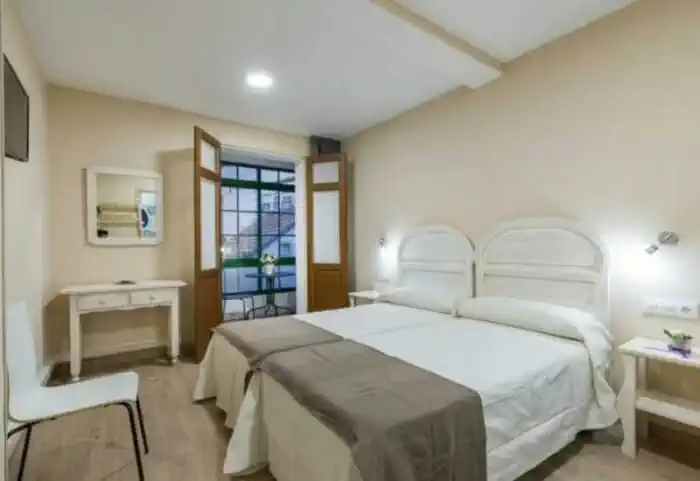
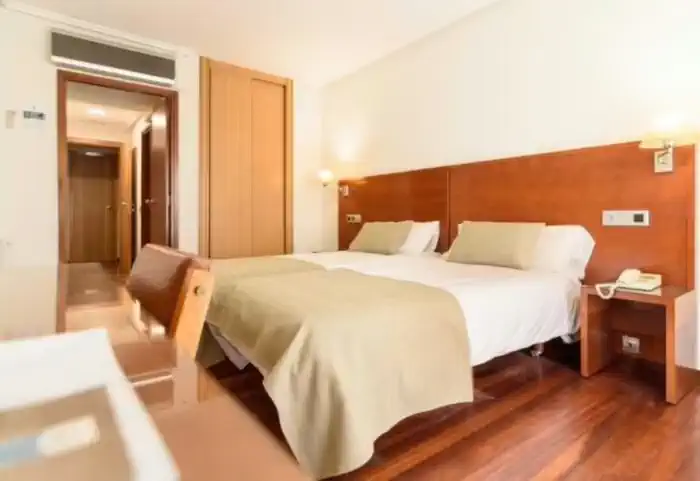
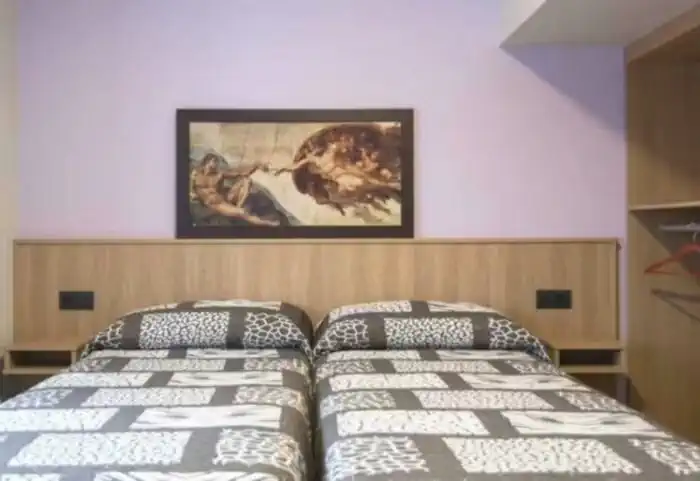
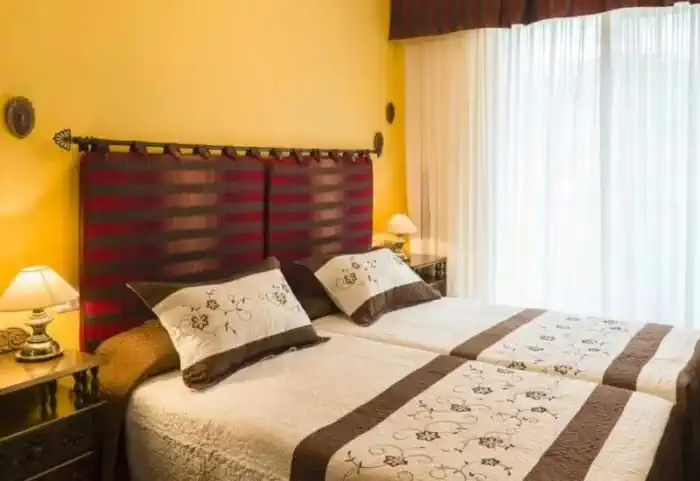
Private comfort (Guesthouses, rural houses and small hotels)
The perfect balance between charm and comfort. Guesthouses, B&Bs and country houses await you in the villages along the Camino with private rooms, private bathrooms, TV, and daily cleaning service. Simple and welcoming, they are the ideal place to truly rest and enjoy the peaceful rural essence that only the Camino can offer.
Photos
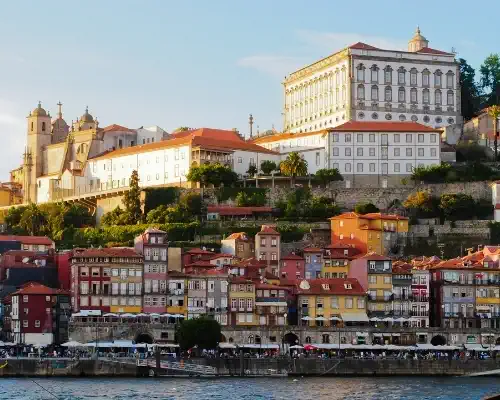
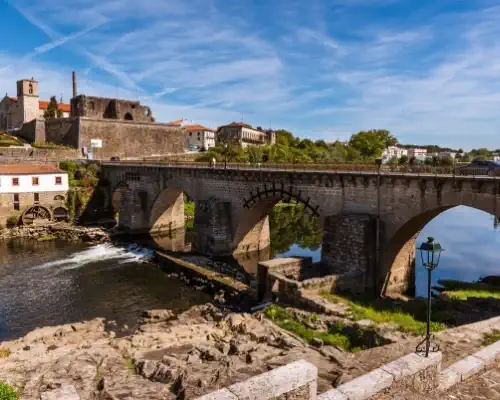
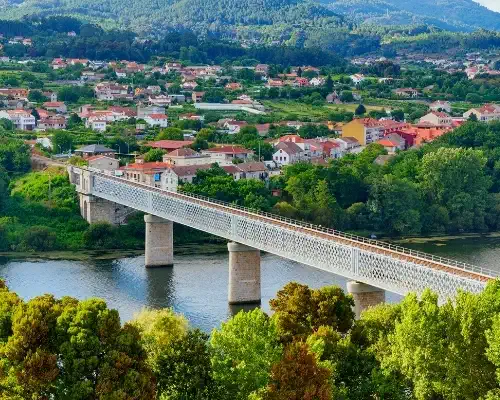
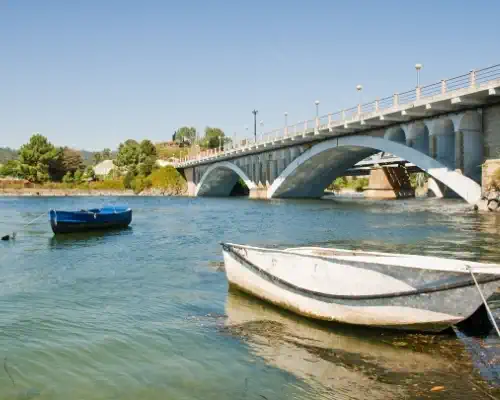
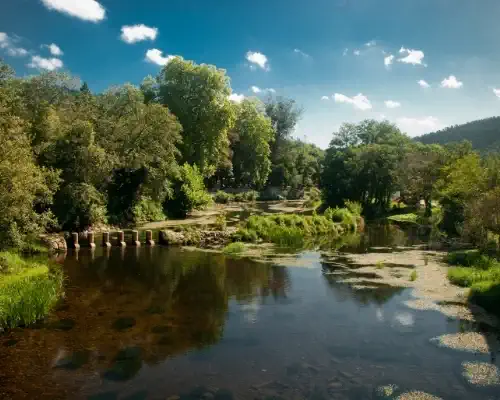
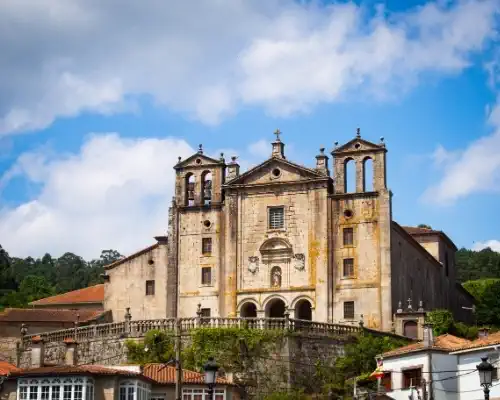
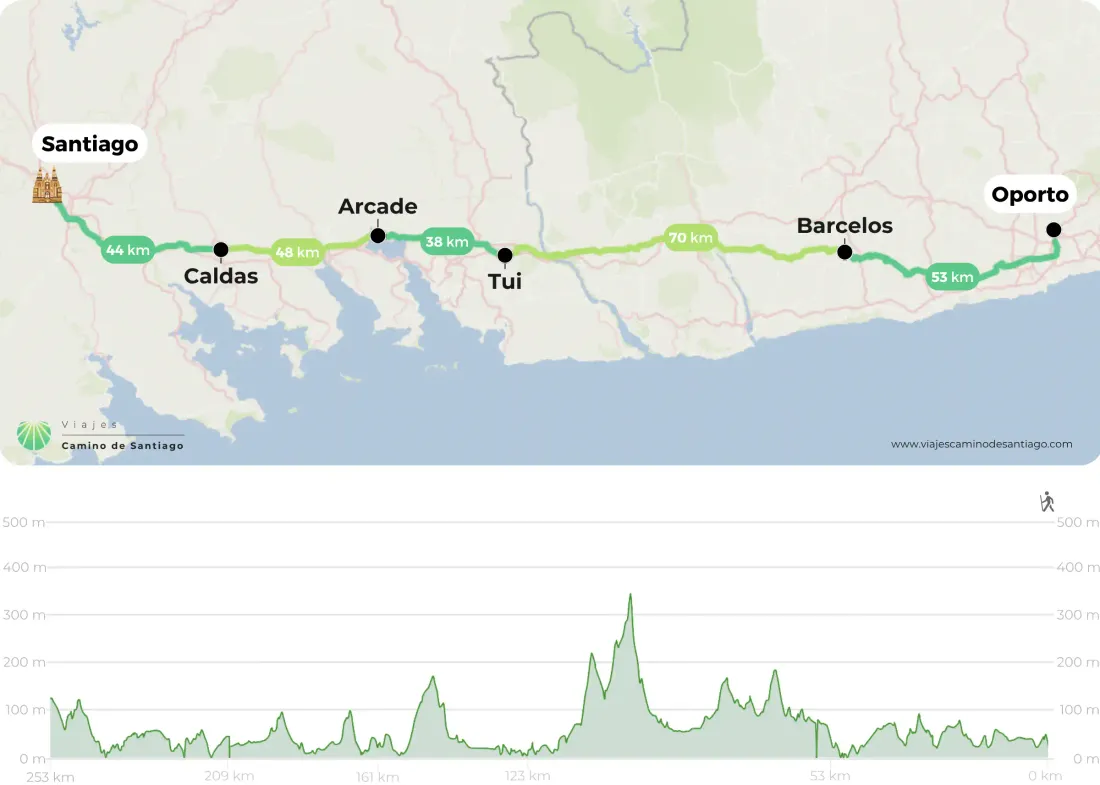
Map of the Portuguese Way by bike from Oporto - Interior
Stages
- day 1
Arrival at Oporto
- day 2
Stage 1. Oporto - Barcelos (53 km)
Your first day on the bike. Getting out of Porto drags on, with some twenty kilometres of warehouses and industrial estates, but the good part comes afterwards: past the monastery of Vairão a nice descent takes you to the river Ave, the lowest point of the route, and then straight into the climb to São Mamede. After that, the church of Arcos, the stamp at São Pedro de Rates and the final drop to Barcelos. - day 3
Stage 2. Barcelos - Tui (70 km)
The toughest stage of your Portuguese Way by bike. After a first stop in Ponte de Lima you face the climb to the Labruja pass, demanding because of the surface; if you would rather not push the bike, there is an alternative on tarmac that makes it far easier. Then a breather in Rubiães and only twenty kilometres left: Valença do Minho and the border crossing into Tui. - day 4
Stage 3. Tui - Arcade (38 km)
After yesterday, this is almost a stroll. You leave Tui through the natural area of As Gándaras e río Louro, far nicer than the alternative past the industrial estate. Beyond O Porriño comes the hardest climb of the day, up to the chapel of Santiaguiño in Mos. Then Redondela and a possible dip at Cesantes beach before rolling on to Arcade, the oyster capital. - day 5
Stage 4. Arcade - Caldas de Reis (48 km)
A long and very varied stage. Shortly after leaving Arcade you cross Ponte Sampaio, one of the most iconic spots on the Portuguese Way. Then pazos, granaries and stone crosses all the way to Pontevedra, and later the observatory of the Alba marshes. At Briallos it is worth the detour to the Barosa waterfalls, with their sixty-metre drop, before reaching the spa town of Caldas de Reis. - day 6
Stage 5. Caldas de Reis - Santiago de Compostela (44 km)
Last day, so set off early and make the most of Santiago. The route follows the original track — watch out for walking pilgrims — and its key stop is Padrón: its famous peppers and the Pedrón, the stone where the boat carrying the Apostle's remains was moored. The final stretch links woods, stone crosses and old churches through Teo and Ames up to your triumphant entrance into the Obradoiro square. - day 7
End of the trip
After your last night, you check out of your accommodation and your trip comes to an end.
Related Trips
 8 days / 7 nights
 7 days / 6 nights
 13 days / 12 nights
 7 days / 6 nights
 8 days / 7 nights
 7 days / 6 nights
Frequently Asked Questions
-
How many kilometres are cycled per day on the Camino de Santiago?
Doing the Camino by bike allows the ‘bicigrino’ to cover more kilometres per day than a pilgrim on foot, easily double. The number of kilometres cycled per day depends on several factors:- physical capabilities of each person;
- time available;
- route and section chosen (technical difficulty of the terrain);
- availability of accommodation.
-
How busy is the Portuguese Way?
The Portuguese Way has become increasingly popular in recent years, positioning itself as the second most traveled route after the French Way. Although it does not reach the same level of traffic as the French route, it is still a busy option, especially from Porto or Tui. At these points, you will find a constant flow of pilgrims, especially during the high season (spring and summer). One of the reasons for its growing popularity is that it is an accessible route with less physically demanding stages. In addition, it offers excellent infrastructure for pilgrims, with numerous hostels, hotels and services at each stage. -
How many days does it take to do the Portuguese Way?
The Portuguese Camino de Santiago is one of the longest routes of the Camino de Santiago, with about 620 km generally divided into 27 stages. Therefore, divided like this, it takes 27 days to complete the Portuguese Camino de Santiago on foot. Each stage would be the distance you travel in one day, from the starting location to the end of the walk, where you will spend the night. The stages can vary in distance and difficulty, and it is important to note that they can be adjusted according to your pace and physical condition. Some pilgrims choose to divide certain long or difficult stages, or lengthen those that are shorter or easier to walk. It all depends on having a place to sleep. -
Where does the Portuguese Way begin?
The Portuguese Camino de Santiago begins in the city of Lisbon, the capital of Portugal. -
What are the stages of the Portuguese Way?
Throughout its approximately 620 kilometers, the Portuguese Way is divided into the following 27 stages:- Lisboa - Alpriate (21,7 km)
- Alpriate - Vila Franca de Xira (18,8 km)
- Vila Franca de Xira - Azambuja (20 km)
- Azambuja - Santarém (33 km)
- Santarém - Golegã (30,7 km)
- Golegã - Tomar (31,3 km)
- Tomar - Alvaiázere (31,7 km)
- Alvaiázere - Alvorge (22,7 km)
- Alvorge - Cernache (26,1 km)
- Cernache - Coimbra (11,3 km)
- Coimbra - Sernadelo (24,8 km)
- Sernadelo - Águeda (23,5 km)
- Águeda - Albergaria-a-Velha (15,8 km)
- Albergaria-a-Velha - São João da Madeira (28,8 km)
- São João da Madeira - Grijó (19 km)
- Grijó - Oporto (15,1 km)
- Oporto - Vilarinho (26,5 km)
- Vilarinho - Barcelos (27,3 km)
- Barcelos - Ponte de Lima (34,5 km)
- Ponte de Lima - Rubiães (17,4 km)
- Rubiães - Tui (19,1 km)
- Tui - O Porriño (18,7 km)
- O Porriño - Arcade (23 km)
- Arcade - Pontevedra (12 km)
- Pontevedra - Caldas de Reis (21 km)
- Caldas de Reis - Padrón (18,6 km)
- Padrón - Santiago de Compostela (24,3 km)
This division can be modified, depending on the preferences and possibilities of each person, always taking into account having a place to spend the night. -
What are the hardest stages of the Portuguese Way?
In all the routes and stages of the Camino de Santiago there is a lot of beauty, nature and heritage. Of course, all this, between dozens of kilometers, with sections and stages that are easier to travel and others that are more complicated. The latter are characterized, above all, by having large slopes and, sometimes, accumulating many kilometers of ascent. Below we want to inform you of the most commented stages and climbs due to their physical demands on the Portuguese Way. Some of them, for many, are part of the hardest stages of the Camino de Santiago.- Codesal – Alto da Portela Grande de Labruja
- Barcelos - Ponte de Lima
-
Which Camino is easier, the Portuguese or the French?
If you are wondering which route is easier between the Portuguese Way and the French Way, the answer depends on several factors. However, in general, the Portuguese Way is considered more accessible for most pilgrims. The Portuguese Way has flatter and gentler terrain, especially on its most popular stretch from Porto to Santiago de Compostela. The stages are less demanding and the climate is more moderate, an ideal option for those looking for a less physically challenging route. On the other hand, the French Way, although more famous and with a highly developed infrastructure, presents stages with greater unevenness, especially in the first sections that cross the Pyrenees and some mountainous areas in the provinces of León and Galicia. Although it is an incredibly popular route full of history, the physical effort is greater, so it requires better physical preparation. -
What are the most beautiful stages of the Portuguese Way?
Some stages of the Portuguese Way stand out for their natural beauty, historical richness and cultural significance. Below, I present a selection of the most beautiful stages of the Portuguese Way:- Tui - O Porriño
- Pontevedra - Caldas de Reis
- Valença do Minho - Tui
- Redondela - Pontevedra
- Caldas de Reis - Padrón
- Padrón - Santiago de Compostela
- Natural Landscapes: This stage crosses lush Galician forests, trails surrounded by vineyards and agricultural fields. The tranquility and greenery of the surroundings provide a comforting experience deeply connected to nature.
- Medieval Rivers and Bridges: Along the way, pilgrims cross crystalline rivers on ancient stone bridges, such as the famous Lérez River Bridge, which adds a historical and picturesque touch to the journey.
- Galician Villages: The route passes through small villages that preserve the traditional Galician essence, where pilgrims can enjoy the local hospitality and the rich gastronomy of the region.
- Hot Springs in Caldas de Reis: The stage ends in Caldas de Reis, known for its natural hot springs, which have attracted visitors since Roman times. It is the perfect place to relax after a day of walking.
-
What kind of bicycles can I rent to do the Camino de Santiago?
We have high quality mountain bikes and electric bikes that you can rent during the whole Camino. Check the details here.
-
What services are included in the Camino de Santiago by bike?
The Camino de Santiago by bike includes the following services:
- Accommodation
- Dossier with information about the stages
- Pilgrim's credential
- On-the-road helpline
- Travel insurance
In addition, you can customize your trip by adding the following optional services:
- Luggage transport between stages
- Breakfast or half board
- Extra night at the beginning or end of the stage
- Bicycle rental
Unlike the group trips, no guide or support vehicle is included between stages. However, you will have a 24-hour hotline where you can contact us in case of any problem or unforeseen event, which we will solve quickly.
-
How difficult is the Portuguese Way?
The Portuguese Way, although it is one of the longest routes, with 27 stages and 620 kilometers from Lisbon, is not considered very difficult. Of all of them, there are two stages considered difficult, due to their distance and relief: stage 20 between Ponte de Lima and Rubiães, and stage 19 between Barcelos - Ponte de Lima. -
Can I bring my own bicycle for a trip on the Camino de Santiago?
Yes, you can do the Camino with your own bike. The important thing is that it is in good condition before starting to avoid problems. Remember that you can also rent a bicycle with us (MTB, e-Bike, etc., with equipment included) which you will find directly at your first shelter, and we will indicate where to return it at the end of your journey.
-
Where will I leave the bicycle each night at the accommodations?
Do not worry, most accommodations on the Camino have secure spaces for bicycles. They are usually garages or enclosed areas with security measures. When we organize your trip, we ensure that each accommodation guarantees this service. Additionally, if it is an e-Bike and you need to charge it overnight, the accommodations will provide you with a power outlet and electricity.
-
Can I do the Camino de Santiago by bicycle?
We have several routes prepared for cyclists, and the choice mainly depends on the number of days you have available. And, if you already have a bicycle, perfect, but if you do not have one, do not worry: you can rent with us either an MTB bicycle or an electric one.
Here you can see all the options:

Reviews
Iván Herrera Ruiz
Marta Pérez León
Andrés Molina Castro
Laura Sánchez Gil
Raúl Domínguez Pérez
Gabriel Lozoya Serrat
Inés Valdivia Peralta
Mario Quintana Arrieta
Paula Rendón Casellas
Héctor Lafuente Becerra