French Way from Leon to O Cebreiro

French Way from Leon to O Cebreiro - Paquete turístico

Attention: Route not available for walking between November 1 and January 15.

León is undoubtedly one of the most important cities on the French Way; over the centuries it has witnessed the pilgrims' pilgrimage and has remained faithful to its eternal hospitality. In this section of the French Way from León to O Cebreiro, you will discover small villages of medieval origin, cathedrals, Templar castles and natural landscapes of great beauty such as the Mountains of León and the Bierzo Valley, until you reach the spectacular mountains of Os Ancares.

Photos

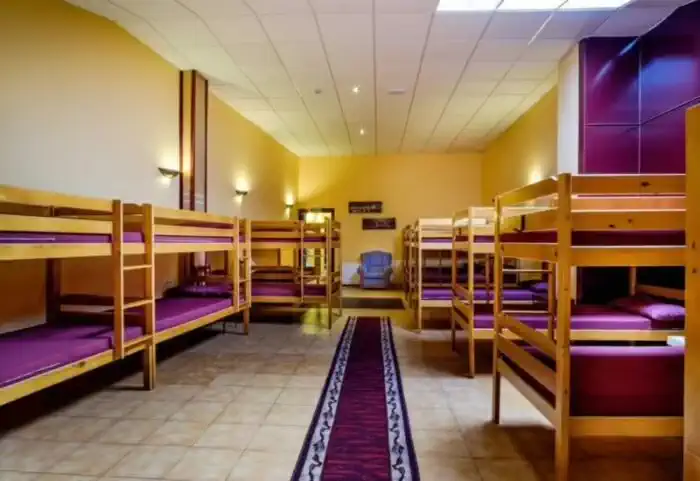
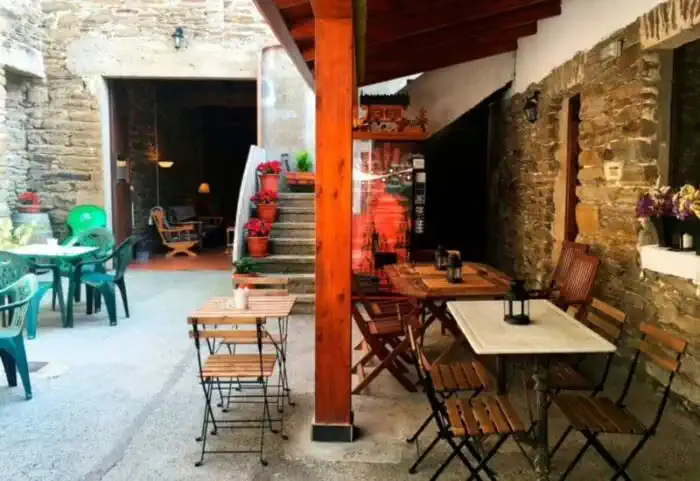
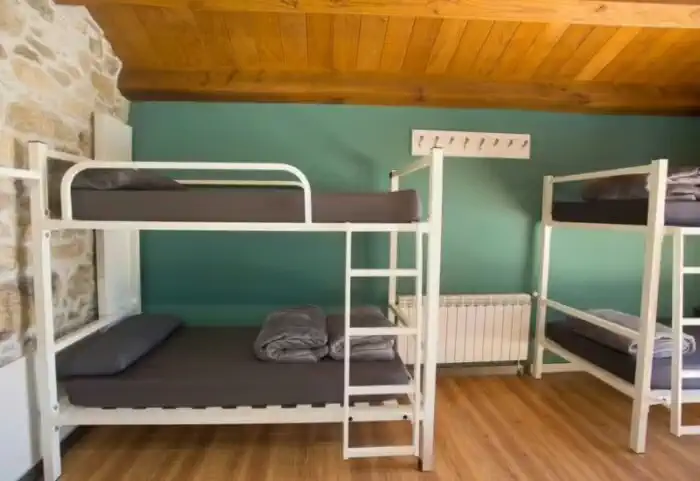
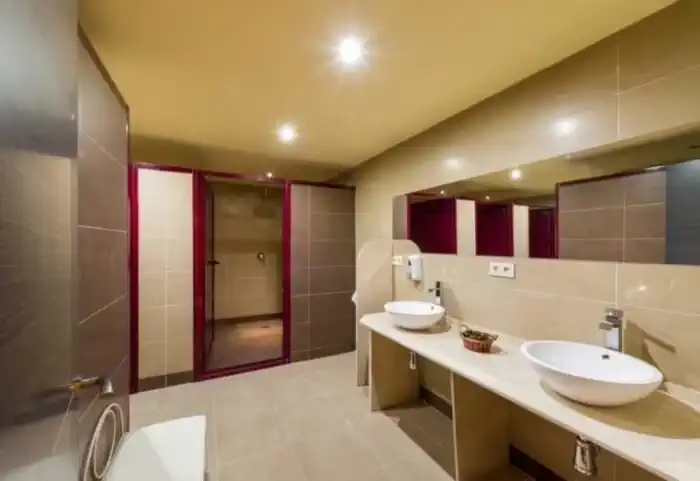
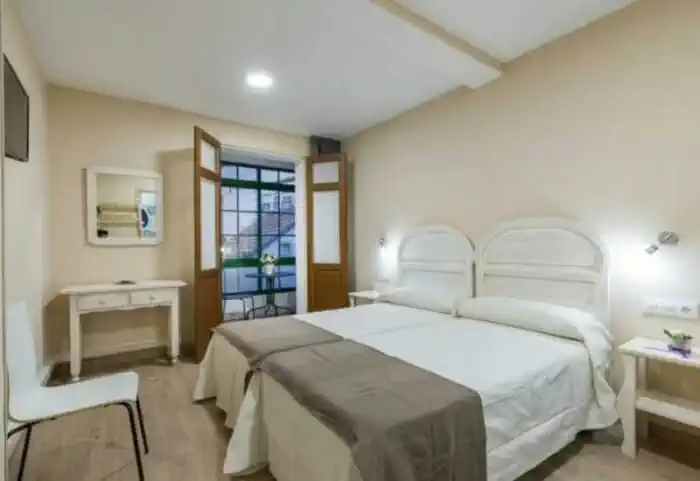
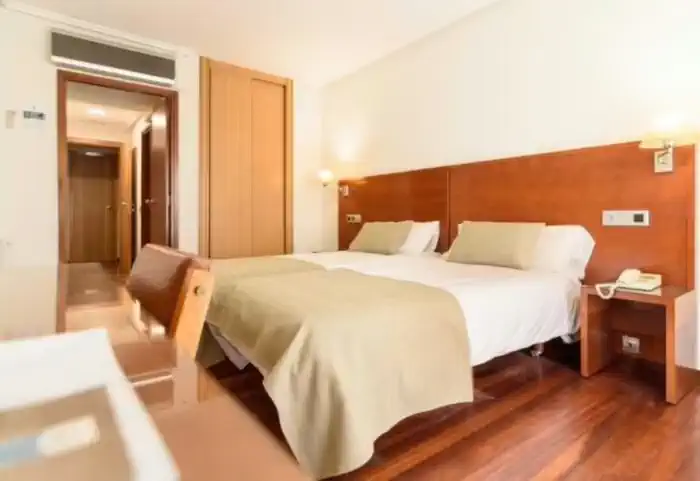
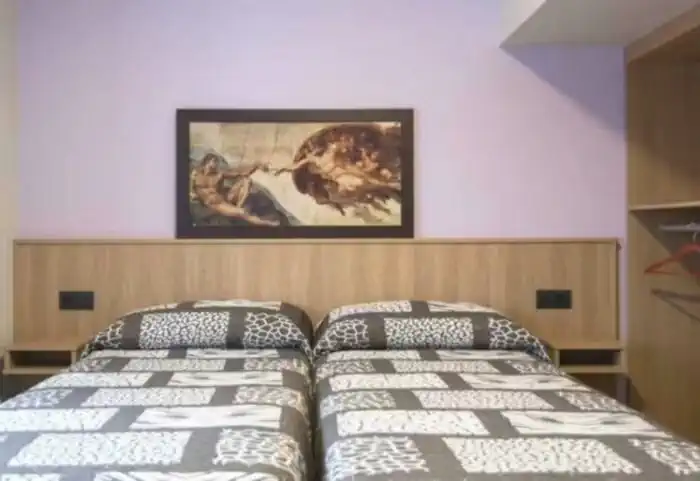
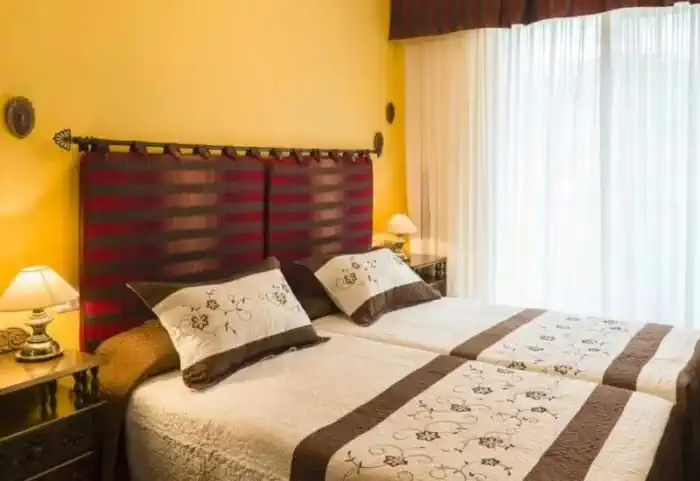
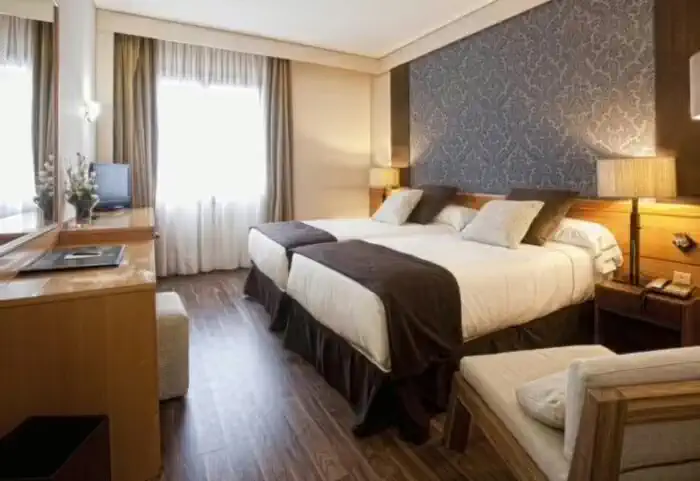
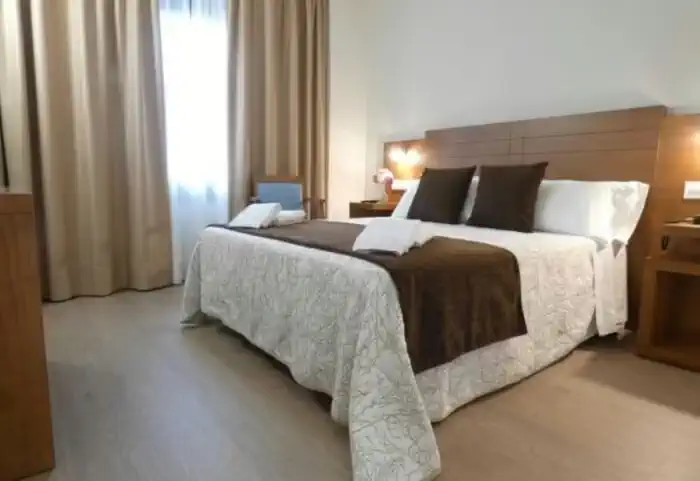
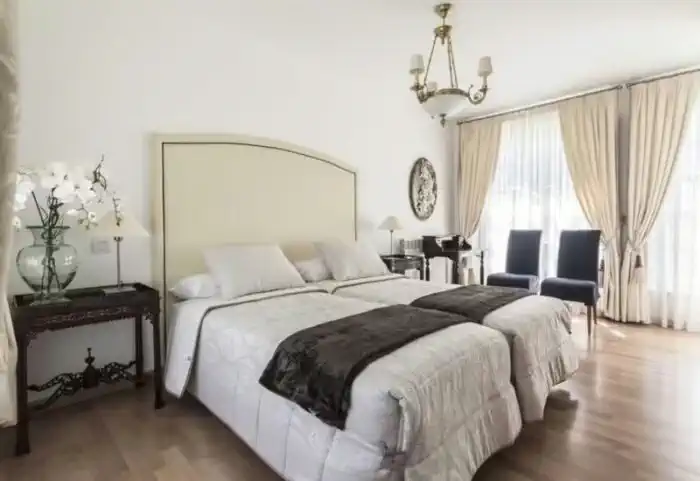
Accommodations

Services

Included in all our routes

  • Accommodation

    8 days / 7 nights

  • 8 days / 7 nights accommodation

  • Complete documentation (Dossier and material for the Camino)

  • Luggage transfer during the stages. (1 piece per person max 15 kgs)

  • On-the-road emergency telephone assistance

  • Pilgrim's Credential

  • Travel insurance

Optional

  • Extra night
  • Supplement for single room
  • Breakfast
  • MP (Breakfast and dinner)
  • Cancellation Insurance

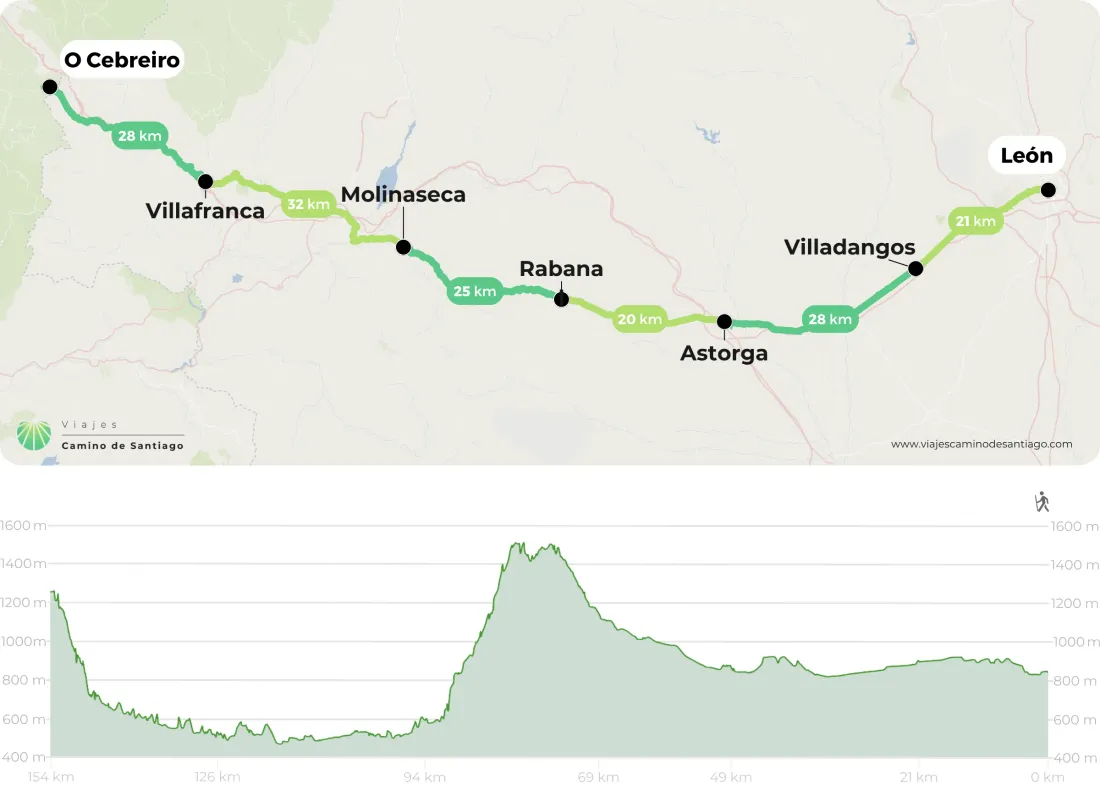
Map of the French Way from Leon to O Cebreiro

Mapa Leon O Cebreiro Jpg RZFBO

Stages

  • day 1

    Arrival at León

    We leave Mansilla de las Mulas in the direction of León, crossing the eight-arched bridge over the Esla, and head towards Villamoros de Mansilla. Here we can take a small detour to see the Monastery of Santa María de Sandoval, of which ruins remain.

    After almost 5 kilometres of walking, we arrive at Villamoros de Mansilla, a village not currently crossed by the Camino but which we can take as an alternative to try to avoid for a stretch along the shoulder of the road.

    We advance to Puente Villarente and after crossing the river Porma we find several services where we can get supplies. We continue along the Arriola Canal to reach a tunnel that crosses the motorway to get to Arcahueja. We look out over the Alto del Portillo, a watchtower that allows us to contemplate the banks of the river Toribio and the hamlet of León. We continue straight on along a gravel track and arrive at the rest area of Valdelafuente, a village that is not worth entering.

    We start to see the first industrial buildings and we come across the church of San Juan Bautista. We leave a cemetery on the right and arrive at a crossroads that leads us to the industrial estate.

    We arrive without further ado at Puente Castro, the prelude to the capital of León. From here we only have to cover the last stretch of this thankless stage, rewarded by the attractions of the city of León. We cross the Toribio River over a pedestrian footbridge and walk along Alcalde Miguel Castañón Avenue until we reach the Plaza de Santa Ana and complete the last kilometre to the city centre.

    To consider

    There is a signposted variant at the exit of Mansilla de las Mulas and ends in Villamoros de Mansilla, allowing you to visit the magnificent Cistercian monastery of Santa María de Sandoval. Lengthens the route by 5.5 km.

    Places of interest

    • Monastery of Santa María de Sandoval - Villaverde de Sandoval (Mansilla Mayor)
    • León Cathedral - León
    • Roman Wall and Medieval Fence - León
    • Castle of León - León
    • Mansions and Palaces of the Old Town - León

    Typical dishes

    • Potage
    • Botillo
    • Cocido Maragato or Cocido Montañés (Maragato Stew or Mountain Stew)
    • Pork Mince
    • Trout
  • day 2

    Stage 1. León - Villadangos del Páramo (20.4 km)

    We leave León behind in the direction of Villadangos del Páramo via the Parador de San Marcos. We cross the river and follow the Quevedo Avenue to Trobajo del Camino and cross the N-120, continuing through an industrial area. We arrive at Virgen del Camino, where we can find several bakeries and bars, where we can make our first stop. Here the Way forks and we must choose between the original route of San Martín or the path of Villar de Mazarife.

    To take the main road through Villadangos we must continue straight on, while to follow the variant through Villar de Mazarife we must turn left and, after 100 metres, take a dirt road on the right.

    We follow the original route through Villadangos, leaving the fountain of Cañín to one side, and we arrive at an industrial area that little by little brings us closer to the parallel of the already known N-120.

    We arrive without further ado at Valverde de la Virgen, finding the parish church of Santa Engracia. We continue our route to San Miguel del Camino, where we find some services. The road takes us along a dirt track for 6 kilometres to Villadangos del Páramo, the end of the stage.

    To consider

    In this stage we will see a lot of roads and industrial areas, as the original route has been conquered by the industrial area of León. If we want, we can opt for the variant of Villar de Mazarife, which will save us half of the urban area, which is the reason why this town has been demanding the condition of Jacobean village for years.

    Places of interest

    • Shrine of the Virgen del Camino - Virgen del Camino
    • Church of Santiago - Villadangos del Páramo

    Typical dishes

    • Stewed anchovies
    • Cod in ajoarriero sauce
    • Botillo del Bierzo
    • Cecina de chivo entrecallada de Vegacervera (cured goat's jerky from Vegacervera)
    • Saint Mark's Cake
  • day 3

    Stage 2. Villadangos del Páramo - Astorga (27.9 km)

    We leave the village of Villadangos del Páramo towards Astorga, crossing San Martín del Camino, where there are several establishments where we can have breakfast or take provisions for today's route. We will take the N-120 for the last time, which will guide us for 8 kilometres until we reach Hospital de Órbigo and admire the Paso Honoroso Bridge.

    Just at the exit of the village we will find a fork that gives us a choice. We can continue straight on along a monotonous road next to the national road or turn right towards Villares, a much more interesting route. The two routes coincide at the Crucero de Santo Toribio.

    If we choose the second option, we will go to Villares de Órbigo where we will be able to find enough services to stop and stock up. A path leads us to Santibañez de Valdeiglesias, where every summer a race is held in one of the largest corn mazes in the world.

    We leave Santibañez by an ascending path and arrive at the House of the Gods, where we can eat and drink something in exchange for a donation. We continue with few slopes until we reach the cross of Santo Toribio, from where we can see Astorga and the Montes de León with the summit of Teleno rising. We descend and enter San Justo de la Vega through Calle Real.

    We cross San Justo de la Vega, cross the river Tuerto and pass behind a factory. After a small Roman bridge we return to the national road. At a roundabout we turn left and take a steeply ascending street that leads us to the Plaza de San Francisco. End of the stage.

    To consider

    This stage still continues along the N-120, but its detour through the town of Villares de Órbigo gives us a break from the asphalt we already know so well. This will add a couple of kilometers to the counter, but will make the experience much more enjoyable.

    Places of interest

    • Órbigo Bridge
    • Church of San Juan Bautista - Hospital de Órbigo
    • Church of Santiago - Villares de Órbigo
    • Cathedral of Santa María - Astorga
    • Episcopal Palace - Astorga

    Typical dishes

    • Maragato stew
    • Conger eel in ajoarriero sauce
    • Garlic soup
    • Sausages (cecina, chorizo, lomo, salchichón...)
    • Mantecadas
    • Puff pastry from Astorga
  • day 4

    Stage 3. Astorga - Rabanal del Camino (20.2 km)

    We leave the beautiful Astorga in the direction of Rabanal del Camino along the street of Los Mártires where we will find the hermitage of Ecce Homo. We leave the church behind and cross the A-6 motorway to continue along the road to Murias de Rechivaldo. At the entrance of the village we turn off to the left of the road, but we have the alternative of visiting Castrillo de los Polvazares. It is a beautiful village and an excellent example of Maragata architecture, declared a Historic-Artistic Site. The detour is less than a kilometre further and links up again in Santa Catalina de Somoza.

    If we do not take the detour, we continue through Murias leaving the church of San Esteban on the right and a long straight road leads us to cross the road. About half an hour later we arrive at Santa Catalina de Somoza, an old village of muleteers and sturdy houses with gates. Here we find several bars that are a good place to make our first stop.

    We cross the village along the Calle Real and return to the road, which takes us to the village of El Ganso, where we find a fountain and the church of Santiago with its chapel of Cristo de los Peregrinos (Christ of the Pilgrims).

    We continue our route past the bar La Barraca, which is sure to catch our attention because of its cowboy aesthetics. We leave along a dirt track, again parallel to the road, finding the first oak and pine forests.

    We pass by the monumental Roble del Peregrino (Pilgrim's Oak) and shortly after we see the Santo Cristo de la Vera Cruz hermitage. At the next crossroads we follow the path that leads to the right to the cobbled Calle Real de Rabanal del Camino. End of stage.

    To consider

    Today we face a stage a little shorter and with few slopes. Many pilgrims spend the night in Foncebadón, although we recommend making a stop in Rabanal del Camino, where the end of the stage was located according to the Codex Calixtinus.

    Places of interest

    • Church of San Esteban - Murias de Rechivaldo
    • Church of Santa María - Santa Catalina de Somoza
    • Church of Santiago - El Ganso
    • Hermitage of the Blessed Christ of the Vera Cruz - Rabanal del Camino
    • Church of Our Lady of the Assumption - Rabanal del Camino

    Typical dishes

    • Maragato stew
    • Garlic soup
    • Sausages (cecina, chorizo, lomo, salchichón...)
    • Vegetables of the land for the preparation of different dishes
  • day 5

    Stage 4. Rabanal del Camino - Molinaseca (24.7 km)

    We start our walk leaving Rabanal del Camino, and, at the height of a washhouse, we join a dirt track that will take us to a small climb, the first of many on our way to Molinaseca. The road takes us to Foncebadón. After leaving the ruins of a sanctuary on the left, we continue along a path that runs along the mountainside. We gain altitude without realizing it until we reach the Cruz de Ferro, one of the most emblematic places of the French Way. It is a tradition to deposit here a stone brought from our place of origin.

    We continue along a path parallel to the road, along which we start to descend. The road narrows and moves away from the asphalt until it enters Manjarín, an abandoned village where only a shelter remains.

    After leaving the refuge behind, we continue on asphalt until we head downhill and then a steep slope on a winding road. We reach the road again and contemplate the impressive views of the mountains of El Bierzo. We take a track in the direction of an abandoned military base and start a vertiginous descent through a rocky path where we must be extremely careful. A stretch not suitable for cyclists.

    We approach Acebo, the first village of El Bierzo. At the entrance we find a cross, the hermitage of San Roque and the well known as Fuente de la Trucha. There is also a medieval smithy that works with water. The Way approaches El Acebo, the first village of the region of El Bierzo on the route.

    We leave Acebo on asphalt and descend to a big curve from where we take a detour to the left. We go back up a stony path to Riego de Ambrós. At this point cyclists must continue on the road.

    The Camino continues along the street Camino de Santiago, entering a shady path and starting a beautiful descent. We reach the small stream of Prado, where the path can be a bit muddy. The path takes us through a beautiful forest of centenary chestnut trees. We reach the road again and pass by El Jardín de Anduriña inn. We go down again, the descent is complicated so we must take extreme precautions. In the distance we can already see Ponferrada, the last big city until we reach Compostela.

    We continue along a path on the edge of a ravine and several bends, and we see the roofs of Molinaseca, closer and closer. The last stretch of the descent is along a path indicated on the ground with an arrow made of stones. We passed a cross and reached the sidewalk. Finally we arrive at Molinaseca.

    To consider

    This stage has a steep climb up to the Cruz de Ferro, but we recommend that you be more careful on the descent, as it is much steeper than the climb. At this point we have perhaps the steepest descent of the entire French Way of St. James, going through an uninterrupted descent of about 900 meters from the Cruz de Ferro to Molinaseca. Be careful and take your time. It's better to be a little later than not being able to walk tomorrow.

    Places of interest

    • Tavern of Gaia - Foncebadón
    • Cruz de Ferro - Foncebadón
    • San Miguel Church - El Acebo
    • Parish church of Riego de Ambrós
    • St. Nicholas of Bari - Molinaseca

    Typical dishes

    • Fruits of the Bierzo (reineta apple, pear conference)
    • Bierzo Pepper
    • Botillo from El Bierzo
    • Cherries and sour cherries
    • Wines D.O.El Bierzo
    • Honey from Bierzo
  • day 6

    Stage 5. Molinaseca - Villafranca del Bierzo (31.9 km)

    We say goodbye to Molinaseca with our minds set on Villafranca del Bierzo along a path that leads us to the village of Campo, where we find picturesque ancestral homes and the church of Nuestra Señora de la Encina. We cross the river Boeza and arrive at the city of Ponferrada, capital of the region of El Bierzo. It is well worth a stop to visit the Templar Castle, the main tourist attraction of the city.

    We skirt the castle and leave the city. We pass a sports site and take a track that leads us to the Church of San Esteban de Columbrianos. We meet again with the vegetation, saying goodbye definitively to the Castilian farmland. The route continues through Fuentes Nuevas, which has services, and the town of Camponaraya.

    A little further on we see a fork that leads us to Carracedo del Monasterio, a variant that adds up to a couple of kilometres and that takes us to an important Benedictine abbey, nowadays in a state of abandonment.

    We continue along the original route for almost 6 kilometres until we reach Cacabelos, where we can have a drink and rest. The Camino leads us to Pieros, which shows us a crossroads with two alternatives. A shortcut takes us along stretches of road shoulder, while the official route through Valtuille de Arriba passes through comfortable vineyards and is only 2 kilometres longer. We recommend the official route, as walking on the hard shoulder is always more dangerous.

    After choosing one of the two options, we arrive at Villafranca del Bierzo. We will enjoy a relaxing afternoon admiring the Puerta del Perdón, the church of Santiago and, why not, taking a dip in the river beach.

    To consider

    Easy stage that goes along good asphalt and dirt tracks, through vineyards. In summer it is advisable to protect yourself from the sun and heat, as temperatures tend to be very high in this area.

    Places of interest

    • Castle of the Templars - Ponferrada
    • Basilica of the Encina - Ponferrada
    • Church of San Esteban - Columbrianos
    • Hermitage of the Divine Christ - Fuentes Nuevas
    • Church of San Ildefonso - Camponaraya
    • Convent of San Francisco - Villafranca del Bierzo
    • Main Square -Villafranca del Bierzo

    Typical dishes

    • Trout
    • Sausages from Bierzo
    • Empanada
    • Bierzo Peppers
    • Chestnuts
    • Botillo
  • day 7

    Stage 6. Villafranca del Bierzo - O Cebreiro (27.8 km)

    We leave Villafranca del Bierzo towards O Cebreiro crossing the river Burbia and we find a fork with two options: The historical road or the mountain road, both of them join in Trabadelo.

    Option A) Historic route: We continue straight on along a secondary road that leads to the national road, with hardly any traffic. We go along the hard shoulder next to the river Valcarce and we reach Pereje by a detour on the right. We cross Pereje by the main street and continue without complications until Trabadelo.

    Option B) Mountain path: We continue to the right and start a steep climb. This path has 400 meters of positive slope and is 1.5 km longer than the historical route. Before starting the steep descent to Trabadelo, we pass through the small village of Pradela. This option is not suitable for cyclists.

    We leave Trabadelo and pass several times over the gigantic viaducts of the A-6. After 2 kilometres the Camino ends, in a very dangerous way, right at one of the exits of the busiest motorway. We recommend extreme caution. In Portela de Valcarce, we find a service station with cafeteria where we can make the first stop of the day. It also has a small supermarket where they sell typical products from El Bierzo.

    We leave Portela behind us and after a long stretch walking along the left-hand side of the N-VI, we reach a crossroads where we must turn off towards Ambasmestas, from where we continue straight on to Vega de Valcarce, where we find all the services.

    The path continues gently uphill until it reaches the villages of Ruitelán and Las Herrerías. At the latter, we pass the fountain and come to a fork that leads either to the Molino Verde or to La Faba, which is the option we should take. As soon as you cross the wooden bridge the climb becomes steeper and steeper. We leave the road and turn off onto a path that gives us a break as we cross the Refoxo stream. Now we start an important zigzagging ascent that leads us to the next high point, we arrive at La Faba.

    We leave the village along an ancient Roman road and contemplate the beautiful landscape of Atlantic forests in the distance. We continue along a mountainous stretch where there is hardly any vegetation and we approach Laguna de Castilla, the last village in Castilla y León on the French Way. Here there is a restaurant and a hostel where we can stop. We leave La Laguna and continue in the same direction, advancing halfway up the slope of a mountain range and slowly gaining altitude.

    We enter, at last, in Galicia. A stone cairn marks the entrance to the Autonomous Community and indicates that we only have 152 km to Santiago de Compostela.

    The last effort takes us past an uninhabited stone house. And so we arrive at the Gaiteiro monument, which recalls a medieval legend that tells of a German pilgrim who got lost in the mountains and was able to reach this place guided by the sound of a bagpipe.

    Once at the top, the views are spectacular. We pass in front of a crossroads, constructions that once marked the crossroads and with which we must become familiar from now on.

    The path takes us to the end of the stage at the back of the church of Santa María la Real. We arrive to O Cebreiro and we enjoy a magical day among pallozas, and cobbled streets that keep secrets of important legends and miracles.

    To consider

    The stage between Villafranca del Bierzo and O Cebreiro has several points to take into account when preparing the stage. On leaving Villafranca del Bierzo, we find the Pradela variant, also known as the "mountain road", well signposted. Despite being 1.5 km longer, it is a perfect option for pilgrims seeking solitude and silence. The path crosses spectacular Atlantic forests and gives us beautiful panoramic views of the Valcarce valley. This option is not recommended for cyclists.

    In O Cebreiro accommodation is scarce and is usually full in high season. We recommend getting information in advance or spending the night in one of the villages along the way, such as Las Herrerías or Laguna de Castilla, which has a hostel.

    Places of interest

    • Church of San Juan Bautista - La Portela de Valcarce
    • Church of Nuestra Señora del Carmen - Ambasmestas
    • Castle of Sarracín - Vega de Valcarce
    • Church of San Julián - Las Herrerías
    • Pallozas de O Cebreiro - O Cebreiro
    • Church of Santa María la Real - O Cebreiro

    Typical dishes

    • Cheese D.O. O Cebreiro
    • Chestnuts
    • Galician stew
    • Slaughter by-products
    • Galician Empanada
    • Meat from autochthonous livestock
  • day 8

    End of the Camino

    After arriving... End of the Camino

Frequently Asked Questions

  • What is on-the-road telephone assistance?

    In your travel documents, you'll find an emergency telephone number where we're accessible while you're on the road. This ensures you'll journey with peace of mind, knowin our team members will assist you with any problems, incidents, or questions you encounter along your Camino de Santiago.

  • What is travel insurance?

    It is the guarantee that you can enjoy your Camino in a safe way. In our trips you already have an insurance included with your trip to be protected during the Camino de Santiago. We will send you the insurance policy along with all the documentation of your trip, so you will have everything you need to enjoy the Camino with peace of mind. Walk without worries!
  • What does the private transfer service consist of?

    We have a taxi service that you can hire whenever you need it. You can hire it, for example, to go from the airport to the start of your Camino, or to go from Santiago to your starting point to pick up your car once you finish the stage.   The price of the transfers will depend on the distance from your point of origin to the destination. If you have any questions about this service do not hesitate to contact us.
  • Where are the accommodations located?

    In your travel documents, you will find the names of the accommodations assigned to you, as well as their contact telephone number and location.   As a general rule, all accommodation are located in the centre of the different towns along the Pilgrims' Route to Santiago de Compostela, without the need to deviate too far from the route. But sometimes, due to lack of availability, it is possible that some accommodation may be a little far from the village or even in neighbouring towns.   For all the accommodations that are at a considerable distance from the route of the Camino, we will provide you with a free taxi service that you can use to get to your accommodation and return to the Camino the next morning.   In any case, these are exceptions that we will inform you at the time of booking.
  • What coverage does the travel insurance have?

    The basic travel insurance included in our packages offers extensive coverage against unforeseen events, ensuring you'll receive guaranteed medical assistance and numerous benefits. You can review the specifics in the General Conditions of Travel Insurance.

  • How do I make a reservation?

    To make a reservation, you can follow these steps:

  • Through our website: Select the route you want and follow the steps indicated in the form. Provide your personal information and that of your companions, choose the type of accommodation, room distribution, meals, transfers, bike rental, etc.
  • By email: If you prefer to make the reservation by email or need a personalized trip, you can send us an email to info@viajecaminodesantiago.com. We will provide you with the necessary information to complete the reservation via email.
  • It is important to note that if the routes or services available on the website do not meet your specific needs, you can request a personalized quote by sending an email to info@viajescaminodesantiago.com.

  • Can I choose the dates I want?

    Yes, you will have total freedom to choose your departure date. However, if you want to do your Camino de Santiago in the months of December, January and February, we recommend that you check availability before making your reservation. At this time of year most accommodation is closed and many services may not be available.
  • What does Camino de Santiago on your own mean?

    In this modality you will do the Camino de Santiago at your own pace and you will only have to worry about choosing the route you like the most, the type of accommodation and your departure date. If you choose this option you will travel alone or with the people that appear in your reservation, and you will have all the services included so that you only have to worry about walking and enjoying the experience.
  • What is luggage transport and how does it work?

    Luggage transport service by default is included in all our trips and it is not necessary to request it. You can enjoy the Camino de Santiago without the burden of carrying your luggage on your back, knowing that your suitcase will be waiting for you at your next accommodation upon your arrival.   Along with your credential, you'll also receive stickers. Cover these stickers with the requested information and stick them in a visible place on your suitcase.   Upon arrival at your accommodation, we suggest asking at the reception where you can leave your luggage. You'll need to leave your luggage at the designated spot early in the morning for our carrier to pick it up. This ensures that when you arrive at your next accommodation, your luggage will already be waiting for you.
  • What services are included in the Camino de Santiago on your own?

    The Camino de Santiago at your own pace includes the following services:

    • Accommodation for resting.
    • Luggage transport so you do not have to carry it.
    • An informative dossier with details about the stages.
    • The Pilgrim Passport.
    • A 24-hour assistance phone number available at all times.
    • A travel insurance for your peace of mind.

    Additionally, you have the option to customize your experience by adding extra services:

    • You can choose whether to include breakfast or half board.
    • We offer private transfers to take you to the start of the stage from Santiago de Compostela, from its airport, or any other point.
    • We can take your vehicle from the starting point to the end of your Camino.
    • You have the option to book extra nights at the beginning or end of your trip.

    Unlike group trips, we do not include a guide or support vehicle between stages. However, we provide you with a 24-hour assistance phone number to resolve any issues or unforeseen events you may encounter on your journey.

French Way from Leon to O Cebreiro

From 318 €

Reviews from our users (3)
Calculate your budget
Request a quote
Organised Trips
Rafael Sánchez López - Kaufmännischer Leiter - Agentur Viajes Camino de Santiago