


Soak up the party with the Entroido, the Galician Carnival
02 February, 2026
Celebration of Entroido in Galicia, with a description of its most notable traditions, dates, and emblematic places, from parades and costumes to typical gastronomy, for those seeking to experience this unique carnival. Includes tips for planning visits and experiencing Galician festive culture.

One of the most traditional cultural manifestations of Galicia, deeply rooted in the land, is the Entroido, which is known in Spanish as Carnival. Just as in Venice, Rio de Janeiro, Cádiz, or Las Palmas de Gran Canaria, in Galicia this festival is highlighted on the calendar. Although they are not as well-known to the general public, the entroidos are a substantial part of the Galician cultural heritage. All the folklore, joy, mischief, and gastronomy merge to celebrate a festival that is deeply ingrained throughout Galicia. Come join us in a parade to discover the Galician Carnival through the Camino de Santiago!
Origins and History of Carnival and Entroido
Experts link the origin of Carnival to pre-Roman cultures that celebrated the change of the season that was to come. Ancient European peoples celebrated this festival as a spell against winter, requesting that the Sun return to shine and the earth bear fruit. The celebration of the end of winter, the beginning of spring, and the hope for good harvests and fertility would be the foundation of this festival.
Subsequently, it is associated with Greco-Roman festivities such as the Bacchanals, Saturnalia, and Lupercalia. During these celebrations, honor was given and excesses of alcohol, sexual liberation, and uncontrolled eating were practiced. All this frenzy of vices was hidden under anonymity, hence the use and origin of masks, which added a mysterious aura.
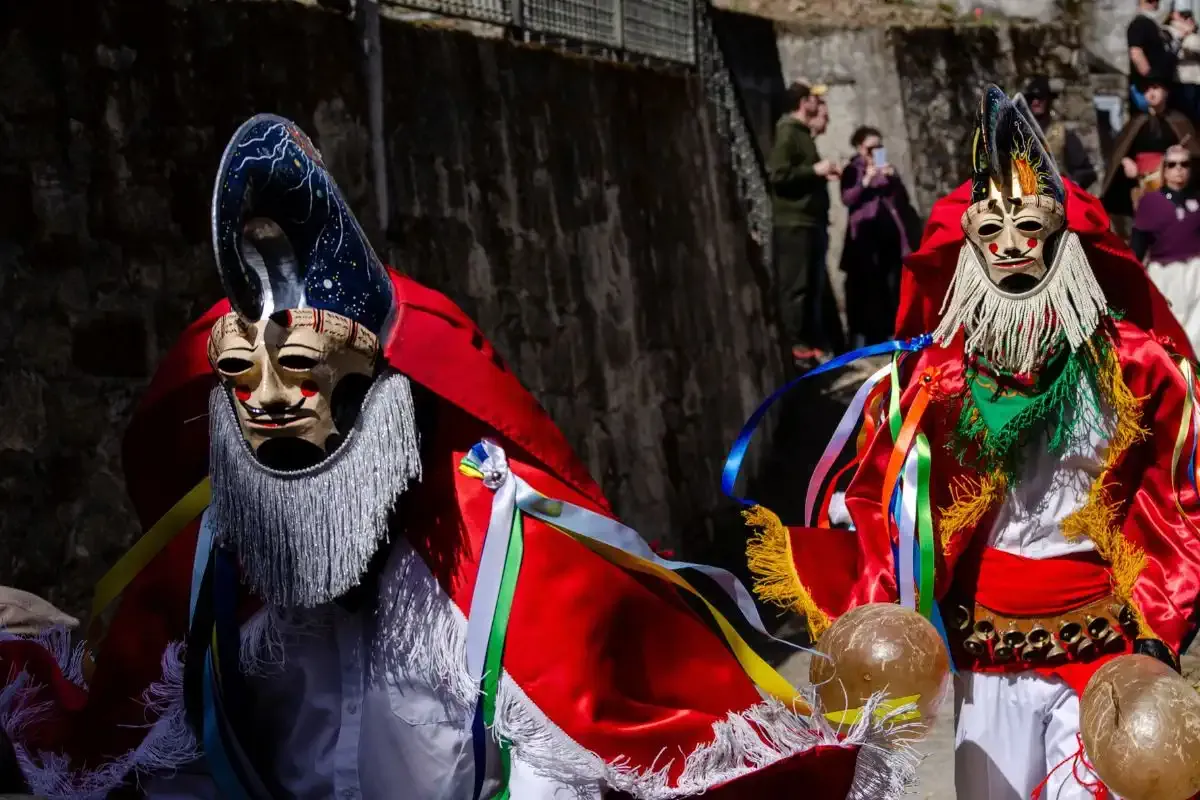
Entroido masks, the Carnival of Galicia
The festival, deeply rooted in society, does not disappear with the officialization of Christianity. The Roman Emperor Constantine the Great, in the year 325 A.D., established Lent in the calendar, and Carnival remains as the period of time preceding it. It was celebrated and (almost) everything was allowed, as forty days of abstinence, devotion, and respect for the crucified Messiah would follow. Despite the religiosity of the Middle Ages, Carnival manages to survive and reach our days.
Where do the names come from?
The term "carnival" comes from the Latin carnem levare and means "to remove meat", referring to the abstinence from it during the upcoming Lent. Other experts point to carrus navalis, a Roman celebration in Egypt in honor of the goddess Isis, featuring a procession of boats.
The term "entroido" is recorded in history for the first time in a document from 1229 preserved in the monastery of Sahagún. The word would come from the Latin introitus, which means "introduction" or "entrance". That is to say, it is a period prior to Lent, a time of celebration before a time of respect. This was already noted in the Book of Good Love (Arcipreste de Hita, 14th century) with the gastronomic battle of Don Carnal and Doña Cuaresma.
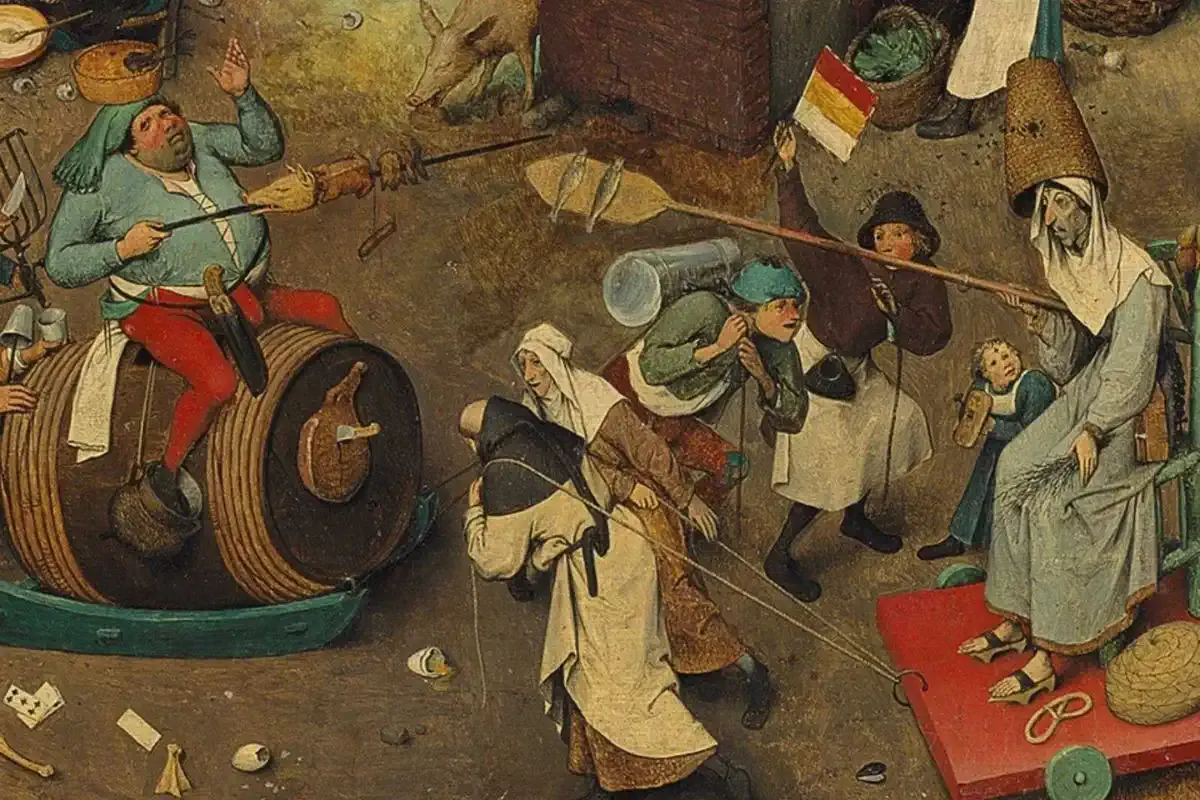
During Carnival, the excesses prohibited during Lent are indulged
Meaning of Entroido in Galicia and tips to enjoy it
Entroido is a festival with deep roots and a rural, participatory character in Galicia. Despite being prohibited between 1937 and 1948 throughout Spain due to its libertine nature, it continued to be celebrated in Galicia, especially in rural areas. It would not be until 1977 that it was celebrated again with total normality.
The Entroido in Galicia is more than just a festival. Color, joy, street parades, groups, and processions fill the streets. In many cases, it begins to be celebrated weeks before the date it is meant to be held, that is, on the very day of Carnival.
While the most famous celebrations take place in the province of Ourense, they can be enjoyed throughout the Galician geography, albeit with local differences. Be that as it may, the entroidos are characterized by the active participation of attendees, as well as a close link with gastronomy.
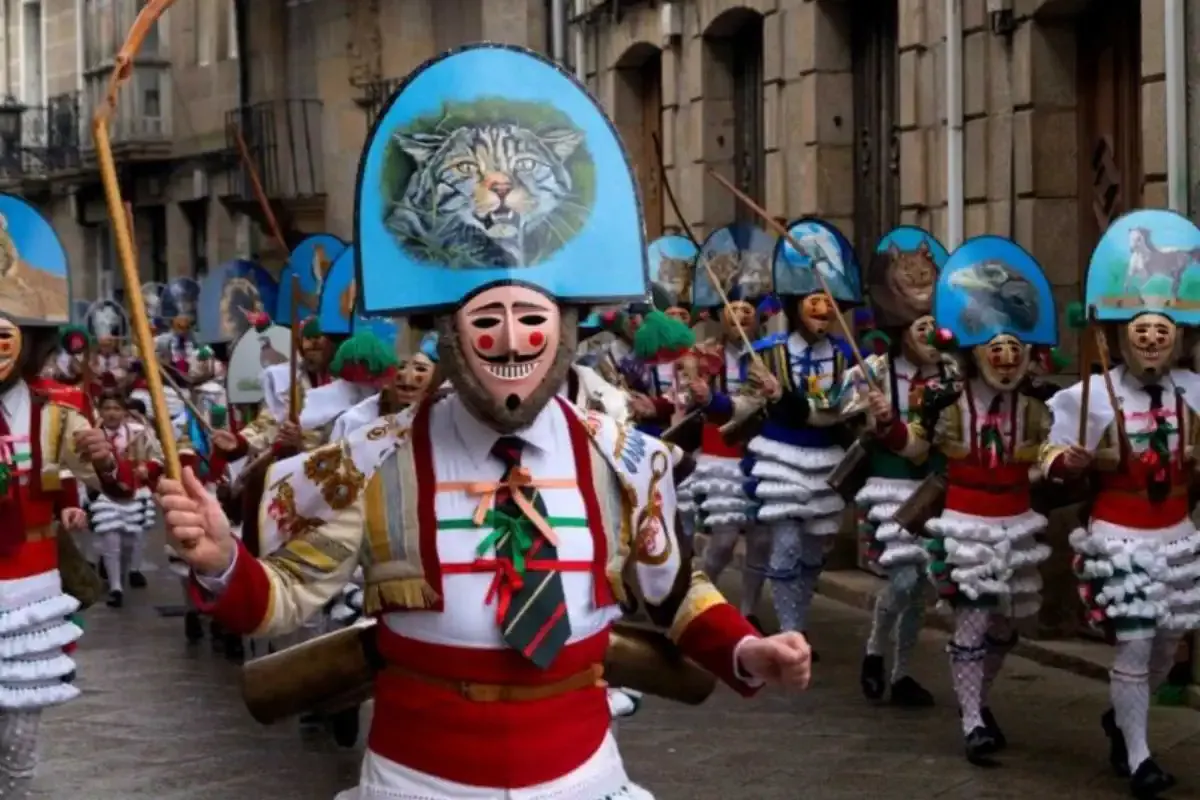
Typical parade of an Entroido in the province of Ourense
Dress up!
This is our first piece of advice that you should follow and a rule that you ought to respect. Anyone, local or visitor, can join the celebration, but there is one unbreakable requirement: to attend in costume, regardless of the choice of disguise.
The locals greatly value the involvement of participants, and attending the Entroido without a costume is a risk, especially in the province of Ourense. The typical characters of the Carnival in Galicia, the Entroido, will show no mercy and may impose possible punishments on you. These, which vary according to the locality, can be:
- receiving whips or blows with sticks or whips;
- being covered in flour or mud, in extreme cases, mixed with live, hungry ants or soaked in vinegar;
- being invited to buy a round of drinks.
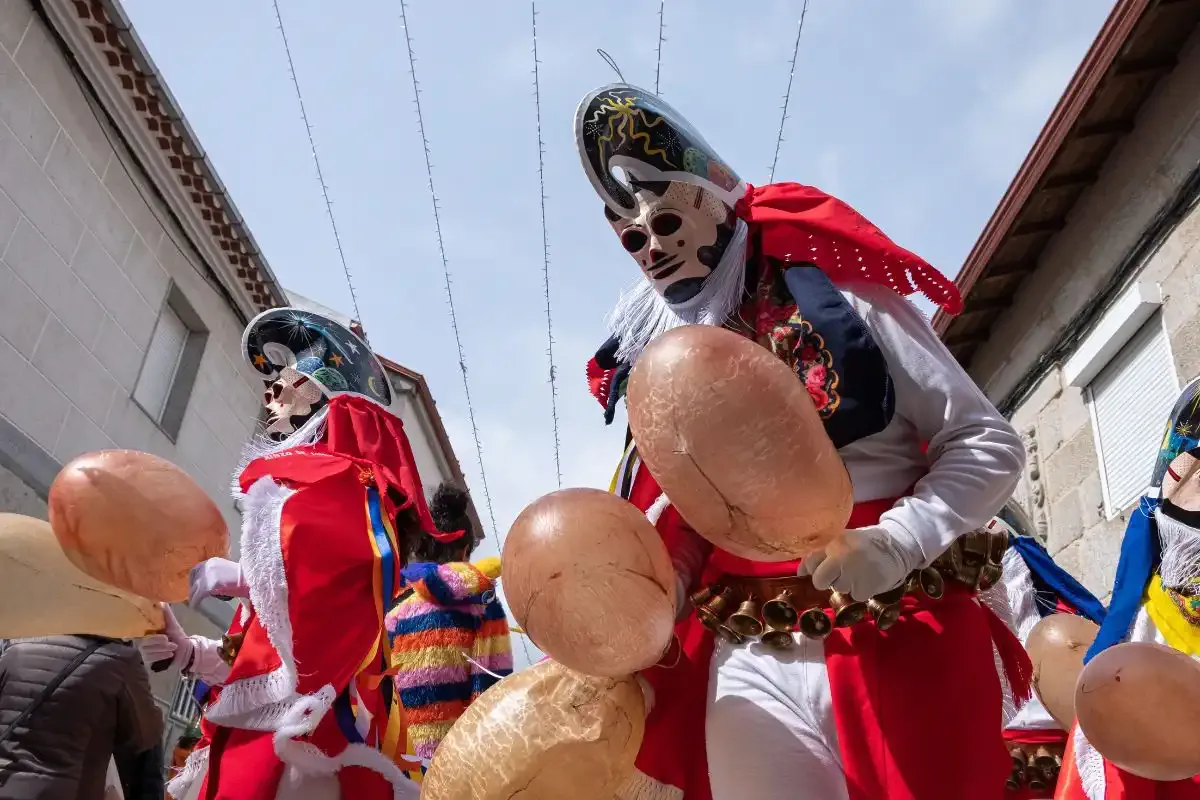
These Pantallas de Xinzo de Limia, characters of the Entroido from this town in Ourense, intimidate you with bladders if you do not wear a costume
Eat, drink, and enjoy!
On the other hand, we mentioned the very important gastronomic element. Indeed, Galicians love to celebrate, eat well, and drink. The Entroido, therefore, must crown its celebrations with the best Galician cuisine.
Sumptuous meals based on pork, such as stews, lacón with grelos, "cachucha" (pig's head), androlla, etc., take center stage. Their ingredients come from the traditional slaughter of this animal in November, as well as from winter agriculture. Also noteworthy are sweets like filloas or ears, and of course, everything is accompanied by wines and liqueurs. And, why not a queimada?
As an ethnological testimony of a culture, many local entroidos are, to this day, Festivals of Tourist Interest at both national and international levels. Since 2017, the Entroido as a whole has been recognized as Intangible Cultural Heritage of Spain, and since 2024 it is a Good of Cultural Interest.
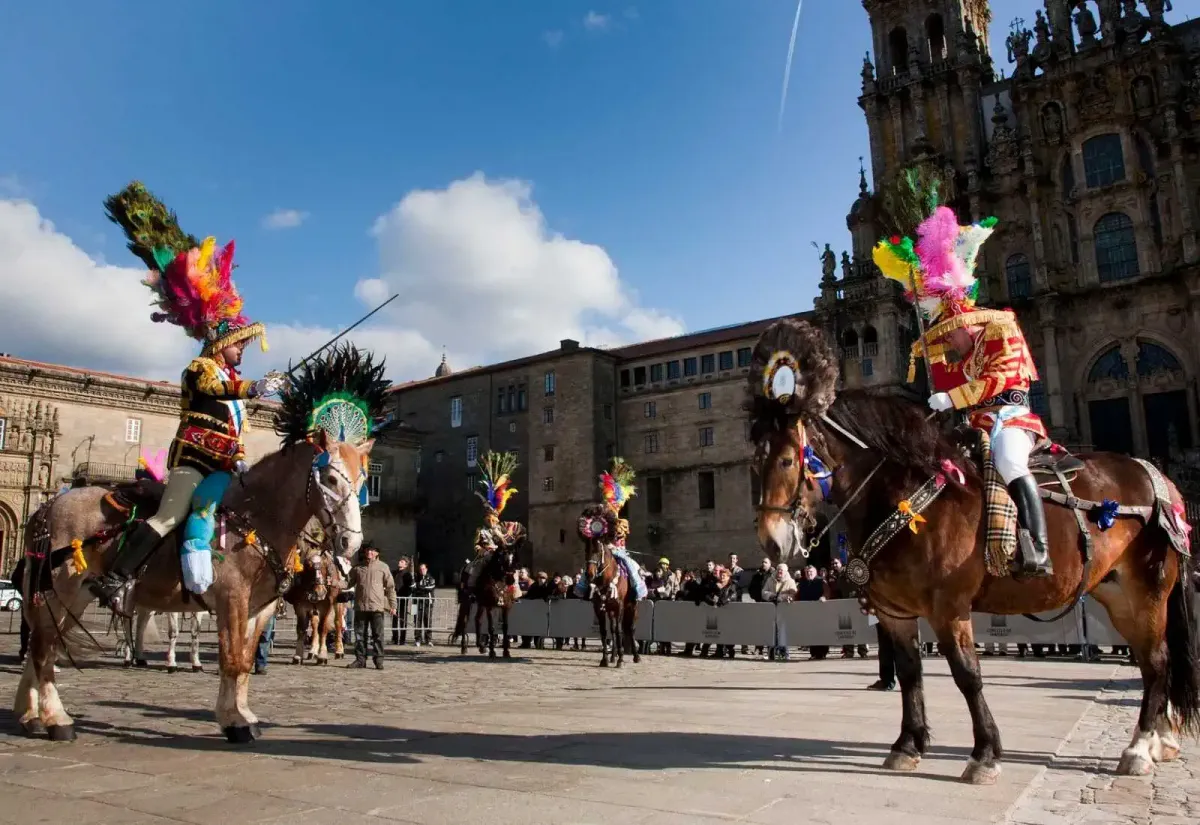
The Xenerais do Ulla, characters from the Entroido of Santiago, in the Plaza del Obradoiro
Entroidos on the Camino de Santiago
Those who undertake any of the routes of the Camino de Santiago within Galicia during the entroido season will be able to enjoy a millenary tradition. In addition to the Camino itself, you can experience much magic, joy, and a certain dose of "danger" that only seeks the healthy amusement of the celebrants.
If you want to experience the traditional entroido, by taking the Sanabrés Way you will pass through Laza, Ourense, or Ponte Ulla and other towns where you can discover this festival. Furthermore, along this route or the Winter Way, you will also pass through Lalín: it may not be the capital of the Entroido, but it is of the cocido. Its Cocido Fair is an International Festival of Tourist Interest, with this dish as the star and protagonist of the carnival.
A good plan to experience the Entroido in Galicia this year is to dress up as a pilgrim and walk the Camino de Santiago in winter. This way, you will kill two birds with one stone and enjoy two unique experiences with all the magic of Galicia.