


Dunas de Liencres Natural Park: Experience the best adventure in the protected areas of Cantabria
27 November, 2026
The Dunes of Liencres Natural Park, in Cantabria, is home to some of the most important dunes in the north of Spain, beaches such as Valdearenas and Canallave, and the cliffs of the Costa Quebrada, very close to the Northern Way.

The Dunes of Liencres Natural Park is on the coast of Cantabria, in the municipality of Piélagos, right where the Pas River meets the sea. Its dunes are among the most important in the north of Spain, and around them you will find wild beaches, a large pine forest and cliffs that look like they belong on another planet. We tell you what to see, how to visit it and why it is a great getaway if you are walking the Northern Way.
A park that has grown over the years
It was declared a Natural Park in 1986 to protect the dunes, the beaches of Valdearenas and Canallave and the pine forest around them. The Pas estuary was added later, and in 2021 a Cantabrian law expanded it to about 1,753 hectares and changed its name: today it is the Dunes of Liencres and Costa Quebrada Natural Park, spread across Piélagos, Miengo and Santa Cruz de Bezana.
It is also part of the Natura 2000 network and, since 2025, of the Costa Quebrada UNESCO Global Geopark, the first in Cantabria.
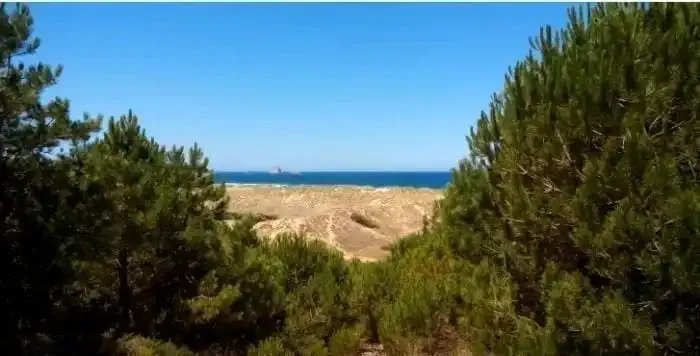
The park lies at the mouth of the Pas River, in Piélagos.
The dunes and the pine forest
The dunes are the park's great jewel. They are formed from the sand brought by the Pas River and the sea, which the wind pushes inland. Close to the beach are the mobile dunes, which change shape with the wind; further back are the fixed dunes, already held in place by vegetation.
Behind them lies a vast pine forest, mostly maritime pine, planted in the middle of the last century to stop the sand from advancing. Today it has paths running through it and is a good place for a stroll in the shade. The dunes are a fragile ecosystem: stick to the marked trails and do not step on them away from the paths.
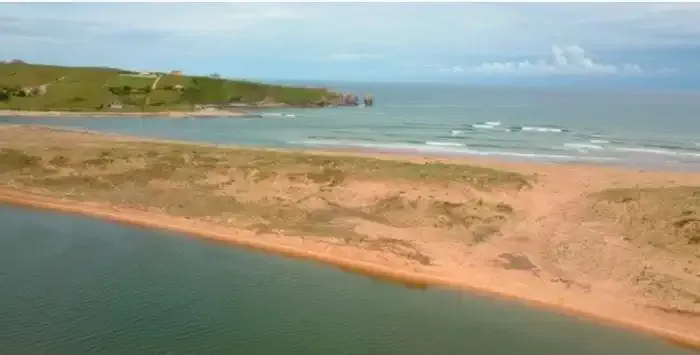
The dunes of Liencres, between the pine forest and the sea.
The estuary and the dunes are also a resting place for many migratory waterbirds, so it is worth bringing binoculars if you enjoy watching them.
The beaches
The two best-known beaches in the park are Valdearenas and Canallave. Valdearenas is the largest and the one next to the dunes, with fine golden sand. Canallave is smaller, faces northwest and has good waves, which makes it very popular with surfers.
These are open beaches on the Cantabrian Sea, with swell and currents: if you want to go for a swim, pay attention to the flags and to the lifeguards' instructions when they are there.
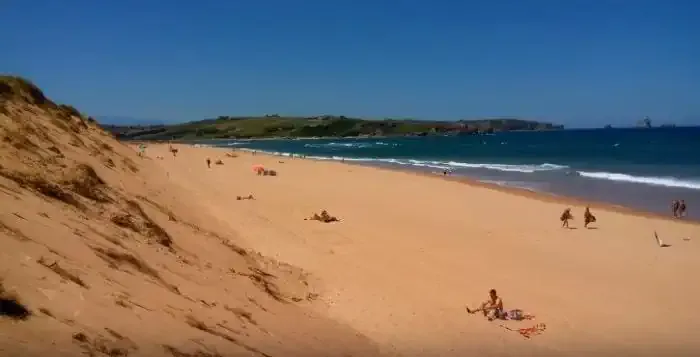
Canallave Beach, known for its waves.
The Costa Quebrada
The dunes are part of the Costa Quebrada, a stretch of coastline that runs from Miengo to the Canal de Hoz, right next to Santander. To the east of Liencres it is like an open-air geology book: cliffs, platforms worn down by the sea, islets such as the Urros de Liencres and small coves like Somocuevas, Portío or La Arnía.
The road along the coast has detours to the prettiest viewpoints, and there are paths beside the cliffs so you can enjoy it on foot. You will find all the information on the Costa Quebrada Geopark website.
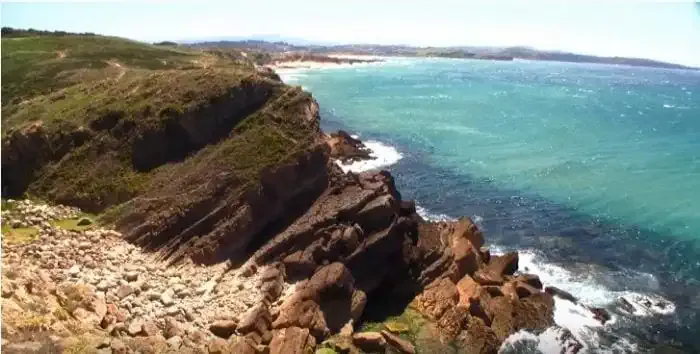
The cliffs of the Costa Quebrada, near Liencres.
How to get there
The park is very close to Santander. You can drive there along the coastal road, which leads to Liencres and the beach car parks. In summer it fills up, so it is best to go early.
Liencres and the Northern Way
The Northern Way passes very close to the park on the stage between Santander and Santillana del Mar, when it crosses the Mogro estuary, which is where the Pas meets the sea. If you are walking this part of the Camino, it is worth setting aside a day to visit the dunes and the Costa Quebrada.
And if you want to keep discovering Cantabria, we recommend the most beautiful villages in Cantabria and the Oyambre Natural Park.
If you are thinking about your next Camino, choose a route from our Camino de Santiago stage-by-stage routes and work out the price here.