


Caminito del Rey: What can't I miss?
06 January, 2026
Description of the King's Little Pathway, detailing its layout, history, and what to expect when traversing this spectacular trail on walkways over gorges, with safety recommendations, best times to visit, and practical tips for planning the excursion in this enclave of Málaga.

After several years of closure, the Caminito del Rey is no longer one of the most dangerous trails in the world, thanks to the restructuring carried out for the enjoyment of hikers and climbers. The new Caminito del Rey preserves the essence and adrenaline of the original route, with trails and suspension bridges more than one hundred meters high, and has become one of the most beautiful places in the province of Málaga and in Andalusia.
What is the Caminito del Rey?
Located between the municipalities of Álora, Ardales and Antequera, the Caminito del Rey consists of a pedestrian walkway of more than three kilometers that runs along the rocky walls inside a canyon, reaching heights of up to 105 meters above the Guadalhorce River. In some sections, the walls are completely vertical, like cliffs, and the path can be as narrow as one meter.
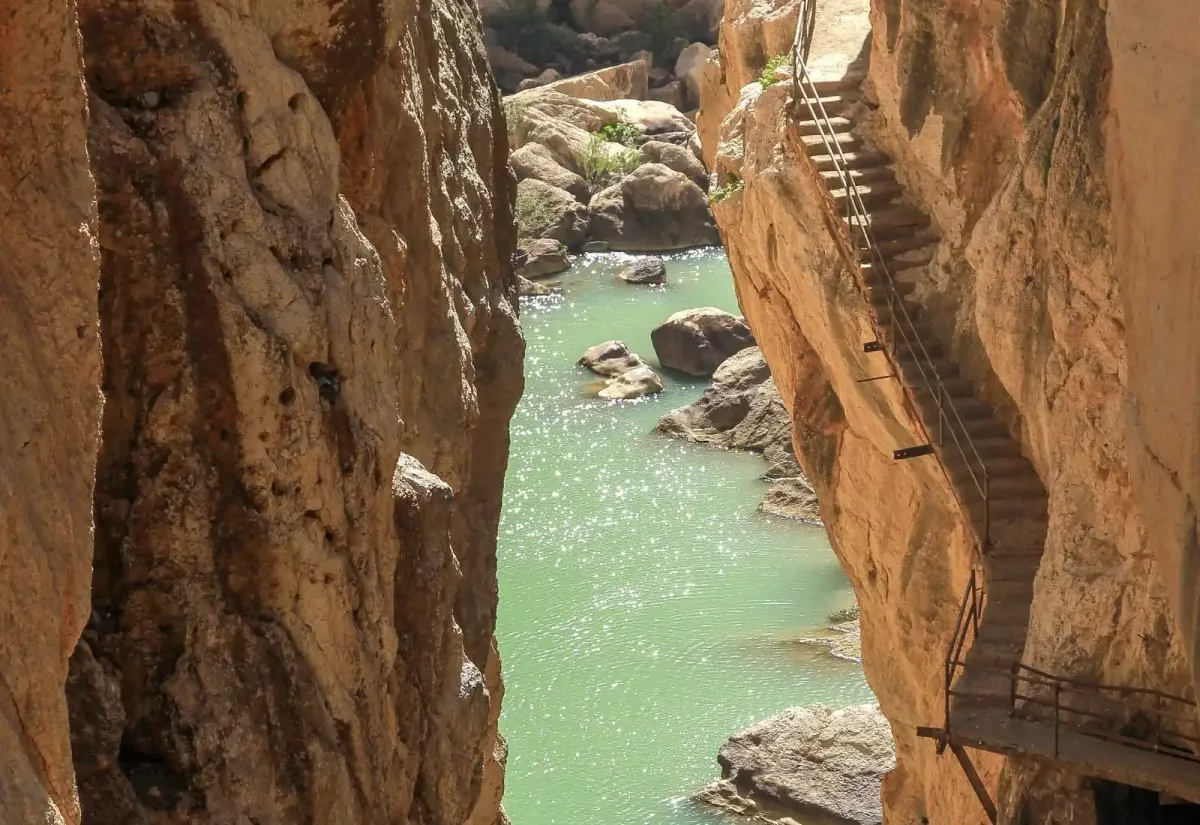
The Guadalhorce River in the Caminito del Rey
Thus, it is an elevated walkway created to replace the previous one, which was known for its danger. It is no surprise that it was once called the most dangerous path in the world: between 1999 and 2000 there were two fatal accidents, which led the Junta de Andalucía to close it in 2001. Even so, the old structure remains above the current one as a reminder of the risk it once posed. Thanks to restoration work carried out between 2014 and 2015, the route is now completely safe, without losing its excitement and spectacular nature.
A whim of nature
More than a whim, a true wonder. The Málaga mountain range, in the western part of the Betic System, offers this unique environment where the Guadalhorce River plays a central role, flowing through the reservoirs of El Chorro, Guadalhorce, Guadalteba and Gaitanejo. Located in the heart of the province, this Desfiladero de los Gaitanes Natural Site, as it is also known, is carved into limestone and dolomite from the Jurassic period, although Miocene rock outcrops can also be found.
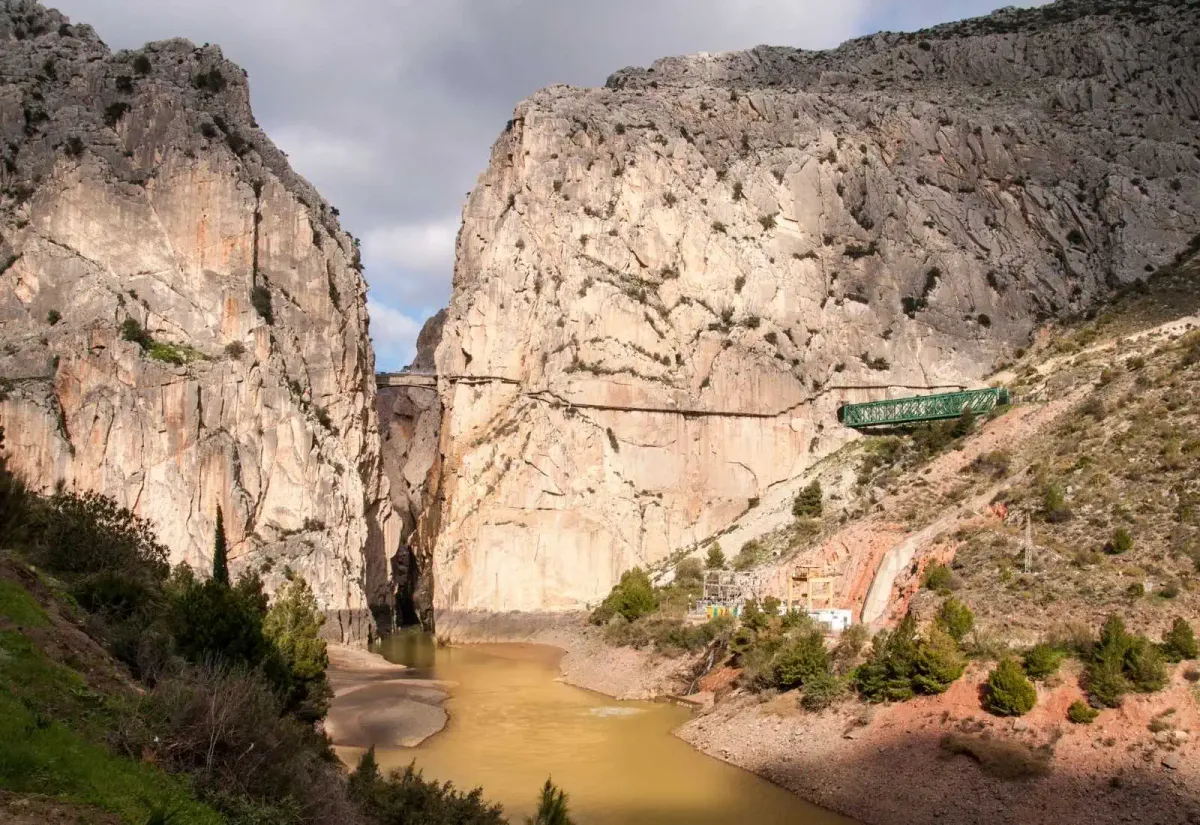
Desfiladero de los Gaitanes Natural Site
Geomorphologically, the most spectacular feature is the vertical stratification of the limestone carved by the river (up to 300 meters deep and ten meters wide), as well as the twenty or so caves, some of them hanging dozens of meters above the river.
Over time, the progressive erosion of the Guadalhorce River deepened the gorge in successive stages. Various conglomerates, calcarenites and Miocene sediments display beautiful structures, including fossil remains of whales, as well as sandstone formations known as taffoni, rounded rock formations where erosion has created caves or shelters.
As for its flora, Aleppo pines, stone pines, holm oaks and eucalyptus form the main vegetation, along with scrubland species such as rockrose, broom, junipers, savins and dwarf palms. Along the riverbanks, you will find tamarisks, reeds, rushes, oleanders, poplars and willows.
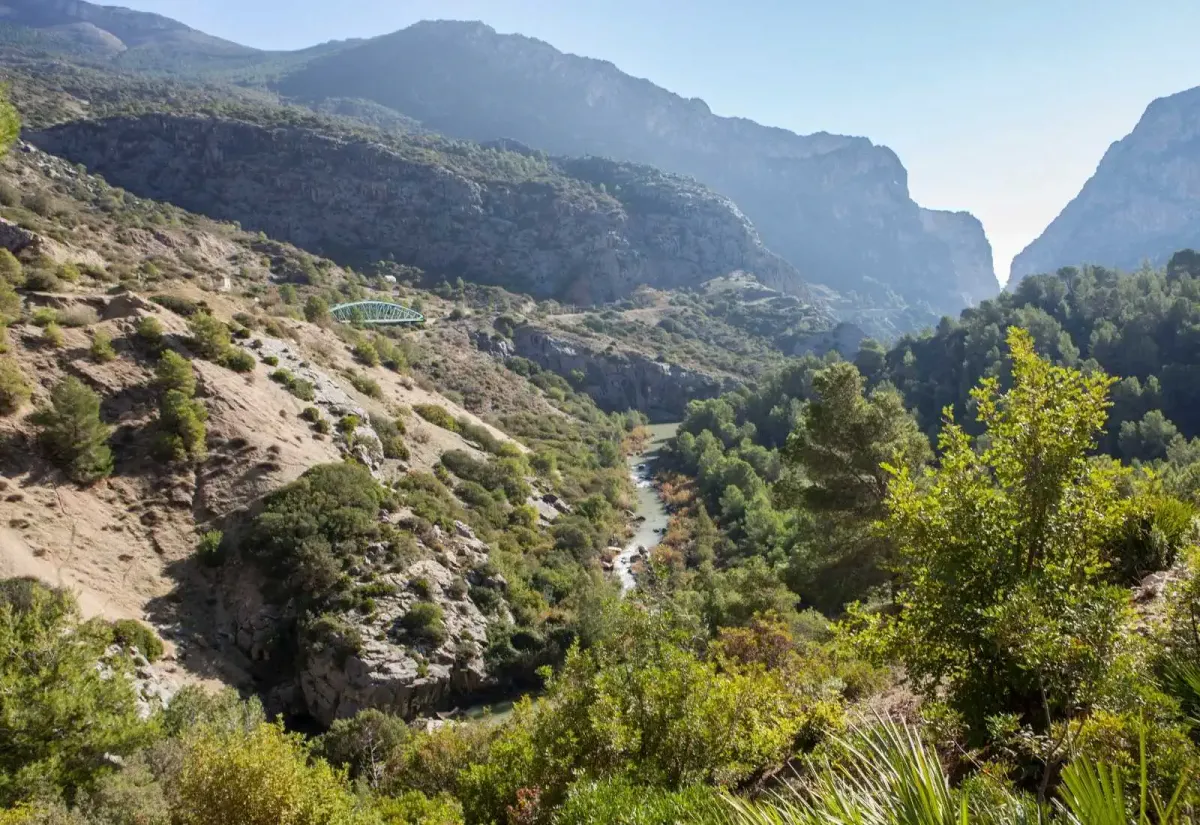
Guadalhorce Valley
Among the fauna, mountain birds such as Egyptian vultures, griffon vultures, golden eagles and honey buzzards are the most common. There are also amphibians and reptiles, including the ocellated lizard, ladder snake, Montpellier snake and viperine snake. Mammals such as mountain goats inhabit the higher areas, along with foxes, rabbits, dormice, badgers and genets.
It was declared a Natural Site by the Junta de Andalucía in 1989, although it had already been designated a Special Protection Area for Birds (SPA) in 1987. Since 2006, it has been part of the Andalusia-Morocco Intercontinental Biosphere Reserve and the list of Sites of Community Importance in the Mediterranean Biogeographical Region. It is currently a candidate to be declared a UNESCO World Heritage Site.
What is the route like?
Located 60 kilometers from Málaga, the Caminito del Rey has a total length of nearly eight kilometers. The route takes about three to four hours to complete, is easy to walk and does not require great physical fitness. It is, therefore, a popular tourist attraction suitable for all ages.
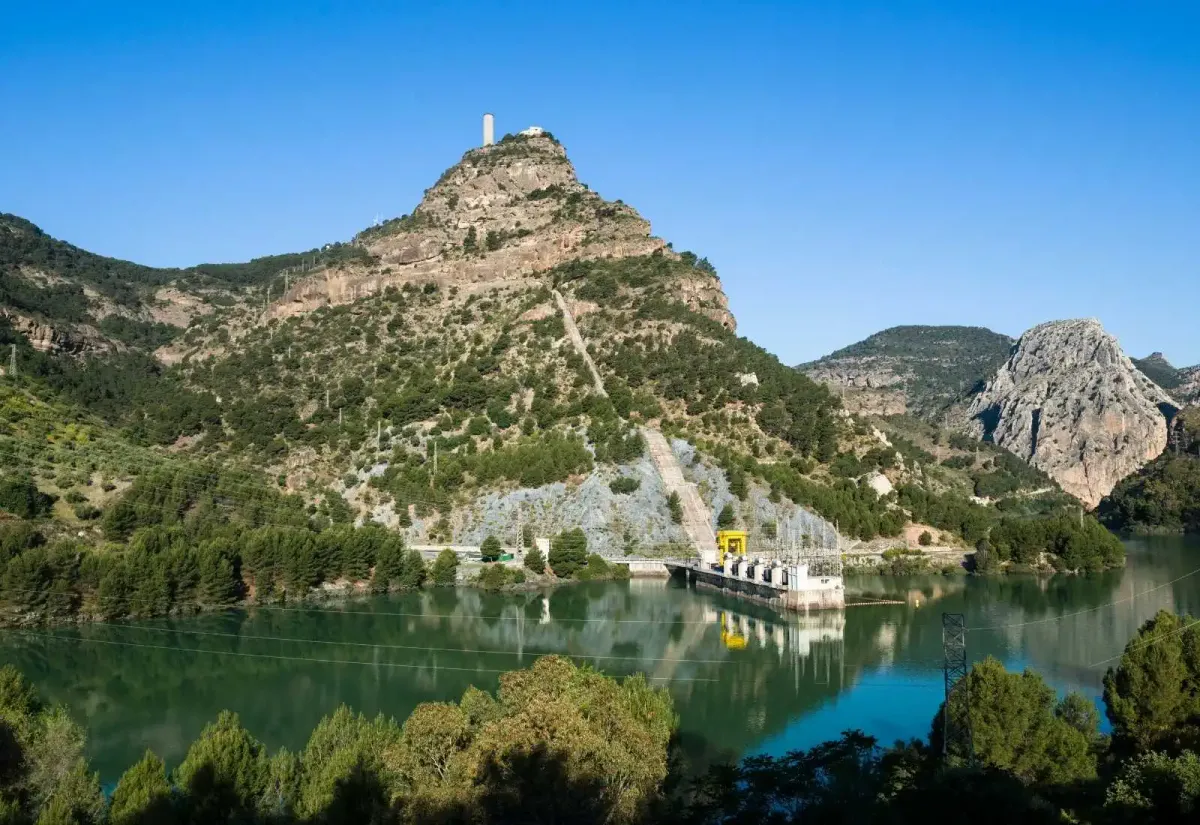
Chorro Reservoir
It is a linear route running from north to south, from Sillón del Rey to El Chorro Station, between the municipalities of Ardales and Álora. There are two access points: one in an area with services and parking, and another that shortens the route by just over one kilometer. Both paths lead to the Control House, where the official route begins.
From there, the path reaches the Gaitanejo Dam and the Cambutas Dam, approaching the famous walkways. It continues through the Gaitanejo Gorge and then the Tajo de las Palomas, where the King's Bridge is located, crossed by King Alfonso XIII on May 21, 1921.
Along the way, you will encounter caves, viewpoints, valleys, sand traps, resting areas, shelters and old industrial structures. In the third canyon, more walkways, caves and balconies appear, leading to the iconic hanging bridge. The final downhill section leads to El Chorro.
Things to keep in mind
The best time to visit is between March and April, when the flora begins to bloom. It is a very popular destination, so it is advisable to arrive early and book your ticket on the official website.
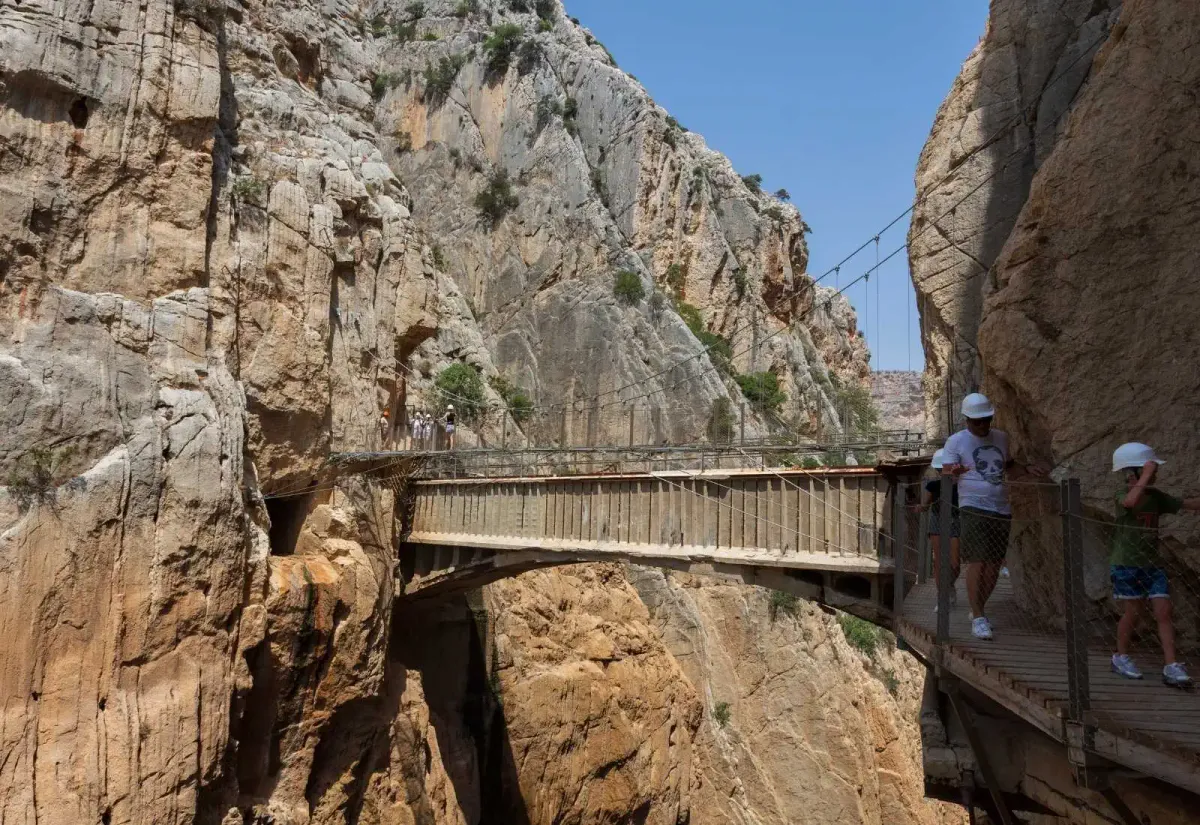
People crossing the Caminito del Rey bridge wearing helmets
Once at the Control House, visitors are provided with a helmet and footwear is checked. Unauthorized items such as umbrellas, trekking poles or selfie sticks are not allowed. There are also safety rules (children under eight years old are not permitted) and it is strictly forbidden to throw litter on the ground.
The Visitor Reception Center will open soon, offering an information point, souvenir shops, a cafeteria, restrooms and parking facilities.
The charm of the Caminito: a cinematic experience
The most spectacular part is walking along the impressive walkway that crosses the Gaitanes Gorge, where the views are truly breathtaking. Prestigious publications such as Lonely Planet and National Geographic have featured this route, presenting it as an exceptional day trip.
It has also served as a filming location for movies such as "Von Ryan's Express" (1965) and "The Bridge of San Luis Rey" (2004).

Promotional poster for Von Ryan's Express
Feel like a king for a day
No matter how you look at it, the views are absolutely stunning. Hiking enthusiasts, photographers and especially climbers will find countless opportunities here. Without a doubt, the Caminito del Rey is one of the trendiest tourist attractions in Andalusia.