


The Miñoto Ribeiro Way, the fruit of history, wine and nature
29 May, 2026
Guide to the Miñoto Ribeiro Way, a Jacobean route that connects northern Portugal with Santiago de Compostela, highlighting its layout, stages, cultural heritage, and landscapes, along with practical advice for planning the journey and discovering a less crowded alternative to the Camino de Santiago.

The Miñoto Ribeiro Way is a route that connects the north of Portugal with the city of Santiago de Compostela. An Jacobean route still unknown to the vast majority of the pilgrim community, but which in the last two decades has been the subject of research and promotion by historians, associations, and municipalities involved, both Portuguese and Spanish. We will contribute our bit, and in this article, we will learn a little more about this path, which, recently recognized by the Church and that allows obtaining the Compostela, merges history, nature, thermalism, and wine on the way to Santiago de Compostela.
A bit of history
The Roman roads and trade routes have always been present in the configuration of the different pilgrimage paths to Santiago de Compostela, serving as existing thoroughfares that facilitated the passage of travelers and pilgrims. In the Camino de Santiago, we have examples such as the Vía XIX in the Portuguese Way or the Vía XVIII in the Camino da Geira and dos Arrieiros. Along this same Vía XVIII, also known as Vía Nova, the Miñoto Ribeiro Way shares sections of the route as well as beginnings and endings of stages.
These routes were used in the Middle Ages once the pilgrimage to Santiago de Compostela began to develop, and in the case of the Miñoto Ribeiro Way, the Vía XVIII was the backbone of this Jacobean path. Testimonies of hospitals, bridges, monasteries, historical documents, and the production and trade of wine support the historical justification of this path.
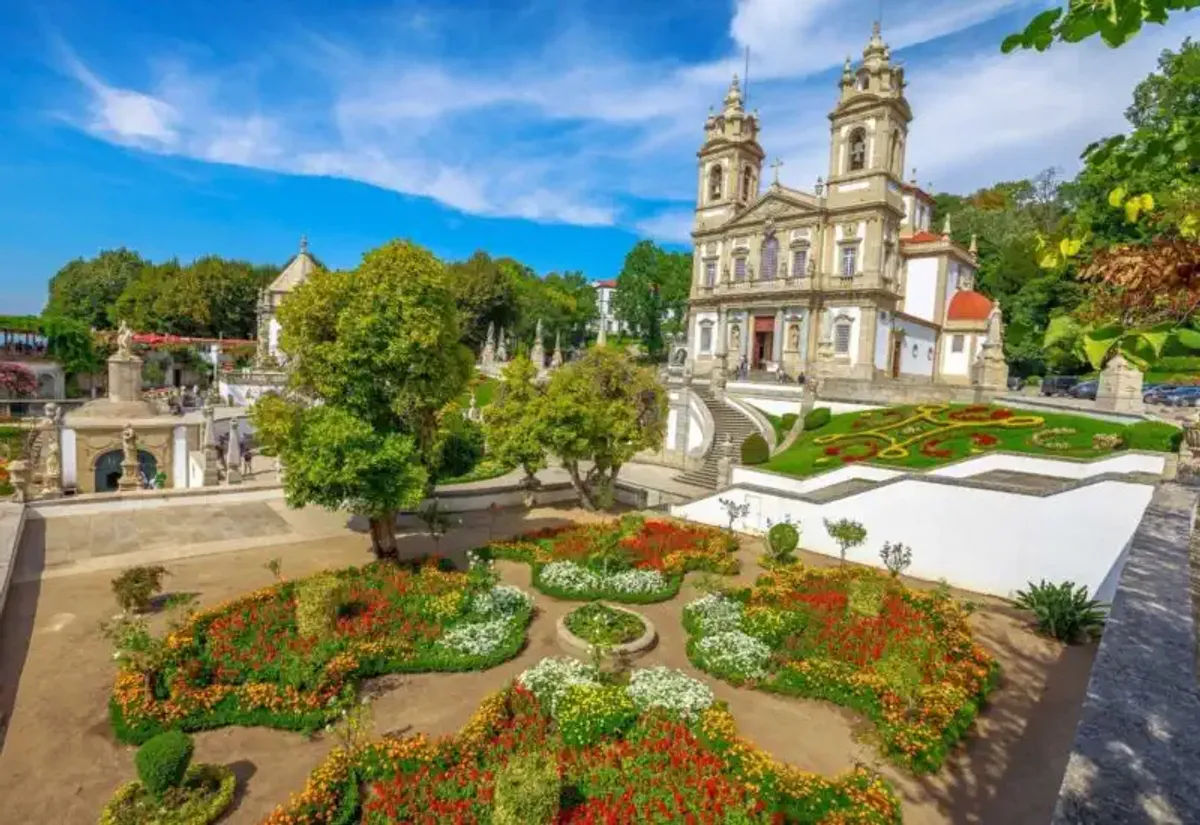 Bom Jesus do Monte, Braga
The stages
Starting from the lands of Braga, the Miño Ribeiro Way crosses the region of Baixa Limia, the Sierra do Xurés, and, following the course of the Miño River, delves into the wine-growing region of O Ribeiro, in the province of Ourense. From there, it heads north towards Santiago de Compostela, passing through the provinces of Pontevedra and A Coruña.
From Braga, there are three possible entry routes into Galicia: one branch that crosses the border at the Melgaço–Padrenda area, another that does so through Lindoso and Baixa Limia, and a third that heads towards Terras de Bouro and enters through Portela do Home. In this article, we will focus on this last branch, which enters Galicia through Portela do Home, briefly returns to Portugal at Castro Leboreiro, and then definitively returns to Spain to head towards Santiago. As always, each pilgrim can configure the stages to their liking, but as a standard, they are divided into nine stages, with a total of approximately 174 kilometers.
Stage 1: Portela do Home – Lobios (12.80 km)
From Portela do Home, access to Galicia is gained through the border, which connects Terras de Bouro in Portugal with Lobios, now in Galicia. A succession of Roman milestones guides the pilgrim with the Caldo River as a companion. Before reaching Os Baños, the path passes by the remains of the Roman mansion of Aquis Originis, and shortly thereafter tackles the final stretch to Lobios, where there are accommodations and services.
Stage 2: Lobios – Castro Leboreiro (14.90 km)
This stage departs from Lobios, and the footprints of the pilgrim will tread on cobblestone paths and bridges with much history, such as the one in Pacín. It is a more mountainous stage that offers seductive examples of churches, cruceiros, and stone washhouses. Furthermore, in this section, we temporarily leave Spain to spend the night in the Portuguese end of the stage, Castro Leboreiro, where there are accommodations, services, and a spectacular waterfall.
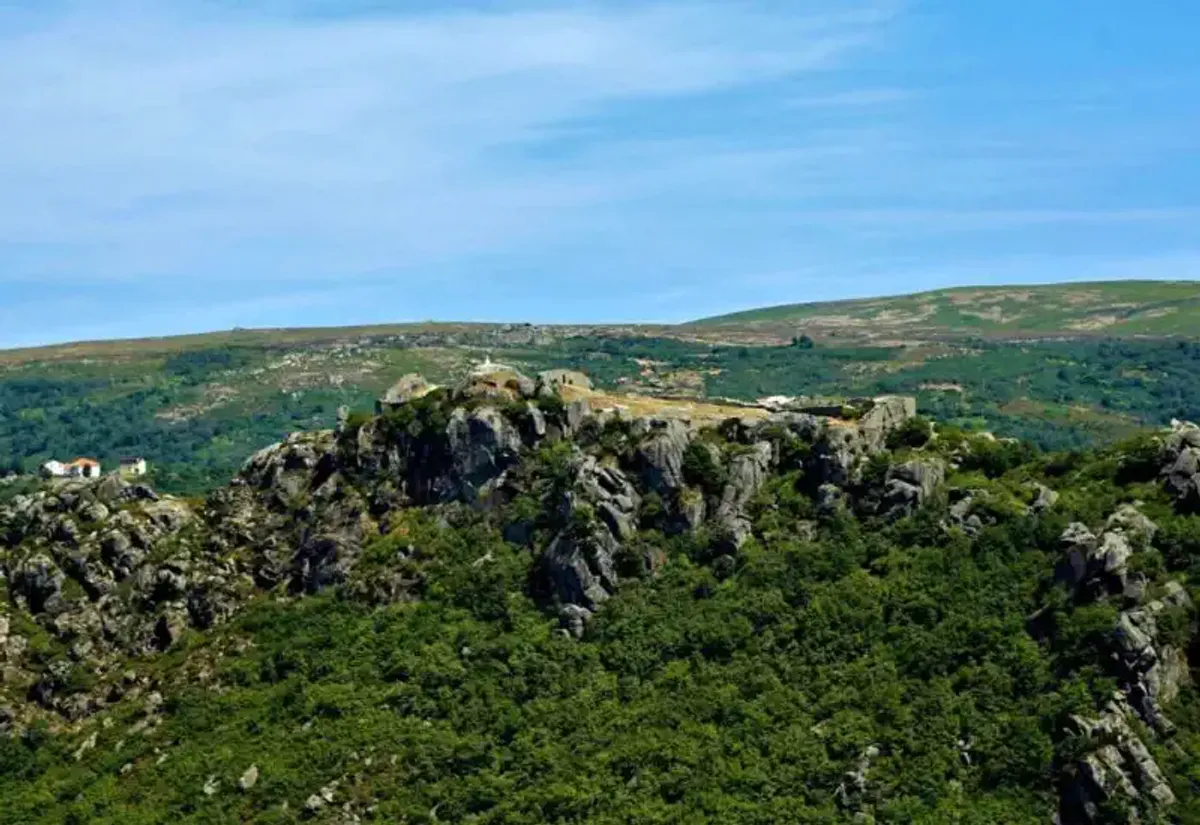 Viewpoint of Castro de Leboreiro
Stage 3: Castro Leboreiro – Cortegada (26.30 km)
In this section of the path, we leave behind Castro Leboreiro and Portugal. We descend through cobblestone paths, among bucolic and genuine villages, towards Monterredondo. The Miño River makes its presence felt, and breathtaking panoramic views, along with lush nature, accompany the walker until this stage concludes in Cortegada, which offers accommodations, services, and thermal waters.
Stage 4: Cortegada – Ribadavia (13.10 km)
One of the shortest stages is the one that departs from Cortegada, although there is a longer and more demanding alternative for those seeking greater elevation. It is a simple and relatively flat stage, where cork oak, oak, and pine forests line the paths and reveal a nature that will surprise us, in addition to small villages like San Bieito, where we can see the humilladero of Meréns. Still accompanied by the Miño River, we reach Arnoia and subsequently Ribadavia, the former capital of the Kingdom of Galicia, where there are accommodations and services, as well as a beautiful historic center and delicious Ribeiro wines.
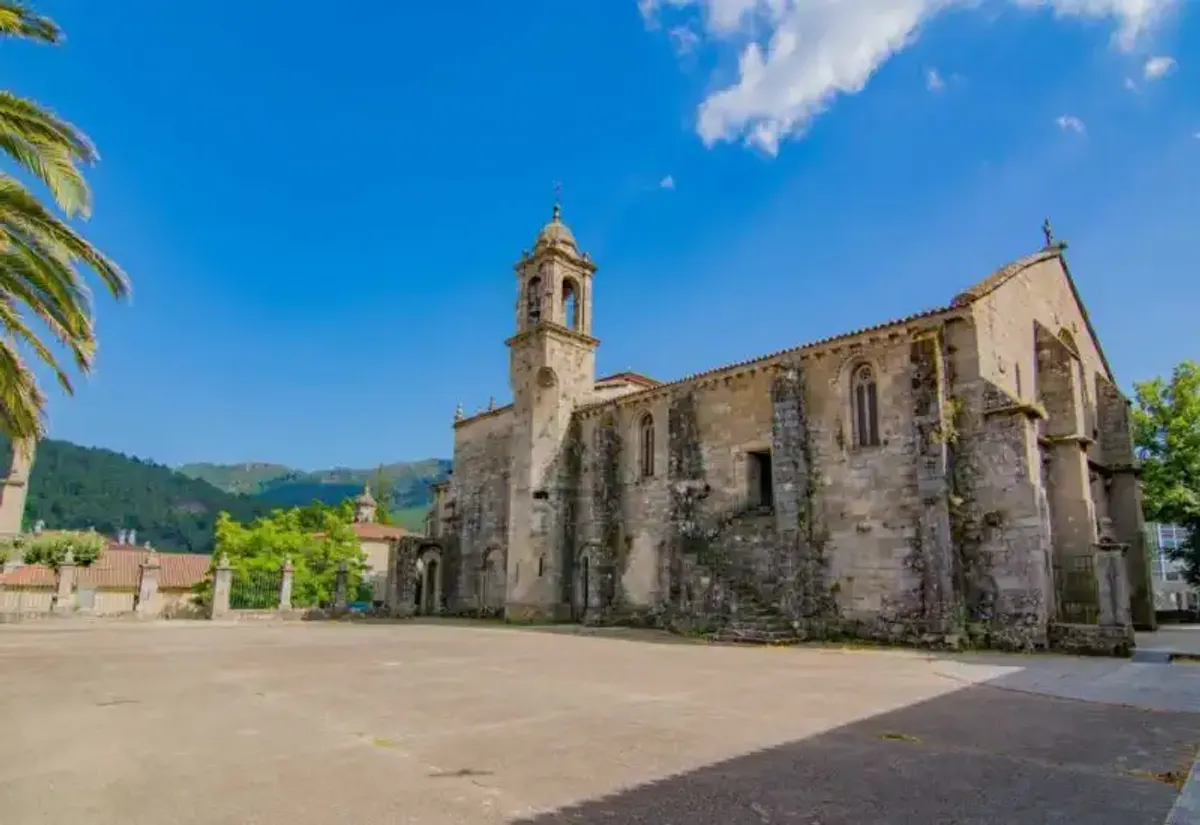 Church of San Domingos da Ribadavia
Stage 5: Ribadavia – Pazos de Arenteiro (19.70 km)
We leave behind the beautiful Ribadavia, at the confluence of the Avia and Miño rivers. The path leads towards Beade and the Monastery of San Clodio, with the Avia river still as a companion along the way. Bridges, churches, cruceiros, and many medieval remains will be faithful companions until the end of the stage, in Pazos de Arenteiro, with accommodations and services.
Stage 6: Pazos de Arenteiro – Soutelo de Montes (29.60 km)
The longest and most demanding stage of the entire route is upon us, a tough day with mountain climbs. Starting in Pazos de Arenteiro, we encounter more bridges, medieval cobbled paths, and small villages, through trails dotted with mámolas, burial mounds characteristic of the Neolithic, until we culminate this stage in Soutelo de Montes, with services and accommodations.
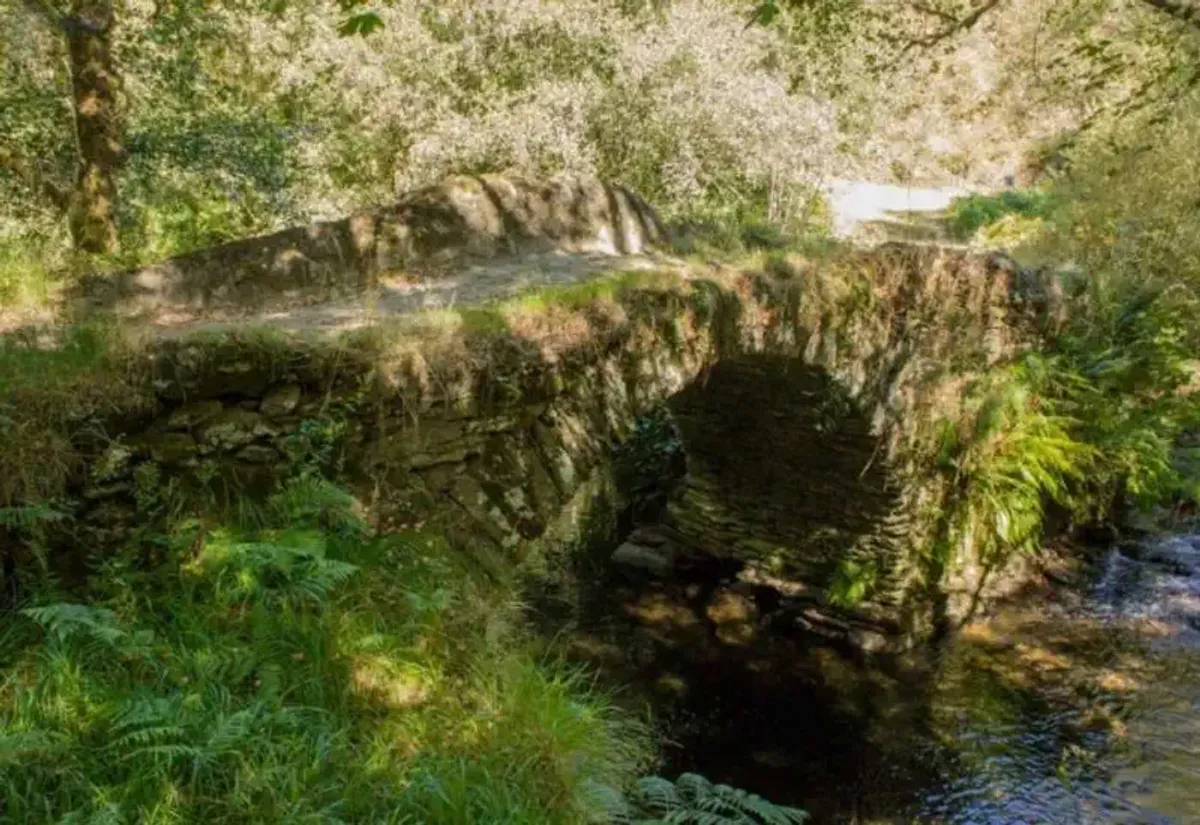 Bridge of Soutelo de los Montes
Stage 7: Soutelo de Montes – O Foxo (27.5 km)
We leave the town of Soutelo de Montes to undertake another long stage, but in a gradual descent. Impressive landscapes accompany this route, passing through Gaxín and the medieval bridge of Gomail. The path crosses landscapes of great beauty until we culminate this stage in O Foxo, where we have services and accommodations.
Stage 8: O Foxo – A Gándara (20.70 km)
We depart from O Foxo and the route heads towards the villages of A Mamoela and O Piñeiro, among others. We will encounter another historic bridge today, that of Sarandón, already in the municipality of Vedra, in a stage that connects with the Sanabrés Way, the final branch of the Silver Way. The walk concludes in the village of A Gándara, with all services and accommodations.
Stage 9: A Gándara – Santiago de Compostela (9.10 km)
The last stage of the route, the shortest and the one that brings us closer to the goal. A journey filled with excitement to arrive, which from A Gándara increases until reaching Santiago de Compostela, entering through the Arco de Mazarelos, one of the seven medieval gates of the city and through which the wine from Ribeiro arrived. It is time to enjoy the path traveled and all the magic experienced in the past days in beautiful Compostela.
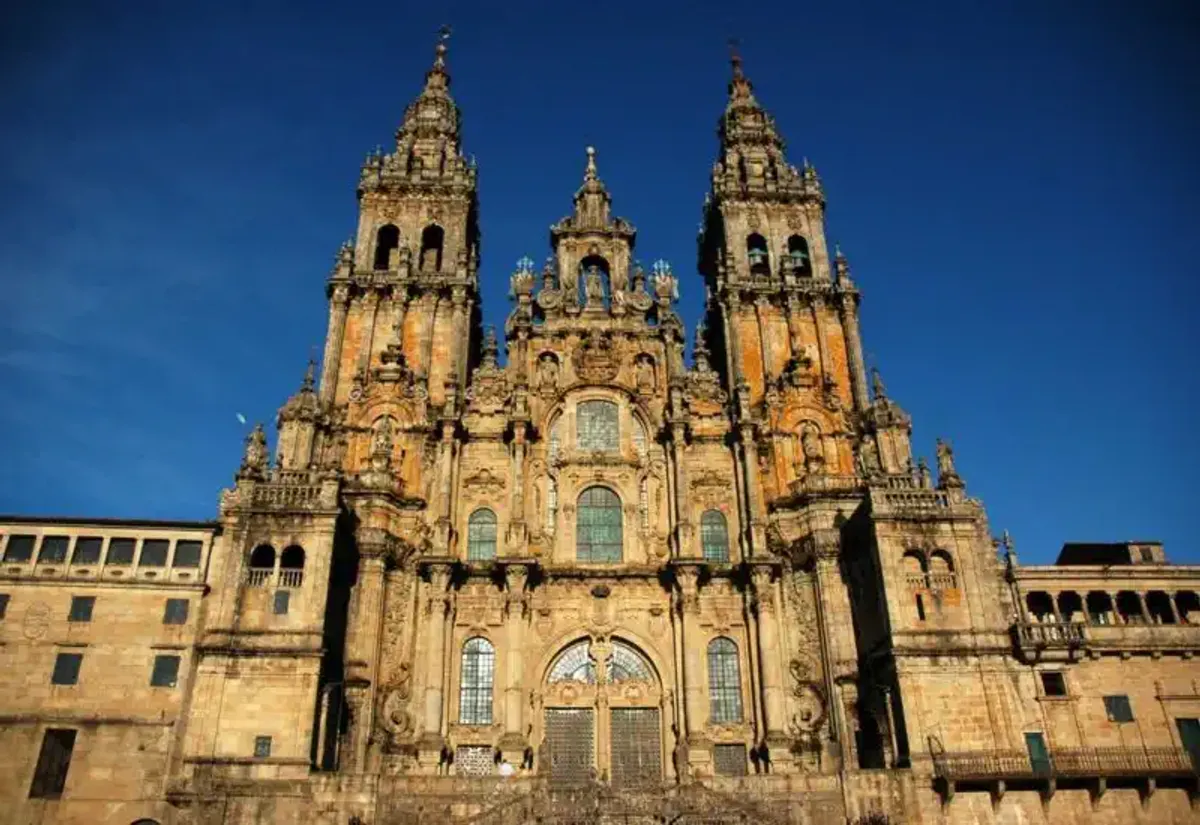 Catedral de Santiago
Things to consider
This route is gradually being marked by the involved municipalities, but it is not fully signposted. Our advice is always to follow some GPS track, which you can download from the official website of the Camino Miñoto Ribeiro. Like every pilgrim, follow the yellow arrow as an unmistakable sign of your good journey.
Furthermore, it should be noted that this route runs parallel to the Camino da Geira and dos Arrieiros, sometimes even along the same path, so you may also find signage for another Jacobean route.
Although there are accommodations and services, we highly recommend booking in advance, and you should know that you will rarely find a shelter for pilgrims. Check with the tourist offices or the official website of the route for more information.
This route can be done at any time of the year, although in the autumn and winter months the temperatures will be low and cold, and you may encounter rain.
A path for the senses
In addition to all its historical and heritage wealth, the Miñoto Ribeiro Way is a great experience for the senses, as it offers the best of the thermal waters of the province of Ourense as well as its finest Ribeiro wines. A solitary path, where all the magic and tranquility of the stages will make your experience truly exciting, and after looking back from the Plaza del Obradoiro, you will remember this path full of sensations and emotion with great joy.