


Jacobean Holy Year 2027: When It Begins, What Changes, and How to Plan Your Camino
29 September, 2026
On December 31, 2026, at 11:30 a.m., the Archbishop of Santiago will open the Holy Door and the Jacobean Holy Year 2027 will begin. Here's what makes it special, which routes fill up first, and how to plan your Camino ahead of time.

There are just a few weeks left until Santiago de Compostela lives one of its great moments: on December 31, 2026, at 11:30 a.m., the Holy Door of the Cathedral will open and the Jacobean Holy Year 2027 will begin. If you've been thinking about walking the Camino de Santiago, this is the year when the most people will do it, and also the year when it pays off the most to plan ahead.
If you're already thinking about dates, our guide to the Camino Holy Year 2027 covers the Holy Year calendar, which stretches fill up first and which month suits you best.
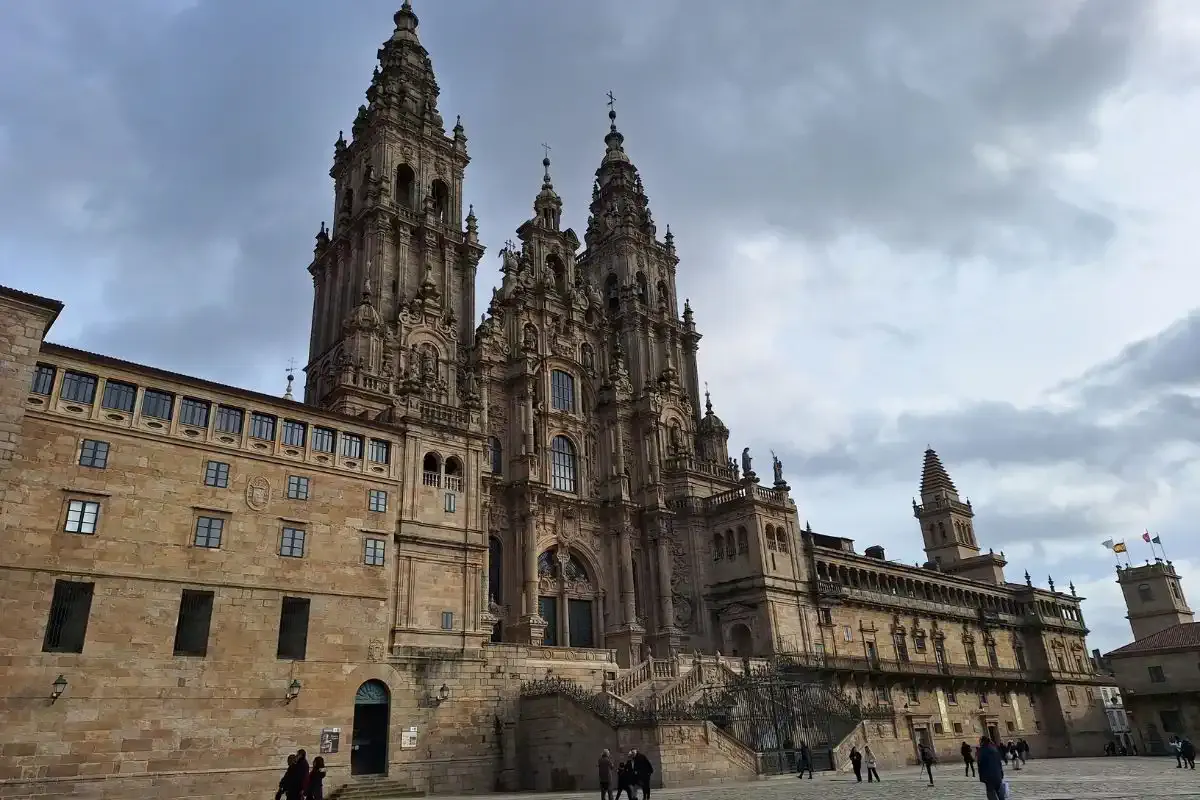 The Cathedral of Santiago, every pilgrim's destination during the Holy Year
What is the Jacobean Holy Year, and why 2027?
The Jacobean Holy Year, or Compostela Holy Year, is celebrated whenever July 25, the feast of Saint James the Apostle, falls on a Sunday. That coincidence occurs around 14 times a century, following a cycle of 6, 5, 6, and 11 years. The last one was in 2021, exceptionally extended into 2022 because of the pandemic; the next is 2027, followed by 2032.
During the Holy Year the Holy Door stays open, and pilgrims can obtain the plenary indulgence by fulfilling the requirements set by the Church.
And what about the Xacobeo? Although the two terms are often used as if they were interchangeable, they're not the same thing. The Holy Year is the religious celebration, organised by the Church and the Cathedral of Santiago. The Xacobeo is the name under which the Xunta de Galicia runs, in every Holy Year, a major programme of culture, tourism, and pilgrim hospitality: concerts, exhibitions, events, and improvements along the Caminos. In 2027 the two will run side by side.
The opening of the Holy Door: December 31, at 11:30 a.m.
Until now, the Holy Door used to open in the late afternoon of December 31. For Holy Year 2027, the Archdiocese of Santiago has decided to move the ceremony forward to the morning: it will begin at 11:30 a.m. The Archbishop, Francisco José Prieto, will open it symbolically by striking the wall with a hammer, as tradition dictates. In the archdiocese's own words, the change is meant to recover the Holy Year's "spiritual foundation."
If you want to experience it live, keep in mind that the Quintana square and the area around the Cathedral fill up many hours in advance.
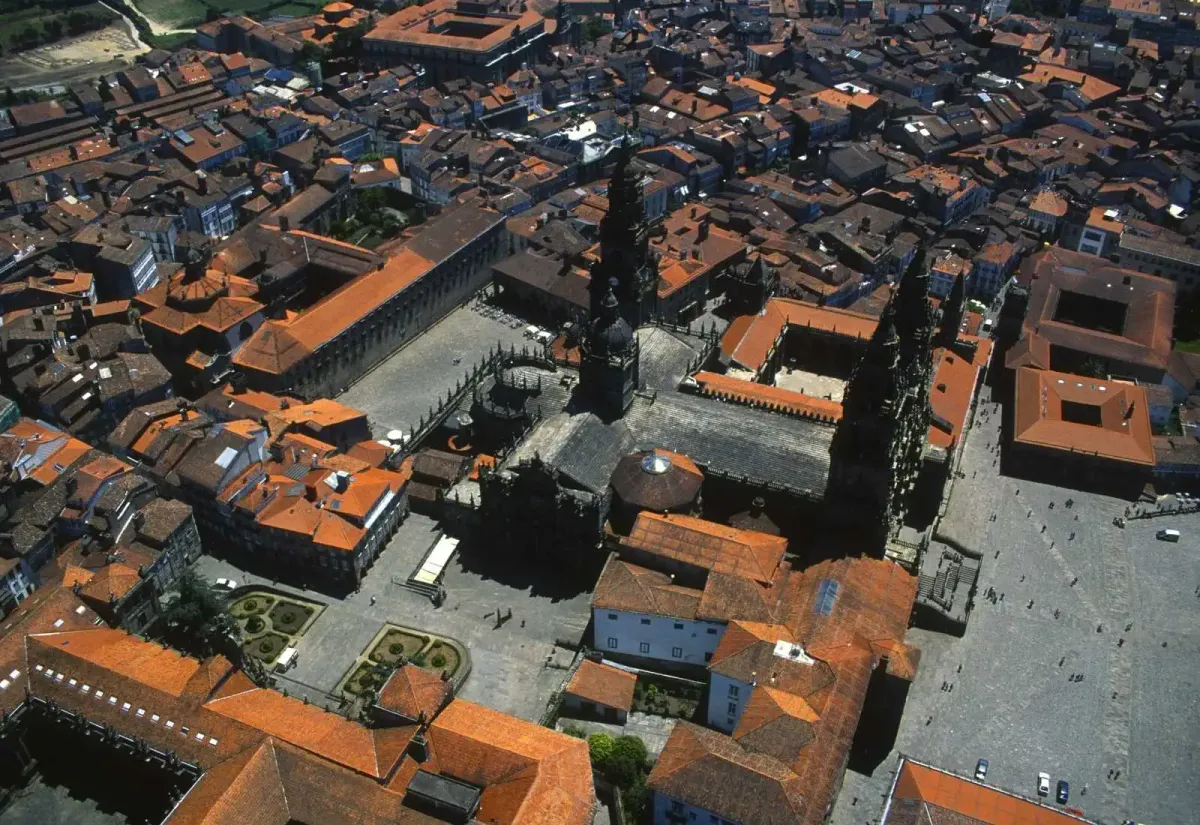 Aerial view of the Cathedral of Santiago and the Obradoiro square
What makes Holy Year 2027 special
- A motto of its own: "When they saw the star, they rejoiced with exceedingly great joy," taken from the Gospel of Saint Matthew.
- Official hymn: "Un campo lleno de estrellas" ("A field full of stars").
- European Youth Pilgrimage, planned for July 15 to 18, 2027.
- A possible visit from Pope Leo XIV. The Archbishop of Santiago has invited him to make the pilgrimage to Compostela and speaks of "well-founded hope," but as of today the visit has not been confirmed by the Holy See. It would be the perfect finishing touch for the Holy Year; we'll keep you posted as soon as there's news (here you can read what we know about a possible papal visit).
And there's more: Xacobeo 27
Alongside the religious celebration, the Xunta de Galicia will roll out the Xacobeo 27 programme throughout the year: a cultural agenda across all of Galicia, events, and expanded services for pilgrims along the Caminos. So even if your Camino has no religious meaning for you, 2027 will still be a special year to walk it.
Not only in Santiago
The Compostela Holy Year is not only celebrated at the Cathedral. Whenever there is a Holy Year in Santiago, there is also a jubilee in these two places:
- Gáldar (Gran Canaria), at the Church of Santiago de los Caballeros, the end point of the Camino de Santiago in Gran Canaria: it has its own Holy Door and plenary indulgence all year round.
- Villafranca del Bierzo (León), on the French Way, where the Romanesque church of Santiago opens its Puerta del Perdón (Door of Forgiveness). Since the Middle Ages, pilgrims who cannot go on to Santiago because of illness or injury have been able to gain the plenary indulgence there, meeting the Church’s conditions, just as if they had reached the Cathedral. That is why Villafranca is known as “the little Compostela”.
On top of that, in 2027 there are two other places with a plenary indulgence that have nothing to do with the Compostela Holy Year, although they may fit into your Camino:
- O Carballiño (Ourense), at the Church of the Veracruz, which celebrates its own Holy Year of the Vera Cruz from 31 October 2026 to 17 September 2027. The Pope granted it for the 75th anniversary of the church and the 125 years since the relic of the True Cross arrived, and it overlaps almost entirely with the Holy Year in Santiago.
- Lugo Cathedral, which offers a plenary indulgence on any day of the year, Holy Year or not: the Blessed Sacrament is exposed there day and night, and all you need to do is visit it and meet the usual conditions.
A special credential for the Holy Year
Santiago Cathedral has issued a special pilgrim credential for the 2027 Holy Year, with the Xacobeo 27 design and its motto, taken from the Gospel of Saint Matthew: “When they saw the star, they rejoiced with exceedingly great joy”. It works just like the usual one: you collect your Camino stamps in it, and it is the one you show to ask for your Compostela. You can get it at the Pilgrim’s Office in Santiago and at the parishes, confraternities and Friends of the Camino associations authorised by the Cathedral, in Spain and in other countries.
Which routes to choose in the Holy Year
In a Holy Year, pilgrim numbers rise on every route, but especially on the shortest and most popular ones. These are the ones that fill up fastest:
- French Way from Sarria: the last 100 km, the most popular option for earning the Compostela.
- Portuguese Way from Tui: the most sought-after alternative, starting from the crossing of the Miño river.
- Portuguese Coastal Way, for walking along the Atlantic.
If you'd rather avoid the crowds, the Primitive Way, the Northern Way, the English Way, or the Winter Way will see fewer pilgrims. And if you're left wanting more, the Finisterre and Muxía Way is the perfect epilogue.
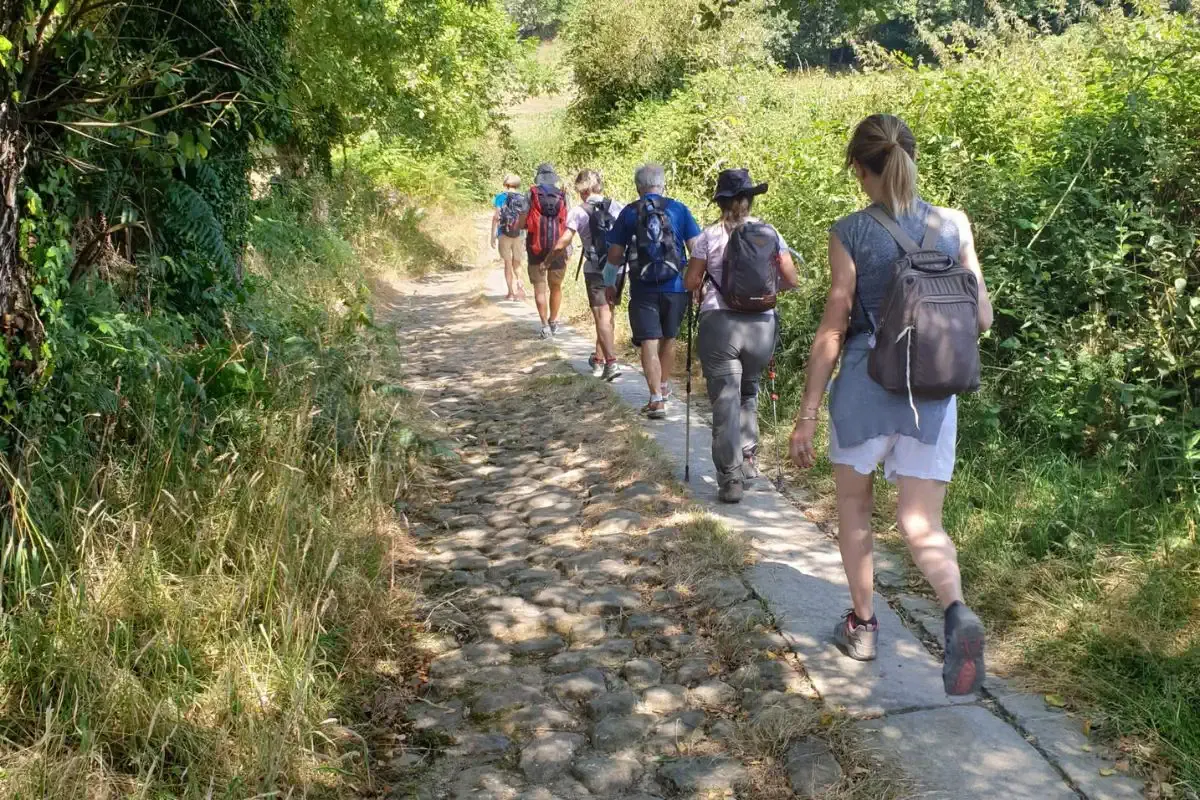 Pilgrims on the Camino de Santiago during the Holy Year
What you'll find in Santiago in 2027
- The Holy Door open all year round.
- The chance to embrace the Apostle and visit the crypt, with more visitors than usual.
- A constant festive atmosphere, especially intense around the Feast of the Apostle in July.
- The Botafumeiro, one of the Cathedral's great symbols. Right now it's temporarily out of service due to restoration works on the transept; if seeing it matters to you, check the Cathedral's calendar before you travel.
 Pilgrims planning their Camino
How to plan your Camino for the Holy Year
During the previous Holy Year, demand for accommodation on the most popular stages soared. That's why we recommend:
- Booking ahead, especially if you'll be walking between May and October, and above all in July and August.
- Choosing the right route for your fitness level and the days you have available; here's a guide to preparing to walk the Camino.
- Deciding how you want to do it:at your own pace, by bike, with your dog, or in an organised group (from Sarria or from Tui).
- Saving yourself the worry with a trip that includes accommodation booked at every stage, luggage transfer, and your pilgrim's credential.
Experience Holy Year 2027 with us
At Viajes Camino de Santiago we've spent more than ten years accompanying pilgrims, and the Holy Year is when having everything organised makes the biggest difference. If you already have dates in mind, calculate your budget here and secure your Camino for the Holy Year.