


Camino to Finisterre: The Ultimate Guide
02 October, 2025
Ultimate guide to the Finisterre Way, the route that extends the Camino de Santiago to the Atlantic. Discover its stages, what to see along the way, tips for organizing your trip, and how to experience a unique journey to the “end of the world.”

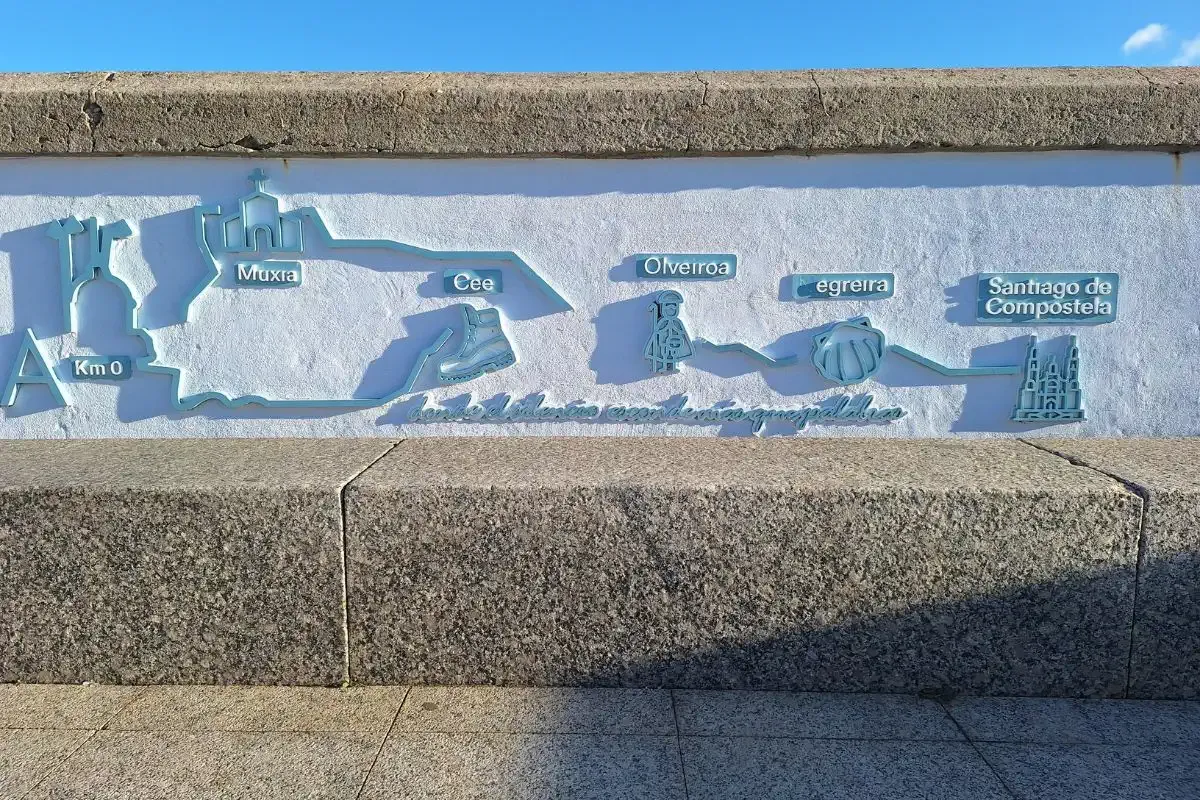
Map of the Camino de Finisterre, the kilometer 0 of all Jacobean routes
History and Significance of the Camino to Finisterre
Cape Finisterre is a place rich in tradition, history, and legends. Dating back to pre-Christian times, ancient pagan settlers, and later the Romans, believed it to be the westernmost point of the Earth.It was already a pilgrimage site for the Celts, who considered it an important place of sun worship, known as the Ara Solis. At that time, the earth was thought to be flat, and people wondered what lay to the west, the Beyond. Perhaps Paradise? Maybe Hell? Would the souls of their deceased rest there?
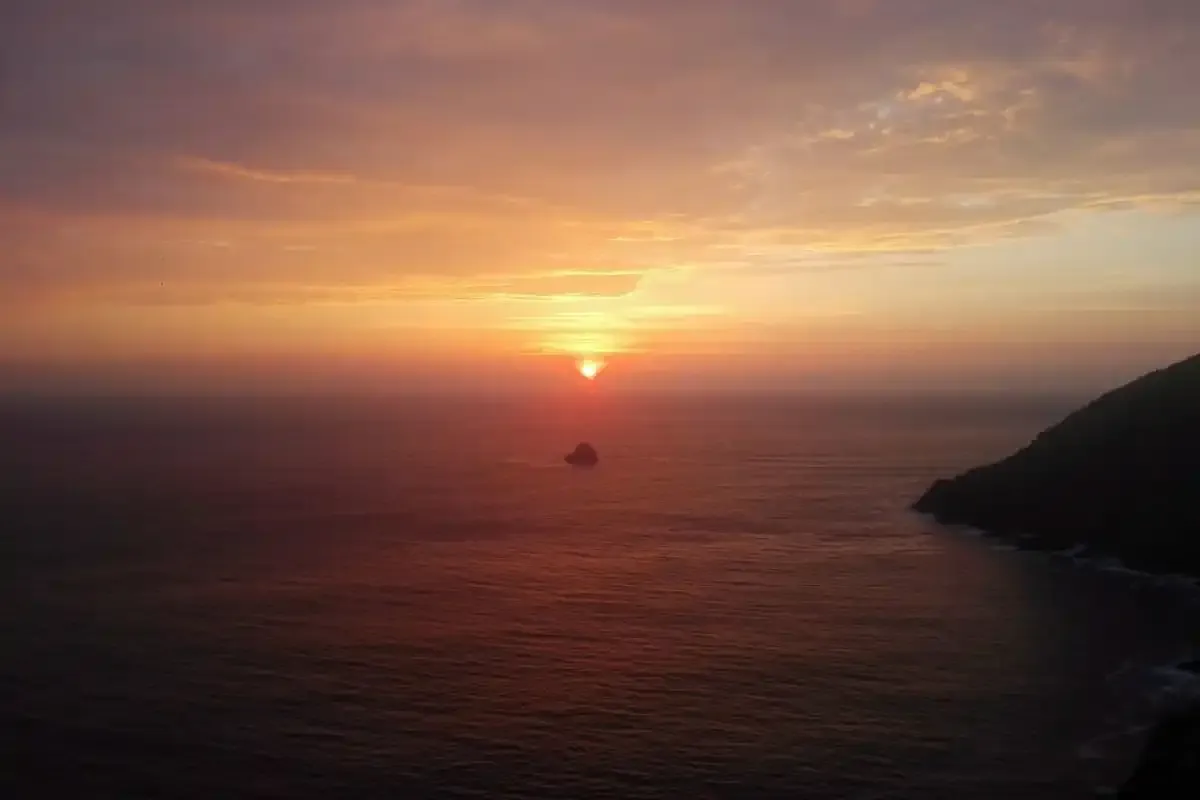
What lay beyond where the sun sets for the ancient inhabitants of Finisterre?
Relationship of Finisterre with the Apostle and the Camino de Santiago
With the arrival of Christianity and the preaching of the Apostle James in Galicia, this place gained new significance and importance. In fact, the Apostle is closely associated with this area, as it was inhabited by pagan sun-worshippers who were the target of his preaching. It is said that James himself destroyed the altar of the Ara Solis, erecting in its place the hermitage of San Guillermo, which no longer exists today. Additionally, the Codex Calixtinus mentions that the remains of the Apostle James passed through Duio, near Finisterre, to obtain the king's consent for burial.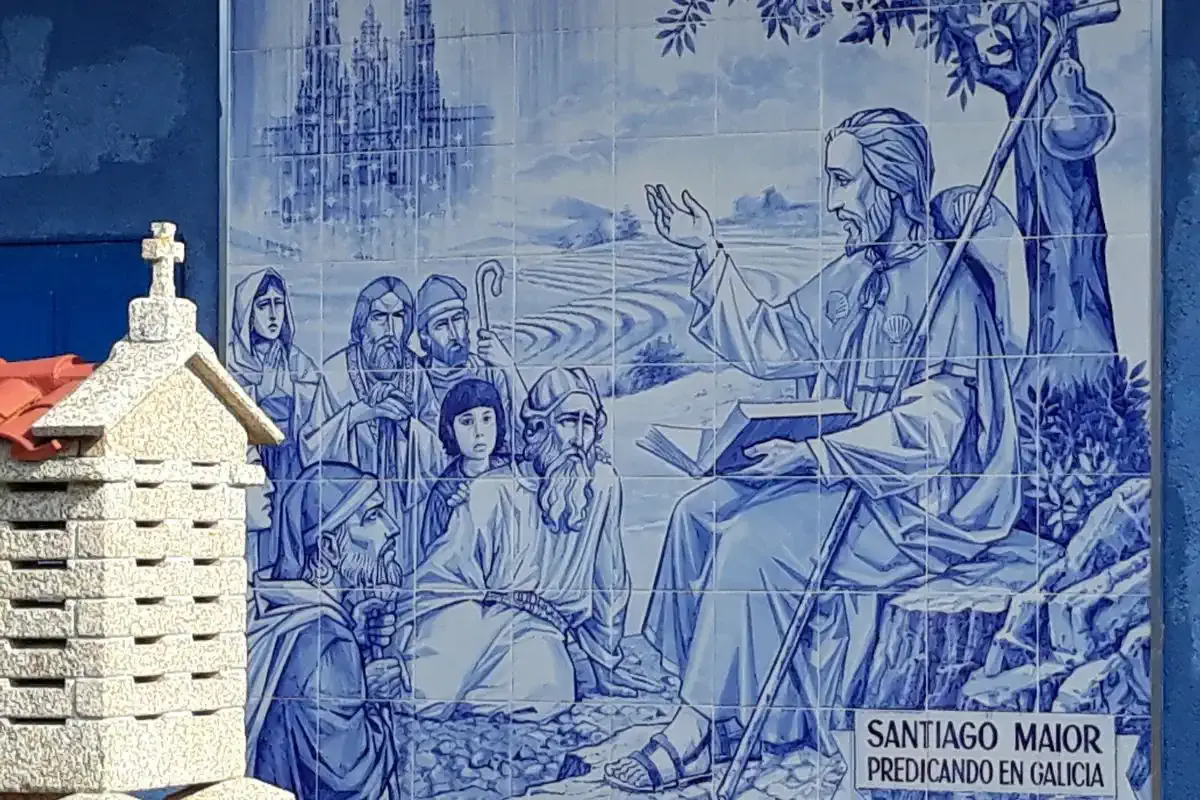
The Apostle James preaching, a scene from the Jacobean legends of the Camino de Finisterre
The Camino to Finisterre experienced a significant decline starting in the 16th century, like many routes. In the 20th century, administrations, associations, and local entities revitalized the route, promoting it and creating its own credential and pilgrimage certificates such as the Fisterrana and the Muxiana.
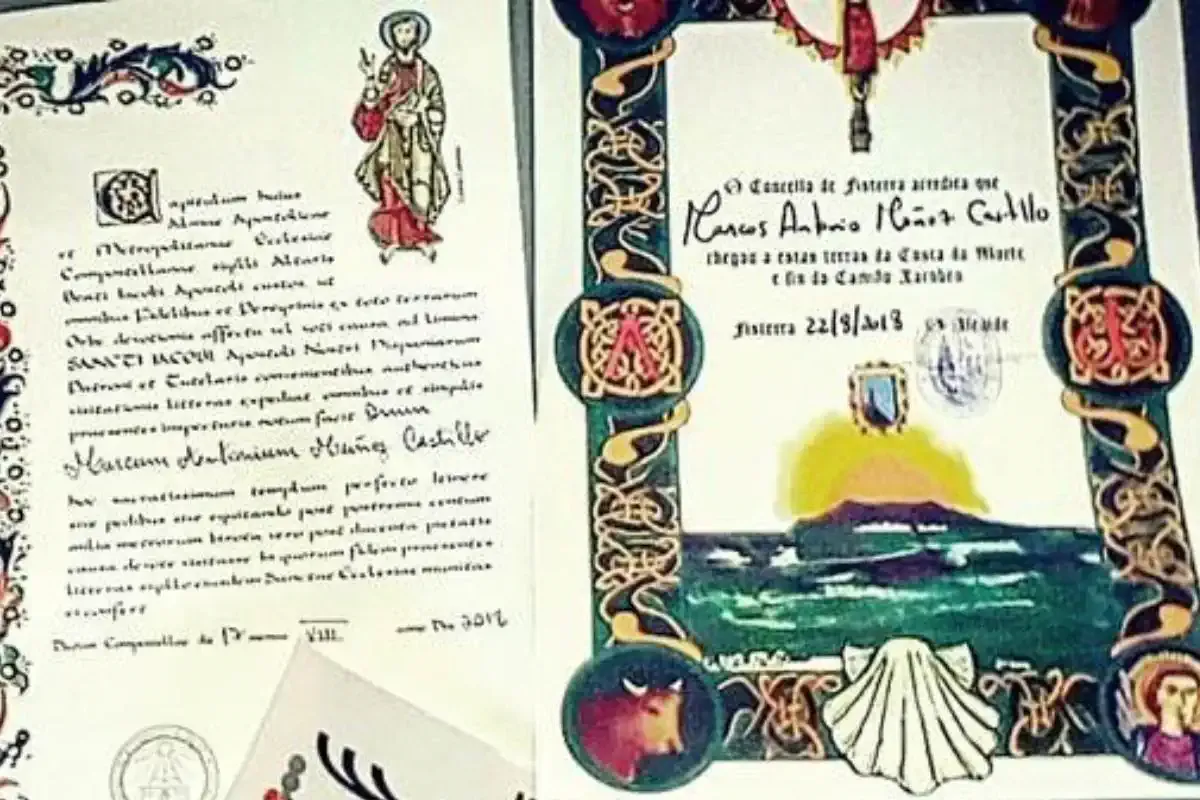
The Finisterrana, on the right, is the certificate issued upon completing the Camino de Finisterre
Routes and Stages of the Camino to Finisterre
For those wishing to embark on this journey, the Camino de Finisterre is divided into four main stages. From Santiago to Finisterre, there are about 90 km, with each stage offering a unique experience, combining stunning landscapes, charming villages, and ancient legends. It is a route suitable for everyone, with some interesting elevation changes and plenty of services. The best time to undertake it would be between spring and summer.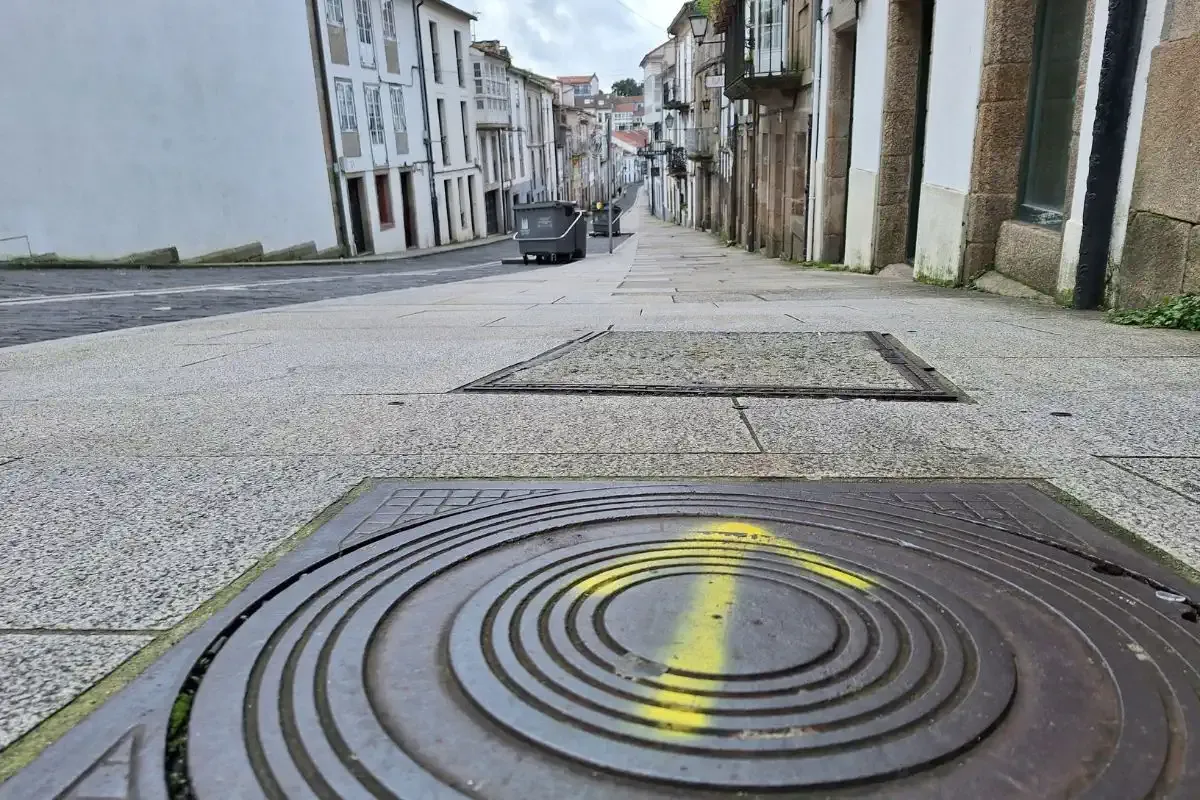
Yellow arrow leaving Santiago de Compostela, start of the Camino de Finisterre
Stage 1: From Santiago to Negreira
The first stage begins in Santiago de Compostela, right at the Plaza del Obradoiro, and ends in Negreira, after just over 20 km. Leaving the city through the San Lorenzo oak grove, the landscape gradually shifts to green fields and quiet rural paths.After crossing the Sarela River, the pilgrim ascends slowly to the village of Sarela de Abaixo. Here, turning around, the pilgrim can bid farewell to the Cathedral of Santiago, enjoying an incredible panoramic view. Small villages, paths, and roads follow, leading the pilgrim to Augapesada. This is a good place to rest before tackling the toughest climb of this route, ascending about 200 meters over approximately 2 km.
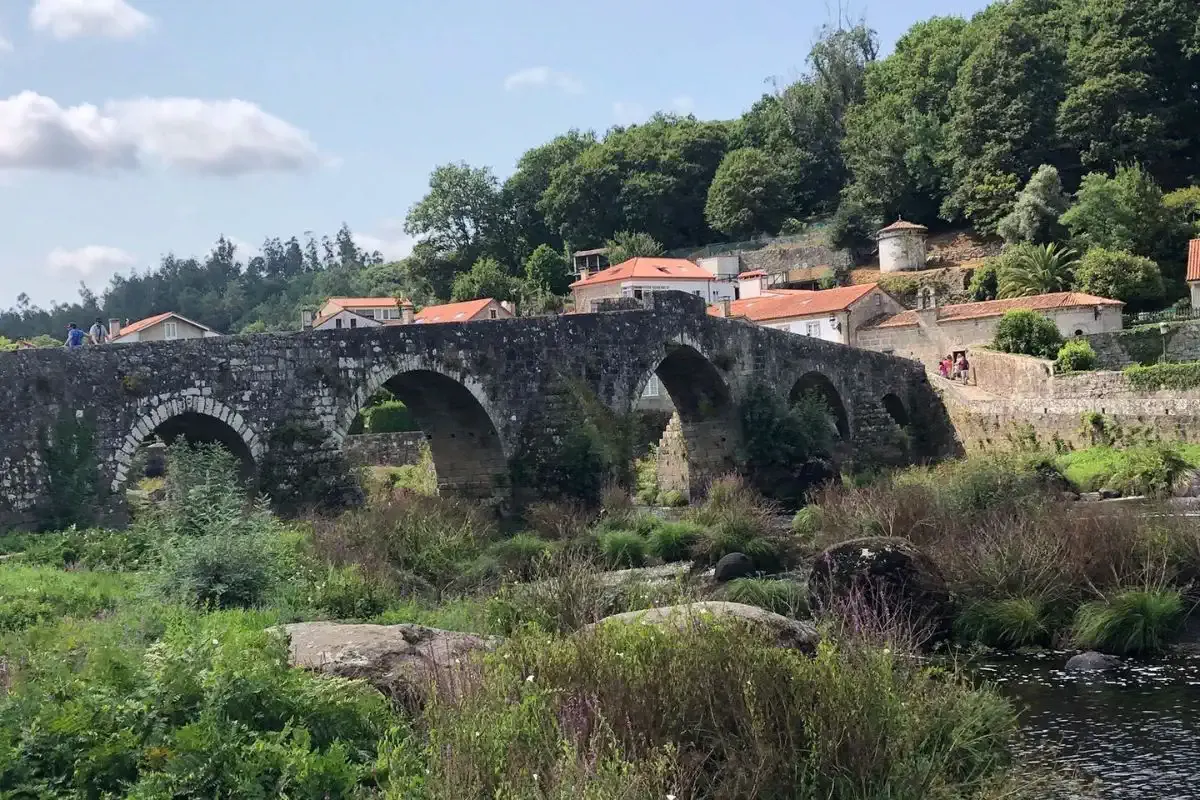
View of Pontemaceira, with its bridge
After visiting Pontemaceira, the pilgrim continues the stage towards the endpoint, Negreira. This is a small town with all services and a welcoming atmosphere where pilgrims can rest.
Stage 2: From Negreira to Olveiroa
This is the longest stage of the Camino de Finisterre, with about 33 km between Negreira and Olveiroa. Although lengthy, it does not present significant difficulties due to its gentle terrain.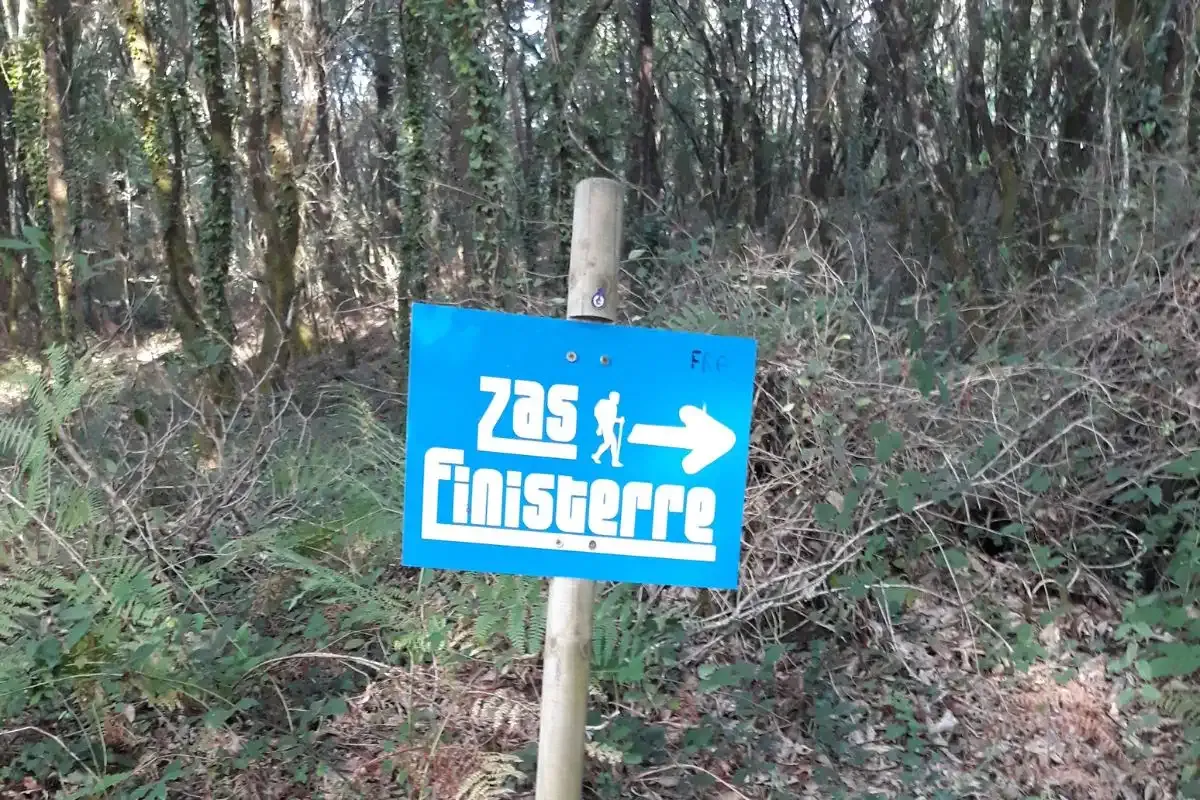
Sign for the alternative route to the Camino de Finisterre upon leaving Negreira
The rural atmosphere stands out: you pass through large meadows, vast forests, and small villages, and the friendliness of the locals will encourage you to continue. After climbing to Alto da Pena, you'll reach another fork: with no notable differences, both paths will lead you to Vilaserío. Shortly before reaching the end, you can admire the incredible views of the A Fervenza reservoir during the descent from Monte Aro.
Finally, you will arrive at Olveiroa, a small village with the necessary services to rest and recover after this long stage.
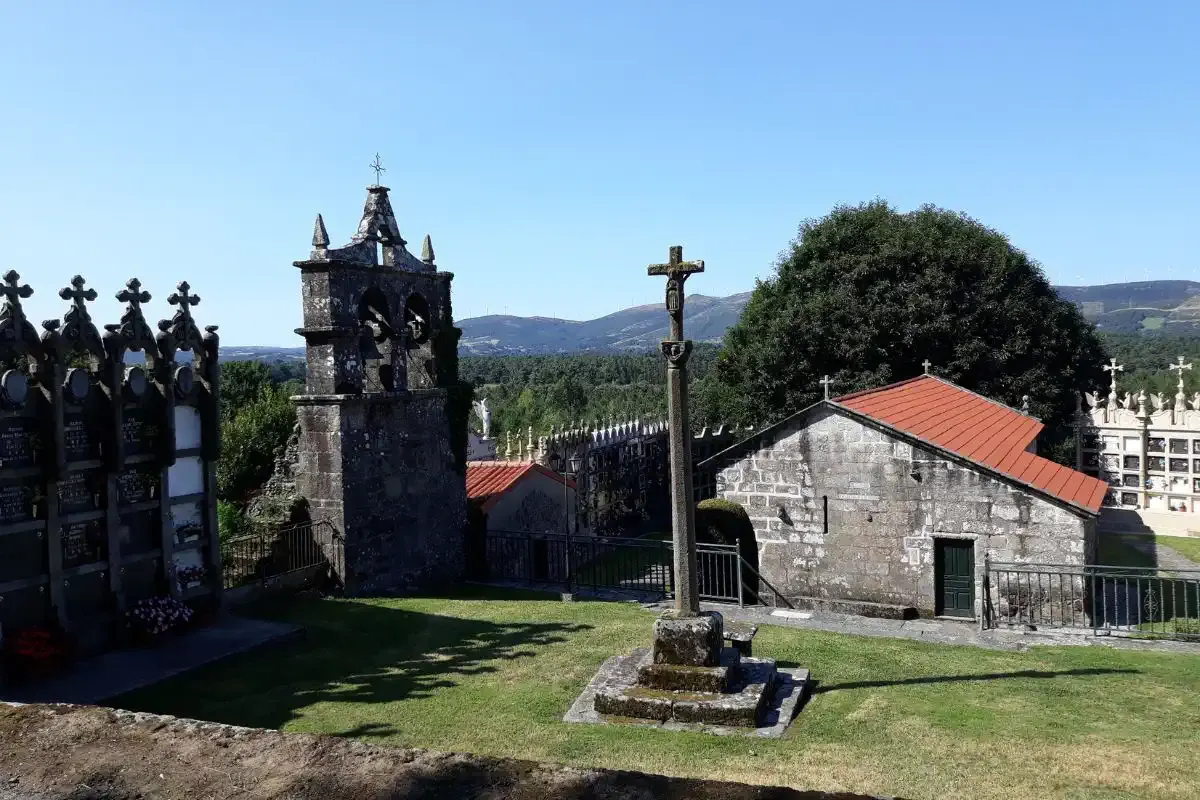
Rural landscape of the Camino de Finisterre, featuring abundant traditional architecture
Stage 3: From Olveiroa to Cee
From Olveiroa, the Camino heads towards Cee, finally bringing you to the Atlantic Ocean, in an 18 km stage. The route starts from the Castrelo reservoir and continues uphill until you are met with spectacular views of the Xallas River. Five kilometers from the start, you will find the village of Hospital, where we recommend stopping before continuing, as there won't be many more services until the end of the stage.After the stop, you will encounter another fork: should you go to Muxía or Finisterre? This route has two possible endings, and some pilgrims extend their journey to reach both locations. You should take the left option to Finisterre, which passes through a beautiful forest that hides a terrifying mythological creature, Vákner.
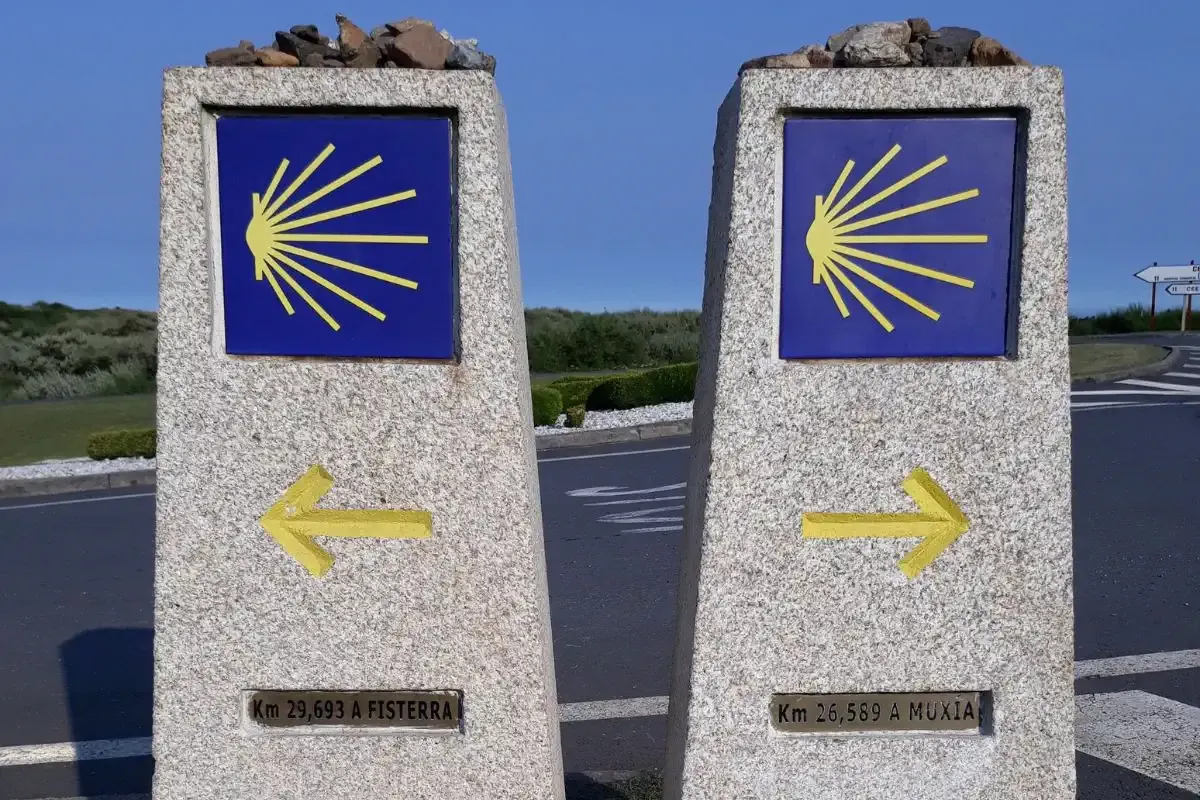
The two markers at the fork in Hospital, on the Camino de Finisterre
Stage 4: From Cee to Finisterre
This is the final stage, where the star is the Atlantic Ocean, signaling that the goal is ever closer. From Cee to Cape Finisterre, it's about 16 km.After Cee, you will reach Corcubión: you should take a break in your journey to stroll through its old town, declared a Historic-Artistic Site. Here, you can also swim at Quenxe beach, sheltered from the winds and storms typical of the Costa da Morte.
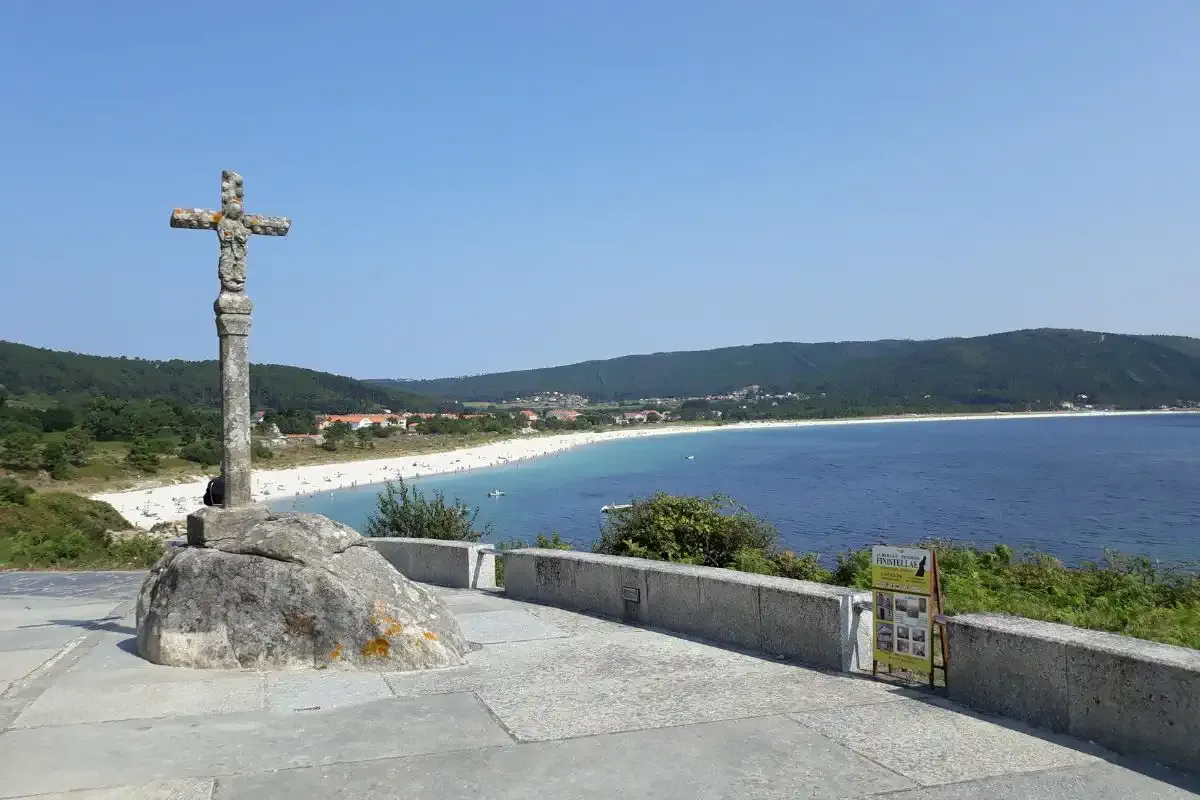
Langosteira beach, in Finisterre
Upon reaching the town of Finisterre, it's worth taking a stroll through the harbor and its narrow streets before heading towards Cape Finisterre. At the Tourist Office or the public hostel, you can obtain the Finisterrana with your credential.
Just a 3 km gradual climb takes you to the famous Finisterre lighthouse, a magical place and the end of this Camino to Finisterre, where you will find the km 0.000 marker of all Jacobean routes. Many pilgrims spend the afternoon at the cape, waiting to witness one of the most spectacular sunsets in the world.
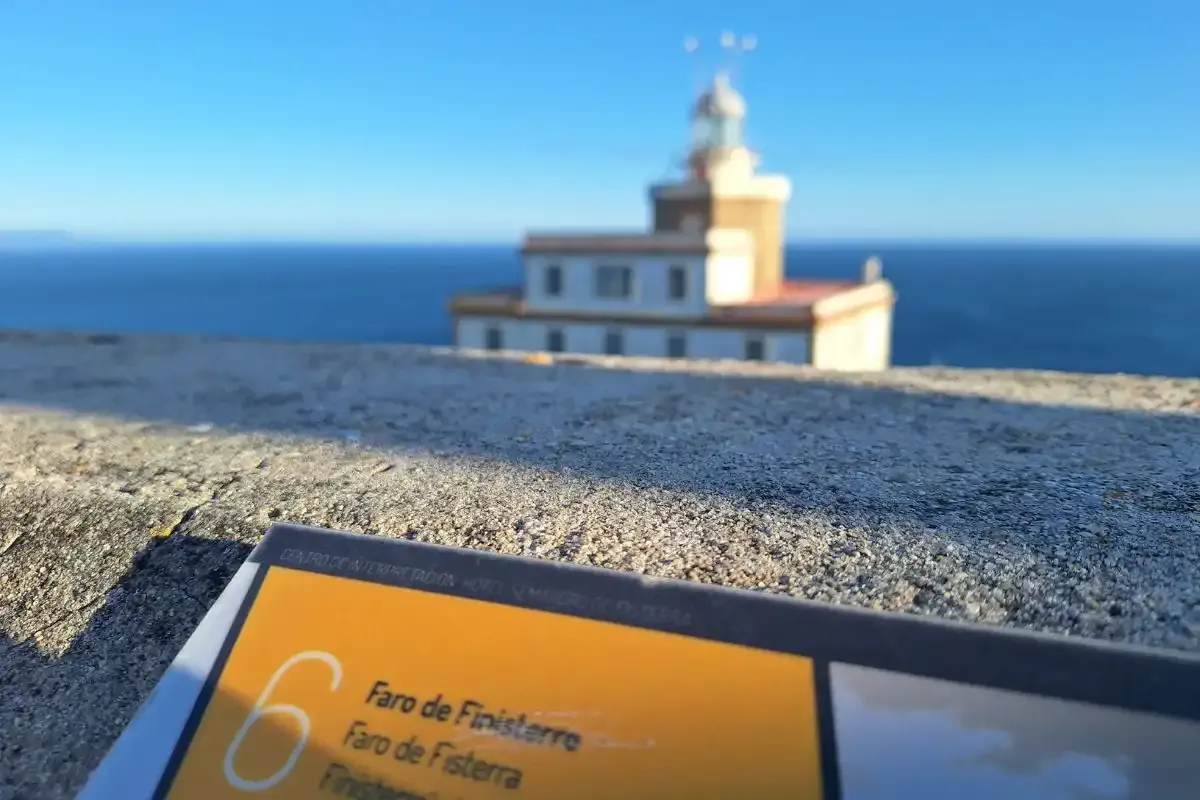
Finisterre lighthouse
Preparations for Your Camino
To undertake the Camino de Finisterre, as with all routes, you need to prepare everything you need to bring. Here’s a summary with a basic list:- Comfortable and suitable clothing for walking.
- Sturdy, well-worn footwear.
- A lightweight backpack.
- Sleeping bag if you're staying in hostels.
- First aid kit.
- Water and snacks.
- Personal documentation, mobile phone, charger, and pilgrim credential.
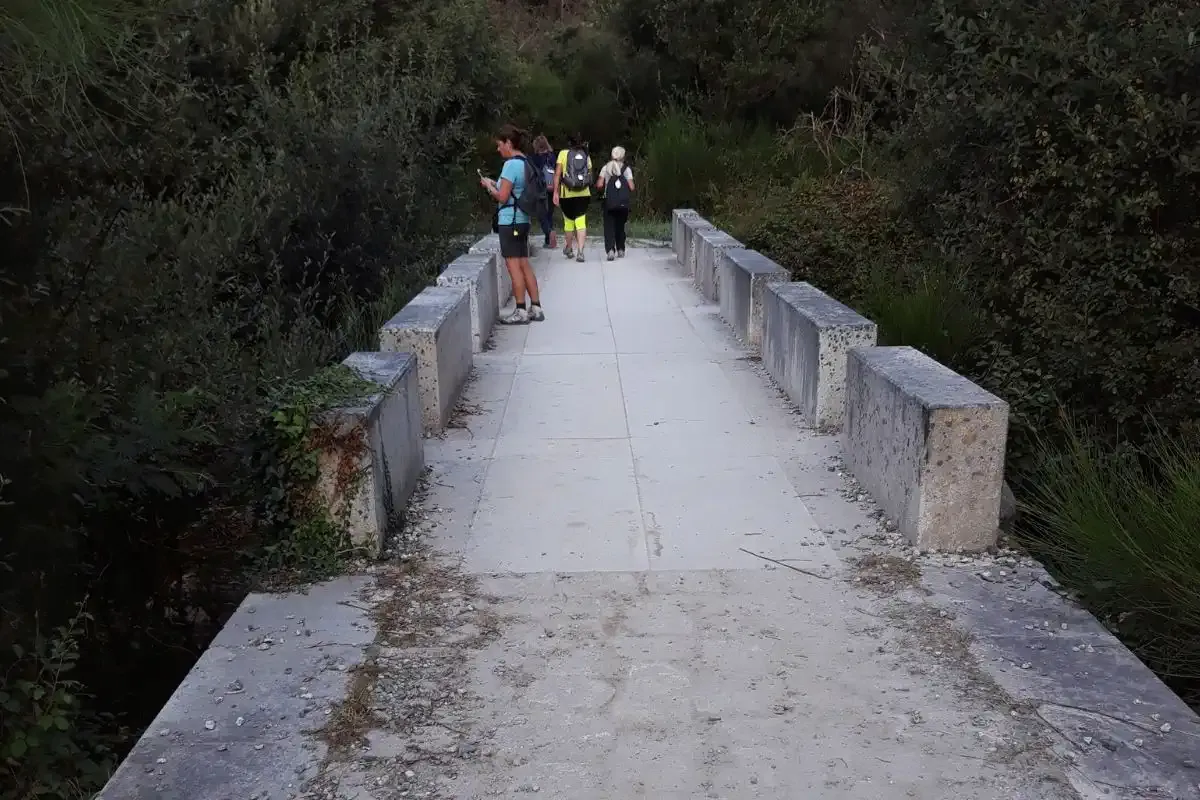
Pilgrims in the way to Finisterre
- Plan your route: research the stages, as even though the Camino is well-marked, having a map or guide can be useful.
- Hydration and nutrition: carry enough water and some energy snacks to keep you hydrated and energized.
- Take care of your feet: wear high-quality socks and ensure your shoes fit well to avoid blisters.
- Connect with other pilgrims: talking to other pilgrims can enrich your experience and provide support during difficult moments.
Attractions and Points of Interest on the Camino to Finisterre
Let's delve deeper into the Camino de Finisterre, which has much to offer.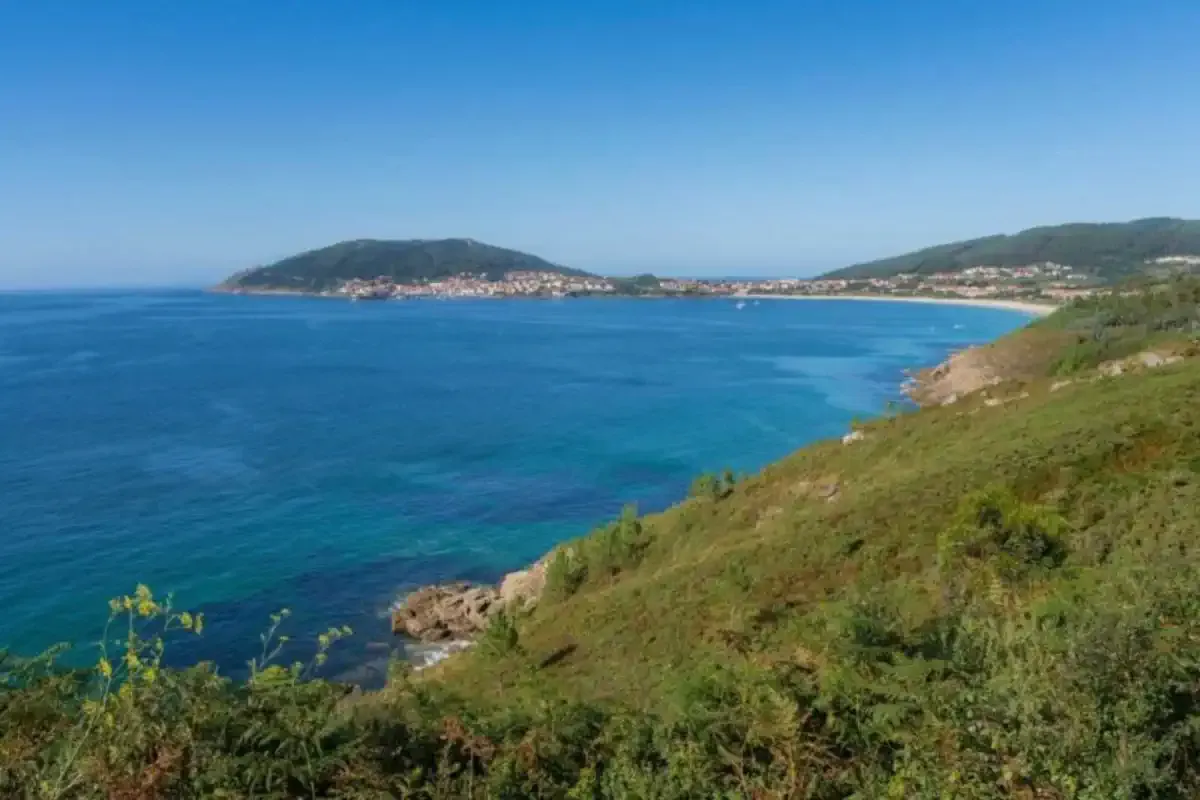
Panoramic View of Finisterre
Pontemaceira
Pontemaceira, a charming rural village built around a magnificent Roman bridge over the Tambre River, dotted with ancient mills. Legend has it that the disciples of the Apostle James the Greater, while fleeing from the Romans, crossed this bridge. Immediately after, the bridge collapsed, causing their pursuers to fall into the river.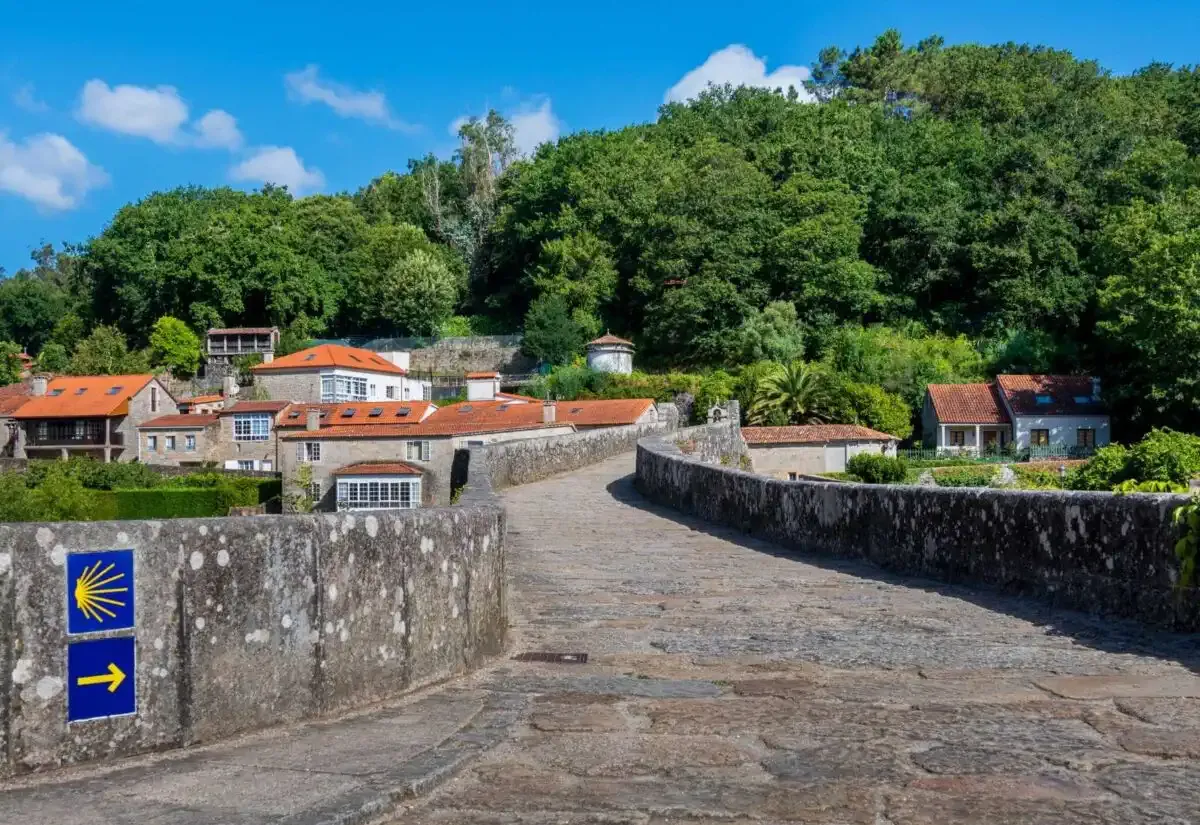
Bridge over the Tambre River in Pontemaceira
Negreira
Negreira, a charming village that retains its rural essence, where pilgrims can enjoy the tranquility of the countryside and the hospitality of its inhabitants. In Negreira, there is an impressive medieval fortress that has undergone several renovations but still preserves elements of its original structure. Notable features include its large chimney and a stone gallery visible from the main street, which connects the Pazo de Cotón with the Chapel of San Mauro through an elegant triple stone archway.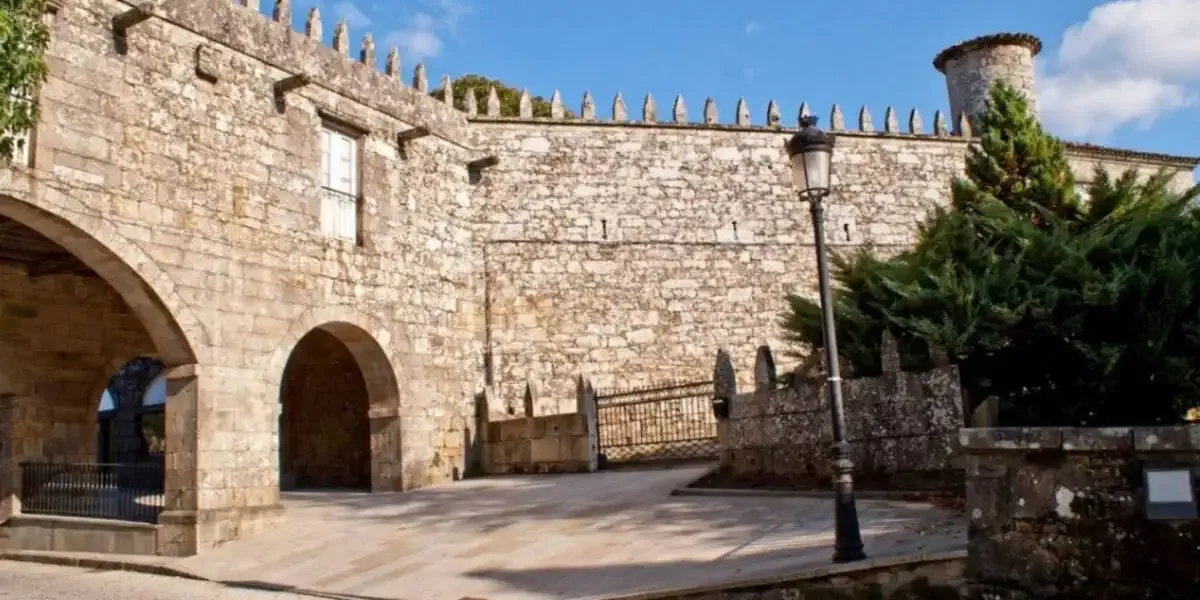
Pazo de Cotón, in Negreira
Olveiroa
Olveiroa is a typical rural village where its centuries-old hórreos stand out, now in perfect condition. These traditional Galician agricultural storage structures are a delight for pilgrims, who can appreciate them in their full glory during a stroll through the village. Additionally, the Olveiroa bridge, located in the stunning surroundings of the Fervenza reservoir, holds great visual and historical value. It was the site of a confrontation between Galician peasants and the troops of Napoleon Bonaparte in the early 19th century.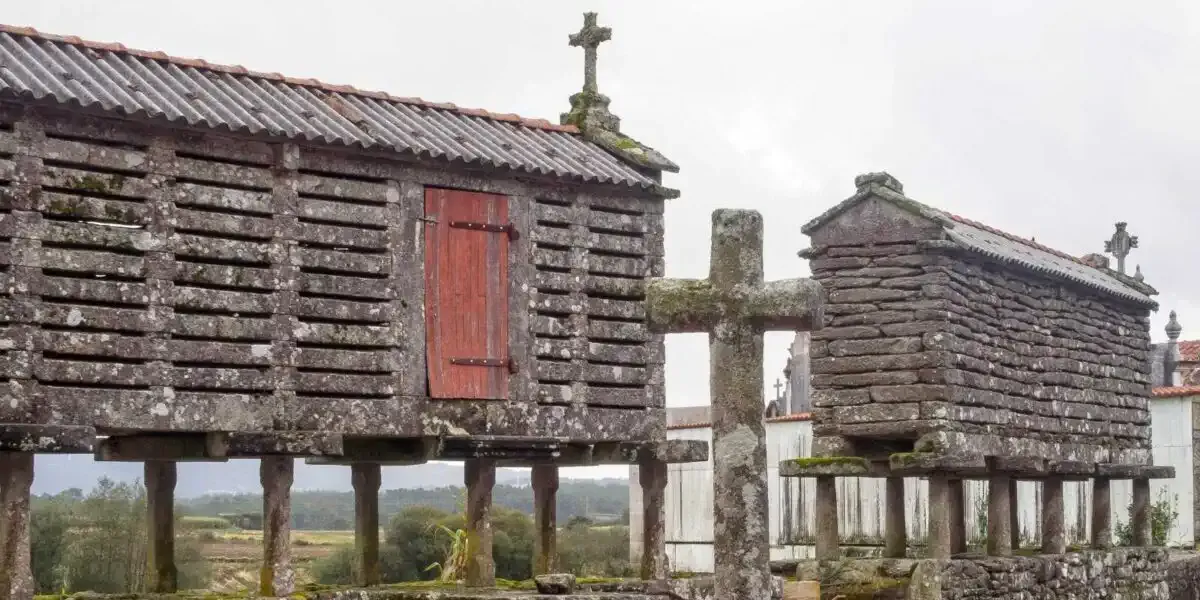
Hórreos in Olveiroa
Vákner
Vákner is a werewolf, depicted in an imposing statue nearly 5 meters tall, known at crossroads and paths of the Camino de Santiago. The medieval legends of werewolf sightings, lycanthropes, and strange beasts in this area are famous, reinforcing its connection to these mysterious stories.
The werewolf Vákner awaits you in the forests of the Camino to Finisterre
Cee
In the Middle Ages, Cee was a small agricultural and fishing village. During this period, the town began to grow and prosper, leaving its mark on constructions that are still preserved today. Among the medieval remnants, the Church of Toba, from the 12th century, and the Church of Cee, which retains 15th-century architecture in its upper chapel, stand out. Later on, Fernando Blanco de Lema, an important philanthropist born in Cee at the end of the 18th century, financed buildings dedicated to education, such as the old Escola das Nenas and the current institute and Botanical Garden that bears his name.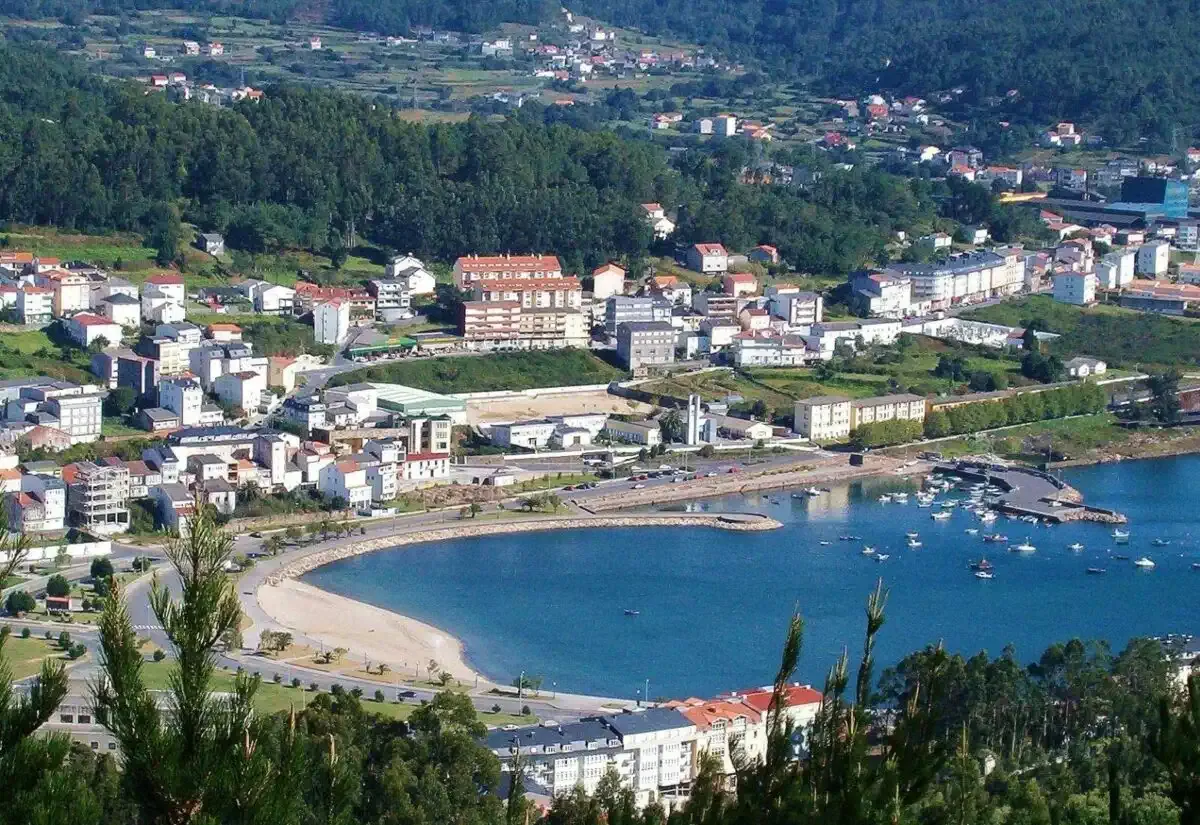
Panoramic view of Cee
Finisterre
As a fishing village, Finisterre, or Fisterra as it is called in Galician, is famous for its rich seafood cuisine. It is an ideal place to savor Galician-style octopus, fishermen's stews, and fresh shellfish. Notable sites include the Castle of San Carlos, now the Fishing Museum, as well as the fish market, where you can attend fish and seafood auctions.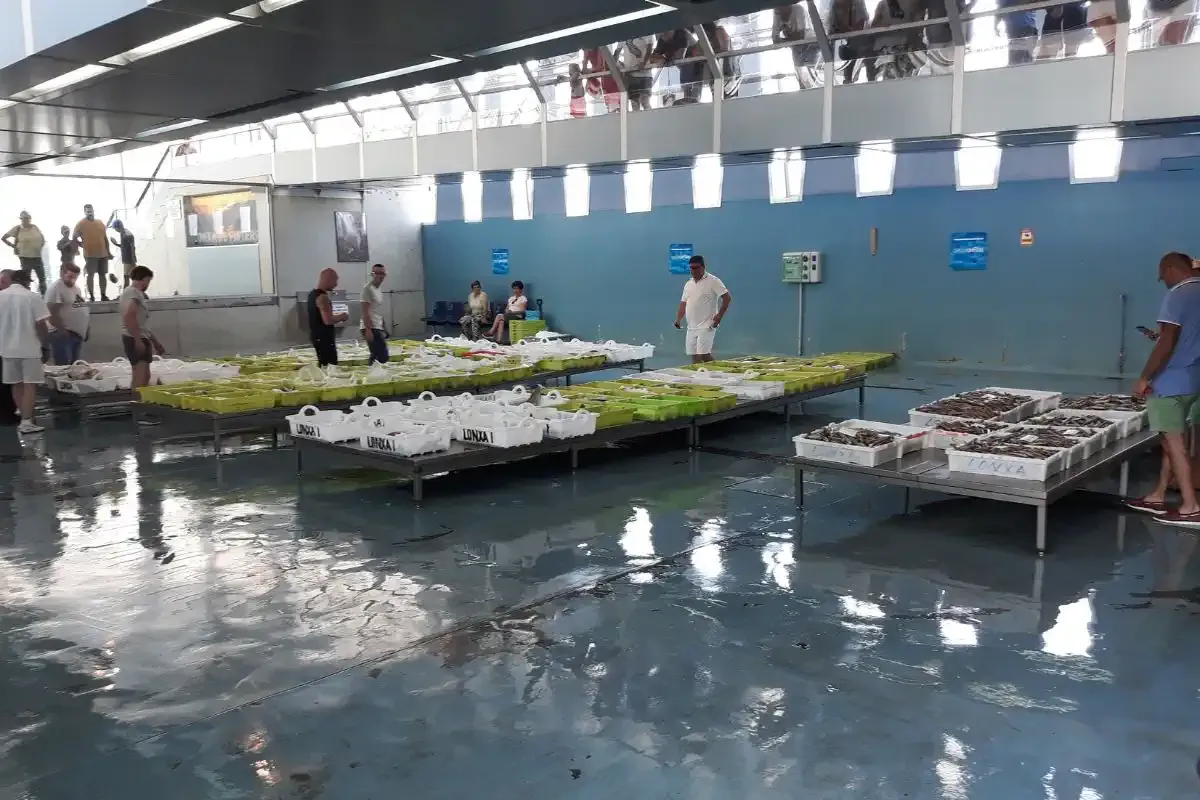
Pilgrims attending an auction at the Finisterre fish market
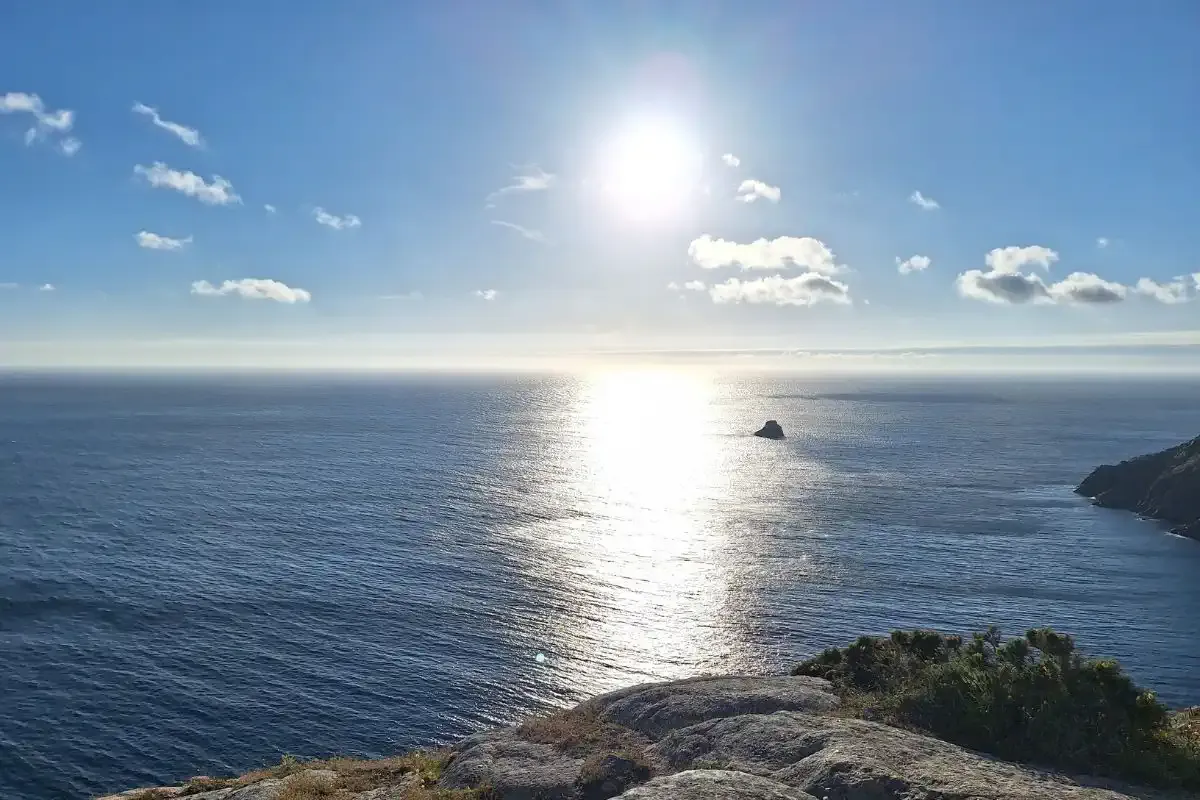
Cape Finisterre, preparing for a sunset
Enjoy the Camino to Finisterre with an organized group
Have you already walked the Camino from Sarria with us and are looking for more? A new challenge? Or a transformative experience? Complete the adventure by reaching the end of the world and join our exclusive organized group on the Camino to Finisterre. A transcendent adventure awaits you with travelers of all ages, traversing the most epic landscapes of Galicia. From the green interior of Galicia to the beautiful and treacherous Costa da Morte, witness to storms and shipwrecks.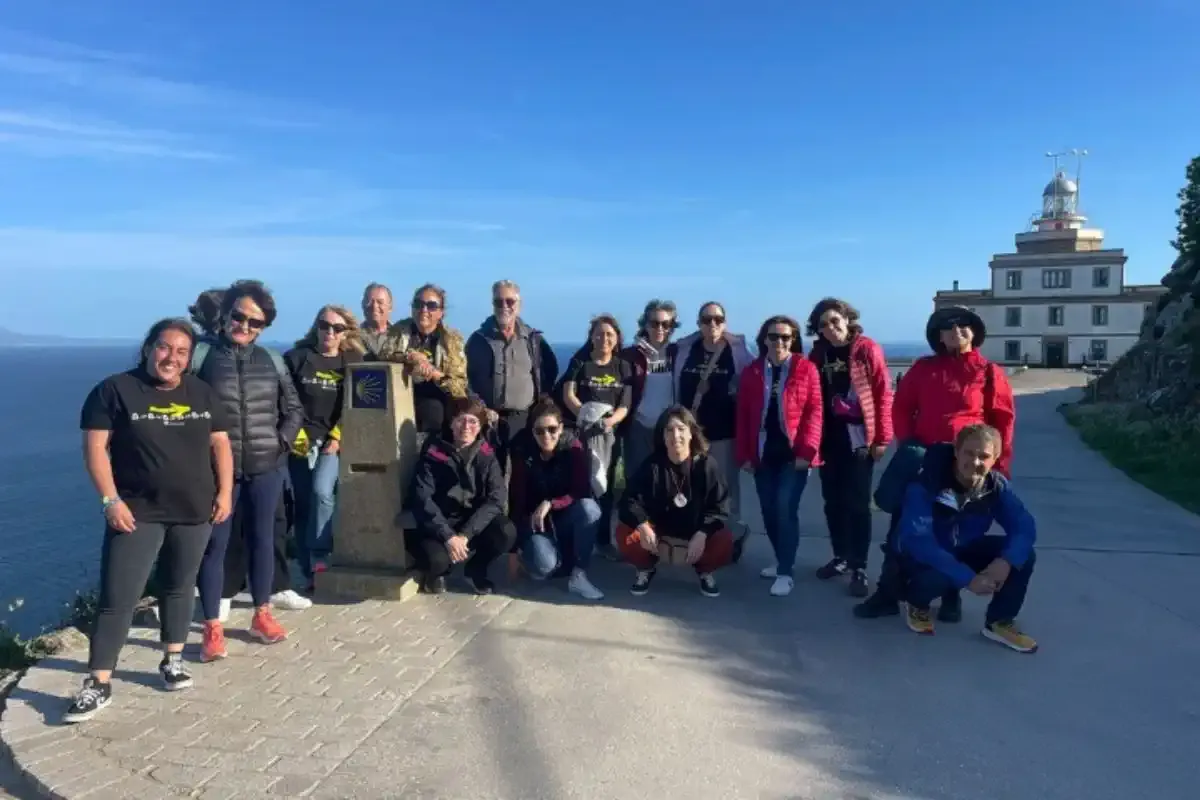
Our organized group pilgrims, at the end of their adventure at Km. 0 of the Camino de Finisterre
Comments (1)
Carmen
Jorge Severo Medina Martín
Leave a comment