


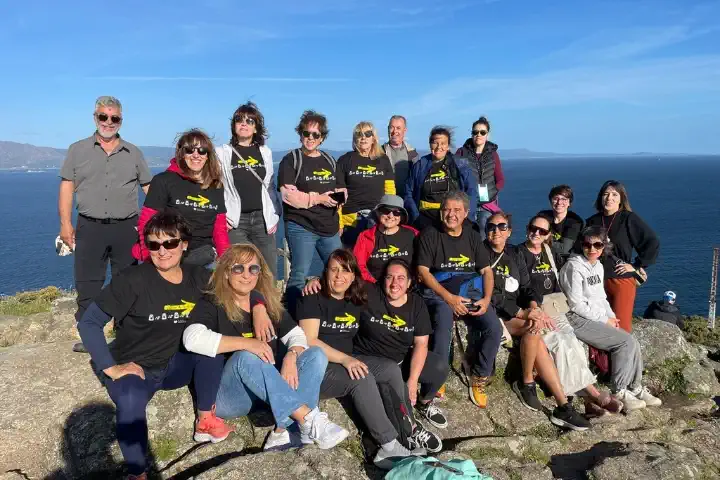
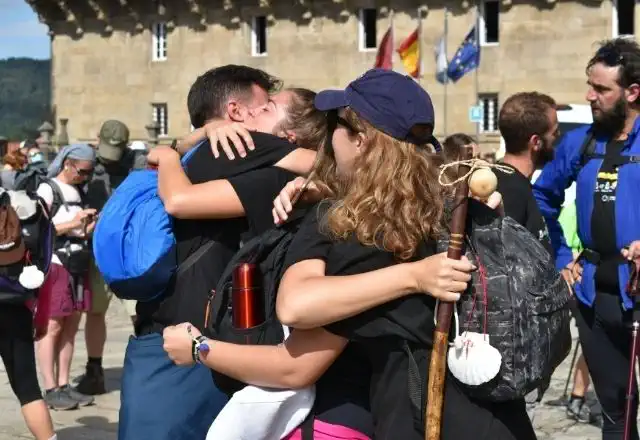
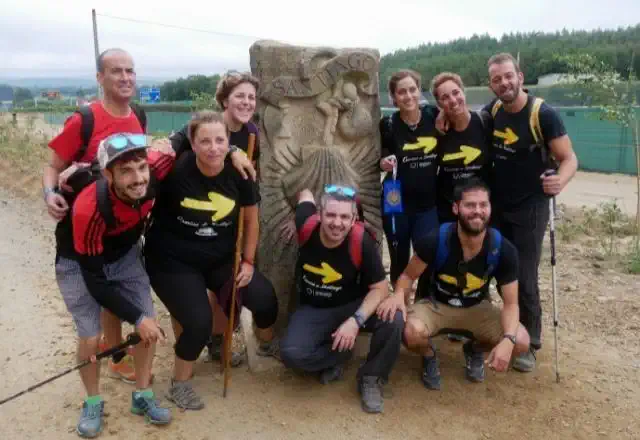
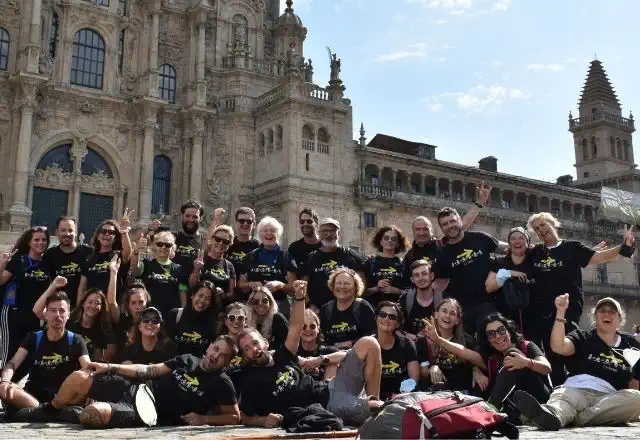
The Camino de Santiago to Finisterre in a group, the end of the world shared with other pilgrims. 94 kilometres from Santiago through Negreira, Olveiroa and Cee to the Fisterra lighthouse, with a great atmosphere and the thrill of seeing the Atlantic at the end of the walk.
You bring the enthusiasm; we bring the group and the organising: accommodation, daily luggage transfer, documentation, travel insurance and a great pilgrim vibe, from 389 €.
Viajes Camino de Santiago® organises the Way to Fisterra in a group.
Services
Included in all our routes
- Accommodation
6 days / 5 nights
- 24 hour accompanying monitor
- 6 days / 5 nights accommodation
- Complete documentation (Dossier and material for the Camino)
- Free scallop and pilgrim's t-shirt
- Luggage transfer during the stages. (1 piece per person max 15 kgs)
- Pilgrim's Credential
- Travel insurance
Optional
- Transfer from Santiago to Finisterre
- Supplement for single room
- Cancellation Insurance
Available Dates
- From 11 to 16 of July
- From 1 to 6 of August
- From 1 to 6 of September
Accommodations
- Most popular
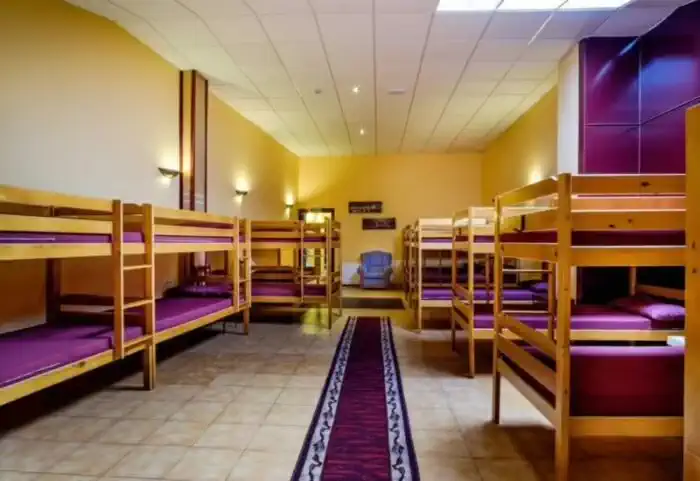
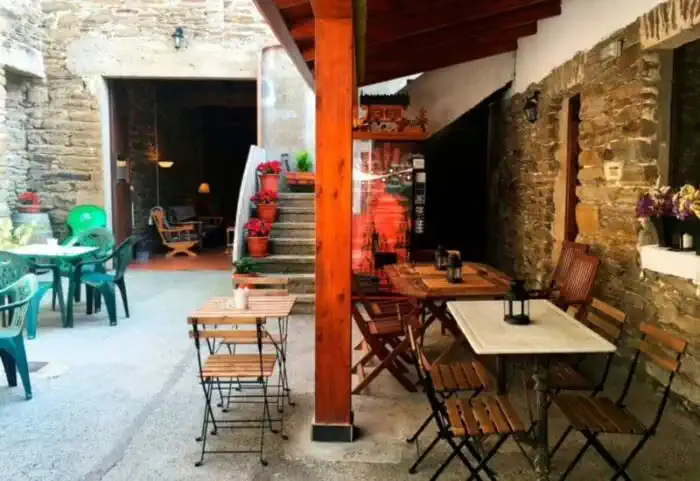
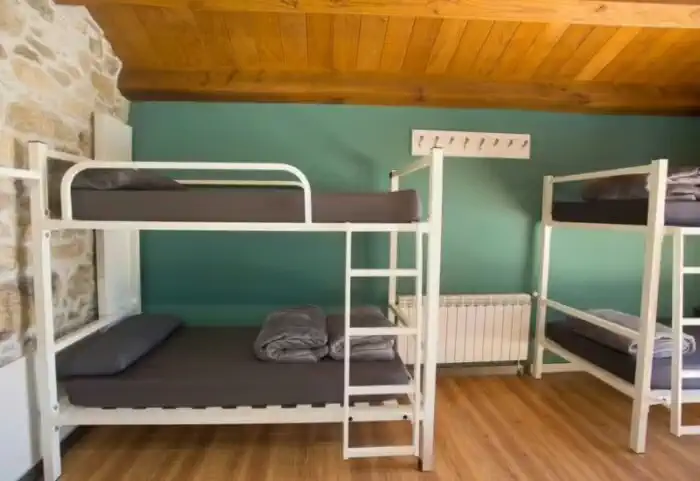
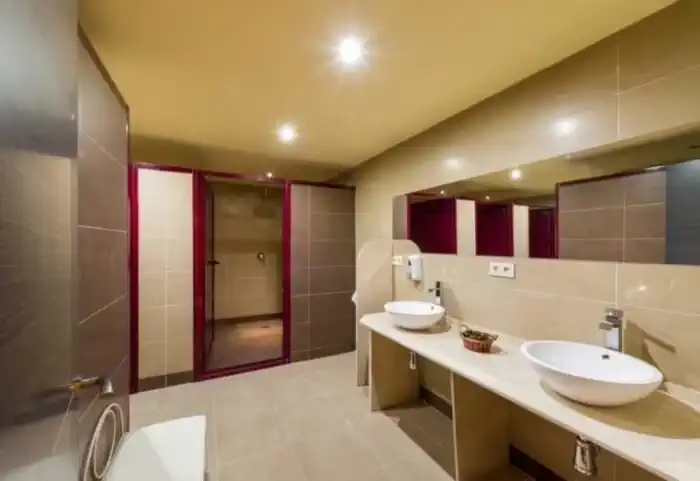
Basic accommodation (Private hostels)
389 €
The most authentic accommodation on the Camino. Hostels are the ideal option for those traveling on a tight budget, solo pilgrims, or anyone who wants to experience the Camino de Santiago in its purest form. They are the perfect place to socialize, share stages, and connect with fellow walkers along this ancient route.
- Most popular
Private comfort (Guesthouses, rural houses and small hotels)
599 €
The perfect balance between charm and comfort. Guesthouses, B&Bs and country houses await you in the villages along the Camino with private rooms, private bathrooms, TV, and daily cleaning service. Simple and welcoming, they are the ideal place to truly rest and enjoy the peaceful rural essence that only the Camino can offer.
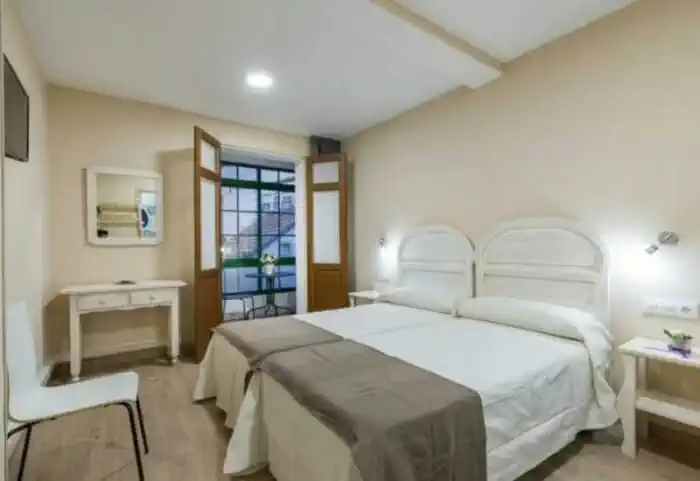
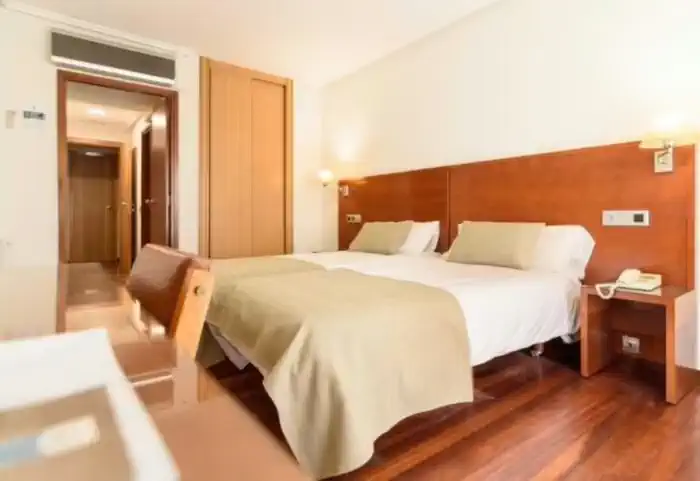
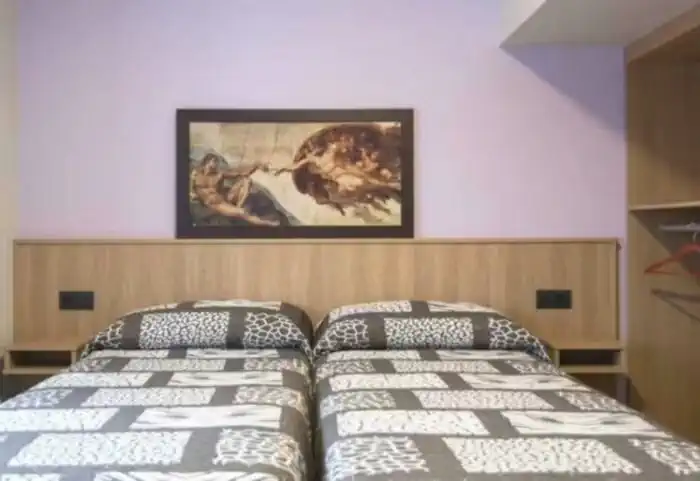
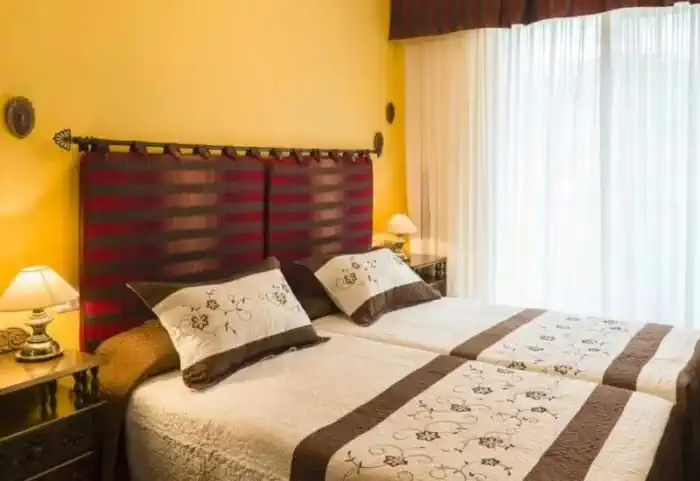
Photos
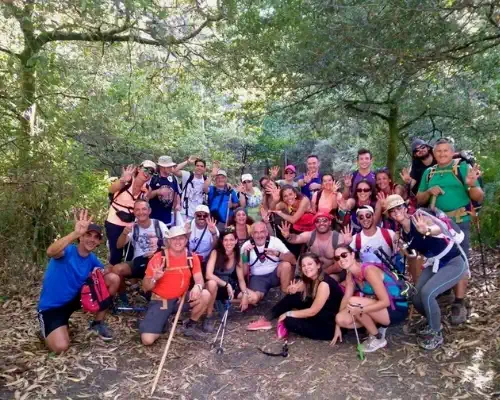
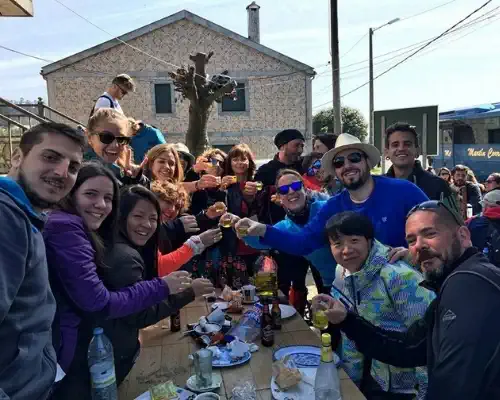
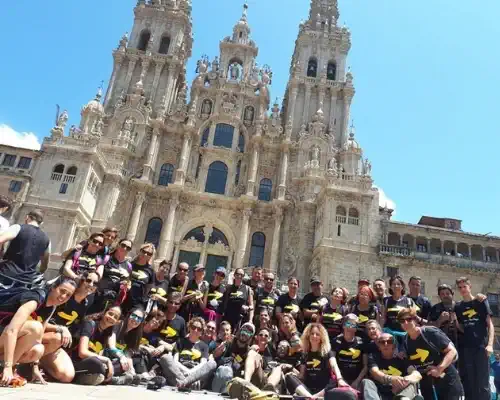
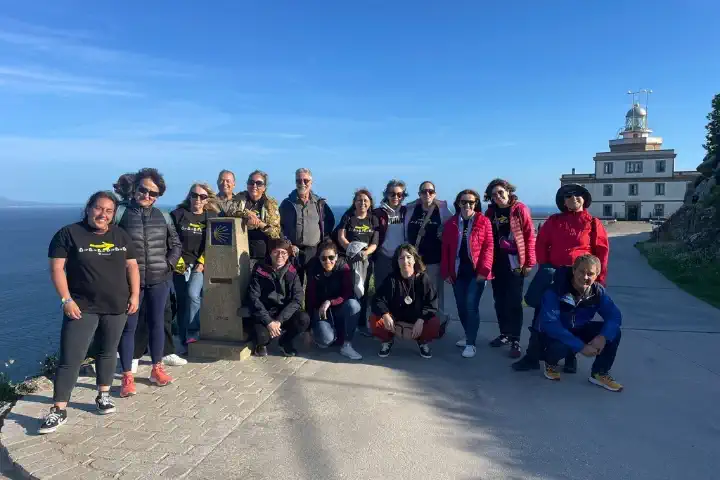
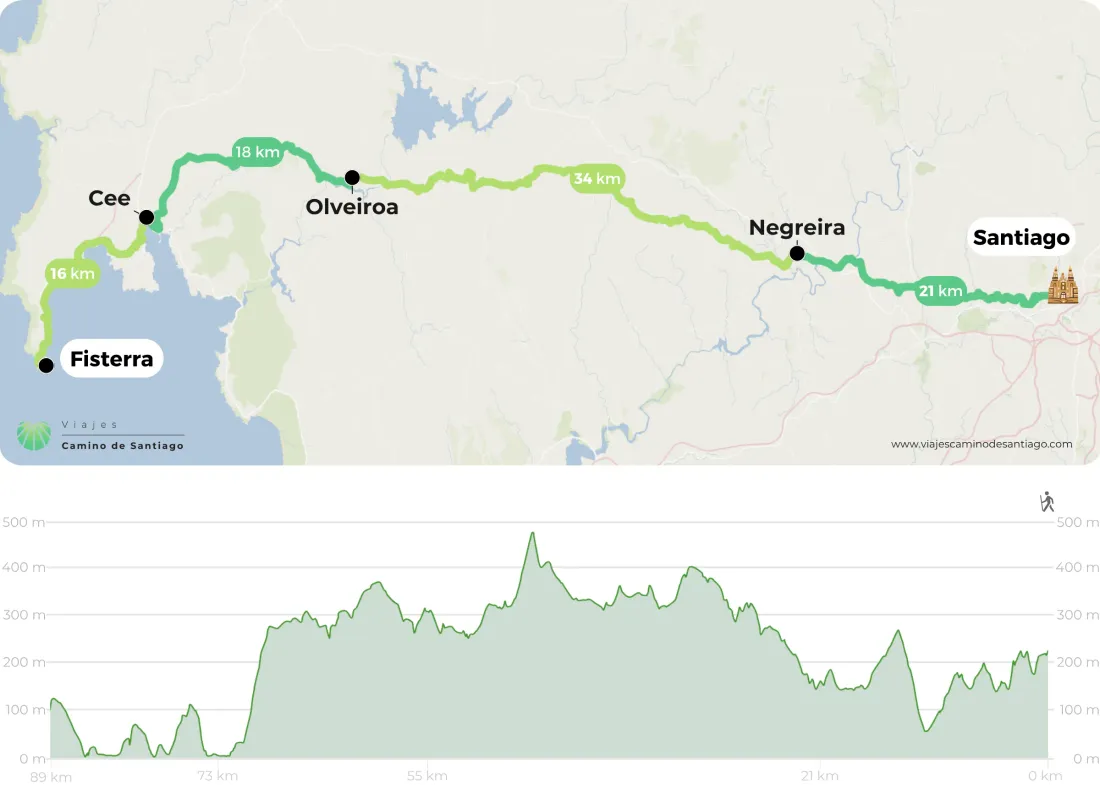
Map of the Camino to Finisterre with an organized group
Stages
- day 1
Arrival at Santiago de Compostela
- day 2
Stage 1. Santiago de Compostela - Negreira (20.6 km)
You set off on your walk to Finisterre from the very Plaza del Obradoiro. After leaving Santiago through the Carballeira de San Lourenzo, you enjoy a beautiful panoramic view of the city from Sarela de Abaixo and continue on through forests and villages. The highlight of the day is Ponte Maceira, one of the prettiest villages in Spain, with its spectacular medieval bridge over the Tambre. Shortly after, you reach Negreira, the end of the stage.
- day 3
Stage 2. Negreira - A Picota (31 km)
The longest stage of the Camino to Finisterre, but without major difficulties: more than 30 kilometres of purely rural landscape, among meadows, native woodland and small villages of friendly people, through Vilaserío, As Maroñas and Santa Mariña. After Santa Mariña you leave the waymarked route for just over a kilometre to spend the night in A Picota, the main town of Mazaricos, with a deep-rooted cattle-farming tradition: don't miss its Monument to the Cows. Tomorrow you rejoin the Camino towards Olveiroa and Cee.
- day 4
Stage 3. A Picota - Cee (26 km)
From A Picota you rejoin the Camino and head towards Cee to finally reunite with the Atlantic: a sign that the goal is close. You pass through Olveiroa, a hamlet of centuries-old hórreos, climb up from the Castrelo reservoir to spectacular views over the river Xallas and, past the village of Hospital —a good last stop—, the path becomes solitary all the way to the Fisterra–Muxía fork. You descend into Cee, right in the heart of the Costa da Morte: relax in its natural surroundings and beaches.
- day 5
Stage 4. Cee - Fisterra (16 km)
The day you reach the end of the world. You leave Cee and soon reach Corcubión, a Historic Site of stone houses well worth a stroll. Then, pure Costa da Morte: paths through flowering gorse with the sea in the background and beaches like Sardiñeiro and the long Langosteira, where many take a dip. And finally, Finisterre. Don't miss the climb up to the lighthouse to see one of the most beautiful sunsets in the world.
- day 6
End of the trip
After your last night, you check out of your accommodation and your trip comes to an end.
Related Trips
 7 days / 6 nights
 6 days / 5 nights
 7 days / 6 nights
Frequently Asked Questions
-
Why is it called Finisterre?
Finisterre, which in Galician is called Fisterra, is so called because in Roman times it was considered the known “end of the world” or the “end of the earth”. The word would derive from finis and terrae, that is, “end of the earth.” -
What do pilgrims do when they arrive in Finisterre?
Upon arriving in Finisterre, pilgrims usually visit the Lighthouse, watch the ocean and the sunset, and participate in symbolic rituals such as throwing a stone into the sea. Although clothing was burned in the past, this is currently prohibited. They also visit the Church of Our Lady of the Sands and can obtain the "Fisterrana" as a certificate of their arrival. -
Can I travel alone but in an organised group?
Yes, in case you do not come accompanied to the Camino, of course you can travel in our organised groups. In fact, that is the goal, that you live and share the magic of the Camino. We want everyone who wants to do the Camino to do it, and if you have no one to travel with, travel with us and other future pilgrim friends you will meet in our organized groups, the best social network in the world. -
How many people will be in the group?
Our groups do not have a fixed size, but they are usually made up of around 40 people of all ages. Socialising and a great atmosphere are always guaranteed!
-
What are the advantages of joining an organized group to do the Camino?
There are so many advantages, we're sure we'll miss a few. First of all, you won't feel alone at any moment. You'll make friends, discover incredible places, and experience amazing gastronomy. Walking the Camino in a group is an experience where you're bound to have fun whether you want to or not. Our guides will make you feel at home, and we'll handle your luggage. What more could you ask for to make it a perfect trip? -
Do I have to walk at the pace of the group?
The Camino de Santiago is neither a race nor a competition, and everyone must experience it at their own pace. If you don't want to get injured, forget about rushing and don't obsess about getting there first. The Camino invites you to go slowly, to contemplate the landscape, to enjoy the company and solitude. Because no matter how slowly you walk, we assure you that you will never feel lost or helpless, you will always find people to share the road with. In addition, the guide will be watching the group at all times, suggesting stops for those who want to wait for the others. -
How many kilometres and days is the group Camino to Finisterre?
It is 94 km in four stages, from the Plaza del Obradoiro to Fisterra via Negreira and Cee. The trip lasts 6 days and 5 nights: on the first day you arrive in Santiago, then you walk the four stages, and the last day is for heading home or extending your stay. The second stage, leaving Negreira, is the longest of the route.
-
When do I meet the group and the guides for the Camino to Finisterre?
Before you start walking. On the day you arrive in Santiago, the group gets together with the guides at an information meeting: they explain the itinerary to Finisterre, answer your questions and hand out the pilgrim passport and the tags for the luggage transfer. It is your first chance to put faces to names, and you can spend the rest of the day at the Plaza del Obradoiro and the Cathedral.
-
If I have already walked to Santiago on another route, does it make sense to continue to Finisterre with a group?
Yes, it is the natural continuation. On the other routes Santiago is the finish line; on the Camino to Finisterre it is the starting point, and in 94 km you walk from the Plaza del Obradoiro to the Fisterra lighthouse, in the heart of the Costa da Morte. This route does not earn you the Compostela, because it does not end in Santiago: if you earned it on your previous Camino, collect it at the Pilgrim’s Office before setting off. When you reach Fisterra you can ask for the Fisterrana with your pilgrim passport stamped since Santiago.
-
If I travel alone on the group Camino to Finisterre, can I have a room to myself?
Yes. When booking you can add the single room supplement, which is optional on this trip. That way you have your own space to rest at the end of each stage, and you spend the rest of the day with the group.
-
How do I get back from Finisterre to Santiago at the end of the group trip?
You can add the transfer from Finisterre to Santiago to your booking; on this trip it is an optional service. If you decide after booking, just ask us in advance and we will add it. The last day is yours to plan: head home, spend another day in Santiago or go over to Muxía to see the sanctuary of A Virxe da Barca.
Camino to Finisterre with an organized group
From 389 €

Reviews
Álvaro Gómez Torres
Óscar Delgado Fuentes
Iván Prieto Salgado
Elena Pascual Romero
Elena García Torres
Pablo Herrera Navarro
Ana Belén Muñoz
Javier Romero Díaz
Sergio Pérez Martín
Cristina López Vega
Laura Fernández Gil
Daniel Moreno Castro
Rubén Castillo Ortega
Marta Sánchez Ruiz