Attention: Route not available for walking between November 1 and January 15
Among vineyards, valleys, and rivers, the Father Sarmiento Route will lead you to discover O Salnés, “the most picturesque region one could dream of,” as the Galician writer Emilia Pardo Bazán said.
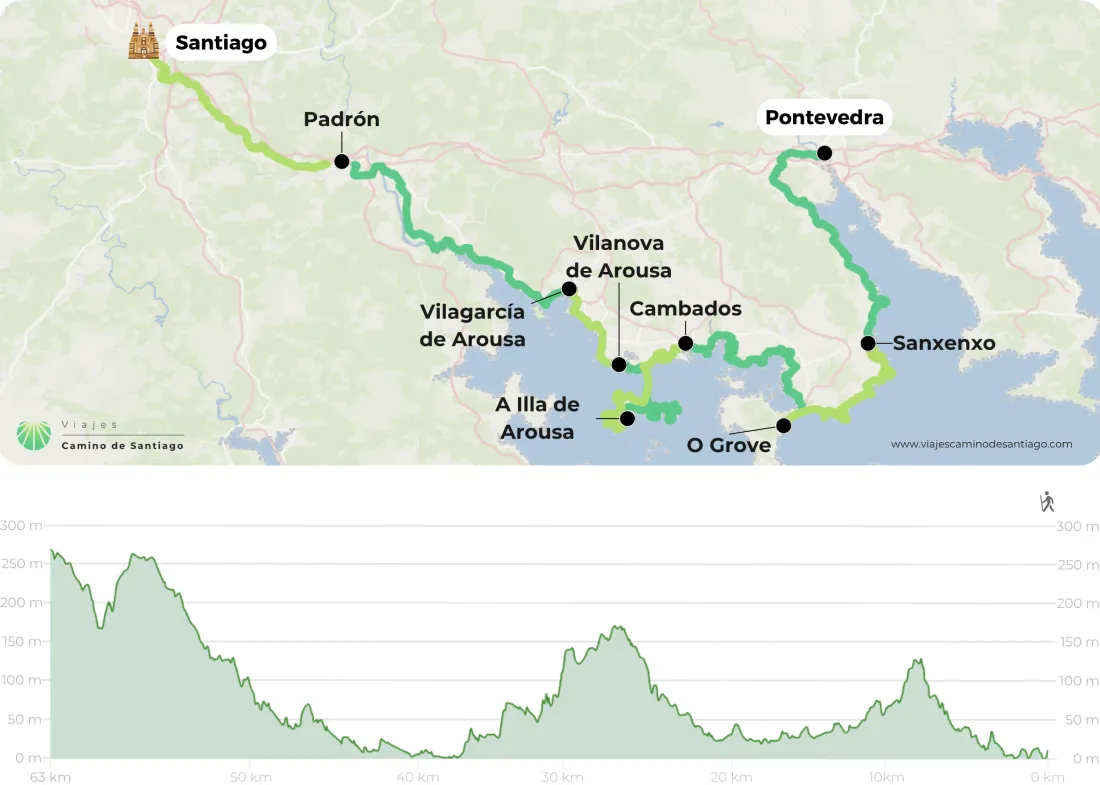
With your gaze set on the Rías de Pontevedra and Arousa, you will recreate the same path that Fray Martín Sarmiento took in 1745 to gain the jubilee. A trail of 190 kilometers that traverses the beautiful Galician coast guiding your steps towards Santiago de Compostela.
Photos
Accommodations
- Most popular
Accommodation (Guesthouse, B&B or Country Cottage)
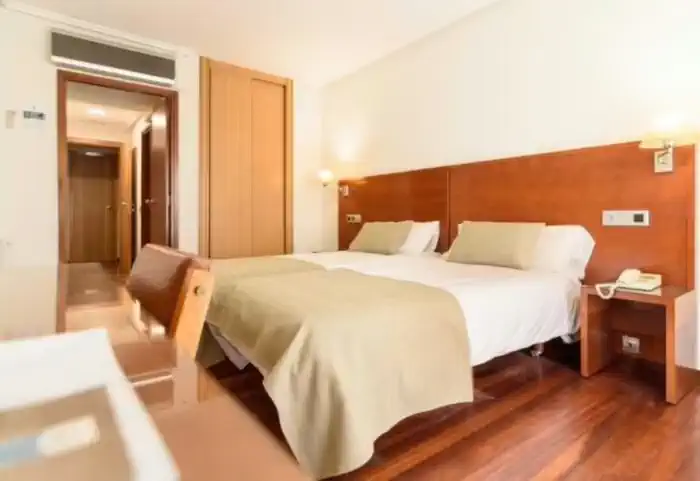
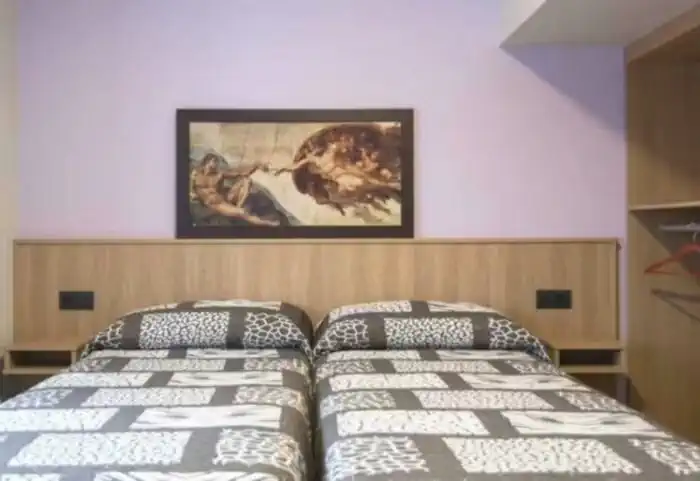
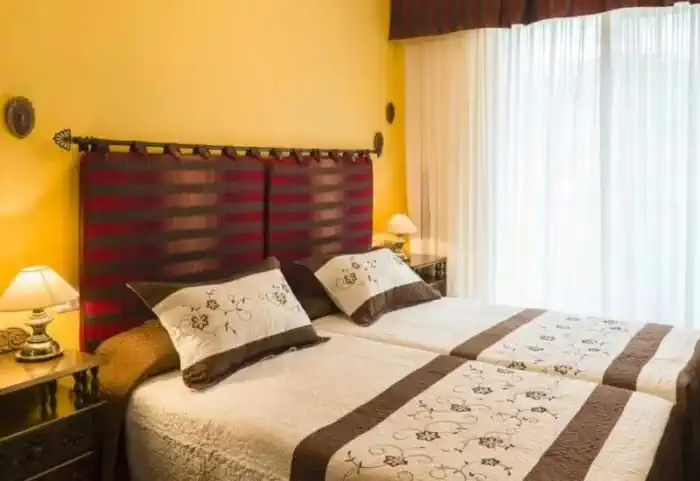
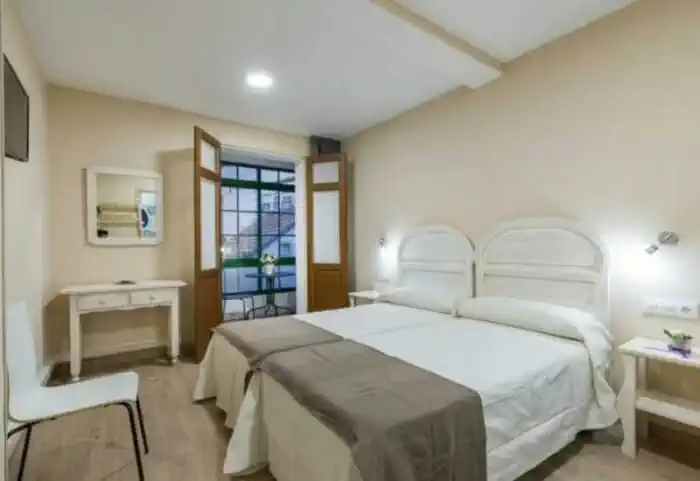
The perfect balance between charm and comfort. Guesthouses, B&Bs and country houses await you in the villages along the Camino with private rooms, private bathrooms, TV, and daily cleaning service. Simple and welcoming, they are the ideal place to truly rest and enjoy the peaceful rural essence that only the Camino can offer.
Services
Included in all our routes
- Accommodation
10 days / 9 nights
- 9 days / 8 nights accommodation
- Complete documentation (Dossier and material for the Camino)
- Luggage transfer during the stages. (1 piece per person max 15 kgs)
- On-the-road emergency telephone assistance
- Pilgrim's Credential
- Travel insurance
Optional
- Supplement for single room
- Extra night in Santiago de Compostela
- Breakfast
- MP (Breakfast and dinner)
- Cancellation Insurance
Map of the Route of Father Sarmiento
Stages
- day 1
Arrival at Pontevedra
The adventure begins! You will start the Spiritual Variant from the beautiful city of Pontevedra. . A stroll through its cobbled streets and squares will be enough to realize the special charm it hides. After Santiago de Compostela, Pontevedra is the place on this route with the largest number of heritage elements. You can visit, among other things, the Ruins of Santo Domingo in the Provincial Museum of Pontevedra, the Royal Basilica of Santa María la Mayor, and the symbol of the city: the church of La Peregrina. - day 2
Stage 1. Pontevedra - Sanxenxo (25 km)
We can begin this first stage by leaving the city of Pontevedra, or starting directly from Poio. If we set off from Pontevedra, we will need to cross the “O Burgo” bridge towards Sanxenxo to enter the municipality of Poio. After crossing the urban center of Poio, we will continue along the coastline, alternating between coves of beautiful beaches and rocky outcrops. Along the way, we will have the opportunity to visit the beaches of Lourido and Cabeceira, and pass by the port of Campelo.
Subsequently, the coastline curves inland upon reaching the promenade of da Seca, only to open up again towards the beach da Pinela, presenting us with the iconic village of Combarro.
Here we can take a break to explore the beautiful village of Combarro.
Once we resume our journey, we continue along the coastline of the province of Pontevedra, passing through the places of Chancelas, O Covelo, Raxó, and A Granxa, until we reach Sanxenxo. This is a landscape dominated by continuous coves, beaches, and outcrops, where we walk with the island of Tambo on the horizon.
Things to consider
It is common for pilgrims starting the Padre Sarmiento route to have previously completed a section of the Portuguese Way and, upon arriving in Pontevedra, decide to continue along this variant until reaching Sanxenxo.
It is highly recommended to make a considerable stop in Combarro to thoroughly explore the village.
Places of interest
- Combarro
- Island of Tambo
- Viewpoint of A Granxa
- Portonovo
- Silgar Beach
Typical dishes
- Empanada de zamburiñas
- Octopus á feira
- Fish and seafood
- Seafood rice
- Albariño wines
- day 3
Stage 2. Sanxenxo - Grove, O (19.5 km)
We will leave Sanxenxo to progressively bid farewell to the urban beaches and enter more natural surroundings that will accompany us until O Grove. The first stop on today's stage will be at Punta Vicaño, from where we can enjoy beautiful views of Sanxenxo. Subsequently, we will pass through the areas of Portonovo and Paxariñas.
As we continue advancing, we will arrive at Punta Faxilda, from where we will have an impressive panoramic view of the Ons Islands. After that, after advancing a few more kilometers, we will pass by the Hermitage of Nosa Señora de A Lanzada, located on a coastal promontory.
The next point of passage is the sedimentary formation of A Lanzada, a large straight expanse of fine golden sand, dunes, and turquoise waters, where we can relax before reaching the end of the stage in O Grove.
Things to consider
O Grove is geographically situated on a tombolo, a small island connected to the mainland by a strip of land that shapes the sedimentary space of A Lanzada, so it can only be accessed from the path of Sanxenxo. For this reason, the next stage we present is circular, in order to explore the coastline of O Grove.
Places of interest
- Montalvo Beach
- Major Lagoon
- Punta Faxilda
- Hermitage of Nosa Señora da Lanzada
- A Lanzada Beach
- Castro de A Lanzada
Typical dishes
- Fish
- Seafood from the estuary: Zamburiñas, razor clams, and clams, lobsters, crayfish…
- Mussels in vinaigrette
- Varied empanadas
- Seafood rice
- day 4
Stage 3. Grove, O - Grove, O (29 km)
About this circular stage of O Grove, there is nothing written regarding how to undertake it; you can start from whichever end catches your attention, as the order of the factors will not alter the product. Just like in the rest of the route of Padre Sarmiento, we will find this circular section marked.
Apart from the impressive coastal landscape that we will enjoy, the most representative landmarks we can discover on our little detour are: the islands of Sálvora, the island of La Toja and its curious chapel covered in shells, archaeological sites, lagoons, an open-air museum, the viewpoint of Siradella, and various beaches.
Things to consider
Staying an extra day in O Grove to complete this circular stage and enjoy its charms is entirely optional and depends on you and the time you have available. Some pilgrims choose to stay and enjoy the sun and the beach, while others prefer to keep walking.
Places of interest
- O Grove and its port
- San Vicente do Mar
- The island of La Toja
- A Salazón Museum
- O Grove Aquarium
- Viewpoint of A Siradella
- Bodeira Lagoon
Typical dishes
- Fish and seafood
- Seafood rice
- Octopus á feira
- Grilled razor clams
- Albariño wines
- day 5
Stage 4. Grove, O - Cambados (22 km)
We continue our adventure retracing the path taken towards the beach of A Lanzada, to leave the peninsula of O Grove and begin the route to Cambados. Keeping the intertidal complex Umia-Grove on our left, the path leads us along the coast of Meaño towards Cambados. In this stretch, the landscape will be dominated by the ancient tile factories of Meaño, “As telleiras,” and the vineyards of white grapes.
The approach to the climax of the marshes of the intertidal complex Umia-O Grove at the mouth of the Umia River will indicate that we are nearing the end of our stage. We can stop to contemplate the landscape at the Bird Observatory of the intertidal complex. At the height of the observatory towards the interior, lies the albariño winery Condes de Albarei, a winery that has accumulated several victories in its record.
Things to consider
In Cambados, the mythical albariño wine festival is celebrated every year during the month of August. The town center fills with stands belonging to dozens of wineries, and a jury selects the winery of the winning harvest of the year, so if you are coming from O Grove, you might want to plan your visit well before starting to walk. The prices of wine bottles are lower than usual, and there is a lively atmosphere.
If you are undertaking the route during these dates, we recommend adding an extra day in Cambados to enjoy this experience.
Places of interest
- Tower of San Sadurniño
- The square of Fefiñanes
- The ruins of Santa Mariña
- The Ramón Cabanillas Museum
- The Ethnographic Wine Museum
Typical dishes
- Albariño wine: wineries Bouza do Rei, Condes de Albarei or Paco y Lola
- Razorfish
- Scallops
- Varied fish
- Seafood and fish rice dishes
- day 6
Stage 5. Cambados - Illa de Arousa, A (18 km)
In the first section of this stage, from Cambados to Illa de Arousa, you will find the Tide Mill of “A Seca”, one of the few sea water mills that exist in Galicia, which will surprise you with its peculiar engineering. It is currently fully restored and can be visited. The path continues along the coast until you reach a two-kilometer bridge that will guide you to Illa de Arousa.
This small island is a truly idyllic place, marked by fishing tradition and surrounded by the most beautiful beaches. The fishing port of “O Xufre”, the Lighthouse of “Punta Cabalo”, the route of “Os Cons” (large granite rocks sculpted by the wind and waves), and the Viewpoint of “Con do Forno” are some of the attractions that this stage will offer you.
Things to consider
In this stage, the route of the Padre Sarmiento leaves Cambados to venture into the sea in Illa de Arousa, where we will see countless marine tourist spots, so we recommend enjoying the stage, as with the visits it is only 18 kilometers.
Places of interest
- Tide Mill of “A Seca” - Illa de Arousa
- Lighthouse of Punta Cabalo - Illa de Arousa
- Viewpoint of “Con do Forno” - Illa de Arousa
Typical dishes
- Mussel: the quintessential mollusk
- Razorshells
- Fish and seafood
- Octopus á feira
- Albariño wine from the Rías Baixas
- day 7
Stage 6. Illa de Arousa, A - Vilanova de Arousa (17 km)
We leave Illa de Arousa and head towards the Carreirón" Natural Park we leave Illa de Arousa, with the intention of returning to the beaches of Vilanova. A place characterized by its beaches of crystalline waters and white sandy beaches. We must remember that we are in an area of special interest for bird watching.
After crossing the bridge again, you will continue your way to the beaches of "O Terrón", a coastal route that will take you to the centre of Vilanova de Arousa, your end of the stage. This municipality, which was the birthplace of the writer Ramón del Valle-Inclán, you can relive the history of his life and work by visiting his house museum.To consider
In Vilanova de Arousa, the Route of Father Sarmiento meets the Spiritual Variant to continue together to Santiago de Compostela, so as the stage is quite short, we can take the opportunity to see the last remnants of the Illa de Arousa.Places of Interest
- Carreirón Natural Park
- Manor house of Valle-Inclán
- Towers of Cálogo
- Church of Santa María de Caleiro
Typical dishes
- Mussel: the mollusc par excellence
- Scallops
- Fish and seafood
- Octopus á feira
- Albariño wine from Rías Baixas
- day 8
Stage 7. Vilanova de Arousa - Padrón (35.5 km)
The first milestone of today's journey will be Vilagarcía de Arousa, 9 kilometers from Vilanova, which we will reach by alternating coastal paths and trails, and once in Vilagarcía, we will begin the land route of the famous and mythical Traslatio to Padrón. The path runs alongside the Ulla River, upstream. We leave the center of Vilagarcía heading towards Carril, crossing along our way the places of Bamio, Catoira, Vilarello, and Pontecesures.
Without a doubt, the most impressive point along the route will be Catoira with its imposing towers. Once we arrive at Pontecesures, after crossing the bridge to Padrón, the spiritual variant of the Camino will have ended. From here, one can continue to Santiago de Compostela via the conventional route of the Portuguese Way.
Padrón is famous, among other things, for its peppers and for being the site where the boat of the Apostle Santiago landed. For this last reason, it is mandatory to fully complete the spiritual variant by visiting the famous Pedrón in the church of Santiago, which according to legend was used to tie the Apostle's boat.
Things to consider
There is a specific certificate that accredits the completion of the spiritual variant: the Pedronía. It is issued at the town hall of Padrón, so we must set out to walk early from Vilanova de Arousa if we want to collect it.
Places of interest
- Vilagarcía de Arousa
- Towers of Catoira
- Rosalía de Castro House-Museum
- Collegiate Church of Iria Flavia
- Church of Santiago
Typical dishes
- Padrón peppers
- Fish and seafood
- Zorza
- Galician stew
- day 9
Stage 8. Padrón - Santiago de Compostela (24.3 km)
The first milestone of today's exciting journey towards Santiago de Compostela, we will find it in the monumental collegiate church of Iria Flavia, the first parish that we will set foot on after leaving the urban centre of Padrón. After stopping to contemplate this significant monument, our route continues through small villages and neighbourhoods that follow the course of the N-550 road and the railway line. On some occasions, you will have to cross the railway track, so you will have to be extremely careful.
A Escravitude is the next landmark we will reach. Here, we can visit the Sanctuary built in the 16th century on the so-called "Fonte Santa". As in so many other places along the way, this place has a legend to tell. It is said that the waters of the "Fonte Santa" healed a pilgrim suffering from hypopresia, on his way to Compostela. After three days, the man was miraculously cured and exclaimed: "Grazas Virxe, por librarme da Escravitude do meu mal" (translated into Spanish as: thank you Virgin, for freeing me from the slavery of my evil); and this is where the toponym A Escravitude comes from. We continue our journey taking extreme precautions between the asphalt stretches and the crossings over the train tracks.The next enclave of reference is A Picaraña, where you can take the opportunity to make a technical stop for refreshments.
After the short rest, the hardest part of the stage begins: the ascending slopes. We head towards Faramello and Teo along ascending paths. At this point we can make a small detour on the way to Castro Lupario, also known as Castro de Beca. It is believed that this castrexo settlement was the home of the mythical queen Lupa, who appears in the Codex Calixtinus.
There is little left and the next point of our adventure brings us closer to the imminent end. We will pass through Osebe before entering O Milladoiro. Here we can already appreciate a strong change in the landscape that heralds the periphery of the urban space of Santiago de Compostela. Finally, we enter Santiago de Compostela by the hand of the mythical neighborhood of Conxo, a place that once constituted a municipal entity itself, until it was swallowed up and annexed by the growth of the Galician capital. At this point, you can stop to visit the church of Santa Maria, located in the alameda of the neighborhood.
Dear friends, the end is already counted by the minute. We only have to walk along the streets of Sánchez Freire, García Prieto, Rosalía de Castro and Rúa do Franco to find ourselves in front of the imposing façade of the Cathedral of Santiago in the Plaza del Obradoiro.Congratulations pilgrim, you made it!
You are in Santiago de Compostela, the city where rain is art. After having stamped the credential at each stage and having collected your Compostela, after all the effort it's time to enjoy the city, you've earned it. We hope you enjoy strolling through the old town, enjoying a fresh beer accompanied by a delicious tapa, dancing and singing in a foliada, or tasting some of its traditional liqueurs, among a thousand and one other things that this small but great city has to offer.To consider
Don't forget to pick up your Compostela at the Pilgrim's Welcome Office in Santiago is located in Rúa Carretas, which is accessed from the Plaza del Obradoiro by Rúa Costa do Cristo, and although it is open from 12:00 to 16:00, we recommend going for a walk early from Padrón and go with time to avoid queues.
The pilgrim's mass is celebrated every day at 12:00 and 18:00.Places of interest
- Collegiate Church of Iria Flavia
- The Cathedral of Santiago de Compostela
- San Martín Pinario Monastery - Santiago de Compostela
- Saint Dominic of Bonaval - Santiago de Compostela
- Abastos Market - Santiago de Compostela
- Faculty of Geography and History - Santiago de Compostela
- Hostel of the Catholic Monarchs - Santiago de Compostela
Typical dishes
- Zorza
- Raxo
- Lacón with turnip tops
- Fish and seafood
- Galician veal meats
- Denomination of Origin Wines
- After-dinner liqueurs: coffee liqueur, herbs, white marc, cream...
- day 10
End of the Camino
After arriving... End of the Camino
Frequently Asked Questions
-
What is on-the-road telephone assistance?
In your travel documents, you'll find an emergency telephone number where we're accessible while you're on the road. This ensures you'll journey with peace of mind, knowin our team members will assist you with any problems, incidents, or questions you encounter along your Camino de Santiago.
-
What is travel insurance?
It is the guarantee that you can enjoy your Camino in a safe way. In our trips you already have an insurance included with your trip to be protected during the Camino de Santiago. We will send you the insurance policy along with all the documentation of your trip, so you will have everything you need to enjoy the Camino with peace of mind. Walk without worries! -
What does the private transfer service consist of?
We have a taxi service that you can hire whenever you need it. You can hire it, for example, to go from the airport to the start of your Camino, or to go from Santiago to your starting point to pick up your car once you finish the stage. The price of the transfers will depend on the distance from your point of origin to the destination. If you have any questions about this service do not hesitate to contact us. -
Where are the accommodations located?
In your travel documents, you will find the names of the accommodations assigned to you, as well as their contact telephone number and location. As a general rule, all accommodation are located in the centre of the different towns along the Pilgrims' Route to Santiago de Compostela, without the need to deviate too far from the route. But sometimes, due to lack of availability, it is possible that some accommodation may be a little far from the village or even in neighbouring towns. For all the accommodations that are at a considerable distance from the route of the Camino, we will provide you with a free taxi service that you can use to get to your accommodation and return to the Camino the next morning. In any case, these are exceptions that we will inform you at the time of booking. -
What coverage does the travel insurance have?
The basic travel insurance included in our packages offers extensive coverage against unforeseen events, ensuring you'll receive guaranteed medical assistance and numerous benefits. You can review the specifics in the General Conditions of Travel Insurance.
-
How do I make a reservation?
To make a reservation, you can follow these steps:
- Through our website: Select the route you want and follow the steps indicated in the form. Provide your personal information and that of your companions, choose the type of accommodation, room distribution, meals, transfers, bike rental, etc.
- By email: If you prefer to make the reservation by email or need a personalized trip, you can send us an email to info@viajecaminodesantiago.com. We will provide you with the necessary information to complete the reservation via email.
It is important to note that if the routes or services available on the website do not meet your specific needs, you can request a personalized quote by sending an email to info@viajescaminodesantiago.com.
-
Can I choose the dates I want?
Yes, you will have total freedom to choose your departure date. However, if you want to do your Camino de Santiago in the months of December, January and February, we recommend that you check availability before making your reservation. At this time of year most accommodation is closed and many services may not be available. -
What does Camino de Santiago on your own mean?
In this modality you will do the Camino de Santiago at your own pace and you will only have to worry about choosing the route you like the most, the type of accommodation and your departure date. If you choose this option you will travel alone or with the people that appear in your reservation, and you will have all the services included so that you only have to worry about walking and enjoying the experience. -
What is luggage transport and how does it work?
Luggage transport service by default is included in all our trips and it is not necessary to request it. You can enjoy the Camino de Santiago without the burden of carrying your luggage on your back, knowing that your suitcase will be waiting for you at your next accommodation upon your arrival. Along with your credential, you'll also receive stickers. Cover these stickers with the requested information and stick them in a visible place on your suitcase. Upon arrival at your accommodation, we suggest asking at the reception where you can leave your luggage. You'll need to leave your luggage at the designated spot early in the morning for our carrier to pick it up. This ensures that when you arrive at your next accommodation, your luggage will already be waiting for you. -
What services are included in the Camino de Santiago on your own?
The Camino de Santiago at your own pace includes the following services:
- Accommodation for resting.
- Luggage transport so you do not have to carry it.
- An informative dossier with details about the stages.
- The Pilgrim Passport.
- A 24-hour assistance phone number available at all times.
- A travel insurance for your peace of mind.
Additionally, you have the option to customize your experience by adding extra services:
- You can choose whether to include breakfast or half board.
- We offer private transfers to take you to the start of the stage from Santiago de Compostela, from its airport, or any other point.
- We can take your vehicle from the starting point to the end of your Camino.
- You have the option to book extra nights at the beginning or end of your trip.
Unlike group trips, we do not include a guide or support vehicle between stages. However, we provide you with a 24-hour assistance phone number to resolve any issues or unforeseen events you may encounter on your journey.


Reviews
Luis Gomez Martinez
Sarai Melero
Carmen Navarro