


What to See on the Camino de Santiago from Sarria: A Stage-by-Stage Guide
05 March, 2026
The Way from Sarria concentrates great historical and cultural wealth. Throughout its stages, the pilgrim discovers churches, chapels, cruceiros, villages, and unique landscapes, experiencing an authentic journey that combines heritage, tradition, and spirituality all the way to Santiago.

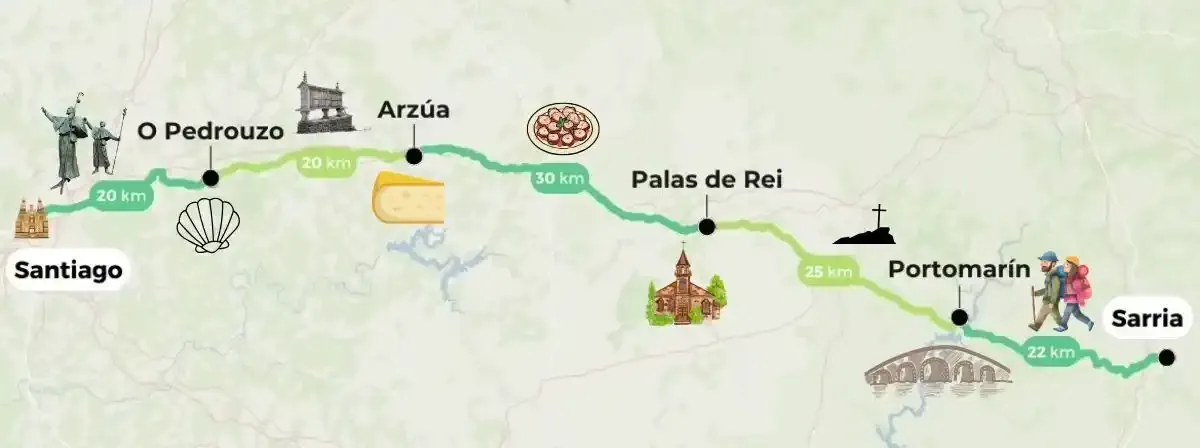
The Camino de Santiago from Sarria hides many things to see, do and even taste
What to see on the Camino de Santiago from Sarria
The section that begins in Sarria is the most traveled, but also one of the richest in religious and cultural heritage. From this town to Santiago de Compostela, the Camino crosses historic villages, natural landscapes, and urban centers where the Jacobean tradition is still very present.Sarria is one of the main starting points of the Camino de Santiago, since from here pilgrims cover the minimum one hundred kilometers required to obtain the Compostela. Beyond this practical aspect, Sarria has an interesting historic center and several temples that reflect its historical importance as a place of passage for pilgrims.
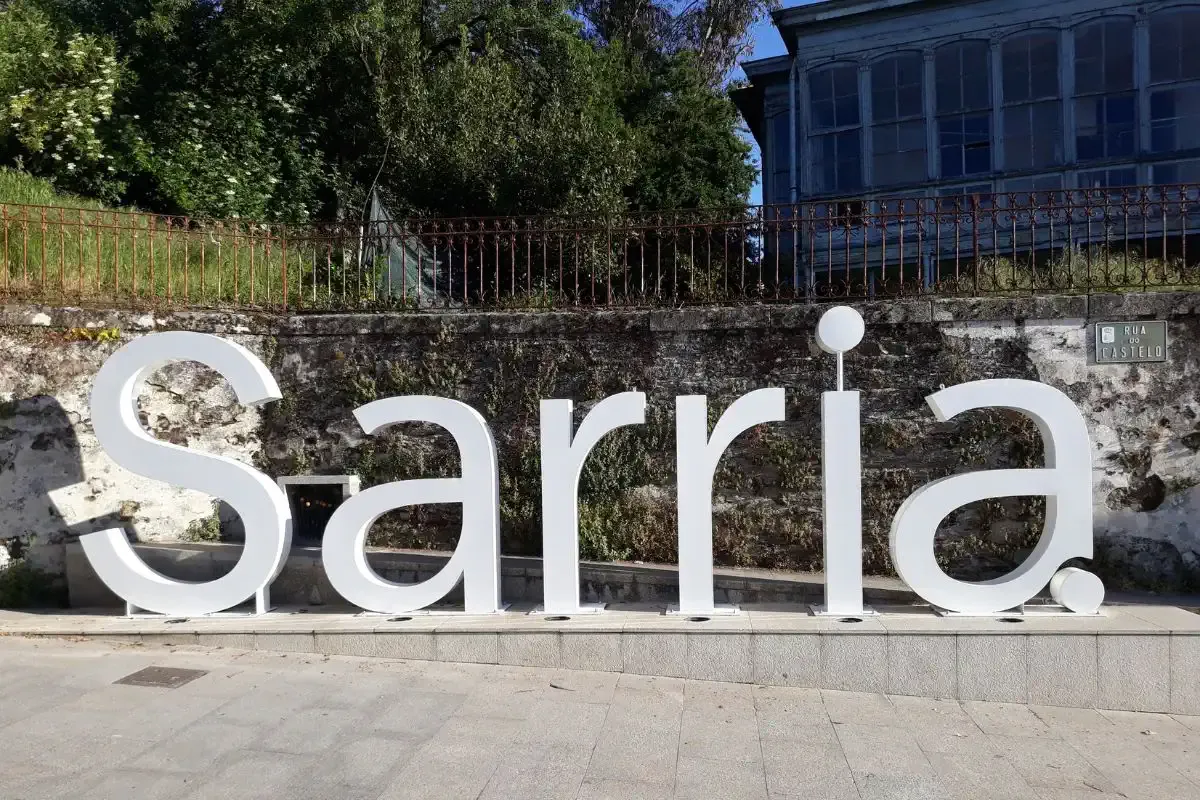
A photo at the Sarria letters is a must when starting your Camino from this town in Lugo
Stage 1: Sarria – Portomarín
The first stage from Sarria features a landscape of rural paths and small villages, a very beautiful stage that offers plenty of heritage right from the start. It is a gradual beginning that allows the pilgrim to ease into the rhythm of the Camino while discovering some of its first heritage landmarks.In Sarria, around km 115, we begin the route at the parish church of Santa Mariña, located in the historic center on Rúa Maior, after climbing the famous staircase of 64 steps. It is a temple of medieval origin closely linked to the parish life of the town. A few meters away, on the same street, stands the church of San Salvador, one of the oldest religious buildings in Sarria and a notable example of Galician Romanesque architecture. Opposite are the famous Sarria letters, a photo spot for every pilgrim, and behind them, hidden behind a wall, is the Sarria castle, which is currently not restored for visits.
We continue walking and, already leaving the historic center, the convent of La Merced appears, a former Mercedarian foundation located right on the Camino de Santiago. Historically, it was linked to the reception of pilgrims, a constant that will accompany walkers throughout the route.
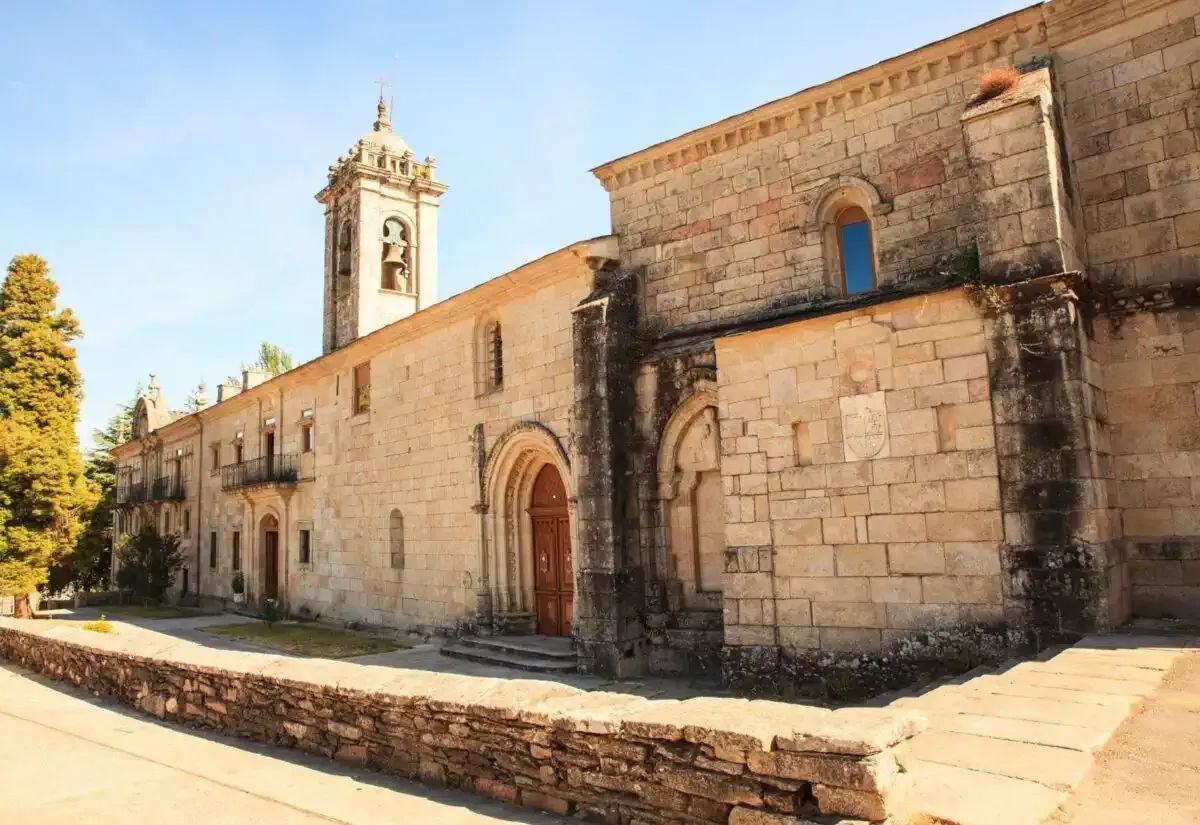
Convent of La Merced in Sarria
Further ahead, in Morgade, at km 101.996, the Camino passes next to the small chapel of Santa Mariña. It is a simple construction that clearly reflects the popular religiosity of the Galician rural environment.
Following the Camino route, in Ferreiros, at km 100.485, stands the church of Santa María de Ferreiros, the parish church of an old village traditionally linked to the passage of pilgrims.
The stage ends in Portomarín. Here stands out the church of San Juan or San Nicolás, located in Plaza Conde Fenosa. It is an impressive fortress-church that was moved stone by stone after the construction of the reservoir, and today it is one of the most emblematic temples of the Camino. A short distance away is also the church of San Pedro, on Travesía de Circunvalación, the parish church of the town. And of course, you should not miss visiting the banks of the Miño River: if the water level is very low, you will be able to admire the old foundations and everything that remains of the old Portomarín, the town that rose again from the Miño River.
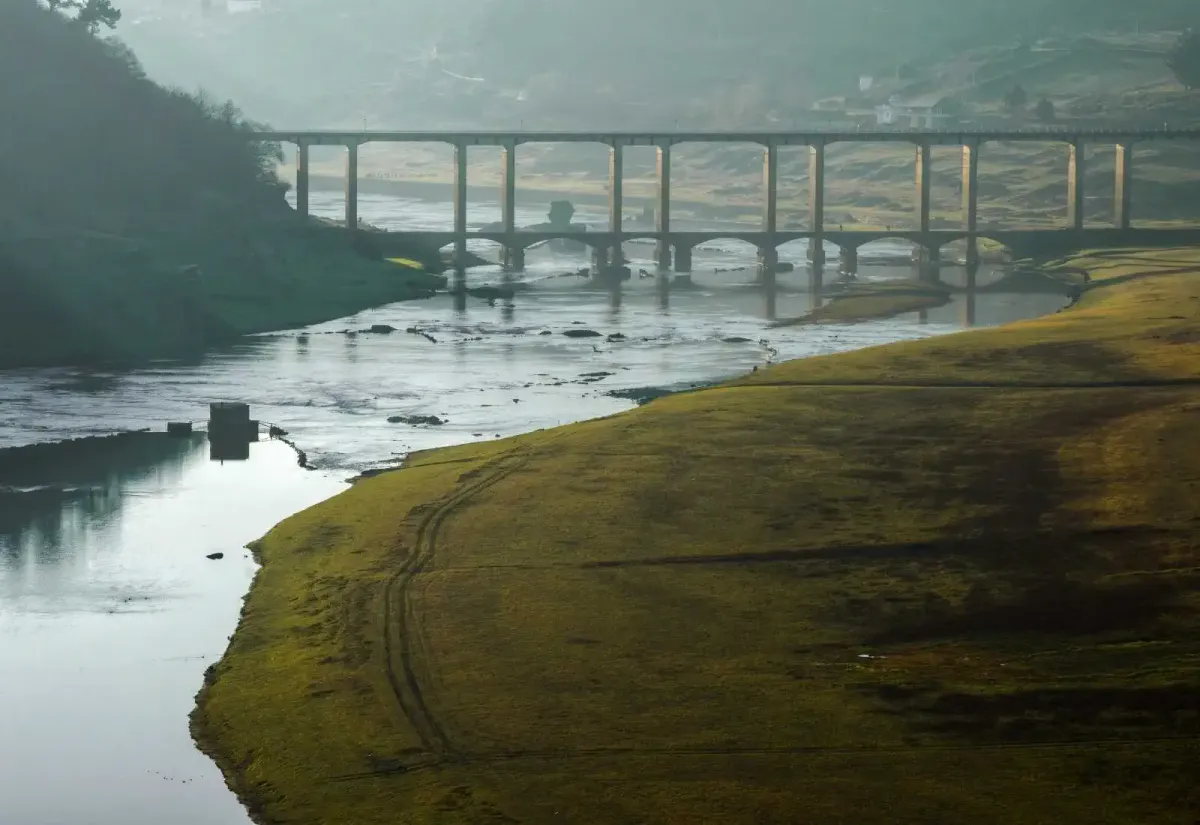
The Miño River with little water allows you to see the remains of the old Portomarín
Stage 2: Portomarín – Palas de Rei
We leave Portomarín behind and begin a stage marked by medieval history, rural Romanesque churches, and one of the most interesting archaeological sites on the French Way.As we move forward, in Gonzar, at km 84.253, appears the church of Santa María de Gonzar, a Romanesque temple that usually remains closed. Shortly after, in Castromaior, at km 83.106, stands the church of Santa María de Castromaior, also Romanesque and usually closed.
Continuing on, at km 82.069, we find the detour to the Castromaior hillfort. This is an important pre-Roman archaeological site that allows visitors to understand the ancient occupation of the territory. Although it is not a religious element, it is a highly recommended visit to understand the history of the surroundings.
Further ahead we reach Ventas de Narón, at km 78.812, where the chapel of La Magdalena is located. It is usually open to visit and stamp the credential and is attended by Eladio, a well-known volunteer on the Camino and a passionate enthusiast of the Templar world.
We continue along the Camino to Lameiros, at km 76.284. Here stands the chapel of San Marcos, located off the Camino to the right. At this same point stands the cruceiro of Lameiros, from the 17th century, one of the most symbolic on the Camino, with representations of the Passion of Christ and the instruments of the crucifixion.
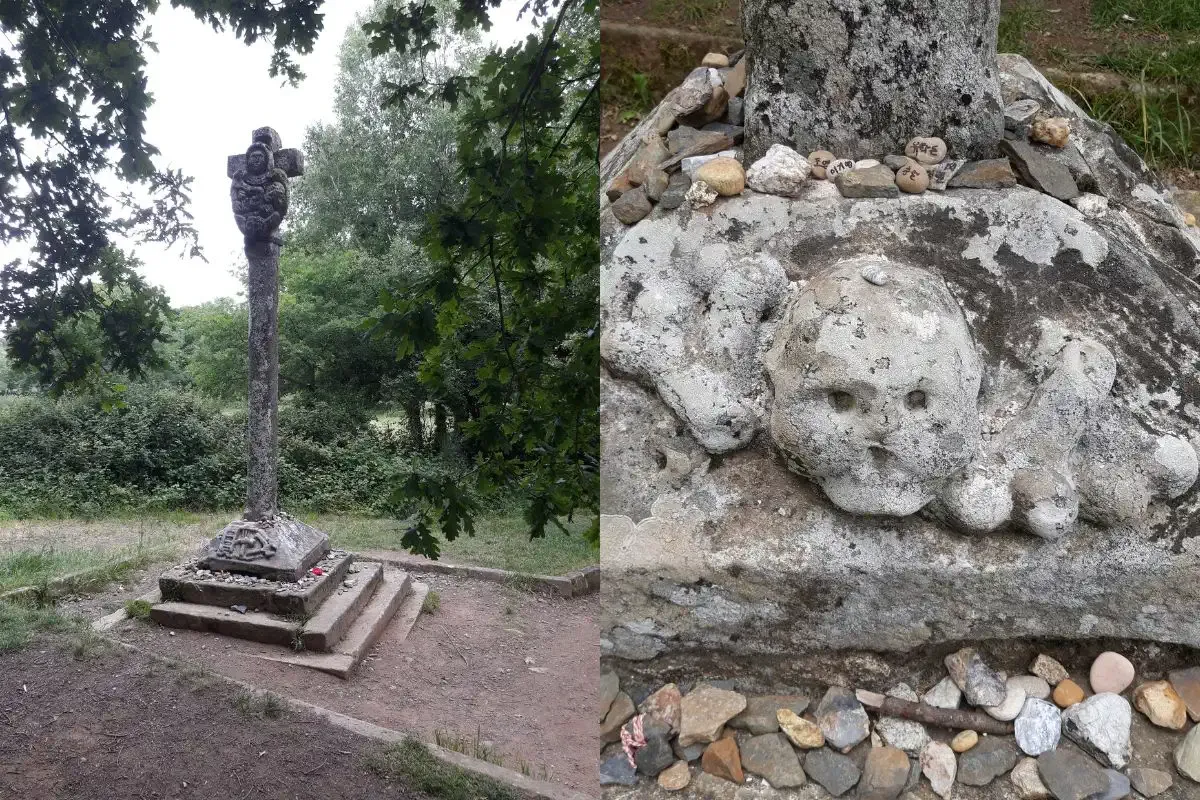
In Galicia, with about 12,000 cruceiros like this one in Lameiros on the French Way, you can avoid the Santa Compaña
Further ahead, at km 72.515, it is possible to take a detour to the church of San Salvador de Vilar de Donas. This former monastery, related to the Order of Santiago, is located off the Camino and requires a detour of about 5 kilometers round trip. The temple is usually open with a volunteer.
Returning to the Camino, in Lestedo, at km 71.985, stands the parish church of Santiago de Lestedo. The stage ends in Palas de Rei, where the parish church of San Tirso stands directly on the Camino at the entrance to the town and usually holds daily mass.
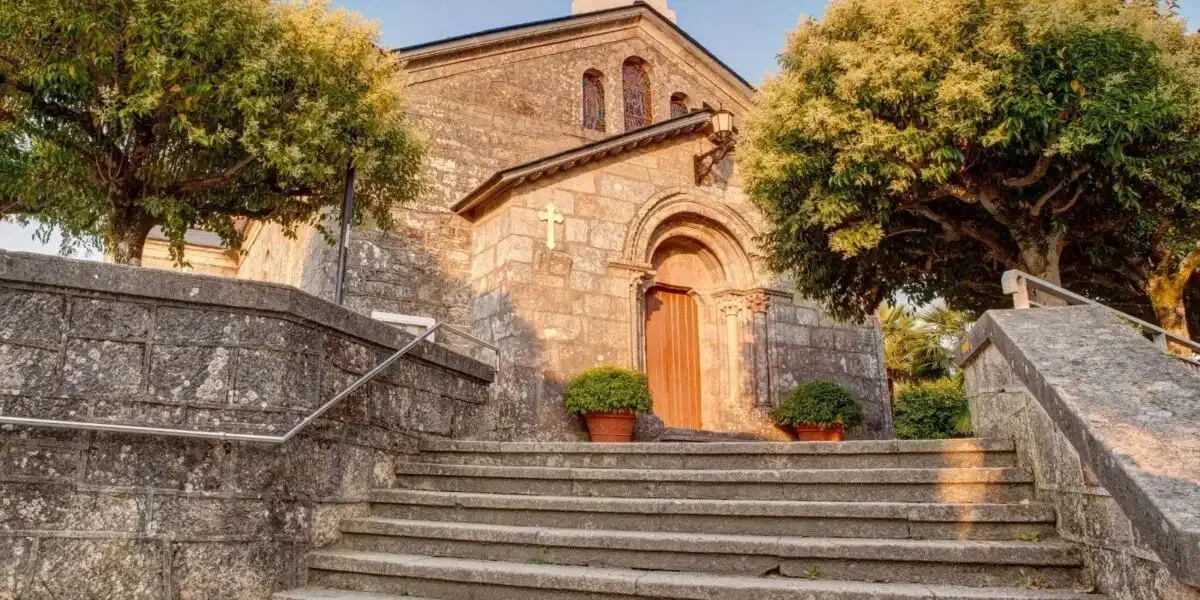
Church of San Tirso in Palas de Rei
Stage 3: Palas de Rei – Arzúa
This stage runs through forests, traditional villages, and some of the best examples of Romanesque churches on the French Way, with Melide as one of the most outstanding points. Leaving Palas de Rei, in San Julián del Camino, at km 63.830, stands the church of San Julián del Camino, which is usually open in the morning and has volunteers who stamp pilgrim credentials.We continue walking to Leboreiro, at km 58.245, where the church of Santa María de Leboreiro stands out, known for its interesting interior frescoes. In this area there was also an old pilgrim hospital.
Shortly before reaching Melide, in Furelos, around km 54.139, stands the magnificent Furelos bridge and the church of San Juan de Furelos. Sometimes it is open and its altarpiece stands out, featuring a crucified Christ with one loose arm that seems to extend a hand to the pilgrim.
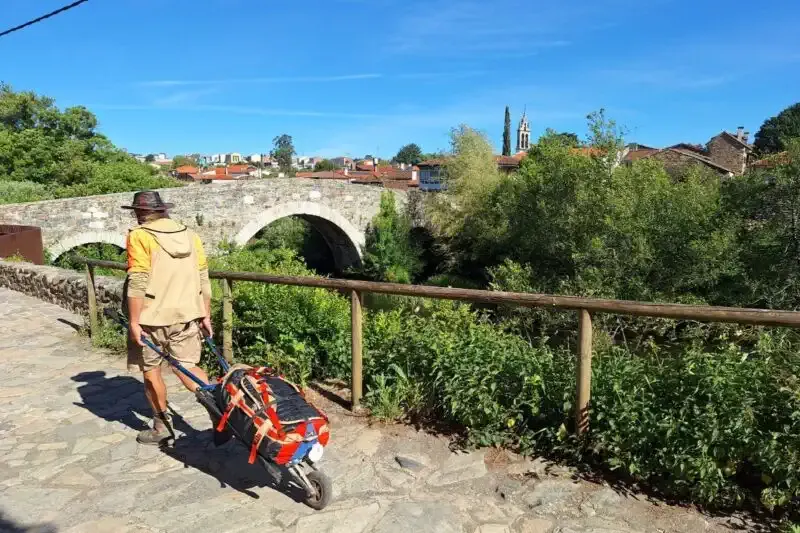
Pilgrim arriving at the Furelos bridge
We continue to Boente, at km 46.701, where the church of Santiago de Boente is located. The stage ends in Arzúa, capital of the D.O. Arzúa-Ulloa cheese, around km 38, where the church of Santiago de Arzúa and the chapel of La Magdalena stand out.
Stage 4: Arzúa – O Pedrouzo
Leaving Arzúa, at approximately km 38.25, we find the community of Guanellian nuns, located right on the Camino. They often offer stamps, fruit, and water to pilgrims. As we continue along the stage, several commemorative plaques in memory of deceased pilgrims appear: for example, before km 37.397 there is a plaque dedicated to the priest Ramón Pazos Seaje, who died while walking the Camino.In Preguntoño, at km 36.399, stands the sanctuary of San Paio, located off the Camino and somewhat hidden, so it often goes unnoticed. Further ahead we reach Santa Irene: at km 22.745 there is a detour toward the complementary path, where the fountain of Santa Irene and the hermitage of Santa Irene are located, which is usually closed.
The stage ends in O Pedrouzo, around km 20.145. Here stands the parish of Santa Eulalia de Arca, known for its scallop-shell-shaped apse. It is attended by the community of Italian Guanellians, and the figure of Father Fabio stands out, who celebrates mass and usually offers a catechesis beforehand for pilgrims.
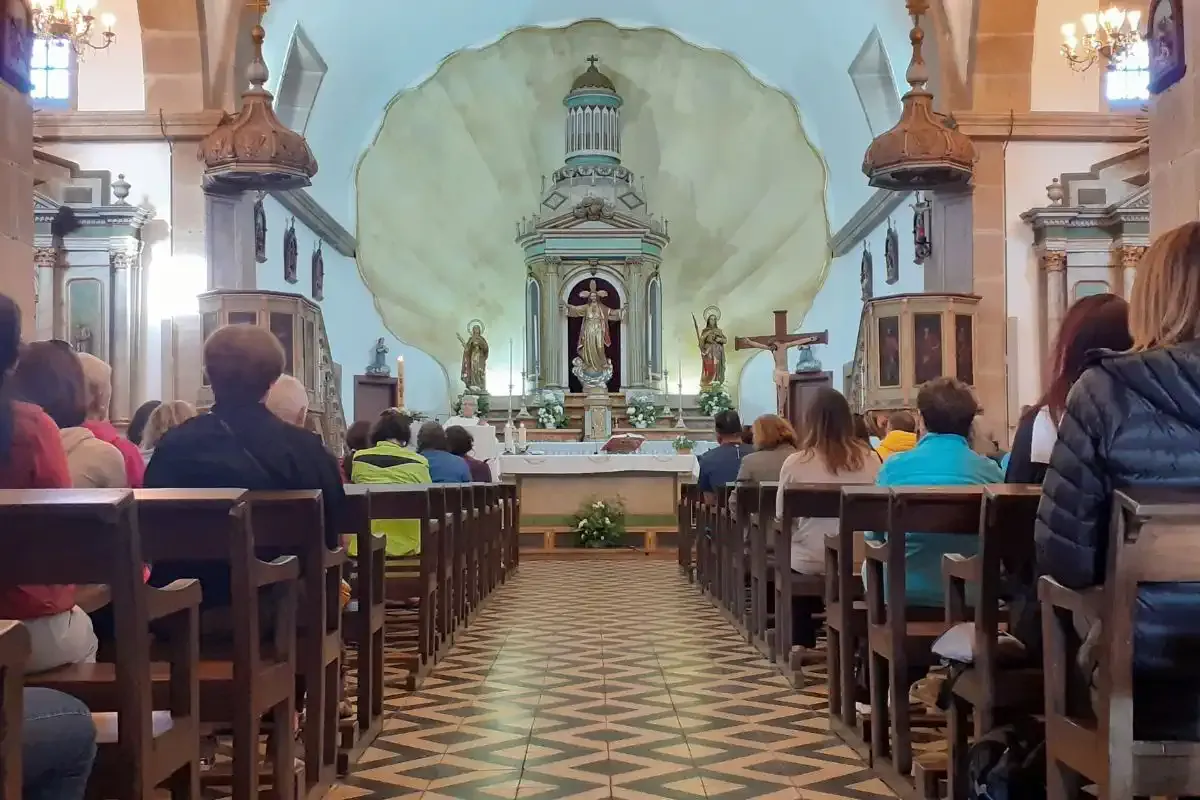
Pilgrims attending mass at the church of Santa Eulalia de Arca in O Pedrouzo
Stage 5: O Pedrouzo – Santiago de Compostela
The final stage of the Camino from Sarria is full of symbolism and emotion, with some of the most recognizable places on the Camino de Santiago. Leaving O Pedrouzo, in San Paio, around km 12, stands the chapel of Santa Lucía, the first chapel of the day, where there is usually a Guanellian volunteer who offers a stamp.We continue to Lavacolla, around km 10, where the church of San Paio de Sabugueira is located. Very close by is the chapel of San Roque, located off the Camino but nearby. In this area there is also the stream where pilgrims traditionally washed before arriving in Santiago.
We continue walking until reaching Monte do Gozo, at km 4.940. From its viewpoint you can see the towers of the Cathedral of Santiago for the first time. Here stands the statue of the two pilgrims. Continuing straight ahead leads to the chapel of San Marcos, the last chapel before entering the city.
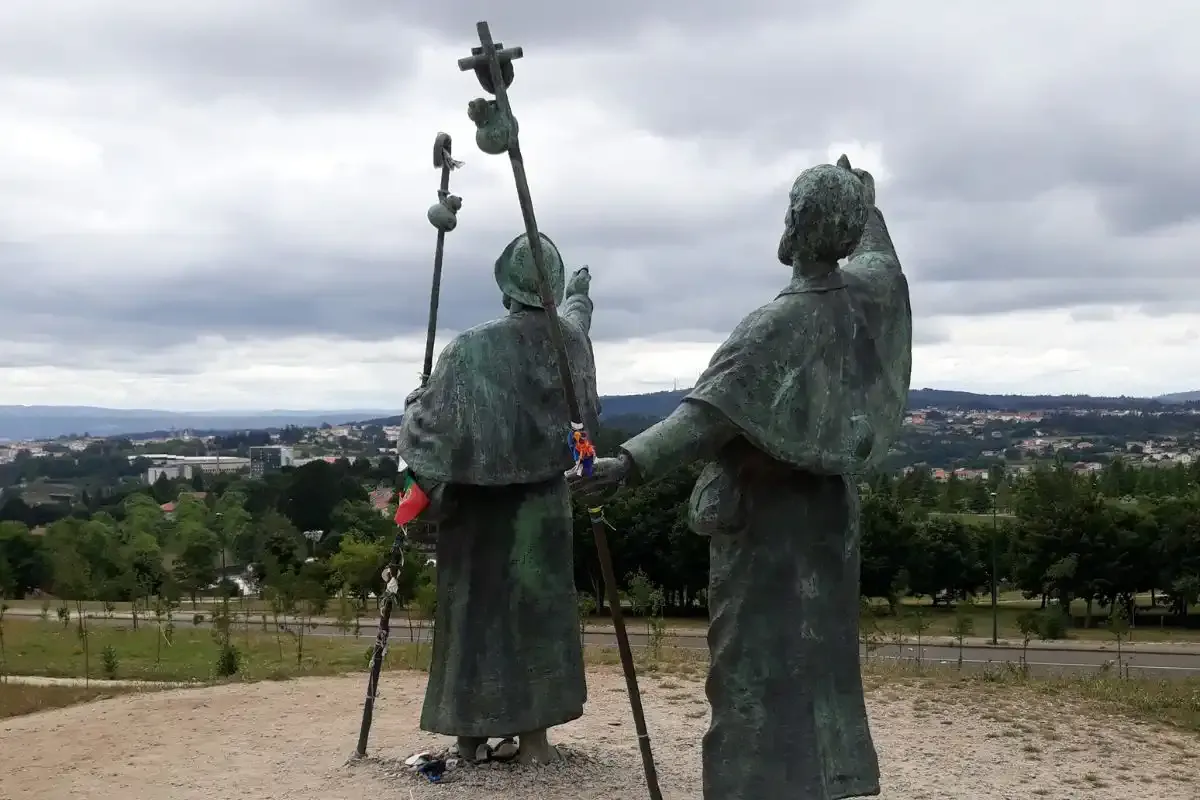
Statue of the pilgrims at Monte do Gozo upon arriving in Santiago
The Camino culminates in the Praza do Obradoiro and in the Cathedral of Santiago, the final destination of the pilgrimage. Very close by is the Pilgrim Reception Office, where the Compostela can be collected and which also has a chapel.
A Camino marked step by step
The Camino de Santiago from Sarria offers an extraordinary concentration of religious, historical, and cultural heritage. Throughout its stages, pilgrims encounter Romanesque churches, rural chapels, cruceiros, former hospitals, archaeological sites, and religious communities that keep the Jacobean tradition alive. Stopping at these places allows pilgrims to better understand the meaning of the Camino and enrich the experience beyond the physical effort. From Sarria to Santiago, every temple, every monument, and every landscape forms part of a shared history that continues to accompany pilgrims until their arrival at the Cathedral.¡Ultreia et Suseia!