


The Last 200 Kilometers/124 Miles of Each Camino
29 May, 2026
Guide to the last 200 kilometers of the Camino de Santiago, explaining why they are key to obtaining the Compostela, which routes allow you to complete them, how to plan the stages, and what to consider to make the most of this final stretch of the pilgrimage.

Just as is the case with the last 100 kilometers of the Camino de Santiago, covering the last 200 kilometers is a recurring option among pilgrims. Practically all the Jacobean routes, except for the English Way and the Camino de Santiago to Finisterre and Muxía, allow for this distance to be covered. If you have about ten free days and are a regular walker, walking the last 200 kilometers of the Camino de Santiago is a great idea. You can also consider doing it by bicycle, which would take about four days and allows you, just like on foot, to obtain the Compostela. Keep reading and you will discover the different routes to Santiago de Compostela and their last 200 km.
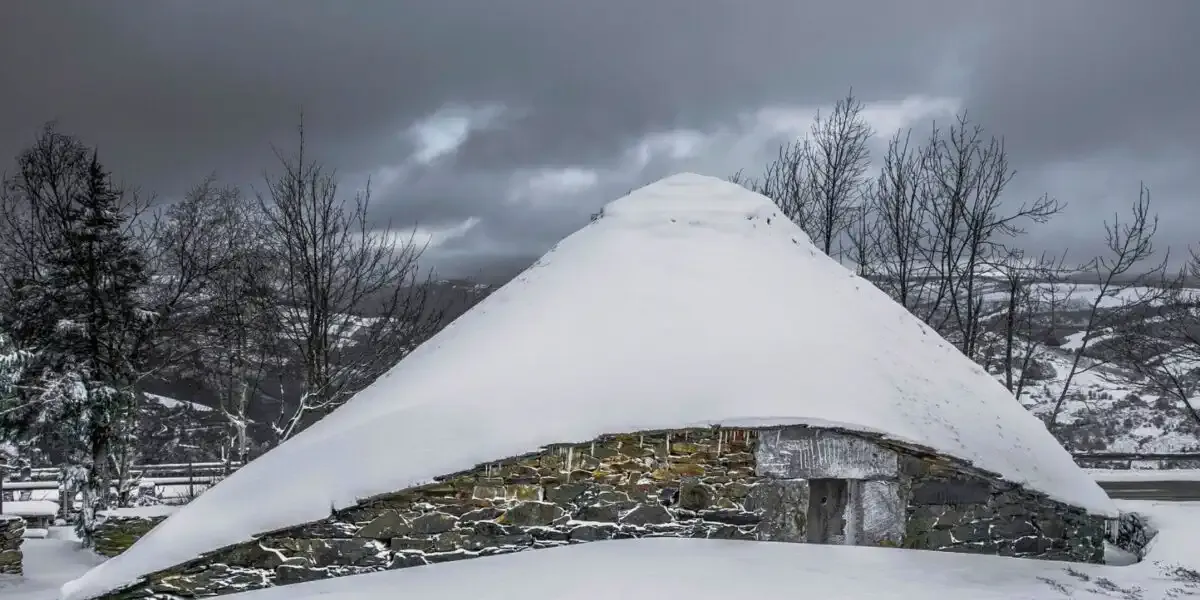
Palloza in the mythical village of O Cebreiro, in the last 200 kilometers of the French Way
The French Way from Ponferrada (204 km)
The great route among all the Ways to Santiago, the French Way, which is the most traveled route every year. Starting in Castilla y León and crossing the provinces of León, Lugo, and A Coruña, the last 200 kilometers begin in Ponferrada. You will pass through Cacabelos, Villafranca del Bierzo, O Cebreiro, Triacastela, Sarria, Portomarin, Palas de Rei, Melide, Arzúa, and O Pedrouzo, before arriving in Santiago. For beginner pilgrims, it is a comfortable, simple option with many services, which will also allow you to meet a lot of new people.
The Portuguese Way from Vilarinho (208 km)
The Portuguese Way is the second traditionally most traveled route, and its name is due to its origin from the neighboring country. In its last 200 kilometers, it traverses the north of Portugal and the provinces of Pontevedra and A Coruña, starting in the Portuguese town of Vilarinho. It passes through the towns of Ponte de Lima, Barcelos, Rubiães, Tui, O Porriño, Redondela, Arcade, Pontevedra, Caldas de Reis, and Padrón. At some points, it runs close to some Galician estuaries, and in addition to the Compostela, you can obtain the Pedronia, a similar certificate issued in Padrón. It is very interesting, as a large part of its route follows the ancient Roman road XIX, which connected Bracara Augusta (Braga, Portugal) with Lucus Augusta (Lugo).
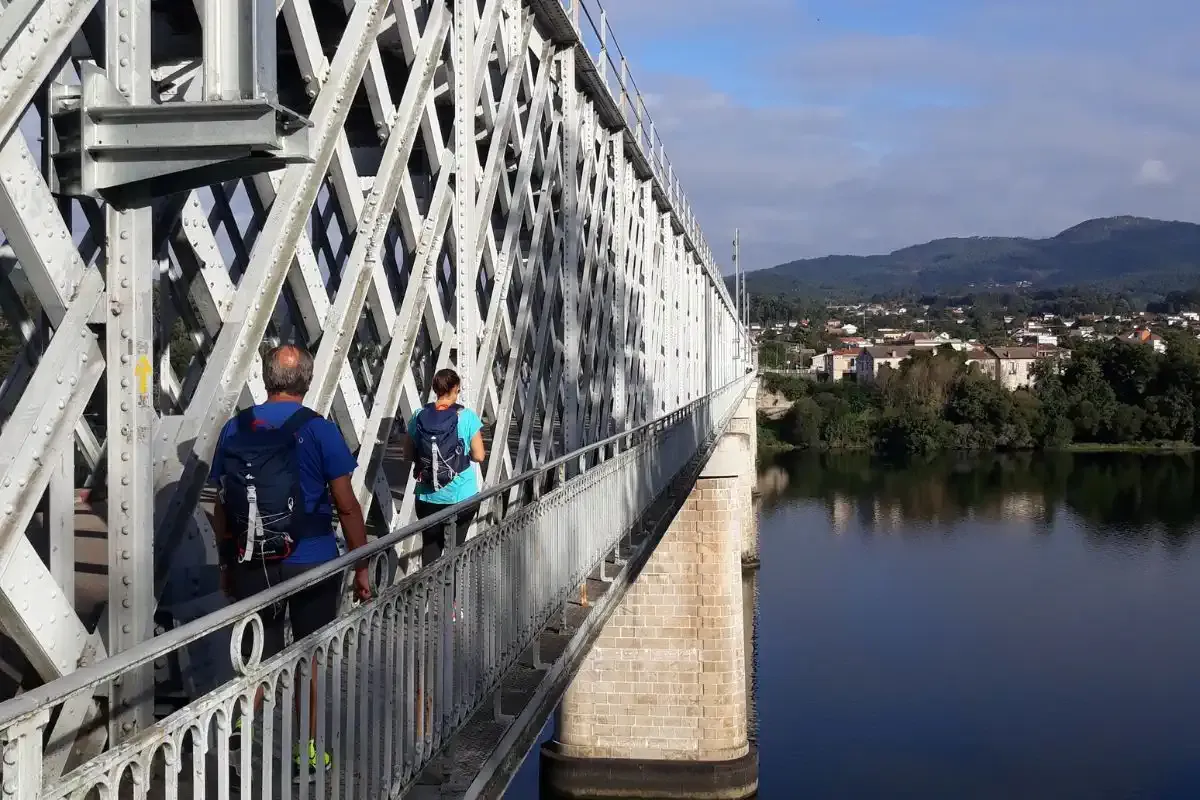
The Portuguese Way crossing the border between Spain and Portugal
The Portuguese Way by the Coast from Castelo do Neiva (201 km)
The Portuguese Way by the Coast is a variant of the previous Portuguese Way, which allows you to enjoy the Atlantic Ocean coast. It is one of the top five routes in terms of the number of walkers, and it is experiencing considerable growth. It traverses the north of Portugal and the provinces of Pontevedra and A Coruña, with its last 200 kilometers starting in the town of Castelo do Neiva. It passes through Viana do Castelo, Caminha, A Guarda, Baiona, Vigo, and, once in Redondela, follows the route of the Portuguese Way.
The Northern Way from Tol (203 km)
The Northern Way crosses in its last 200 kilometers part of the West of Asturias and the provinces of Lugo and A Coruña, departing from Tol. The main towns are Tol, Ribadeo, Mondoñedo, Abadín, Vilalba, Baamonde, Miraz, Sobrado dos Monxes, Arzúa, and Pedrouzo. A little-traveled path but with moderate growth, and in Arzúa it converges with the French Way, where the number of pilgrims obviously increases. In this case, you will enjoy the beautiful Asturian landscapes and you will access Galicia by crossing the first of the Rías Altas, the estuary of Ribadeo.
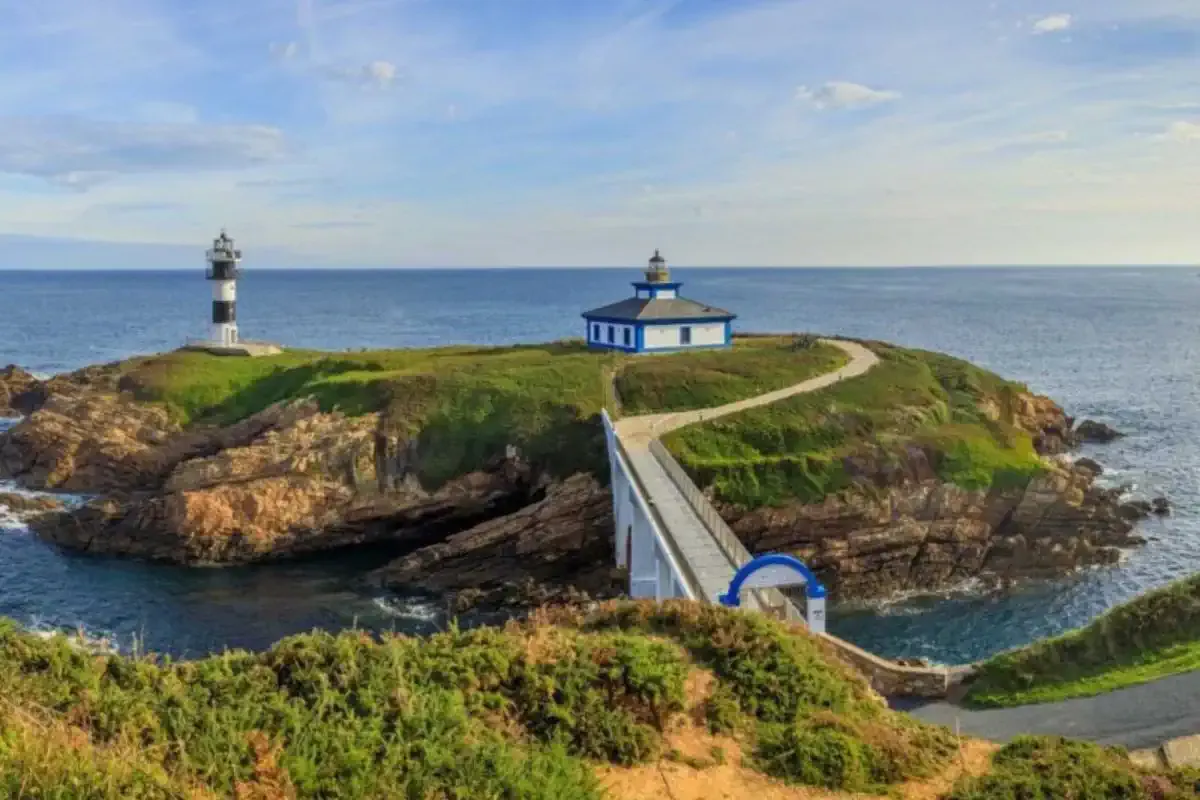
Faro de Isla Pancha, in Ribadeo, in the last 200 kilometers of the Northern Way
The Primitive Way from Berducedo (200 km)
The Primitive Way was the first route to be born, with its first pilgrim being the Asturian king Alfonso IX. The history of the Primitive Way tells that this monarch traveled from Oviedo to Santiago de Compostela to confirm the discovery of the remains of the Apostle. Little frequented but slowly growing, just like the Northern Way converges with the French Way, but in Melide. The last 200 kilometers begin in Berducedo and run through the West of Asturias and the provinces of Lugo and A Coruña. You will pass through Grandas de Salime, A Fonsagrada, O Cádavo, Lugo, Ponte Ferreira, Melide, Arzúa, and O Pedrouzo.
The Winter Way from Carucedo (200 km)
The Winter Way begins in Ponferrada and traverses the province of León, as well as the four Galician provinces. If you wish to cover its last 200 km, you must start from the town of Carucedo. It passes through O Barco de Valdeorras, A Rúa de Valdeorras, Quiroga, Monforte de Lemos, Chantada, Rodeiro, Lalín, and Ponte Ulla. A little-traveled route, named as such because it is an alternative to the French Way to avoid snowfalls in the Ancares, which are very abundant in winter. It is a more gentle Camino upon entering Galicia, where you can also savor the wines of Valdeorras and the Galician stews of Lalín.
Sanabres Way from Lubián (213 km)
This section, known as the Sanabres Way, is also an alternative continuation and endpoint of the Silver Way. A route not very crowded, but gradually gaining devoted pilgrims. It passes through A Vilavella, A Gudiña, Laza, Xunqueira de Ambía, Ourense, Cea, Lalín, Bandeira, and Santa Cruz de Rivadulla. It crosses the province of Zamora, and then the provinces of Ourense, Pontevedra, and A Coruña, and its last 200 km begin in Lubián.
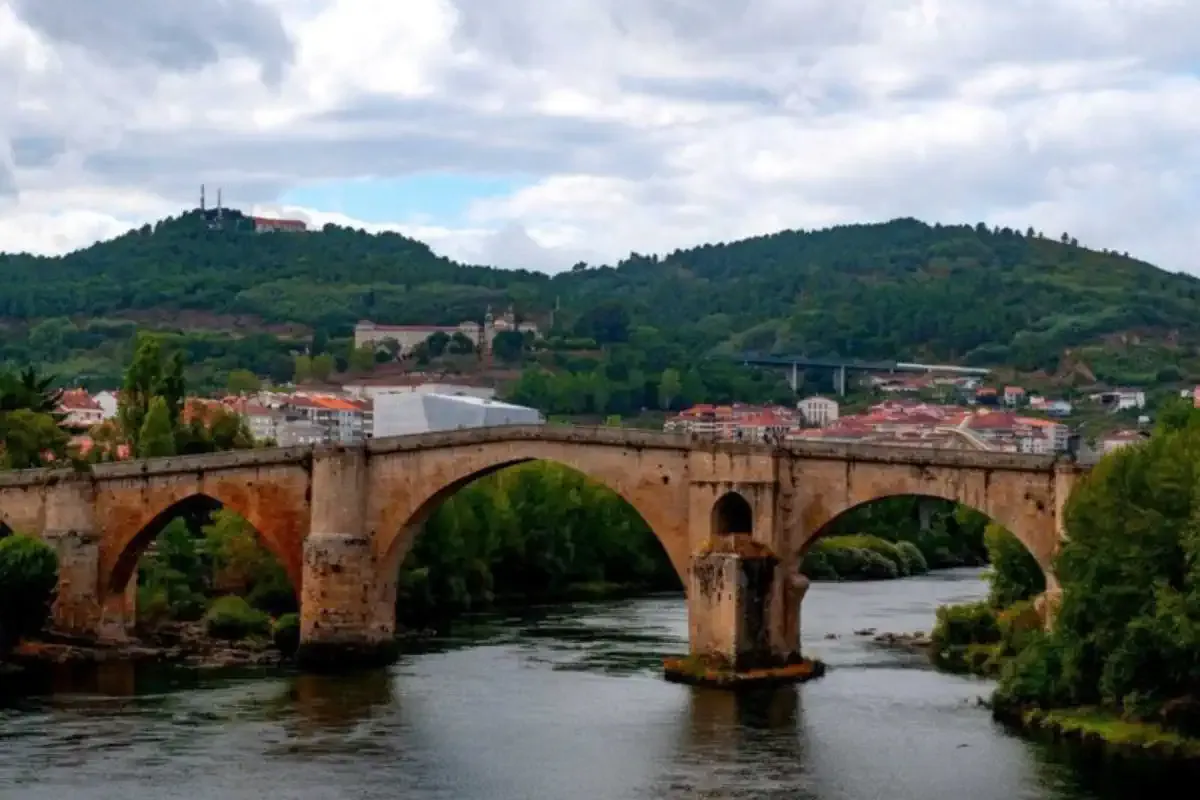
Roman bridge in Ourense, in the last 200 kilometers of the Sanabres Way
Would you like us to help you choose?
With the last 200 kilometers you will traverse diverse landscapes and regions, along with their people and gastronomy. Galicia is one of them, as your destination, Santiago de Compostela, is its capital. Depending on which route you choose, you can enjoy different regions of Spain and even another country, our neighbor Portugal. We would be delighted to help you choose which Camino to take: the last 200 kilometers of any route of the Camino de Santiago will provide you with a unique experience. Contact us without obligation!
Comments (1)
Patricia Rodríguez
Leave a comment