


The Camino de Santiago in separate stages
09 December, 2025
Tips for completing individual stages on the Camino de Santiago, explaining how to organize independent sections without completing the entire route, transportation options, logistical planning, and how to stamp the pilgrim passport, ideal for those looking to adapt the Camino to their available time.

Perhaps you have considered doing the Camino de Santiago in its entirety. Arriving in Santiago from your home or perhaps walking a section is a plan that everyone should undertake at least once in their lifetime. You may be thinking that you do not have much time, but did you know that you can do the Camino de Santiago in separate stages? We reveal it to you in this article!
Advantages of Pilgriming in Separate Stages
As mentioned, dear pilgrim: you can complete a long journey in separate stages without any problem. This has its advantages, and the first is that, despite your time limitations, you can take advantage of your free days to pilgrimage. With the lifestyle we have today, we do not always have the necessary time to walk the entire Camino to Santiago. However, many pilgrims do it in separate stages and complete it, step by step, over different weeks, months, and years.
You can do it this way, in bits and pieces, taking advantage of every weekend or free days. Moreover, you will be able to obtain the Compostela, as the Pilgrim Passport does not expire, no matter how many years pass. However, be careful! The stamps and dates must be in chronological order, and you must complete the stages in the spatial order they are in. And if you run out of space for stamps in your pilgrim passport, you can use a second passport.
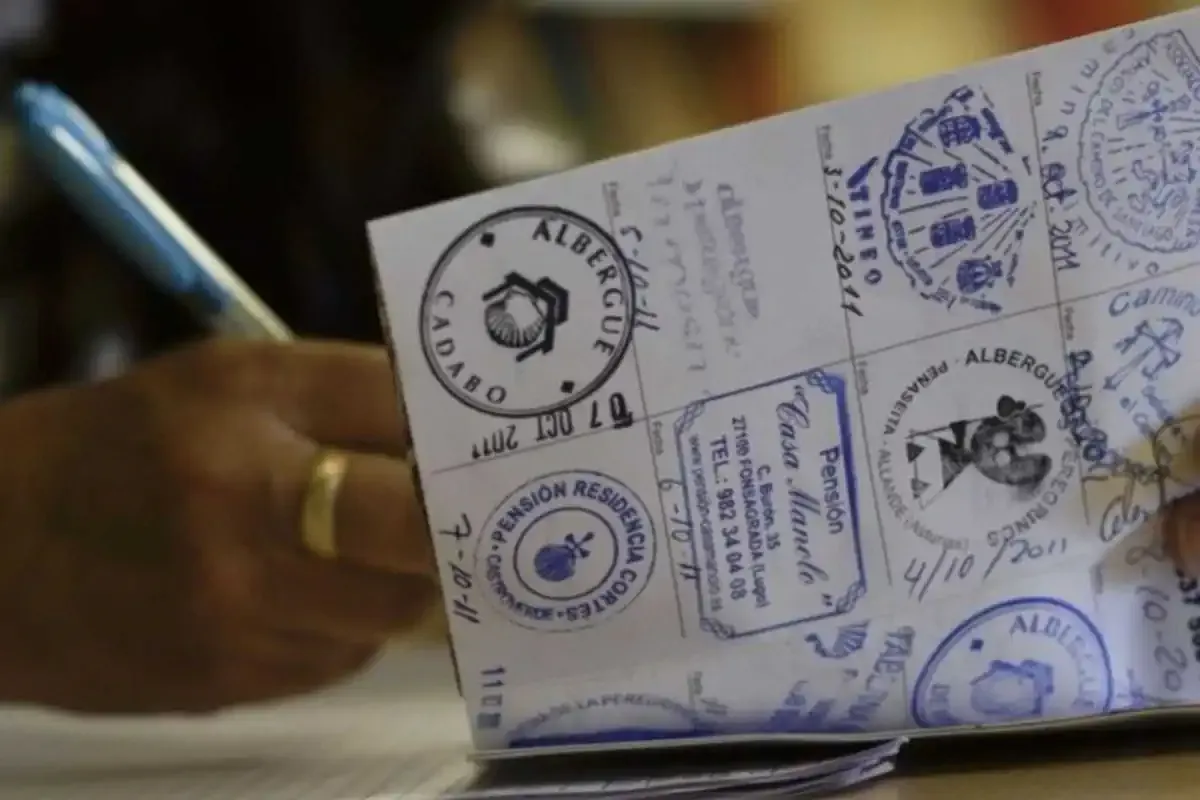
The Pilgrim Passport does not expire
On the other hand, you may want to do a route to Santiago with friends and family, but everyone's schedules do not match. Therefore, pilgriming in separate stages is the perfect solution, as it will allow you to agree on schedules.
By completing different parts of the Camino over several months or years, you will have more time to organize the stages. You will be able to reflect on those you have already completed and even learn from the mistakes you made in previous sections. Furthermore, by doing the Camino in separate stages, you will meet new people in each section you undertake.
How to do the Camino in separate stages?
The first thing to consider is how close or far you live from the start and route of the Jacobean route you wish to take. If you live in Galicia, you won't have much trouble, as it is where all the routes converge and you have options to choose from. If that is not your case, but you live in a region where a section of a Jacobean route passes through, you can undertake it this way.
If you do one stage every weekend, you will need a support vehicle or sweep car to take you to the starting point and pick you up at the end. If you are lucky enough to have someone to perform this task, great, but if not, you will depend on public transport or taxis. This way, you will save on accommodation and other associated needs, such as luggage transport.
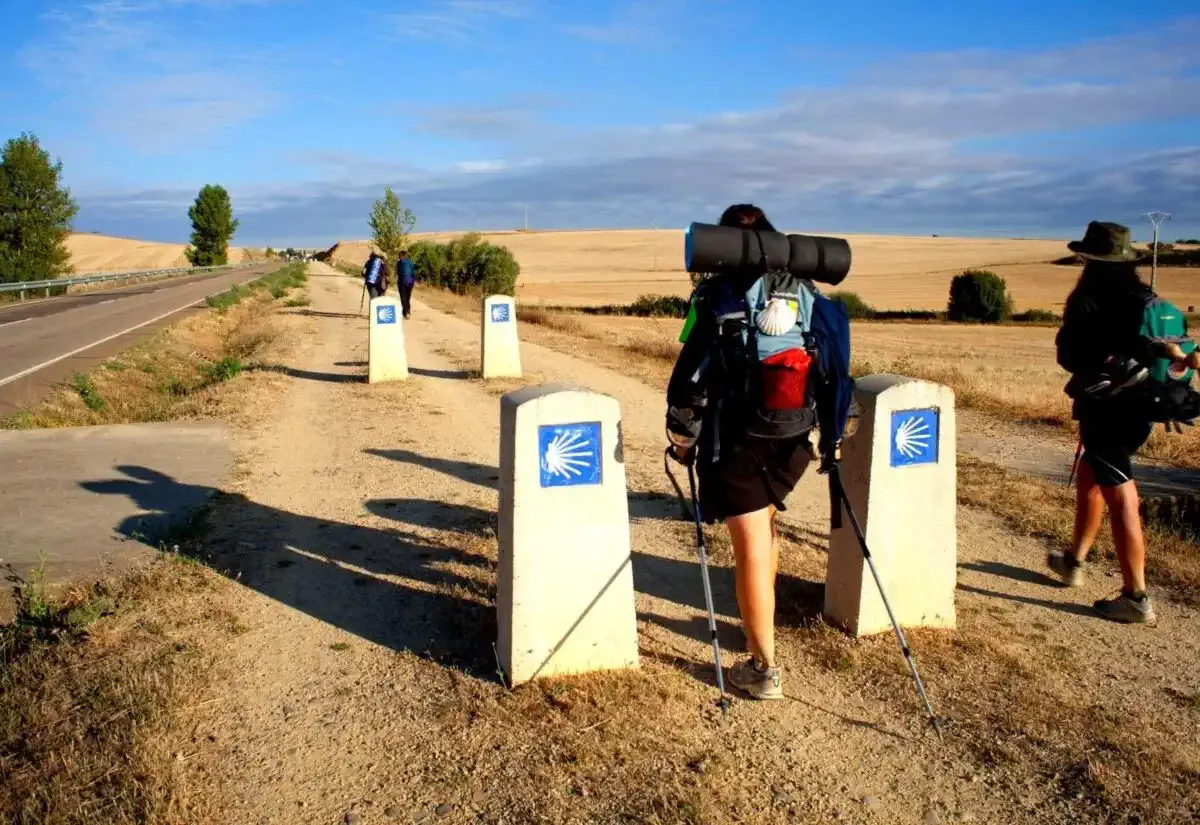
Some pilgrims on the French Way through Castilla y León
If, on the other hand, you complete two stages with an overnight stay on a weekend, make sure to book the accommodation you need in advance. Do not leave room for improvisation to avoid unpleasant surprises.
The most recommended routes for doing the Camino de Santiago in separate stages
If you have already made your decision, you need to choose the route to take. It can be a short route of 5 or 6 stages, or a longer one, with 10 to 30 or more stages. Shall we take a look?
The French Way
Many pilgrims decide to undertake the entire French Way within the Iberian Peninsula, either from Roncesvalles or from Somport via the Aragonese Way. From Roncesvalles, you will cover approximately 800 km in about 33 stages, and from Somport, around 960 kilometers in about 39 stages. This is a long route but very attractive and with a lot of historical tradition: if you cannot do it all at once, do it in separate stages.
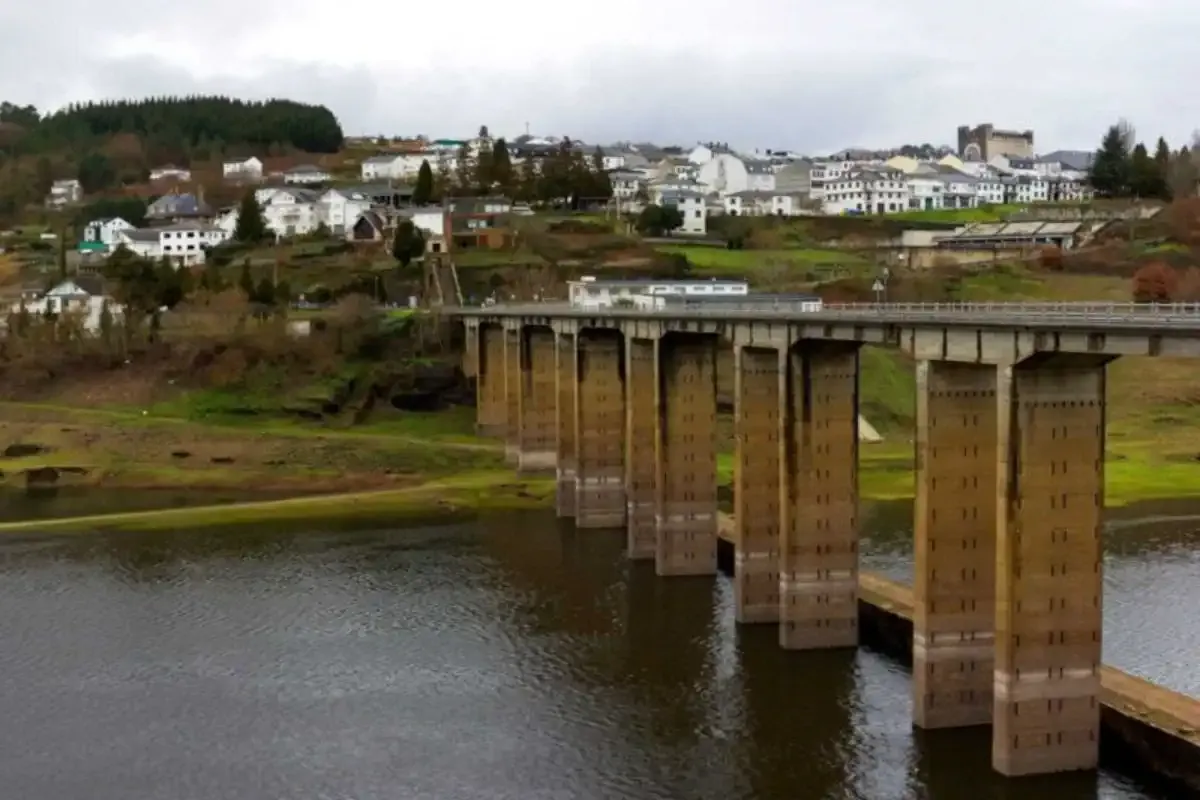
The French Way as it passes through Portomarin
The Portuguese Way
Another historical route to do in pieces, starting far from Santiago: Lisbon. The Portuguese capital is about 620 kilometers from the city of the Apostle, with an approximate division of 27 stages. The main attraction of the Portuguese Way is that it largely runs through neighboring Portugal, whose gastronomy and landscapes will be novel to you. Additionally, there is also the coastal variant from Porto, as well as the Spiritual variant from Pontevedra.
The Silver Way
About 950 kilometers and 38 stages separate Seville from Santiago de Compostela. It connects in Astorga (León) with the French Way, although there is also the variant of the Sanabréс Way from Granja de Moreruela (Zamora). A Way that follows in the footsteps of the ancient Romans. If you are from Seville and want to reach Santiago de Compostela, you can do the Silver Way all at once, or break it into separate stages.
The Northern Way
Approximately 860 kilometers in 36 stages separate Irún from Santiago de Compostela. The Northern Way is a historic route that runs parallel to the Cantabrian Sea. It is a very interesting path, as due to its proximity to the sea, you will enjoy both inland and coastal landscapes. The wonderful Cantabrian beaches and the gastronomy of the various regions of the northern peninsula will accompany you.
The Primitive Way
If we were talking about historic routes, here we bring you the first of all. The Primitive Way begins in Oviedo, where King Alfonso II the Chaste resided, one of the first pilgrims in history. It totals 268 km to be completed in about 11 stages, enjoying the Galician and Asturian mountains and their rich spoon dishes.
The Rest of the Ways
There are even more routes of the Camino de Santiago, but not as long. They can also be done in individual stages, although their distance is manageable to complete in one go during your holidays. The English Way, with its 113 kilometers in 6 stages, is very accessible. The same goes for the Way to Finisterre and Muxía, which, with its 120 kilometers in 5 stages, can be perfectly completed during vacation days.

The arrival at Cape Finisterre from Cee is a single pilgrim stage that can be done on the Costa da Morte (Galicia)
Things to Consider
Take into account the weather and the time of year, the need for accommodation or not, what to bring in your backpack, and the physical preparation. Instead of individual stages, you could also organize yourself each month and over several years to complete some sections. The most common option is to walk about 100 or 200 kilometers each year, starting each year where you left off the previous year. This is how some of our pilgrims did it, from their home in Holland to Santiago de Compostela over 19 summers.
As a final piece of advice, if you are a beginner, try walking the last 100 kilometers of the French Way from Sarria or the Portuguese Way from Tui. This will give you a taste of what to expect in a long adventure.
However you choose to do it, the important thing is to enjoy the Camino without rushing. It is a very worthwhile investment of time psychologically, emotionally, and spiritually, and completing a Jacobean route in individual stages will allow you to live the pilgrim experience.
Comments (2)
Isabel
Jorge Severo Medina Martín
amaya
Viajes Camino de Santiago
Leave a comment