


Information
The Fisterra–Muxía stage, 31 kilometres long, is one of the most symbolic days at the end of the Camino. It links the two coastal points that for centuries were considered the "end of the known world", and it does so along old rural paths, crossing small hamlets, streams and woods of pine and eucalyptus. Unlike the inland stages, here the sea and the sky are the true leading characters: the Atlantic light, the salt-air scent and the wind off the cliffs walk beside every step.
From Fisterra, the route begins with a descent along the coast, passing through San Martiño de Duio — whose Romanesque church still holds medieval remains — and along Rostro beach, one of the wildest stretches of the Costa da Morte. The Way then turns inland into the Lires valley, crosses the river of the same name and climbs gently through wooded sections. The hamlets follow one another peacefully, with their hórreos, stone crosses and small pazos, reminding us that this coastal Galicia keeps a rhythm of its own, beyond the main Jacobean routes.
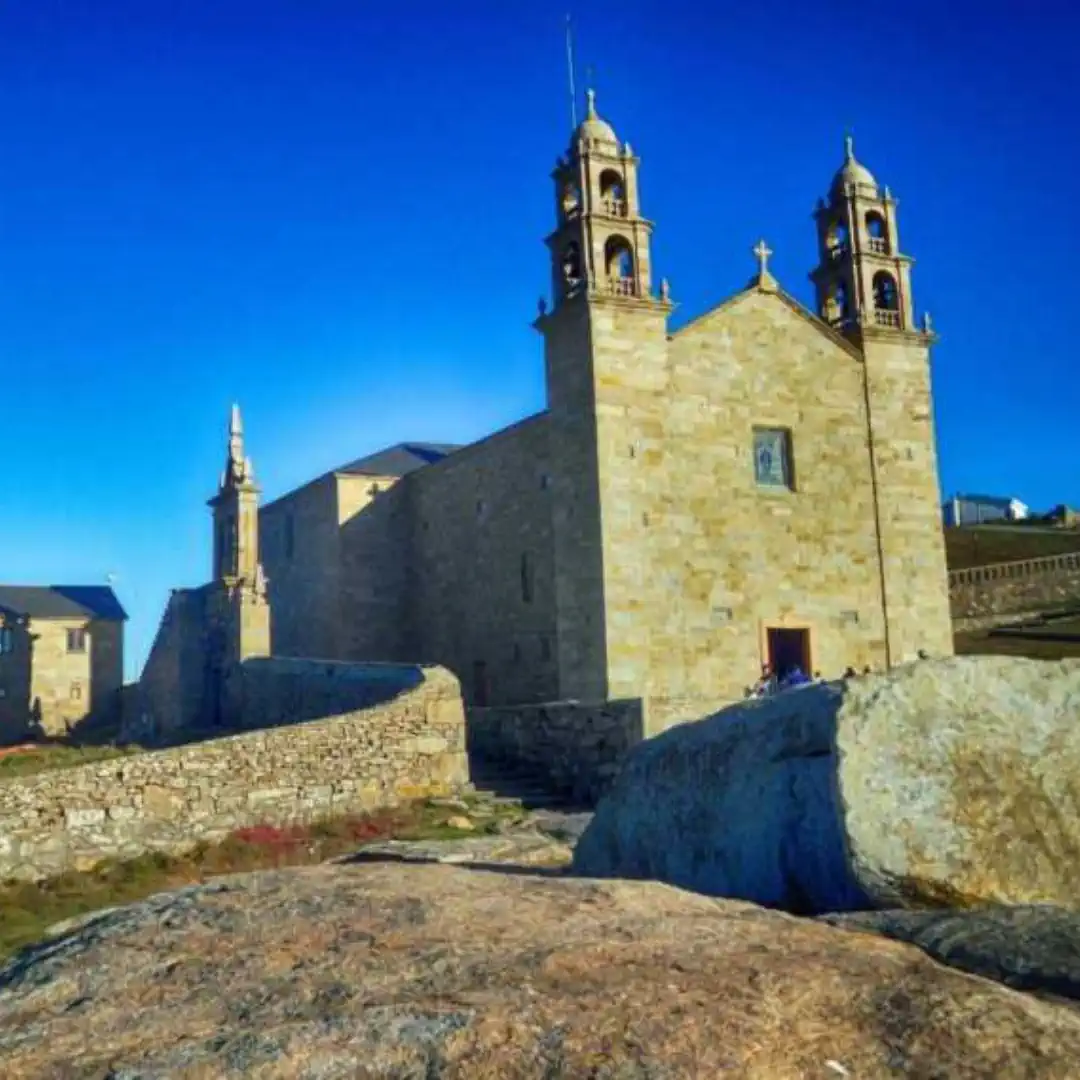
The final stretch reaches Muxía following the shore of the ría, with the unmistakable silhouette of the Sanctuary of A Virxe da Barca framed against the ocean. Here, according to tradition, the Virgin Mary appeared to the apostle Santiago to encourage him in his preaching, and the huge stones around the sanctuary — a pedra de abalar, a pedra dos cadrís — are said to be the remains of the boat on which she arrived. A place of natural and spiritual force that needs no further explanation.
Arriving in Muxía is not so much "closing" the Camino as extending it inwards: sitting before the Atlantic, watching the waves crash against the rocks and letting the mind empty out. The local gastronomy — octopus, goose barnacles, razor clams, scallop pie — and the fresh fish from the harbour round off a long but rewarding day, in which the pilgrim often feels that the true end of the journey is closer to silence than to any physical goal.
The Fisterra–Muxía stage links the two most mythical capes of the Way, closing the Atlantic route with a 31-kilometre leg between cliffs, quiet beaches and woodlands of pine and eucalyptus. We leave Fisterra following the coast along rural trails, cross small Galician hamlets such as San Martiño de Duio, Buxán and Lires, and walk past estuaries, streams and old mills until we reach Muxía. The end comes at the Sanctuary of A Virxe da Barca, standing over the rocks that, according to Jacobean tradition, are the remains of the stone boat in which the Virgin came to encourage the apostle Santiago. A long stage but with no major climbs, ideal to close the Camino facing the ocean. Here the pilgrim no longer walks towards a goal, but says farewell to the sea and to themselves.Photos
Hostels
-

Pilgrim Hostel of Finisterre
Address Rúa Real, 4, 15155 Fisterra, A Coruña
Website Not available
Email alberguefisterra@hotmail.com
Website Not available
-

Pilgrims' Hospice of Muxía
Address Rúa Enfesto, 15125 Muxía, A Coruña
Website +34610264325
Email Not available
Website Not available
Villages
-

Fisterra
Region Fisterra
Province A Coruña
Population 4697
