Lighthouse Route from Malpica to Finisterre
Lighthouse Route from Malpica to Finisterre - Paquete turístico

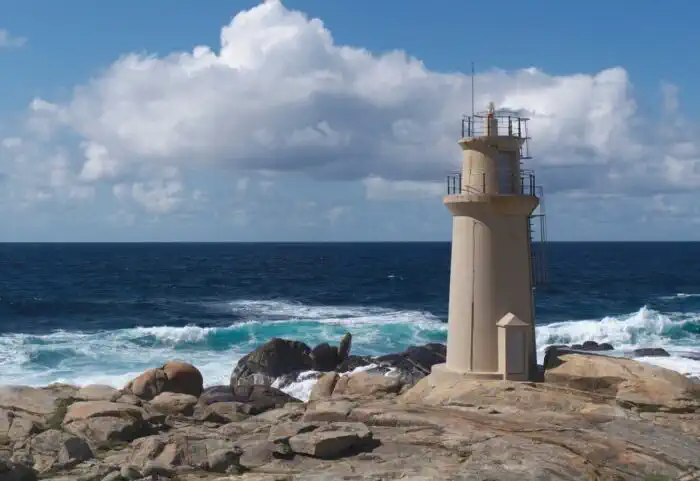
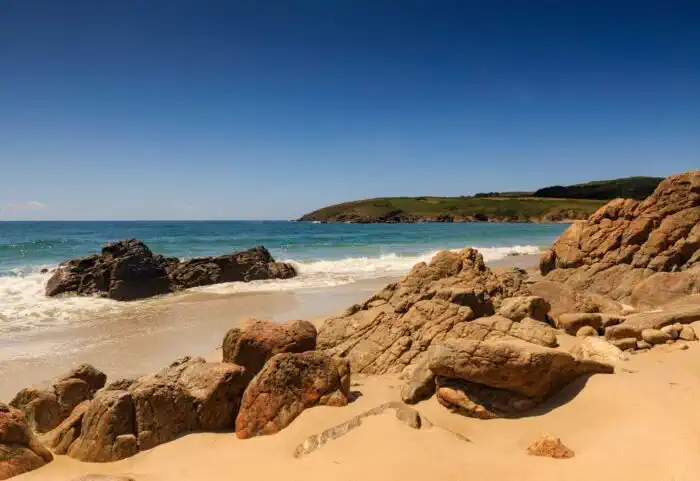
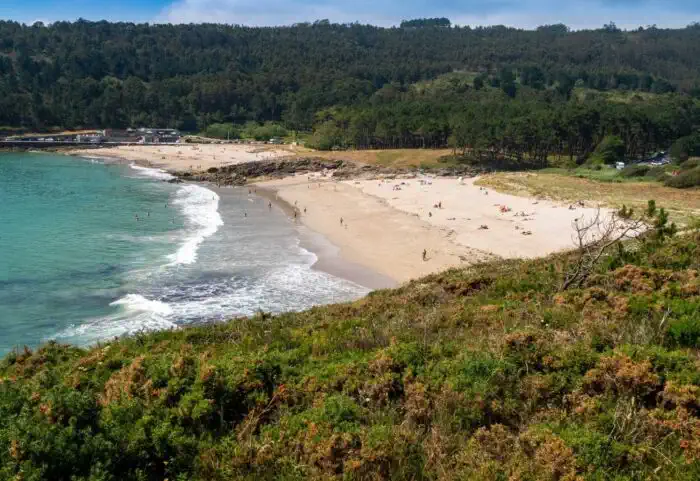
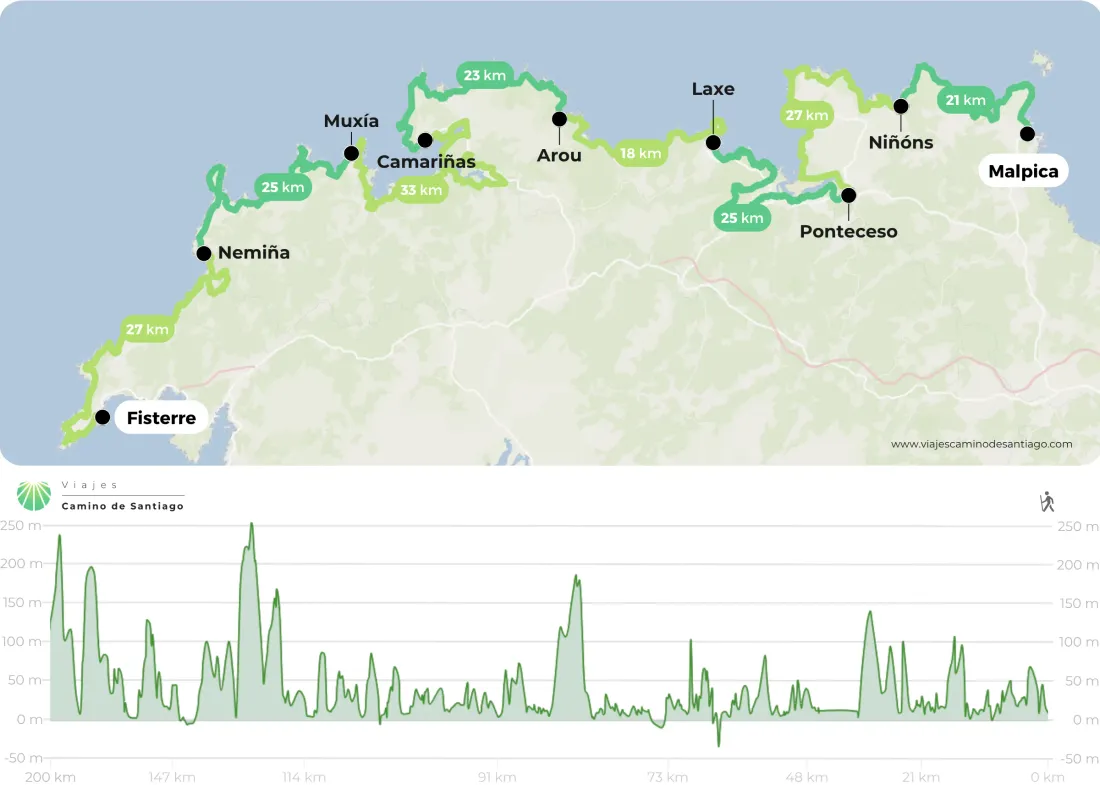
The Route of the Lighthouses is a unique experience that traverses the spectacular Costa da Morte, from Malpica to Finisterre, on an itinerary designed to enjoy the Atlantic landscape in 8 days and 7 nights. This journey combines wild nature, cliffs, and pristine beaches, aimed at those seeking a different adventure with complete tranquility.

It includes reservation of accommodations, luggage transfer, telephone assistance throughout the trip, detailed documentation, and travel insurance, ensuring comfort on each day. It is ideal for hikers and active travelers who wish to discover one of the most impressive coastal routes in Galicia without worries.

Photos

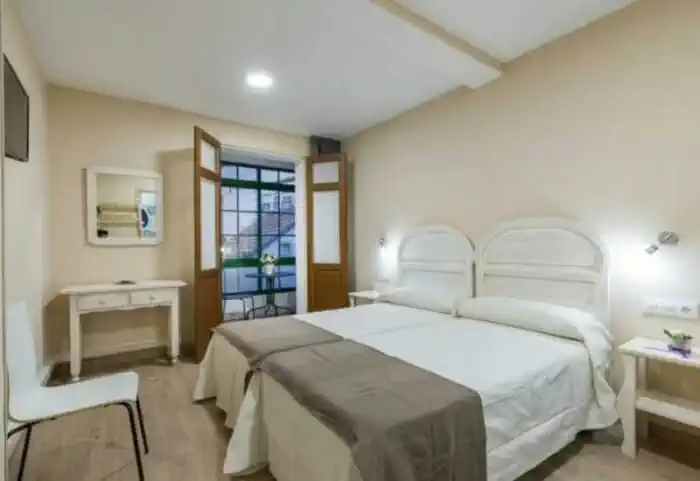
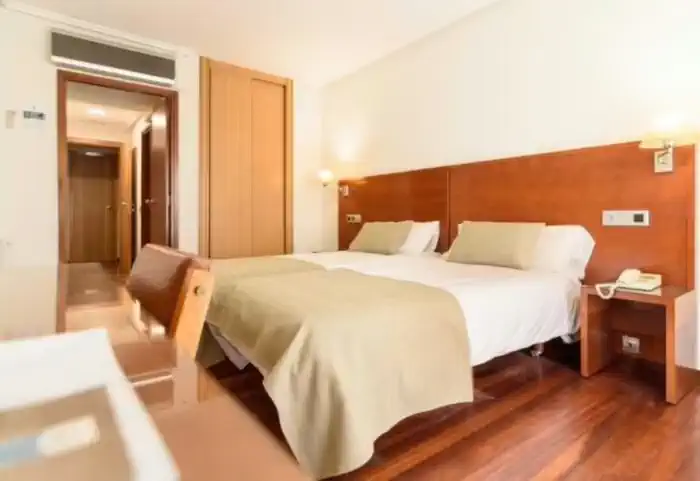
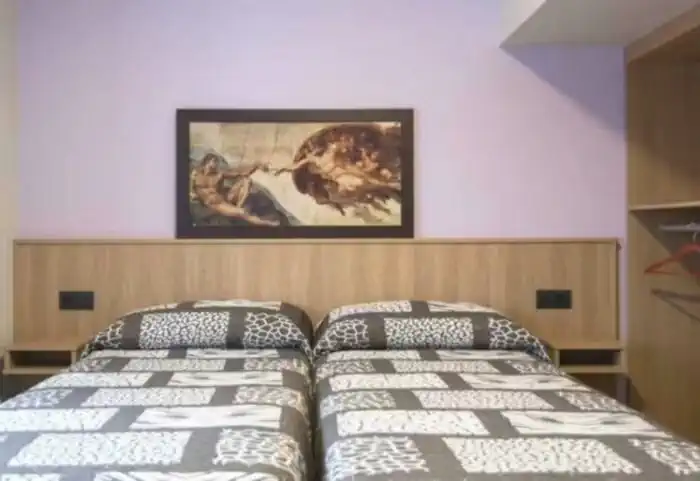
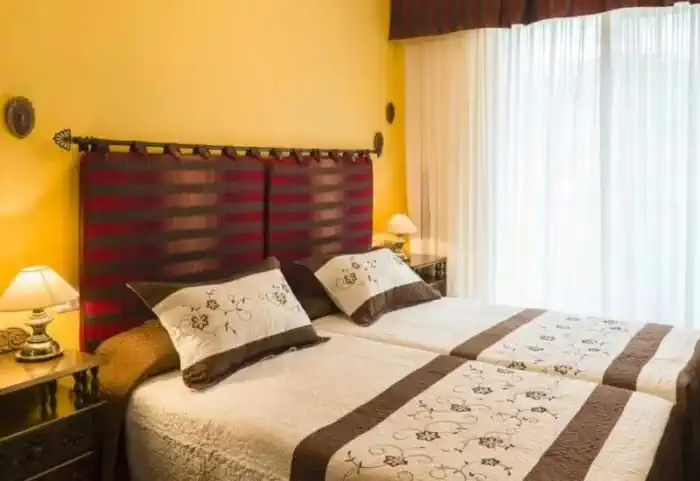
Accommodations

  • Hostels, guesthouses, and rural houses

Services

Included in all our routes

  • Accommodation

    10 days / 9 nights

  • Complete documentation (Dossier and material for the Camino)

  • Luggage transfer during the stages. (1 piece per person max 15 kgs)

  • On-the-road emergency telephone assistance

  • Pilgrim's Credential

  • Travel insurance

Optional

  • Extra night
  • Breakfast
  • MP (Breakfast and dinner)
  • Cancellation Insurance

Stages

  • day 1

    Arrival at Malpica de Bergantiños

  • day 2

    Stage 1. Malpica de Bergantiños - Playa de Niñóns (21.3 km)

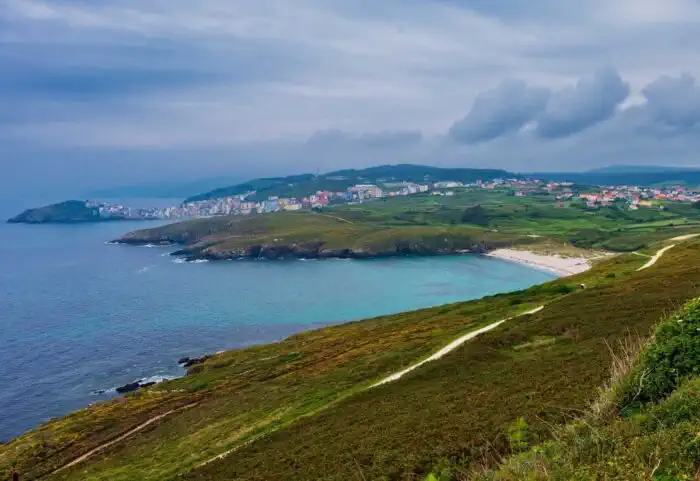
    We begin this stage at the port of the fishing village of Malpica de Bergantiños, capital of the city council (in Galician, concello) of the same name and of the region of Bergantiños, on the way to Niñóns Beach. A town of great fishing tradition, its port is famous for whale fishing.

    From the harbour beacon we start our adventure. Leaving the Port we can find the first signs that will guide our steps, which will take us through the central streets of the city centre until we reach the Paseo Marítimo and the beaches of Area Maior and Canido. From there we can sense the path that will take us to the Hermitage of San Adrián passing by the Seaia Beach and the fountains of Navenllos and Los Romeros (be careful, the first one causes flu, the second one cures warts!).

    Passing the hermitage we arrive at the Cape of San Hadrian, from where we admire the fabulous Sisargas Islands, with the lighthouse of the Sisarga Grande Island. We continue along fishermen's paths, which we will find many along this Way, as well as along the first cliffs until we reach Beo Beach. We continue and Seiruga Beach awaits us which, as usual, will force us to take off our shoes and roll up our trousers to cross the small stream that flows into it: this is a lively and fun Way.

    We continue towards Barizo, with a new beach, and here begins the hardest part of this stage.

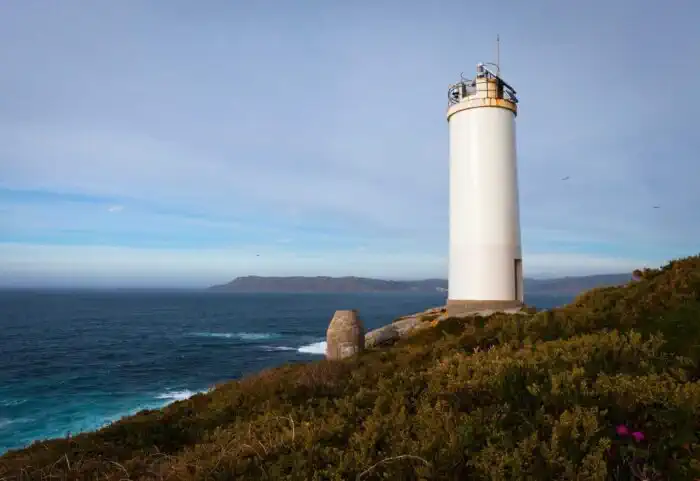
    A short climb takes us to a very short stretch of asphalt that leads to the Puerto de Barizo, and here we will (almost) climb, getting ready to reach the Mount Punta Nariga and the Punta Nariga Lighthouse, the most modern of the route (1998) and designed by the renowned architect César Portela with a lot of work on the "Costa da Morte". Be sure to observe the environment, the rocks have very particular shapes and you can also find petroglyphs, those marks and incisions in the rock work of ancient inhabitants of the area.

    We continue a little further to reach the end of the stage, Niñóns Beach, but before we get there there are a series of streams of very fresh water that fall into the sea. Once on the beach, once the stage is over, you have to take into account that this is a place that hardly has mobile coverage.

    To be taken into account.

    The Way of the Lighthouses is much more than you can imagine with the first kilometres you will find in this stage, and when you finish it you will realise what this fantastic route is all about. You will find some fountains with drinking water as well as streams. From Malpica, mobile coverage is sometimes conspicuous by its absence, in this case even at the end of the stage in Playa de Niñóns. There are some bar and restaurant services along the way, but they are usually closed in low season.

    Places of interest.

    • Viewpoint "Atalaia" of Malpica (near the route).
    • Casa del Pescador de Malpica (on the route).
    • Hermitage of San Adrián (on the route).
    • Pazo and towers of Mens (outside the route, privately owned, not open to visitors).
    • Petroglyphs of Punta Nariga (on the route).
    • Beaches and lighthouses (on the route).

    Gastronomy.

    • Fish.
    • Seafood.
    • Galician broth.
    • Tripe.
    • Lamb.
  • day 3

    Stage 2. Playa de Niñóns - Ponteceso (27.1 km)

    We leave the beautiful beach of Niñóns through a forest that takes us to the small beach of O Morro, which leads us to Ponteceso. Small coves and beaches such as Niño do Corvo and Santamariña make us advance to a point where we will momentarily leave the coast, as it is a dangerous area of cliffs. We quickly return to the coast and we find the beach of A Barda.

    Now comes the complicated part of the stage. The Costa Tremosa offers us a demanding path that will take us to the rustic and picturesque village of Roncudo, with its traditional popular architecture perfectly adapted to the difficult climate of the area. Dotted with wind energy blades, this high area will suddenly offer us a steep downhill slope towards cliffs rich in barnacles, where brave and brave "percebeiros" risk their lives to put these rich marine jewels on our tablecloth.

    We have arrived at the Roncudo lighthouse.

    From there an asphalted road joins the lighthouse with the village of Corme, where we can find several services. After the beaches of Arnela, Osmo and Ermida, we will arrive at Balarés Beach, at the foot of Monte Branco (don't worry, we won't climb this one), which, after surrounding it, offers us the marvellous beach of Barra Beach. A path and then the Paseo del Malecón will take us to Ponteceso, a small village with services and the end of our stage.

    To consider

    This is one of the longest and most complicated stages, so have a good breakfast before leaving Playa de Niñóns and take it easy, and we will start to find steep downhill slopes, so we recommend knee pads and walking sticks, to reach Ponteceso without incident. Fortunately, we will pass through the town centre of Corme shortly after the halfway point of the stage, so we will have access to several services.

    Places of interest.

    • Tower of Brántuas and Church of Nuestra Señora del Faro (off the route).
    • Pedra da Serpe (out of the route).
    • Museum of Contemporary Art Costa da Morte (on the route).
    • Eduardo Pondal Foundation (outside the route).
    • Beaches and lighthouses (on the route).

    Gastronomy.

    • Barnacles.
    • Sea urchins.
    • Sea and river fish (elvers and trout).
    • Shellfish (cockles).
    • Octopus.
    • Raxo.
    • Beans.
  • day 4

    Stage 3. Ponteceso - Laxe (25.3 km)

    We start the stage leaving the town centre of Ponteceso, from the house of the famous Galician bard Eduardo Pondal and we cross the bridge over the Anllóns River to walk 1 km along the AC-429 road towards Laxe. We quickly turn right and walk through the woods until we reach the shore opposite to the final route of the previous stage, with Barra Beach in front of us. We will find some fountains and the beach of A Urixeira.

    We arrive at the small urban centre of Cabana de Bergantiños, which is, however, the municipal seat. There we will pass by the beach of A Carballa, and we will have some services nearby (bar, restaurant, taxi). We continue through this area of ornithological importance, and we arrive at the Lodeiro Cove, where we will have a small supermarket.

    It is here that we will enter and temporarily leave the coast. We should not be disappointed, as a forest path with a stream and old mills awaits us: the Rego dos Muíños will not leave you indifferent. We continue with a respectable but beautiful ascent, and at its end we find the AC-430 road: to visit the Castro Borneiro we have to turn off 1 km round trip.

    We continue through the village of Vilaseco and arrive at the fabulous Dolmen of Dombate.

    It is worth a 15 minute stop and visit (free entrance). We continue on the plain and arrive at Fontefría, where we will find a public washing place and a fountain. We continue and get ready to climb to the top of Monte Castelo, where we will enjoy the reward for our effort: a wonderful view of the Ría de Corme and Laxe, where we can take a deep breath, rejoice in the scenery and encourage us to continue, because now it is time to descend, which we will do carefully.

    We arrive at the village of Cánduas and shortly after we return to the coast, where we will again have some considerable ascent. The beaches of Rebordelo and San Pedro await us, which, together with Punta do Cabalo, precede the beach and village of Laxe, where we will have all kinds of services and we will end our stage.

    To be taken into account.

    This is not a particularly difficult stage, although we must be aware that there will be some steep climbs and descents ahead of us. The incursion to the interior, leaving the coast, from Ponteceso, will not detract from the merit of this route, indeed, it will enrich it with beautiful fluvial and panoramic landscapes until reaching Laxe, as well as with a historical and ethnographic heritage of great value.

    Places of interest.

    • Castro Borneiro (on the route).
    • Dolmen of Dombate (on the route).
    • Monte Castelo viewpoint (on the route).
    • Laxe Sea Museum (on the route).
    • Beaches and lighthouses (on the route).

    Gastronomy.

    • Fish (haddock, horse mackerel, etc.).
    • Seafood.
    • Octopus.
  • day 5

    Stage 4. Laxe - Arou (18 km)

    We leave the Port of Laxe by the Church of Santa María de la Atalaia, in Gothic style, whose name reminds us of the Atalaia of Malpica and suggests a defensive function and surveillance of the city, and we head towards the town of Arou. In a few minutes we will be back along the coast and passing points, capes, "coídos" and "furnas". We arrive at the Lighthouse of Laxe, which is followed by the Stone of Lovers, a very common sight on the Galician coast.

    We continue walking and, if we are lucky to have low tide, we will find a treasure fruit of the bad action of Man, but that Nature took care of mending: Playa de los Cristales, a cove where the sea, with the passage of time, dragged the crystals of bottles of different colors that Man threw into a landfill in the area.

    Thus, the capricious Nature created a beach of perfectly polished crystals that, curiously, it is forbidden to pick up.

    We continue and, after a climb, we reach the Peñón de Soesto, with beautiful views and which precedes the Playa de Soesto. We keep going and we pass Arnado Beach and, shortly after, the majestic Traba Beach. Here we will find a drinking fountain and, at the end, with a short detour, we will find a bar.

    We keep going and arrive at the Coído (or pebble beach) of Sabadelle, just before the fishing village of Camelle, where we will find services and learn the story of an endearing foreign character who was "adopted" by the local population: Man "El Alemán de Camelle", with his little house as a sea hermit, and to whom the Town Council of Camariñas (to which Camelle belongs) honoured him with a museum.

    Sculpture of German Man in Camelle

    This man, In love with the Costa da Morte, he settled in the village, and thanks to the good reception and help from his neighbours, he lived between bathing in the ocean and artistic creations in the style of "Land Art". He died on the Feast of the Holy Innocents in 2002, shortly after the tragic natural disaster of the Prestige oil tanker on November 13, 2002, they say of grief. We continue a little more, and we arrive at Arou, our end of the stage.

    To be taken into account.

    When walking these trails we should never be in a hurry, and in this stage even less so, since from the port of Laxe to the town of Arou, we are presented with a simple, short, charming stage, full of surprises. Today we give you a break so that you can enjoy 200% of this Galician wonder, the Way of the Lighthouses; enjoy it, because there is still the second half, which will still be fascinating, but harder.

    Places of interest.

    • Church of Santa María de la Atalaya (on the route).
    • Playa de los Cristales (on the route).
    • House of Man (on the route).
    • Man Museum (on the route).
    • Beaches and lighthouses (on the route).

    Gastronomy.

    • Fish.
    • Seafood.
  • day 6

    Stage 5. Arou - Camariñas (23.8 km)

    We leave Arou and leave behind the beaches of Area de Arou, Braña de Lazo and Lobeiras and arrive at the Port of Santa Mariña, in the direction of Camariñas. We continue advancing and we will arrive at one of the most emblematic points of the Way of the Lighthouses, Monte Branco and its dune system, which give a panoramic view and a passage to the fascinating beaches of Trece.

    We cross the different beaches that compose it and shortly after we will arrive at the Cemetery of the English, where the people of the area buried the English sailors from the British torpedo boat HMS Serpent on the 10th November 1890. Not only this shipwreck, but 7 more and 245 victims are counted in the tragic history of this stretch of coastline, in front of the dangerous Punta do Boi, which presides over this Cape Thirteen. In fact, we will find different crosses and monuments in honor of all the deceased here.

    By the way, we are at the 100th kilometre of this Camino de los Faros, right at its halfway point.

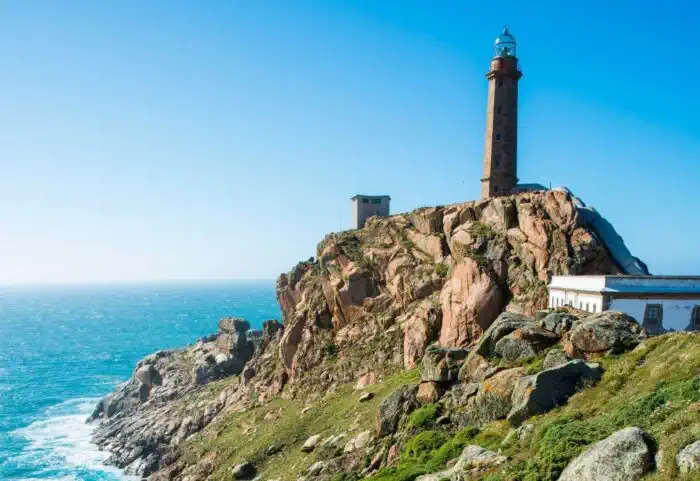
    The rock formations that we will find in this section will transport us to landscapes of unknown planets, and will suggest recognizable shapes, such as the Bear Stone that we will find after the little Reira Beach. More beaches, Area Longa, Balea and Pedrosa will lead us to the emblematic Vilán Lighthouse, whose original was built in 1854, but the one we see today, after several reforms, was built in 1896, inaugurated as the first electric lighthouse in Spain, and as a result of the aforementioned shipwreck of the Serpent.

    Cape Vilan de Arou to Camariñas

    We leave Cape Vilán bordering a fish farm, usual in the area, and then we ascend to the Hermitage of Nuestra Señora del Monte, we pass by the Lago Beach, the small Faro da Viulleira, the Castle Lighthouse and the Soberano Castle itself, a maritime-terrestrial fortress built in the 18th century and which unfortunately is not in its best state of preservation. Thus we arrive at the port and town of Camariñas, famous for its traditional handmade bobbin lace, and that will offer us all kinds of services.

    To be taken into account.

    We strongly recommend you to enjoy this stage as much as possible, and to plan it before leaving Arou, since on the way that separates us from Camariñas, we recommend you to go little by little, stopping to contemplate its panoramic views and to learn about its history. We are beginning the second half of this Camino, and we have to make the most of it.

    Places of interest.

    • Dune of Monte Branco (on the route).
    • Cemetery of the English (on the route).
    • Hermitage of Nuestra Señora del Monte (on the route).
    • Maritime-terrestrial fortress of the Sovereign (on the route).
    • Camariñas Lace Museum (on the route).
    • La Conservería de 1884 Museum in Camariñas (on the route).
    • Beaches and lighthouses.

    Gastronomy.

    • Canned seafood products.
    • Fish.
    • Seafood.
    • Cockle pie.
    • Beans with clams.
  • day 7

    Stage 6. Camariñas - Muxía (32.6 km)

    We leave Camariñas behind us following the AC-432 road, which we will leave to go down to Area da Vila beach towards the coast of Muxía. Here we must be very observant to continue the path, which seems to have no continuation, but at the opposite end of the beach we will find a path of great but short slope, with a rope that will help us to climb it. We continue along the Lingunde Beach to access a beautiful wooded path that runs laterally along the Ensenada de la Basa.

    At the end of this one, a small stretch of the previous road leads us to a restaurant.

    We continue walking on the opposite side of the inlet and we reach the "Areiña Branca Beach", followed by the "Rego dos Coirós Beach", where we will find a picnic area with a fountain and a shower. It is followed by Ariño Beach. The path will take us back to the road and we will find another restaurant. We continue along an asphalted rural track parallel to the road, which we will take again arriving at the Village of A Ponte do Porto we will cross the bridge over the Rio Grande.

    In this villa we will find different services. We continue along the river walk that will take us to the Port of Cereixo, a small village with beautiful traditional granite constructions, such as the magnificent Cereixo Towers, the tide mills and the Church of Santiago de Cereixo.

    Church of santiago de Cereixo from Camariñas to Muxía

    We continue and see that the estuary begins to open at "Area Grande Beach", followed by Barreira Beach, Lago Lighthouse and the beautiful Lago Beach, where we will find bars and camping. We continue through the bucolic village of Merexo, where we will find another bar and connect with the pilgrims coming from Santiago de Compostela towards Muxía, on the Way of St. James to Muxía and Finisterre (we will meet them again in the next two stages).

    We arrive at the village of "Os Muíños", with some bars, and we deviate from the Jacobean route following the lighthouse route and passing by the beach of "Os Muíños". We reach the village of Chorente, where we meet again the pilgrims to Muxía, with whom we will arrive through the beaches of Espiñeirido and the curious Playa de la Cruz, which only exists at low or medium tide.

    We are at the gates of Muxía, our end of the stage.

    We will walk along its promenade, passing by its port. We go up to the Church of Santa María to access the Viewpoint of Monte Corpiño the viewpoint of Monte Corpiño, with spectacular views of Muxía. Thus we arrive at the Punta de la Barca, with its Sanctuary of the Virgen de la Barca its sacred stones, the Lighthouse of Muxía, the La Herida Monument (in memory of the Prestige oil tanker wreck), and one of the two kilometre 0 milestones on the Way of St. James to Muxía and Finisterre.

    Santuario da virxe da barca from Camariñas to Muxía

    We continue along the promenade of Punta de la Barca, opposite to the previous promenade, following the Way of St. James from Muxía to Finisterre, ending today's walk in the square in front of the "Playa de O Coído".

    To be taken into account.

    As already mentioned, this stage is the longest, although quite flat. We recommend to enjoy and savor it, its landscapes and heritage are exquisite. It will be a stage with many inhabited places and services from the exit of Camariñas, and it is possible that we will find pilgrims with a different route, although a common goal, Muxía and perhaps Finisterre, and we will surely meet them again en route.

    Places of interest.

    • Tide Mills of Cereixo (on the route).
    • Church of Santiago de Cereixo (on the route).
    • Torres de Cereixo (on the route, not visitable).
    • Monastery of San Julián de Moraime (off the route).
    • Punta de la Barca (on the route).
    • Beaches and lighthouses.

    Gastronomy.

    • Fish (conger eel, sea bass, etc.).
    • Seafood.
    • Codfish pie.
  • day 8

    Stage 7. Muxía - Nemiña (25.3 km)

    We leave Muxía along the DP-5201 road, common to the The Way of Saint James of Muxía and Finisterre we pass by the football field of Muxía and the Arliña Cove, heading towards the beach of Nemiña. At Lourido Beach we take a detour to walk on its sands, which offer us a view of the recent "Parador Costa da Morte de Muxía".

    We take a deep breath and proceed to climb Mount Cachelmo, with a very steep slope (average 23%). From the top we will have breathtaking views. It is now time to descend a steep slope, which then turns into a climb towards the DP-5201 road, which we will leave to access a dirt track that leads us to Punta Buitra Cape.

    We ascend to Punta Buitra, with views of Cape Touriñán to the south.

    Near the village of Cuño we will find a beautiful path along the stream of Cuño, with the remains of old mills. We continue to face the third and last climb of the stage, the Monte Pedrouzo, which after its summit still has a steep descent in store for us. From there we access Moreira Beach (be careful with the tides, they are dangerous), where the stage will begin to soften a little.

    We continue towards Cape Touriñán and its lighthouse, where a plaque reminds us that we are at the westernmost point of peninsular Spain. We continue walking and little by little we will be able to see the end of our stage, Nemiña Beach, where we will find a restaurant with a beautiful terrace to enjoy the scenery and a well-deserved refreshment.

    To be taken into account.

    In this stage more than in others it is advisable to use knee pads and walking sticks, as they will help us a lot for the slopes that we will find in the first 10 kilometers that separate us from Muxía, if we want to arrive without incident to Nemiña Beach. There are very technical climbs and descents, with uneven ground and average gradients of 25%.

    Places of interest.

    • Beaches and lighthouses.

    Gastronomy.

    • Fish.
    • Seafood.
  • day 9

    Stage 8. Nemiña - Fisterra (26.9 km)

    We leave the Beach of Nemiña with the view on the village of Lires, on the other side of its estuary, the smallest of the Galician estuaries, on the way to Cape Finisterre. To access this population we must enter through forests and link the Way of St. James of Muxía and Finisterre it is only possible to cross the estuary in some hours of the summer months, which would save some kilometres.

    We arrive at Lires, where we will have the last services before reaching our goal.

    We continue and pass by Lires Beach, which gives us access to the open sea again. We pass by Area Grande beach, continue along the cliffs and arrive at the majestic Playa del Rostro beach, whose sand we will walk on. At the end of this beach, between Punta do Rostro and Punta do Castelo, the Casón cargo ship ran aground on 5 December 1987, and 23 of the 31 crew members died.

    Passing by the remains of Castro de Castromiñán, more cliffs lead us to the small beach of Arnela, and from there to Cabo de la Nave, with the viewpoint of Veladoiro, followed by the viewpoint of Mar de Fóra and its beach, dangerous because of its tides.

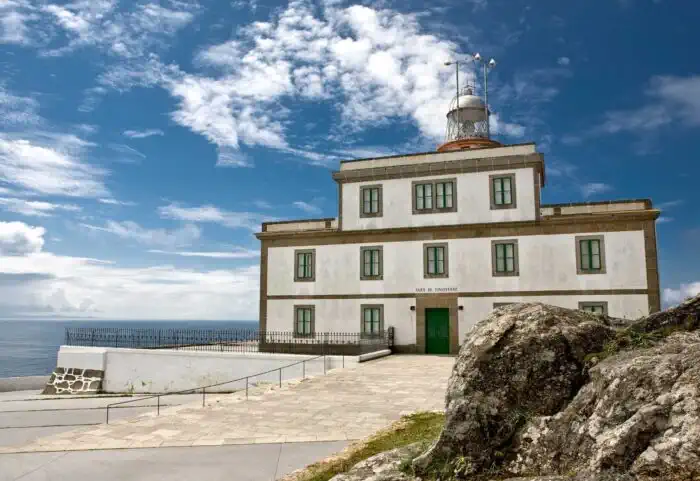
    We follow strong ascents and descents and we face the final stretch, passing close to the Piedras Santas de Finisterre in its Monte Facho, whose panoramic view of the Lighthouse, our goal, is spectacular and exciting, because it turns us into real trasnos after having travelled and enjoyed this unique and singular Way of the Lighthouses.

    To be taken into account.

    This stage is very exciting, because it is the last one and its goal is a magical place, the Cabo Finisterre, and on arrival we will be able to enjoy its famous sunset, so you have to take calmly the route from Playa de Nemiña, especially in the ups and downs of the final stretch, with the certainty that the reward for our effort will be very rewarding.

    Places of interest.

    • Beaches and lighthouses (on the route).

    Gastronomy.

    • Caldeirada of fish with ajada.
    • Grilled razor clams (longueiron).
    • Octopus.
    • Galician Empanada.
  • day 10

    End of the Camino

    After arriving... End of the Camino

Frequently Asked Questions

  • What is on-the-road telephone assistance?

    In your travel documents, you'll find an emergency telephone number where we're accessible while you're on the road. This ensures you'll journey with peace of mind, knowin our team members will assist you with any problems, incidents, or questions you encounter along your Camino de Santiago.

  • What is travel insurance?

    It is the guarantee that you can enjoy your Camino in a safe way. In our trips you already have an insurance included with your trip to be protected during the Camino de Santiago. We will send you the insurance policy along with all the documentation of your trip, so you will have everything you need to enjoy the Camino with peace of mind. Walk without worries!
  • What does the private transfer service consist of?

    We have a taxi service that you can hire whenever you need it. You can hire it, for example, to go from the airport to the start of your Camino, or to go from Santiago to your starting point to pick up your car once you finish the stage.   The price of the transfers will depend on the distance from your point of origin to the destination. If you have any questions about this service do not hesitate to contact us.
  • Where are the accommodations located?

    In your travel documents, you will find the names of the accommodations assigned to you, as well as their contact telephone number and location.   As a general rule, all accommodation are located in the centre of the different towns along the Pilgrims' Route to Santiago de Compostela, without the need to deviate too far from the route. But sometimes, due to lack of availability, it is possible that some accommodation may be a little far from the village or even in neighbouring towns.   For all the accommodations that are at a considerable distance from the route of the Camino, we will provide you with a free taxi service that you can use to get to your accommodation and return to the Camino the next morning.   In any case, these are exceptions that we will inform you at the time of booking.
  • What coverage does the travel insurance have?

    The basic travel insurance included in our packages offers extensive coverage against unforeseen events, ensuring you'll receive guaranteed medical assistance and numerous benefits. You can review the specifics in the General Conditions of Travel Insurance.

  • How do I make a reservation?

    To make a reservation, you can follow these steps:

  • Through our website: Select the route you want and follow the steps indicated in the form. Provide your personal information and that of your companions, choose the type of accommodation, room distribution, meals, transfers, bike rental, etc.
  • By email: If you prefer to make the reservation by email or need a personalized trip, you can send us an email to info@viajecaminodesantiago.com. We will provide you with the necessary information to complete the reservation via email.
  • It is important to note that if the routes or services available on the website do not meet your specific needs, you can request a personalized quote by sending an email to info@viajescaminodesantiago.com.

  • Can I choose the dates I want?

    Yes, you will have total freedom to choose your departure date. However, if you want to do your Camino de Santiago in the months of December, January and February, we recommend that you check availability before making your reservation. At this time of year most accommodation is closed and many services may not be available.
  • What does Camino de Santiago on your own mean?

    In this modality you will do the Camino de Santiago at your own pace and you will only have to worry about choosing the route you like the most, the type of accommodation and your departure date. If you choose this option you will travel alone or with the people that appear in your reservation, and you will have all the services included so that you only have to worry about walking and enjoying the experience.
  • What is luggage transport and how does it work?

    Luggage transport service by default is included in all our trips and it is not necessary to request it. You can enjoy the Camino de Santiago without the burden of carrying your luggage on your back, knowing that your suitcase will be waiting for you at your next accommodation upon your arrival.   Along with your credential, you'll also receive stickers. Cover these stickers with the requested information and stick them in a visible place on your suitcase.   Upon arrival at your accommodation, we suggest asking at the reception where you can leave your luggage. You'll need to leave your luggage at the designated spot early in the morning for our carrier to pick it up. This ensures that when you arrive at your next accommodation, your luggage will already be waiting for you.
  • What services are included in the Camino de Santiago on your own?

    The Camino de Santiago at your own pace includes the following services:

    • Accommodation for resting.
    • Luggage transport so you do not have to carry it.
    • An informative dossier with details about the stages.
    • The Pilgrim Passport.
    • A 24-hour assistance phone number available at all times.
    • A travel insurance for your peace of mind.

    Additionally, you have the option to customize your experience by adding extra services:

    • You can choose whether to include breakfast or half board.
    • We offer private transfers to take you to the start of the stage from Santiago de Compostela, from its airport, or any other point.
    • We can take your vehicle from the starting point to the end of your Camino.
    • You have the option to book extra nights at the beginning or end of your trip.

    Unlike group trips, we do not include a guide or support vehicle between stages. However, we provide you with a 24-hour assistance phone number to resolve any issues or unforeseen events you may encounter on your journey.

Lighthouse Route from Malpica to Finisterre

Reviews from our users
contact
contact
Request a quote
Organised Trips
Rafael Sánchez López - Kaufmännischer Leiter - Agentur Viajes Camino de Santiago