


Cíes Islands: complete guide to visiting them
07 January, 2026
Discover the Cíes Islands, a natural paradise in Galicia known for its white sandy beaches, crystal-clear waters, and protected environment. The article provides practical information for visiting them, what to see, and how to organize your excursion to one of the most spectacular destinations in Spain.

The Cíes Islands are one of those places that, when you visit, you understand why Galicia is considered one of the most spectacular natural destinations in Europe. Located in the Ría de Vigo, they are part of the Maritime-Terrestrial National Park of the Atlantic Islands, along with Ons, Sálvora, and Cortegada. This small archipelago, composed of the islands of Monteagudo, O Faro, and San Martiño, is known for its white sandy beaches, crystal-clear waters, and an almost untouched environment. A place where time seems to stand still and where nature is the true protagonist. If you are thinking of taking a special getaway in Galicia, or even extending your experience after walking the Camino de Santiago, the Cíes Islands are undoubtedly one of the best decisions you can make.
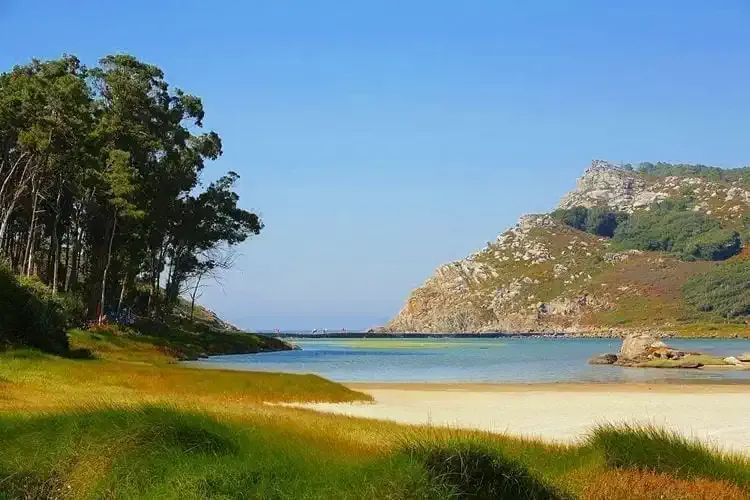
Lago dos Nenos in the Cíes Islands
Where the Cíes Islands are located
The Cíes Islands are located off the coast of Vigo, in the province of Pontevedra. They act as a natural barrier between the Atlantic Ocean and the estuary, which explains the calmness of their inland waters and the strength of the sea on their outer face.
This combination creates a unique landscape: on one side, tranquil beaches perfect for swimming; on the other, wild cliffs with open views of the Atlantic.
How to visit the Cíes Islands step by step
Visiting the Cíes Islands is not as simple as just taking a boat. As it is a protected area, it is necessary to follow a prior process. First, you must request a permit on the official website of the Xunta de Galicia. This procedure is free but mandatory, and it limits daily access to a maximum of 2,200 people. Once you have obtained the permit, you can purchase the ferry ticket from Vigo, Cangas, or Baiona. It is important to do this in this order, as the shipping companies will ask for the authorization code before issuing the ticket.
Finally, it is advisable to decide whether you want to make a one-day visit or spend the night at the campsite, which will allow you to enjoy the islands with much more tranquility, especially at dawn and dusk.
How to get to the Cíes Islands
Access to the Cíes Islands is exclusively by sea. The most common option is the ferry from Vigo, with an approximate duration of between 40 and 50 minutes. There are also departures from Cangas and Baiona, especially during the high season. Another alternative is to arrive by private boat, although in this case, it is necessary to request a specific anchoring permit.
During the spring and summer months, there are more frequent boat services, while in the low season, access is reduced and usually conditioned to authorized organized groups.
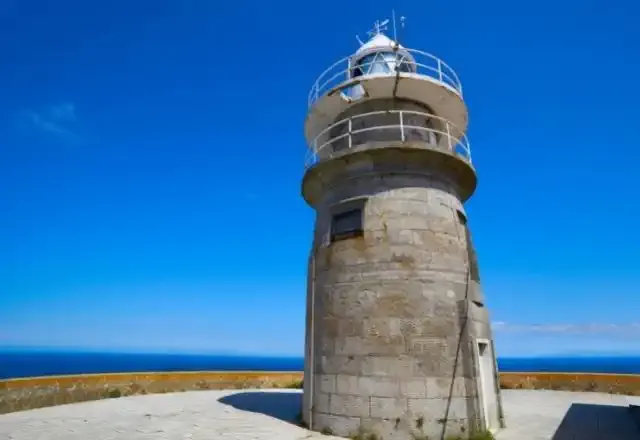
Cíes Lighthouse
Permits to visit the Cíes Islands
Access control is one of the keys to preserving this natural environment. Therefore, before planning your visit, it is essential to request authorization on the official website. This permit is personal and nominative, and can be requested up to a maximum of 45 days in advance. Multiple people can be included in the same application, which facilitates organization if you are traveling in a group.
Where to sleep in the Cíes Islands
Spending the night in the Cíes Islands is a completely different experience from visiting them during the day. When the last ferries leave, the atmosphere changes completely: silence, nature, and a feeling of total disconnection.
However, it should be noted that there are no hotels or traditional accommodations. The only option is the official camping site, where you can bring your own tent or rent one that is already set up.
Waking up in this environment, with the sound of the sea and without crowds, is one of the great privileges that this destination offers.
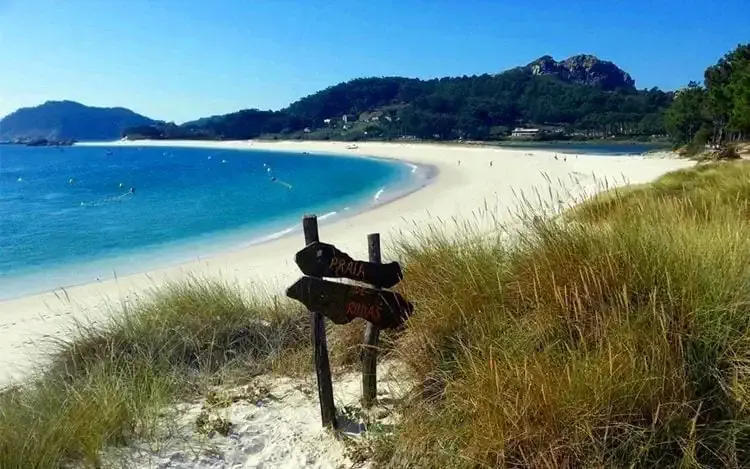
Rodas Beach in the Cíes Islands
What to see and do in the Cíes Islands
In addition to simply admiring their natural beauty, there are various beach and active tourism plans to spend the day on the Cíes Islands.
Beaches
The Cíes Islands are known, above all, for their beaches. Sandy shores of fine white sand and transparent waters that have little to envy to much more distant destinations.
- Rodas Beach: the great icon of the archipelago. It connects two islands forming a kind of crescent and has been internationally recognized as one of the best beaches in the world.
- Figueiras Beach: quieter and wilder, ideal for those seeking a more relaxed atmosphere.
- Playa de San Martiño: the most isolated and least crowded, accessible only by private boat.
Hiking
Beyond the beaches, exploring the islands on foot is one of the best ways to discover their essence. The trails are perfectly marked and allow access to spectacular viewpoints.
- Monte Faro Route (7.5 km): the most complete, with panoramic views and access to the lighthouse.
- Alto do Príncipe Route (3.5 km): short but very scenic, ideal if you have little time.
- Faro da Porta Route (5.2 km): simple and with less traffic.
- Monteagudo Route (5.6 km): perfect for birdwatching and cliffs.
Other Activities
In addition to walking and enjoying its beaches, the Cíes Islands offer unique experiences linked to their natural environment. The low light pollution has turned the archipelago into a Starlight destination, ideal for observing the night sky. It is also possible to engage in water activities such as snorkeling, kayaking, or diving, discovering the richness of the marine life in the national park.
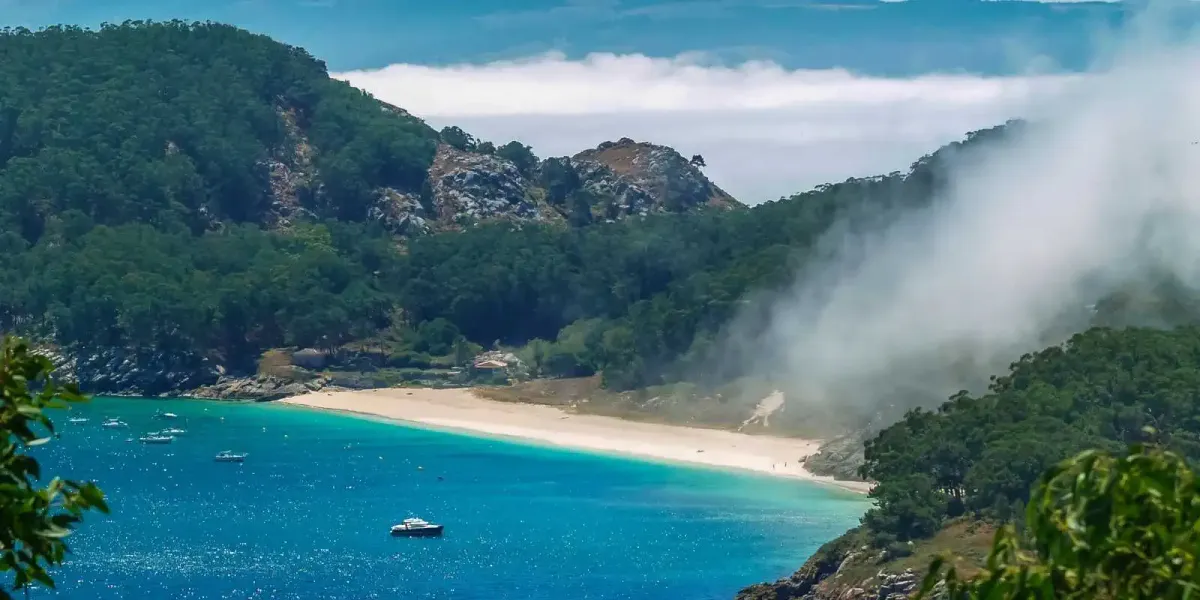
Hiking in the Cíes Islands
Best Time to Visit the Cíes Islands
The best time to visit the Cíes Islands largely depends on the type of experience you are seeking. During the summer months, especially between June and September, you will find a more stable climate, pleasant temperatures, and all services operational. It is the most comfortable option, although also the most crowded. If you prefer a quieter experience, spring is an excellent alternative. Nature is in full bloom, there are fewer visitors, and temperatures remain pleasant for walking and exploring.
In contrast, during winter, access is very limited and weather conditions can hinder visits, making it generally not the most recommended option.
Tips for Visiting the Cíes Islands
To make the most of your visit, it is important to consider some practical aspects. As it is a protected area, human intervention is minimal, which means you should be prepared. It is advisable to bring water and some food, especially if you plan to spend the whole day. It is also important to use sun protection, as sun exposure can be intense, even on cloudy days.
Another key aspect is respect for the environment. There are no bins on the islands, so each visitor must take their waste with them. This small gesture is essential to preserve this natural paradise.
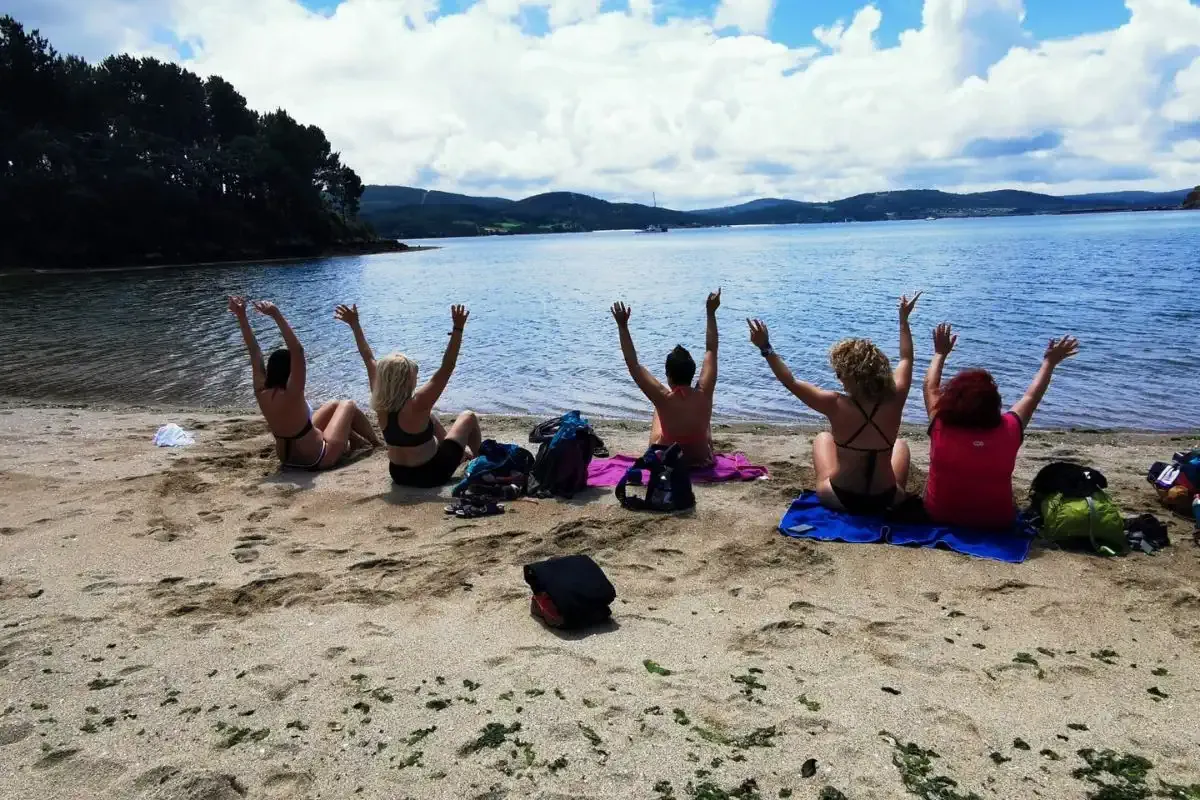
Some pilgrims resting on a beach after their Camino
After the Camino de Santiago… the perfect rest
After completing the Camino de Santiago, many pilgrims feel the need to slow down and enjoy a few days of rest. In this sense, the Cíes Islands represent the perfect contrast: nature, calm, and a total disconnection from daily life. It is an ideal way to close the Camino experience, swapping trails for beaches and kilometers for moments of tranquility by the sea. If you are thinking of organizing your Camino, you can plan your personalized Camino here.
The Cíes Islands are not just a beautiful destination; they are an experience. A place to disconnect, breathe, and reconnect with nature in its purest form. Whether as an independent getaway or as a complement to your trip through Galicia, visiting this archipelago is a decision that is unlikely to disappoint. Its landscapes, tranquility, and authenticity make every moment there special. If you are organizing your trip, our advice is clear: plan it in advance, choose the right time, and if possible, stay at least one night. It is the best way to discover all that the Cíes Islands have to offer.