


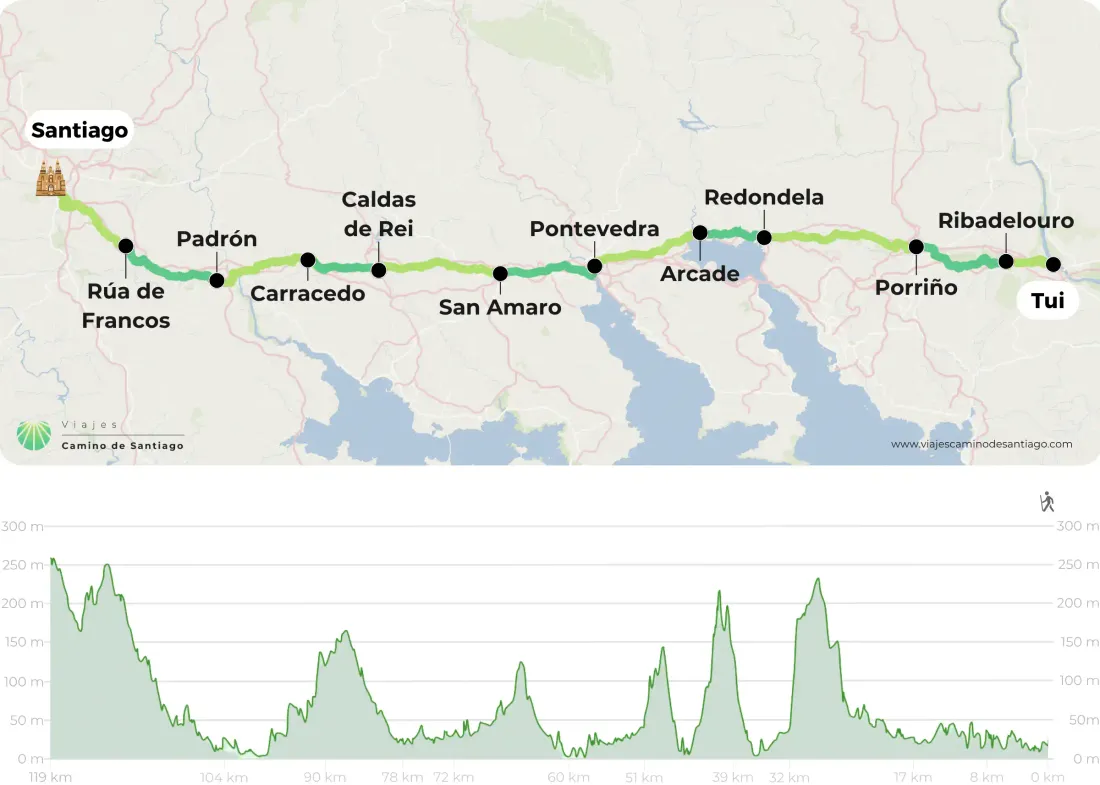
The Camino de Santiago at your own pace, no pressure: the same triumphant arrival in Santiago, but in short, gentle legs. Starting from Tui, you'll cover 119 kilometres well spread out —Ponte das Febres, O Porriño, Redondela, Arcade, Pontevedra, Caldas de Reis— to savour each day calmly, ideal if you prefer to walk unhurried or it's your first time.
You enjoy the walk; we sort out the rest: accommodation every night, your pilgrim's credential, full documentation and travel insurance, from 975 €. If you want your days to be gentler still, add the daily luggage transfer.
The Camino de Santiago in short stages from Tui, a trip organised by Viajes Camino de Santiago®.
Services
Included in all our routes
- Accommodation
13 days / 12 nights
- 13 days / 12 nights accommodation
- Complete documentation (Dossier and material for the Camino)
- On-the-road emergency telephone assistance
- Pilgrim's Credential
- Travel insurance
Optional
- Luggage transfer during the stages. (1 piece per person max 15 kgs)
- Supplement for single room
- Extra night in Santiago de Compostela
- Breakfast
- MP (Breakfast and dinner)
- Cancellation Insurance
Accommodations
- Most popular
Private comfort (Guesthouses, rural houses and small hotels)
975 €
The perfect balance between charm and comfort. Guesthouses, B&Bs and country houses await you in the villages along the Camino with private rooms, private bathrooms, TV, and daily cleaning service. Simple and welcoming, they are the ideal place to truly rest and enjoy the peaceful rural essence that only the Camino can offer.
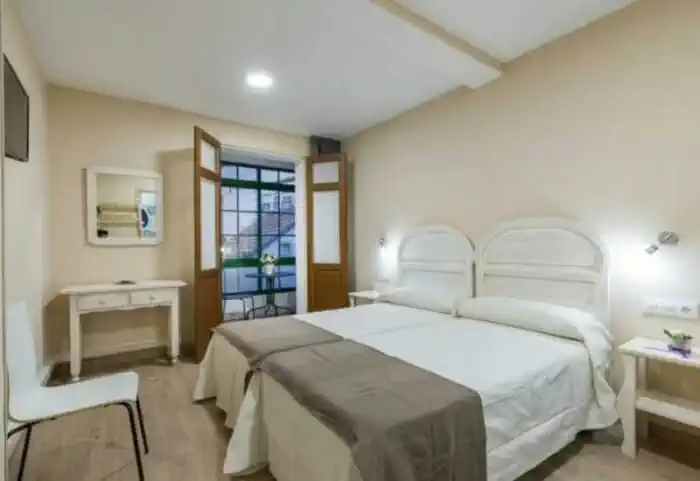
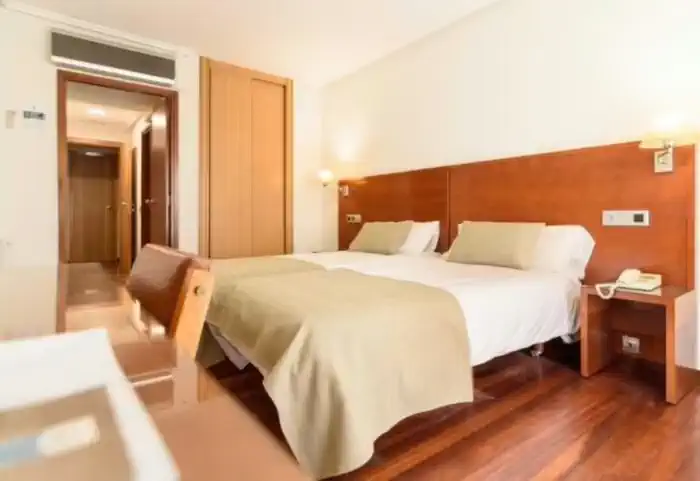
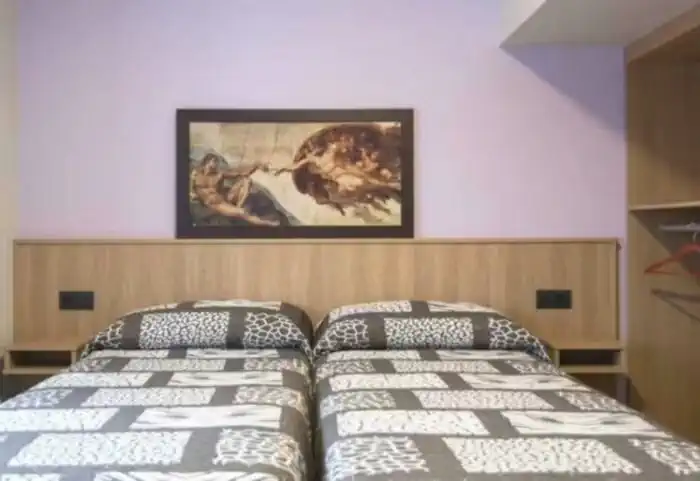
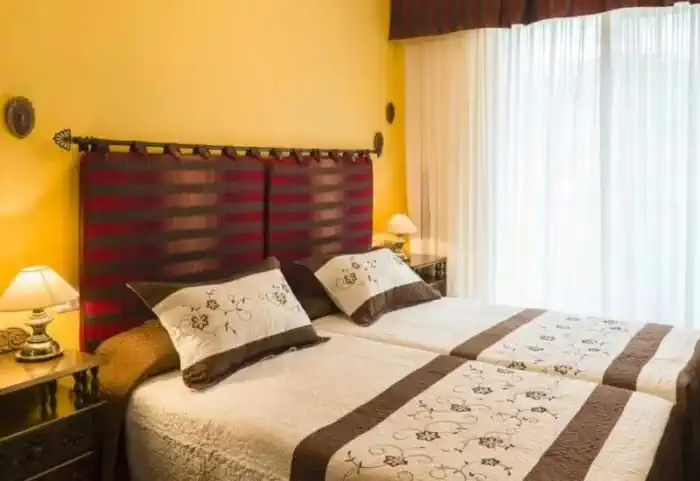
Photos


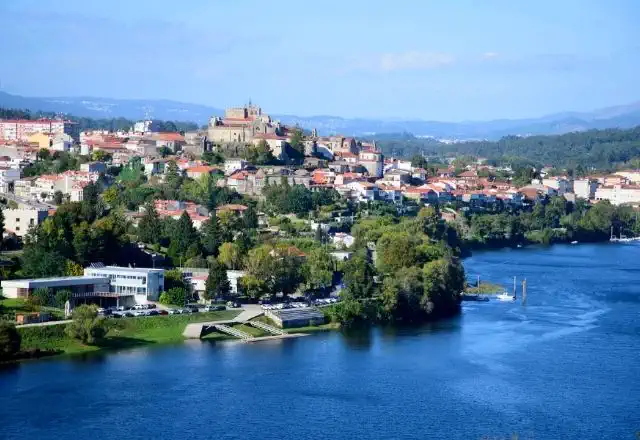
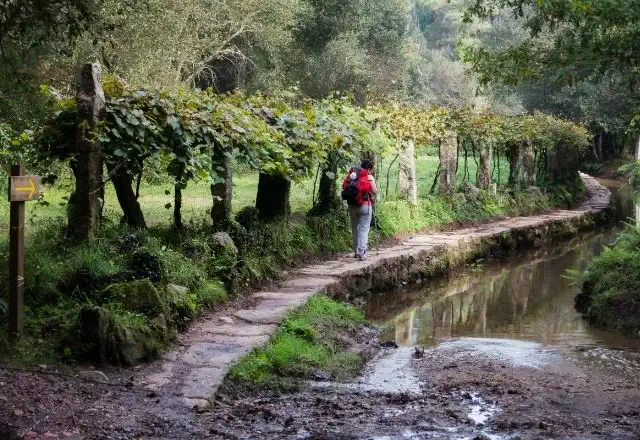
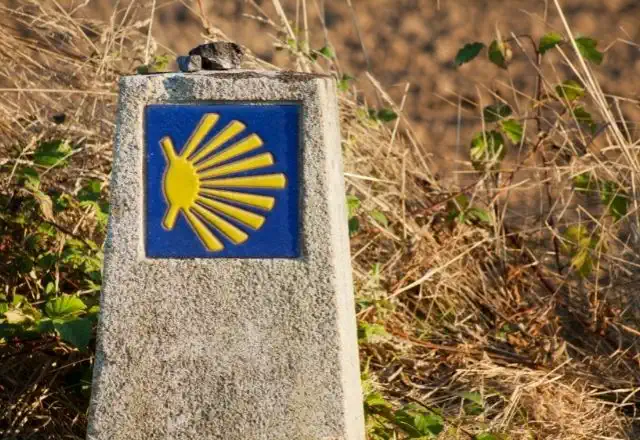
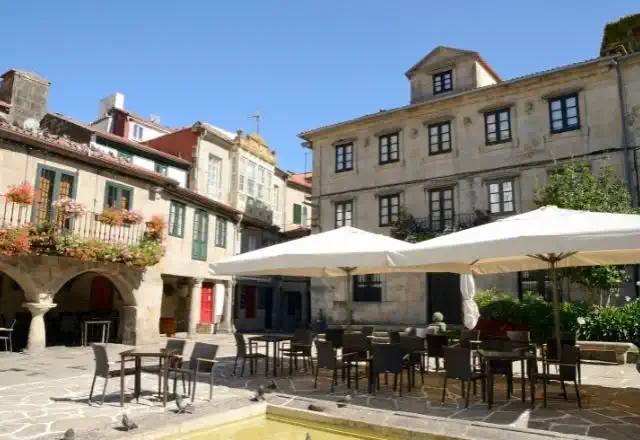
Map of the Portuguese Way in short stages
Stages
- day 1
Arrival at Tui
- day 2
Stage 1. Tui - Ponte das Febres (8 km)
Tui is now behind you, with the Romanesque and Gothic styles of its Santa María cathedral. Before leaving the city, the Camino passes the San Bartolomeu park and its pre-Romanesque church, then heads towards the emblematic San Telmo bridge, the Ponte das Febres. It's a very short stage, so there's still time to visit anything you left unseen in the municipal capital.
- day 3
Stage 2. Ponte das Febres - O Porriño (9 km)
Ponte das Febres is behind you as you plunge into the lush forest of A Ribeira, following the river Louro. In the distance you'll see the great pink granite quarries that made the area famous, exported today as far as Japan and the United States. You finish in O Porriño, homeland of the architect Antonio Palacios: take a good look at his Municipal Palace or the beautiful Farmacia Palacios before you rest.
- day 4
Stage 3. O Porriño - Redondela (15 km)
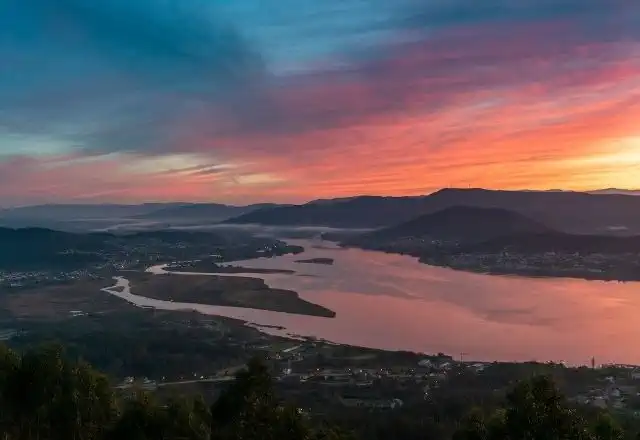
One of the stages with the best views: you climb from O Porriño up to the chapel of Santiaguiño, in Mos, an exceptional viewpoint over the Ría de Vigo, the Cíes Islands, the island of San Simón and the Rande bridge — the sea that inspired Jules Verne. You finish in Redondela, with a very long history; and if the weather's on your side, a swim at Cesantes beach is well worth it.
- day 5
Stage 4. Redondela - Arcade (7 km)
A very short, flat stage, following the coastline to Arcade, the oyster capital. What better way to recharge than with a hearty serving of local produce and, if the weather's kind, some time on the estuary beaches? And of course, pair it with a glass of albariño, the best white wine in the area.
- day 6
Stage 5. Arcade - Pontevedra (12 km)
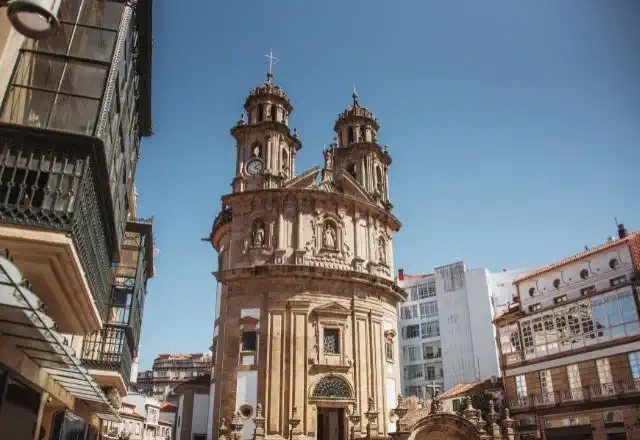
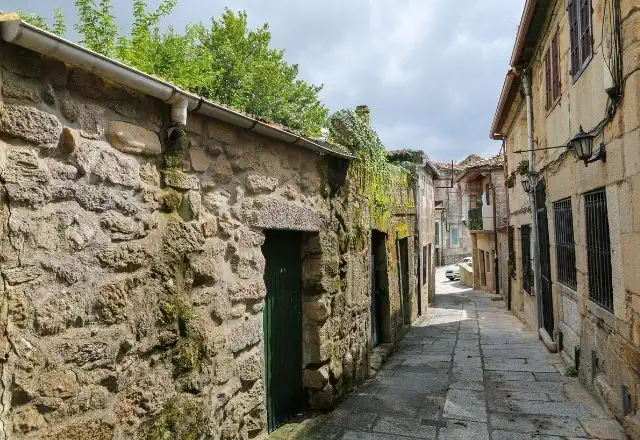
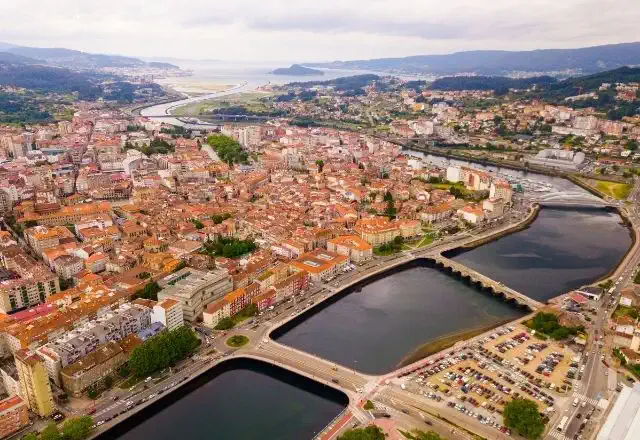
You leave Arcade crossing the historic Pontesampaio bridge, the site of the battle against Napoleon's troops in 1809. Afterwards you walk the evocative Roman road of the Brea Vella da Canicouva, with its great stone slabs, through woods and villages. The stage ends in Pontevedra, for many the prettiest city in Galicia: lose yourself in its cobbled streets and squares before resting.
- day 7
Stage 6. Pontevedra - San Amaro (9 km)
You cross the river Lérez and leave Pontevedra behind on your way to the Marismas de Alba, a large 80-hectare wetland home to hundreds of plants and more than 120 bird species: stop at its observation point. The rest is a quiet stretch, though with several crossings and level crossings where it pays to stay alert, until you reach the end of the stage at San Amaro.
- day 8
Stage 7. San Amaro - Caldas de Reis (12 km)
Leaving San Amaro, watch out for stretches beside roads and crossings. Once in Briallos, it's worth a half-kilometre detour to see the Cascadas do Barosa, with its sixty-metre drop and fourteen terraced mills. The stage ends in Caldas de Reis, one of Galicia's great thermal towns: take a stroll through its botanical garden and relax on a terrace listening to the river.
- day 9
Stage 8. Caldas de Reis - Carracedo (6 km)
Just a few kilometres separate Caldas de Reis from Carracedo. You say goodbye to the thermal town and head into the Bermaña valley, through oak groves, cornfields and stone crosses. A gentle climb brings you to Santa Mariña de Carracedo, a tiny village with a church, rectory house and granary. Since the day is short, make the most of it to visit the Fervenza de Segade, a beautiful waterfall with natural pools.
- day 10
Stage 9. Carracedo - Padrón (12 km)
You leave behind the last kilometres in Pontevedra province, through woods with water mills and tiny villages, until you cross the old Roman bridge at Pontecesures. On the other side awaits Padrón, birthplace of Rosalía de Castro: visit her House-Museum and, of course, the legendary Pedrón stone where the Apostle's boat was moored. Round off the day with some Padrón peppers… fair warning, a few of them bite!
- day 11
Stage 10. Padrón - Rúa de Francos (14 km)
You cross the river Sar to Iria Flavia, an old Roman city and homeland of Nobel laureate Camilo José Cela, and enter the traditional villages of the Sar valley. At the sanctuary of A Escravitude, magnificent views of the lands of Amaía await you. The final stretch, a little more demanding, brings you to Rúa de Francos, next to the legendary Castro Lupario of the fabled Queen Lupa. (Watch out for an unguarded level crossing.)
- day 12
Stage 11. Rúa de Francos - Santiago de Compostela (15 km)
The last day of your adventure! Rise early to make the most of the arrival: 15 kilometres that fly by amid nerves and excitement, crossing Teo and Ames. And suddenly, your triumphant entrance into the Plaza del Obradoiro, a moment you'll never forget. You've reached Santiago! Collect your Compostela very close to the square and enjoy the Galician capital: its culture, its architecture and its food.
- day 13
End of the trip
After your last night, you check out of your accommodation and your trip comes to an end.
Related Trips
 8 days / 7 nights
 7 days / 6 nights
 7 days / 6 nights
 8 days / 7 nights
 7 days / 6 nights
 13 days / 12 nights
Frequently Asked Questions
-
How busy is the Portuguese Way?
The Portuguese Way has become increasingly popular in recent years, positioning itself as the second most traveled route after the French Way. Although it does not reach the same level of traffic as the French route, it is still a busy option, especially from Porto or Tui. At these points, you will find a constant flow of pilgrims, especially during the high season (spring and summer). One of the reasons for its growing popularity is that it is an accessible route with less physically demanding stages. In addition, it offers excellent infrastructure for pilgrims, with numerous hostels, hotels and services at each stage. -
Which Camino is easier, the Portuguese or the French?
If you are wondering which route is easier between the Portuguese Way and the French Way, the answer depends on several factors. However, in general, the Portuguese Way is considered more accessible for most pilgrims. The Portuguese Way has flatter and gentler terrain, especially on its most popular stretch from Porto to Santiago de Compostela. The stages are less demanding and the climate is more moderate, an ideal option for those looking for a less physically challenging route. On the other hand, the French Way, although more famous and with a highly developed infrastructure, presents stages with greater unevenness, especially in the first sections that cross the Pyrenees and some mountainous areas in the provinces of León and Galicia. Although it is an incredibly popular route full of history, the physical effort is greater, so it requires better physical preparation. -
What are the most beautiful stages of the Portuguese Way?
Some stages of the Portuguese Way stand out for their natural beauty, historical richness and cultural significance. Below, I present a selection of the most beautiful stages of the Portuguese Way:- Tui - O Porriño
- Pontevedra - Caldas de Reis
- Valença do Minho - Tui
- Redondela - Pontevedra
- Caldas de Reis - Padrón
- Padrón - Santiago de Compostela
- Natural Landscapes: This stage crosses lush Galician forests, trails surrounded by vineyards and agricultural fields. The tranquility and greenery of the surroundings provide a comforting experience deeply connected to nature.
- Medieval Rivers and Bridges: Along the way, pilgrims cross crystalline rivers on ancient stone bridges, such as the famous Lérez River Bridge, which adds a historical and picturesque touch to the journey.
- Galician Villages: The route passes through small villages that preserve the traditional Galician essence, where pilgrims can enjoy the local hospitality and the rich gastronomy of the region.
- Hot Springs in Caldas de Reis: The stage ends in Caldas de Reis, known for its natural hot springs, which have attracted visitors since Roman times. It is the perfect place to relax after a day of walking.
-
Does the Portuguese Way from Tui entitle you to the Compostela?
Yes. From Tui to Santiago it is between 115 and 119 km depending on how the stages are split (115 km in 5 stages, 118 km in 6 and 119 km in short stages), more than the 100 km minimum on foot that the Pilgrim's Office requires for the Compostela. Tui is the equivalent of Sarria on the Portuguese Way: the most popular starting point that meets the requirement. -
What can you do on the short stage from Caldas de Reis to Carracedo?
It is only 6 km, so you have almost the whole day. We recommend the riverside walk to the Fervenza de Segade, a waterfall with natural pools next to the ruins of an old small power station. You can also finish exploring Caldas de Reis before heading up the Bermaña valley, among oak woods and stone crosses, to Santa Mariña de Carracedo.
-
What is there to see in O Porriño on the Portuguese Way from Tui?
O Porriño is the home town of the architect Antonio Palacios. Look out for its Town Hall, from 1924, the Red de San Luis bandstand, the Cristo fountain and the Farmacia Palacios, designed in 1912 for his brother. Along the way, from the A Ribeira woods, you will see the pink granite quarries that made the area famous, a granite exported as far as Japan or the United States.
-
What is the Portuguese Way in short stages and who is it for?
It is the same Portuguese Way from Tui to Santiago, but split into 11 stages over 119 km: none is longer than 15 km and several are between 6 and 9 km. It is ideal if it is your first time, if you prefer to walk at a relaxed pace or if you want time every afternoon to get to know each town calmly. It includes 12 nights' accommodation, the pilgrim credential, documentation and travel insurance.
-
Are there any dangerous sections on the Portuguese Way from Tui?
It is not dangerous, but some sections need care. Between Pontevedra and Caldas de Reis the Way runs alongside roads, with many junctions and level crossings. On reaching San Amaro you cross a rustic footbridge to a level crossing without barriers, and there is another one on the Padrón–Rúa de Francos stage. Take extra care at these points.
-
What is the Castro Lupario you pass before reaching Santiago?
It is the mythical place where, according to legend, Queen Lupa lived, who received and deceived the Apostle's disciples when they reached Galicia. It is near Rúa de Francos, the end of the penultimate stage of your Portuguese Way in short stages. That section has some small climbs at the end, but the day is short: 14 km from Padrón.
-
What is the longest stage of the Portuguese Way in short stages?
There are two of 15 km: O Porriño–Redondela and Rúa de Francos–Santiago. The first has the toughest climb of the day, up to the chapel of Santiaguiño in Mos, but rewards you with outstanding views of the Vigo estuary, the Cíes Islands, the island of San Simón and the Rande bridge. The other is the arrival at the Obradoiro, and the excitement makes it fly by. The shortest is Caldas de Reis–Carracedo, just 6 km.
Portuguese Way in short stages
From 975 €

Reviews
Marina
Tomás de la Calle
Mari y Jseús
menchu
Pedro
Claudio
antia gm