


What to see in the Cathedral of Santiago
14 October, 2026
A guide to visiting the Cathedral of Santiago de Compostela: opening hours and access, Pilgrim's Mass, the Museum, Gelmírez Palace, the Portico of Glory, the rooftops and the night visit, and what changes while the restoration works last.

The Cathedral of Santiago de Compostela is the goal of every pilgrim and one of the most emblematic places in Spain, both for its religious importance and for its historical and artistic richness. Every year, hundreds of thousands of people reach it along the routes of the Camino de Santiago or as visitors to the city.
But the Cathedral is not just the church: around it there is a museum, a medieval palace, the Portico of Glory and rooftops you can walk along. In this guide we tell you what to see, how to plan your visit and what to keep in mind, both by day and by night.
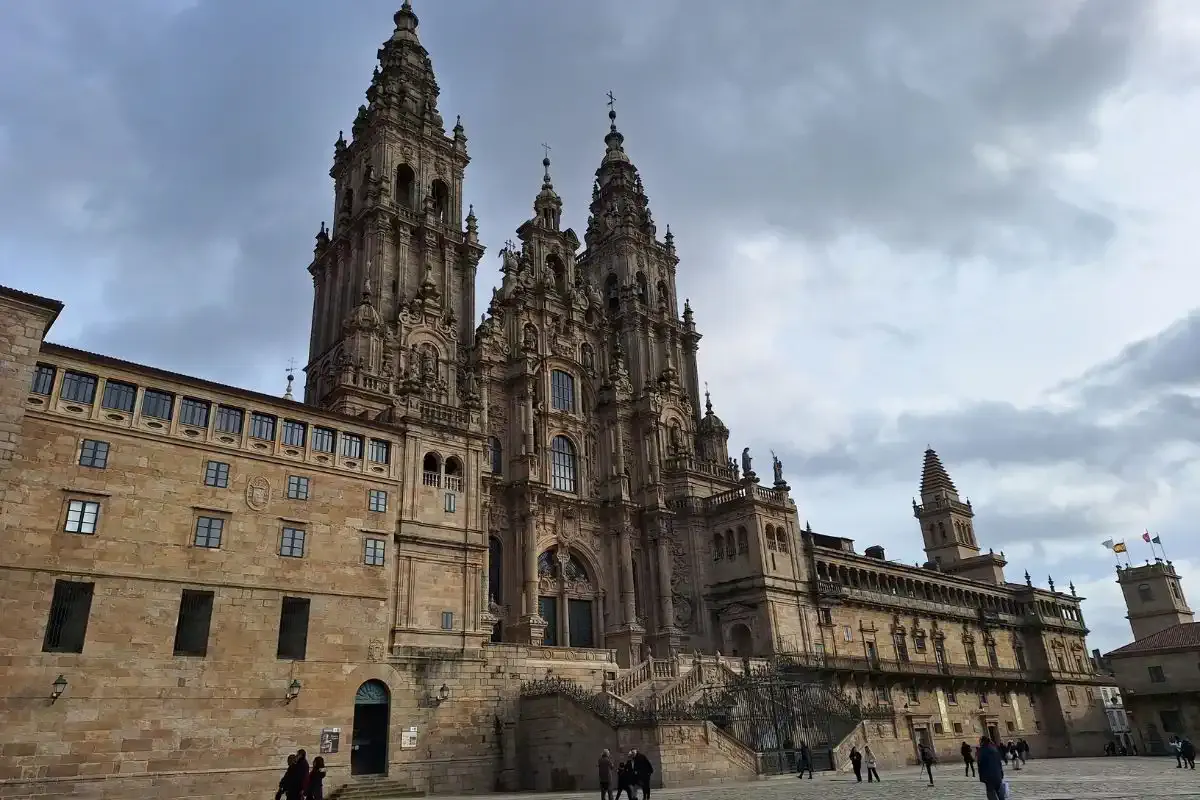
The Obradoiro façade, the best-known image of the Cathedral of Santiago
Before you go: works in the main chapel and Masses at San Agustín
The Cathedral's restoration works change a few things. Because of the work in the main chapel, from 16 October 2026 until further notice, the Pilgrim's Masses at 9:30, 12:00 and 19:30 are held in the nearby Church of San Agustín. The 7:30 Mass remains in the Cathedral, in the Chapel of Communion.
In addition, the Botafumeiro is temporarily out of action because of the works. What does not change is the visit: the church remains open during its usual hours. As these details may change, check the Cathedral's official website before your trip.
Visiting the Cathedral of Santiago
The Cathedral, declared a UNESCO World Heritage Site together with the old town, is one of the great works of European Romanesque, although with important Baroque elements resulting from its extensions and renovations. It is a cathedral because it is the seat of the archbishop, and it also holds the title of basilica. According to tradition, it holds the relics of the Apostle Santiago.
The Obradoiro façade, Baroque in style and facing west, is the backdrop to the arrival photo of almost every pilgrim. Its main doors stay closed and open only on very special occasions.
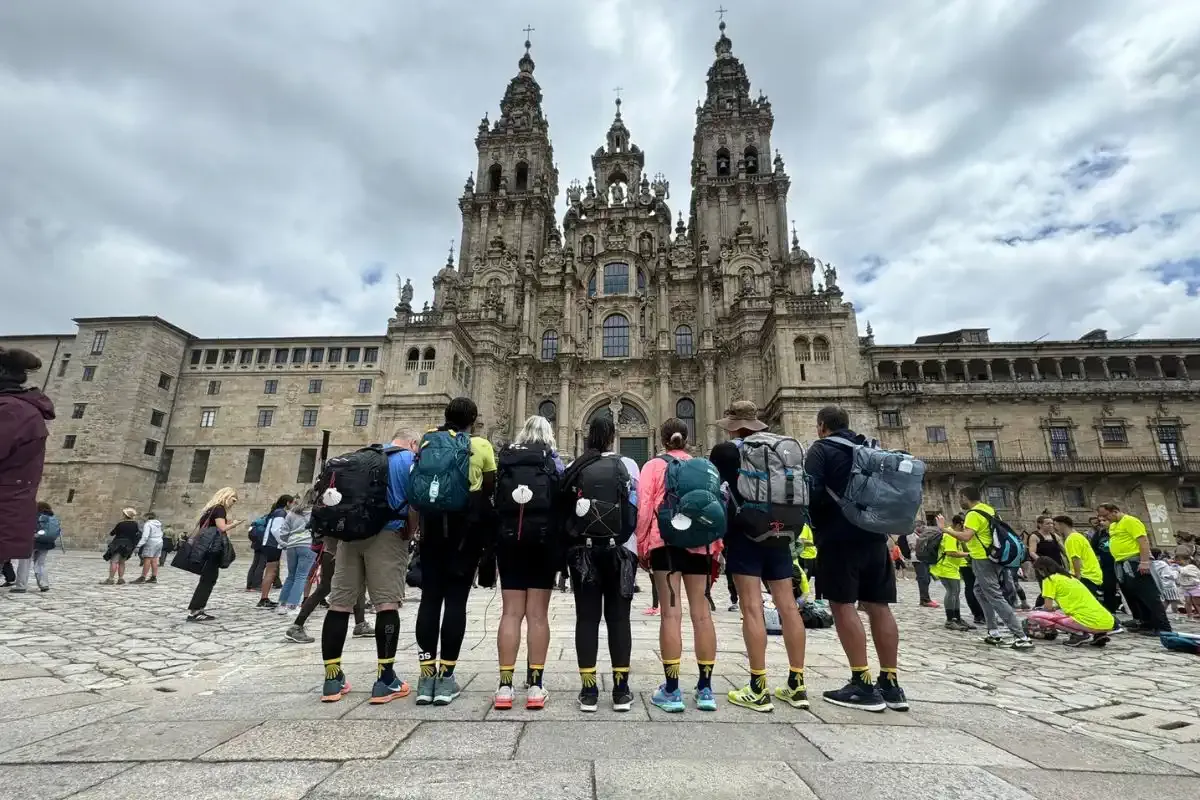
Arriving at the Obradoiro square, a moment no pilgrim forgets
Opening hours and access
- Hours: every day, from 7:00 to 21:00. In summer, it closes at 20:30 on Saturdays.
- Admission: free, through the Platerías door on the south façade.
- Backpacks: backpacks are not allowed inside for security reasons, so it is best to leave yours beforehand at your accommodation or in a luggage locker.
- Services: sightseeing visits are not allowed during Mass.
What to see inside
Inside you can visit the crypt with the tomb of the Apostle, give the embrace to the Apostle and explore its many chapels.
Somewhat less noticed, but very important, is the Holy Door, which faces the Quintana square and, on the inside, is in the ambulatory behind the high altar. It opens only in a Holy Year, although you can see it from the inside without any problem. The next opening will be on 31 December 2026, at the start of the Holy Year 2027.
Masses in the Cathedral: the Pilgrim's Mass
Under normal conditions, the Pilgrim's Mass is held every day at 7:30, 9:30, 12:00 and 19:30. Remember that, for as long as the works in the main chapel last, three of them are held in the Church of San Agustín, as we explained above.
The busiest Masses tend to be those at 12:00 and 19:30, so we recommend you arrive early to get a good spot.
The Botafumeiro usually swings on major solemnities and when a pilgrimage group requests it, never with a guarantee. Because of the works, it is temporarily stopped until further notice.

The Botafumeiro, inside the Cathedral of Santiago
Visiting the Cathedral Museum
The Cathedral Museum is one of the most complete museums in Santiago de Compostela. It brings together a large collection of sacred art, goldwork and liturgical objects linked to the history of the church, and it occupies spaces such as the cloister, which is worth the visit all by itself.
It opens every day from 10:00 to 20:00 (the ticket offices close half an hour earlier) and the ticket offices are in the Obradoiro square. It closes on certain set days, such as 1 and 6 January, 25 July and 25 December, and on 24 and 31 December the last entry is at 14:00.
There are different ticket options: from the permanent collection to a full visit that adds the rooftops, the Portico of Glory with an audio guide, the Gelmírez Palace and other spaces. With your ticket you can see the free-access spaces on the same day or within the seven following days. Inside the museum, photos are not allowed and neither are large bags.

One of the rooms of the Cathedral Museum of Santiago
Among the museum's highlights:
- Permanent collection: works ranging from the Middle Ages to the present day, with medieval sculpture, painting and goldwork.
- Cloister: one of the quietest and most beautiful corners of the Cathedral. Here you can find old bells from the church and the Fons Mirabilis fountain, which originally stood outside, next to the north door, on what is now the Azabachería façade.
- Treasury and Chapel of Relics: chalices, reliquaries and liturgical vestments of great value. The relics of another Santiago, James the Less, are also kept here.
Gelmírez Palace
The Gelmírez Palace (or Xelmírez), commissioned by Archbishop Diego Gelmírez in the twelfth century, is one of the best examples of Romanesque civil architecture in Spain. It stands next to the Cathedral, on its north side, and reflects the power of the Church of Compostela in the Middle Ages.
Its sober façade contrasts with the richness of its rooms, such as the great ceremonial hall. Today it is part of the Museum visit and hosts the Espacio Maestro Mateo and temporary exhibitions on the history and art of the Cathedral.
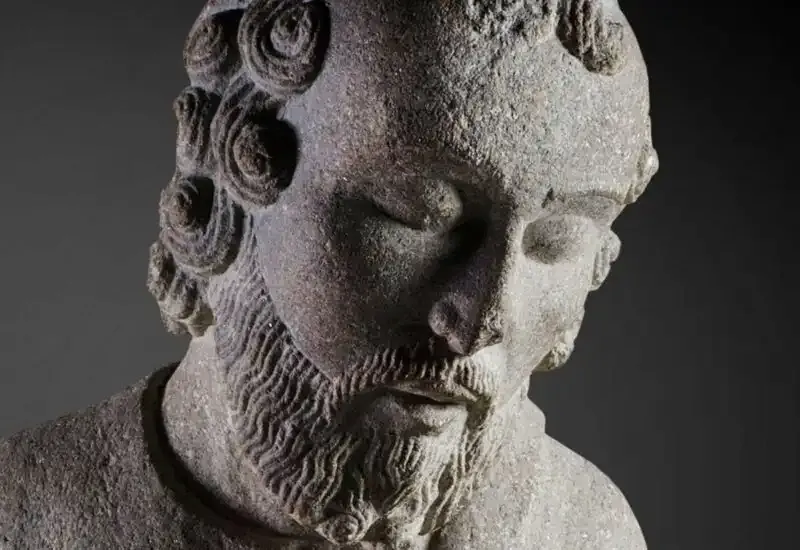
The Cathedral and its museum hold centuries of art in stone
Visiting the Portico of Glory
The Portico of Glory is the great artistic jewel of the Cathedral. This work by Maestro Mateo, from the twelfth century, is one of the peaks of European Romanesque art: its sculptures of apostles, prophets and angels form a grand programme on salvation and the Last Judgement, a true "Bible in stone" for medieval believers.
It was originally the main entrance of the church, opening towards the Obradoiro. When the Baroque façade was built it ended up protected inside, and after its restoration you can admire it again with a good part of its polychromy.
It is visited with a reserved ticket and time slot, on a guided tour or with an audio guide, and your stay is limited to about 25 minutes to protect the work. It is best to be punctual.
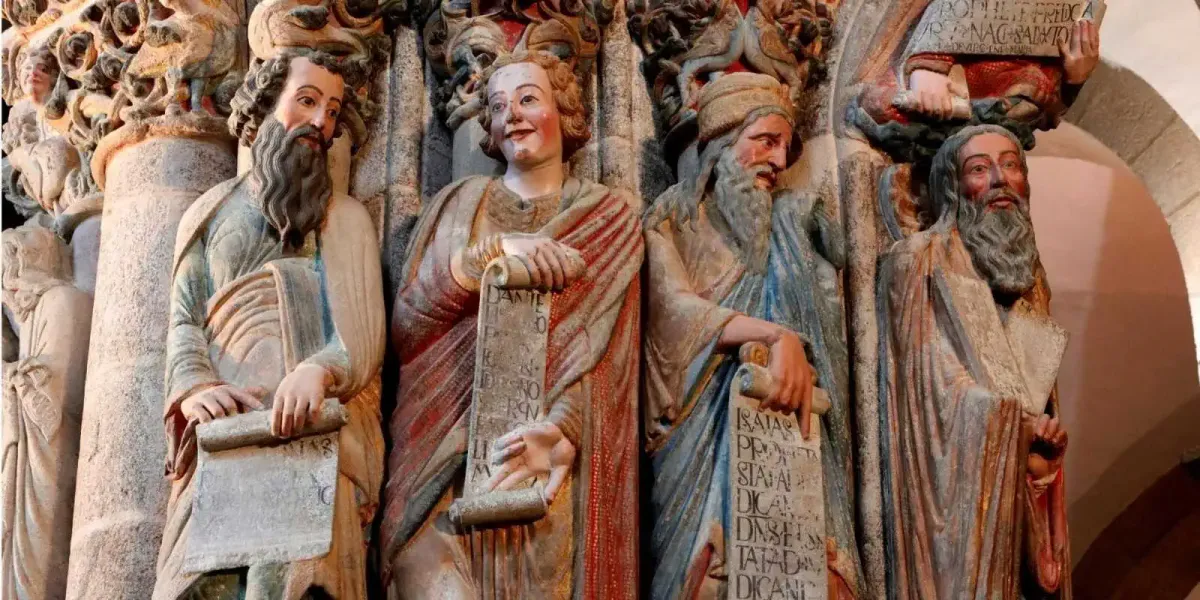
The figures of the Portico of Glory, with their strikingly human expressions
Visiting the rooftops and the Torre de la Carraca
One of the most surprising experiences is walking along the stone rooftops of the Cathedral. The visit is guided, lasts about an hour and involves climbing around 140 steps up the tower's interior staircases, so it is not wheelchair accessible.
The route ends at the top of the Torre de la Carraca, about 72 metres high, with a panoramic view of the city and the hills around it, a perspective few visitors get to know.
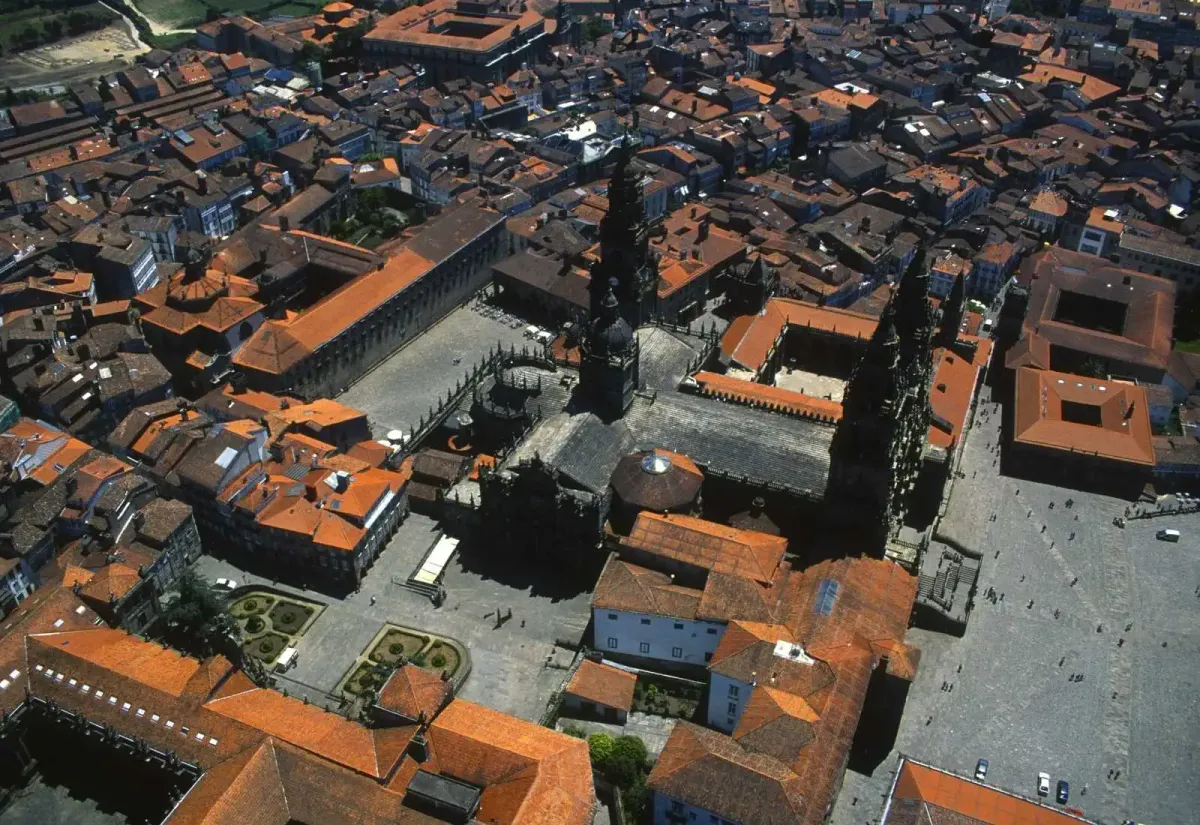
The Cathedral, in the heart of the historic centre of Santiago
Night visit to the Cathedral of Santiago
The night visit is one of the most special experiences in the city. With the church silent and dimly lit, the Cathedral takes on a solemn atmosphere, and the guides tell its story from another perspective, with its lesser-known aspects.
It is a guided visit of about 90 minutes that includes the Portico of Glory and its gallery, as well as other spaces of the church and the museum. There are sessions from Tuesday to Sunday at 22:30, 22:45 and 23:00, normally in Spanish and some in English, and there are no visits on Mondays or on some public holidays. You must arrive at the access point at least 10 minutes early.
Tips for your visit
- Book ahead for the Portico, the rooftops and the night visit, especially in summer and in a Holy Year. Tickets are bought on the Cathedral's official visits website.
- Leave your backpack at your accommodation before going in.
- If you arrive on foot, also set aside some time to collect the Compostela at the Pilgrim's Office.
- To discover other corners of the city, take a look at these hidden secrets of Santiago de Compostela.
The Cathedral of Santiago leaves its mark, not only because of its size and beauty, but because of the stories it holds and the emotion of everyone who has reached it over the centuries. And there is no better finishing touch than getting to know it after walking all the way there. If you feel like calculating the price of your Camino de Santiago, we will help you organise it so you reach the Obradoiro square without having to worry about anything else.