


Eating vegan and vegetarian on the Camino de Santiago: what to expect
24 November, 2026

It is one of the questions we get asked most by pilgrims who don't eat meat or fish: can you walk the Camino de Santiago as a vegan or vegetarian? The short answer is yes. The long answer is that it helps to know what to expect, because having dinner in Santiago is not the same as having dinner in a village of 300 people at the end of a stage. We'll be honest with you about the limitations and share the tricks to help you eat well every day.
What to expect: cities yes, small villages not so much
In the biggest cities on the Camino, such as Santiago, Lugo or Pontevedra, there are vegan and vegetarian restaurants, and more and more bars with some option free of animal products. The villages at the end of each stage, on the other hand, are small, and it is normal for them not to have a fully vegan restaurant.
The Camino runs through rural Galicia, especially in its last kilometres, and that is a land of meat, fish and animal products: eggs, milk, cheese. Even so, things have changed a lot in recent years. With so many international pilgrims, many bars and restaurants are now used to being asked for something without meat, and there are almost always simple dishes to get by with. If you are vegetarian you will find it fairly easy; if you are vegan, you will have to ask a bit more.
If you want to know beforehand what people eat along the route, we tell you in our post about food on the Camino de Santiago.
Breakfasts
Breakfast is the easiest meal. In almost any bar on the Camino you can ask for:
- Toast with tomato and olive oil, the classic that never fails.
- Freshly squeezed orange juice and fruit.
- Coffee or tea with plant-based milk: more and more bars have soy or oat drink, although small villages don't always. If you can't do without it, carry a small carton in your backpack.
Watch out for pastries, because they almost always contain butter or egg. If you are vegetarian, the tortilla de patatas (Spanish potato omelette) is another typical breakfast that you will find everywhere.
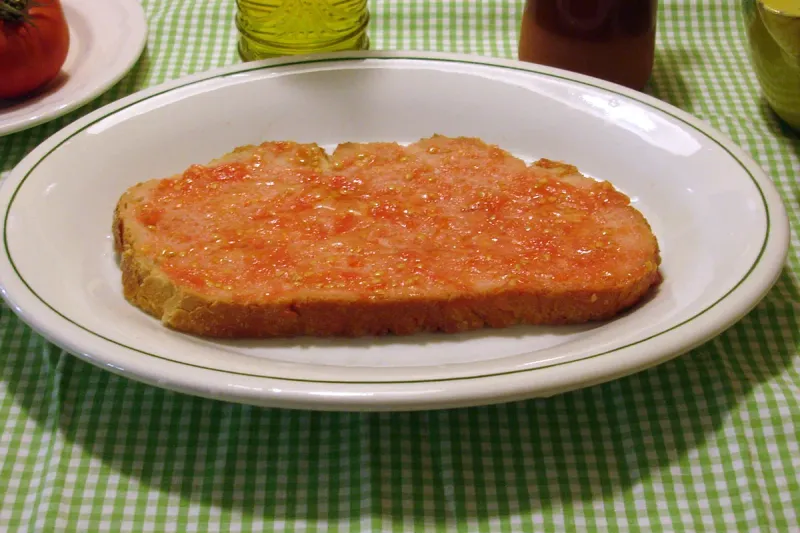
Toast with tomato and oil is the easiest vegan breakfast to find in any bar on the Camino.
Lunches and dinners: the pilgrim's menu
In most villages you will have lunch or dinner with the pilgrim's menu: a first course, a second course, dessert, bread and a drink at a good price. Many first courses are vegetarian or can be adapted without any problem:
- Salads: ask them to leave out the tuna, egg or cheese if you don't eat them.
- Pimientos de Padrón, the great Galician classic, fried in oil and sprinkled with salt.
- Grilled or sautéed vegetables, potatoes and rice.
- Soups, creamed soups and legumes, as long as you ask how they are made.
The hardest part is usually the second course, which is almost always meat or fish. Many vegan pilgrims order two first courses, or a first course and a side of vegetables or potatoes. If you explain it kindly, most places won't object.
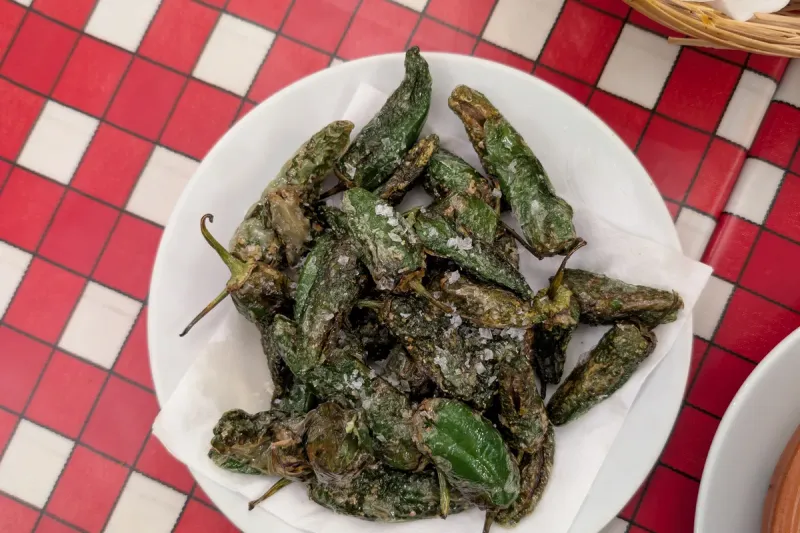
Pimientos de Padrón are a very Galician vegan dish that you will find in almost every bar.
Dishes worth asking about
Some dishes look plant-based but are not, so it is always worth asking:
- Caldo gallego: it contains grelos (turnip greens), cabbage, potatoes and beans, but it is almost always made with unto (pork fat) or with bones or meat.
- Lentils and other legumes: they often include chorizo or are cooked in meat broth.
- Empanada: the most common kind is filled with tuna, meat or seafood. If you find a vegetable one, ask whether the dough contains lard.
- Grelos: the famous dish of grelos usually accompanies lacón (cured pork shoulder), and they are cooked together.
- French fries: in some places they are fried in the same oil as meat or fish.
A very useful phrase: «Soy vegano/a, no como carne, pescado, huevo ni leche» (I'm vegan, I don't eat meat, fish, eggs or milk). If you are vegetarian: «No como carne ni pescado» (I don't eat meat or fish). And if you don't speak Spanish, keep it written down on your phone.
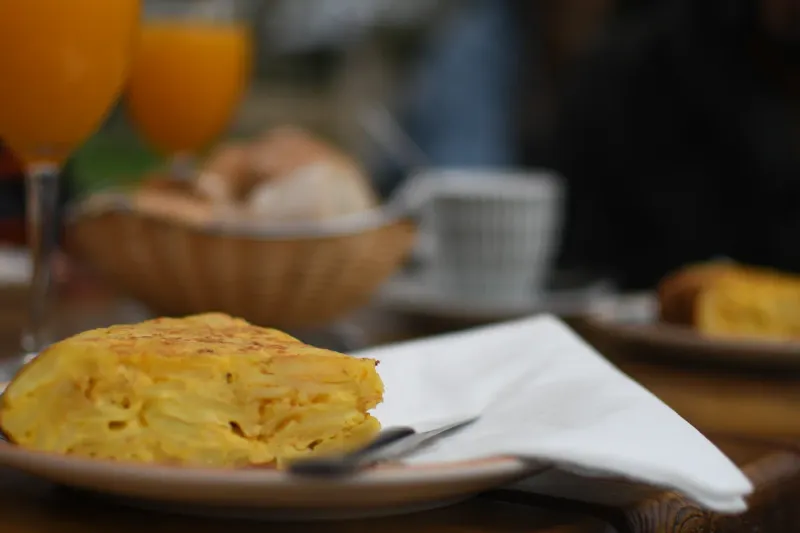
If you are vegetarian, the tortilla de patatas will save more than one meal for you on the Camino.
Carry something with you
The ideal is to always carry some food of your own in your backpack: nuts, fruit, bars, bread or some hummus. When you reach each village, take a look at the bars and restaurants there and, if you find nothing that suits you, fall back on what you are carrying and on the supermarkets, which exist in almost all the villages at the end of a stage. Keep in mind that in small villages many places close at midday and on Sundays. We give you more ideas in our post about food to carry in your backpack.
To find vegan or vegetarian places nearby, the HappyCow app will help you. It lists restaurants and bars with vegan options all over the world, with reviews from other travellers.
Where to eat vegan in Santiago de Compostela
When you arrive in Santiago, it will be very easy. A Holidu study published at the end of 2025 ranked Santiago as the most "veggie" city in Spain by number of vegan and vegetarian restaurants per inhabitant, and linked it to the thousands of pilgrims who arrive every year. Some of the best-known places are:
- A Porta Verde (Rúa do Hospitaliño), vegetarian and vegan cuisine.
- The Green House (Rúa da Conga), vegan cuisine with Asian touches, very close to the Cathedral.
- The Veggie Carmen, in the La Galiciana food market (Rúa Gómez Ulla).
- A Corre Vexeta (Rúa das Rodas), vegetarian and vegan cuisine.
- Black Cat (Rúa de San Pedro), a vegan café with a set lunch menu, on the same street where the Camino Francés enters the city.
Restaurants change their opening hours and sometimes close, so we recommend checking before you go. And if you feel like exploring more, here is our selection of trendy bars and restaurants in Santiago.
What if you walk the Camino with us?
If you book your Camino with us, tell us in the comments field that you are vegan or vegetarian. We pass it on to the accommodations so they can take it into account at breakfast, although we can't always guarantee it, especially in the smallest villages. Lunches and dinners, unless you book half board, are your choice along the way, so you can go wherever suits you best.
Eating vegan on the Camino takes a bit of planning, but it shouldn't put you off. And if you also want to try more traditional Galician cuisine, here is our Galician gastronomy route. Are you up for it? Request your quote and we'll help you organise it.