


Sangüesa - A medieval historical heritage
15 November, 2026
Sangüesa, on the banks of the Aragón river, is one of the classic stops on the Aragonese Way in Navarre. We tell you what to see, from Santa María la Real to its palaces, what to eat, where to sleep and how to get there.

Sangüesa is a Navarre town on the banks of the Aragón river, in the eastern part of central Navarre and less than an hour by car from Pamplona. It is one of the classic stops on the Aragonese Way and preserves one of the most interesting medieval ensembles on the route.
We tell you what to see, what to eat, where to sleep and how to get there so you can make the most of your time in Sangüesa, whether you arrive on foot or come for a short break.
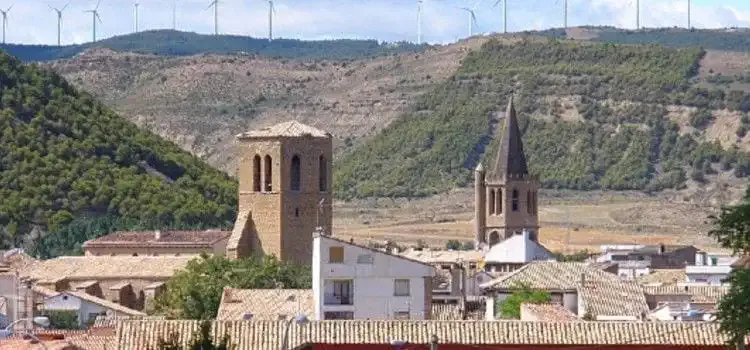
The church towers rise above the rooftops of Sangüesa.
What to see and do in Sangüesa?
In the Middle Ages, Sangüesa enjoyed a time of splendour thanks to the pilgrims and merchants passing through, and from those days it keeps churches, palaces and noble houses that make walking its streets feel like travelling into the past. The best way to see it is without hurry, stopping now and then at one of its bars.
Church of Santa María la Real
This is the great jewel of Sangüesa, standing beside the bridge over the Aragón at the entrance to the town. It is a Romanesque church of the twelfth century, built on the former royal palace that King Alfonso I the Battler gave to the Order of Saint John, and completed in the Gothic style. It was declared a National Monument in 1889.
Do not miss its portal, one of the great works of Romanesque art in Navarre, full of biblical figures, trades and fantastic creatures. Pilgrims arriving from Somport stopped here to venerate the Virgin of Rocamadour.
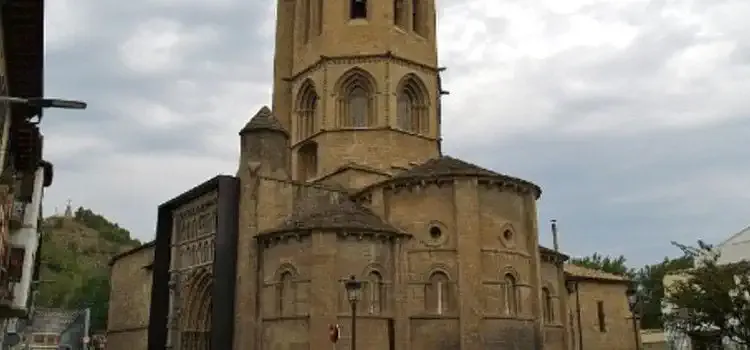
Santa María la Real, with its octagonal tower and famous portal.
Church of Santiago and the convent of San Francisco
The church of Santiago, between Romanesque and Gothic, looks almost like a fortress thanks to its battlemented tower. Inside it holds a large Gothic stone carving of Saint James the pilgrim, which was found buried under the floor of one of its chapels. If you like Gothic art, make time for the convent of San Francisco too.
Palaces and noble houses
Behind the town hall rise the towers of the Palace of the Prince of Viana, a Gothic palace that was once a residence of the kings of Navarre. The town hall was built in the sixteenth century on one of its wings.
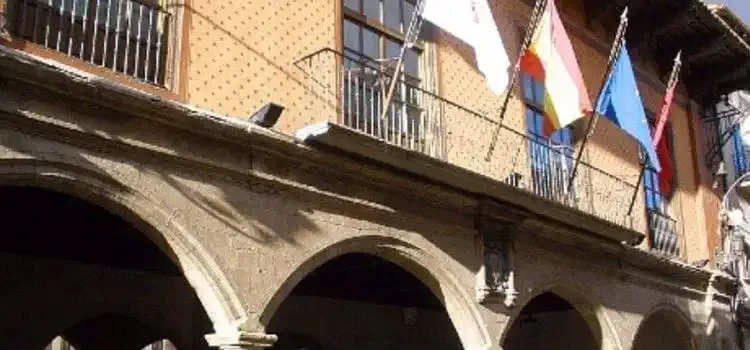
The arcades of the town hall of Sangüesa.
Very close by is the Palacio de Vallesantoro, a Baroque building with a spectacular carved wooden eave and a doorway with twisted Solomonic columns. Today it is the town's cultural centre. In the old town you will also find other houses with coats of arms that are well worth a leisurely look.
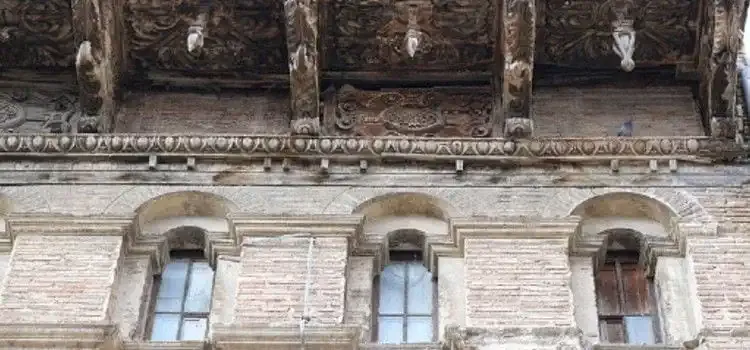
The carved eave of the Palacio de Vallesantoro.
Nature around the town
Sangüesa is also a good starting point for discovering the nature of the Navarre Pyrenees. Close by you have the Lumbier and Arbayún gorges, two canyons where colonies of vultures live, and a little further away the Salazar and Roncal valleys. A few kilometres away are also Javier Castle and Leyre Monastery, two visits you should not miss if you have time.
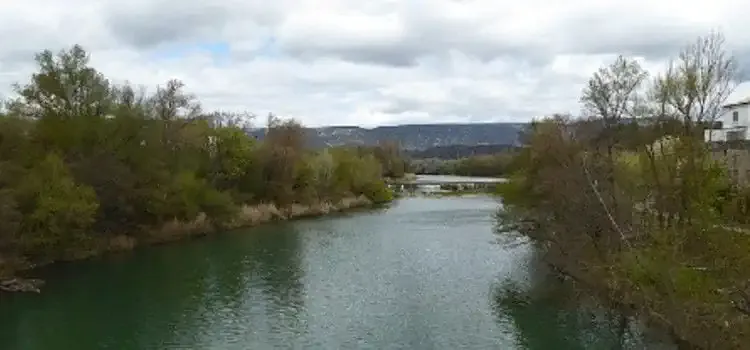
The Aragón river as it flows through Sangüesa.
Where to eat in Sangüesa?
The local cuisine relies on the Navarre market gardens and seasonal produce. It is well worth trying the menestra de verduras (a mixed vegetable stew), the pochas (tender fresh white beans), asparagus and artichokes in season, game meats and, to go with them, the cheeses and wines of Navarre.

Cheese, grapes and wine: a lovely way to end the stage.
In the old town you will find tapas bars and restaurants serving traditional Navarre home cooking. If you go at the weekend or during the festivities, it is best to book.
Where to sleep in Sangüesa?
Sangüesa has accommodation for every taste: hotels, country houses and a municipal pilgrim hostel designed for those walking the Aragonese Way. If you plan to sleep in the hostel, check the opening dates first, because not all of them open all year round.
How to get to Sangüesa?
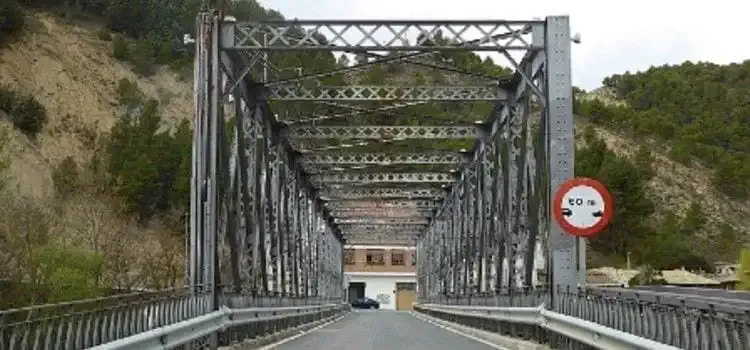
The iron bridge over the Aragón, the entrance to Sangüesa.
From Pamplona you get there by the Pyrenees motorway (A-21), heading towards Jaca, and then taking the exit for Sangüesa. There are also buses from Pamplona.
If you arrive as a pilgrim on the Aragonese Way, you will enter Sangüesa from Artieda, Ruesta and Undués de Lerda, after descending from Canfranc and Jaca. From here the Camino continues towards Monreal and joins the French Way at Puente la Reina.
And if you feel like walking the Camino all the way to Santiago, take a look at the Camino de Santiago routes we suggest. Once you have made up your mind, you can calculate the price of your Camino here in a moment.