Attention: Route not available for walking between November 1 and January 15.
The Primitive Way, originating in the Asturian capital of Oviedo, marks the starting point for pilgrims embarking on their sacred journey towards Santiago de Compostela. As the oldest pilgrimage route of the Camino de Santiago, it retains the timeless essence of the first devout travelers.
Entering Galicia through the rugged terrain of Lugo, this ancient path offers pilgrims a profound and solitary experience. Though challenging, with its demanding slopes, it rewards travelers with a profound connection to the land and its deeply rooted rural traditions.
Each step taken along the Primitive Way is not merely a physical journey but a spiritual pilgrimage, where pilgrims find solace amidst the silent landscapes. With Santiago de Compostela as the ultimate destination, every pilgrim's heart is filled with anticipation, their souls nourished by the profound sense of purpose that accompanies them on this sacred journey.
Photos
Accommodations
- Most popular
Private Hostels
453 €
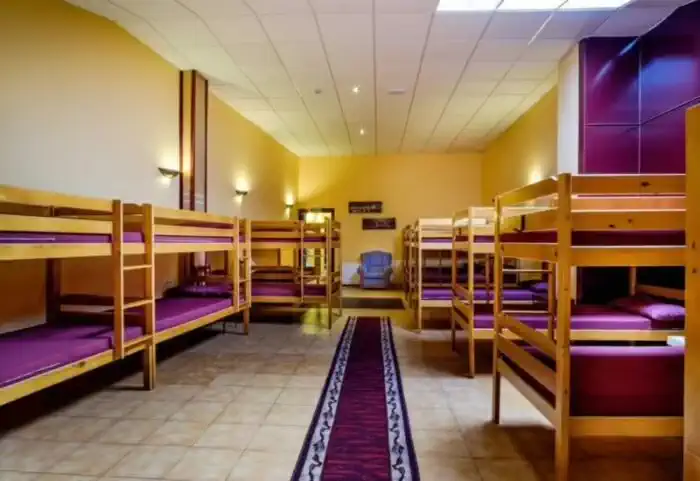
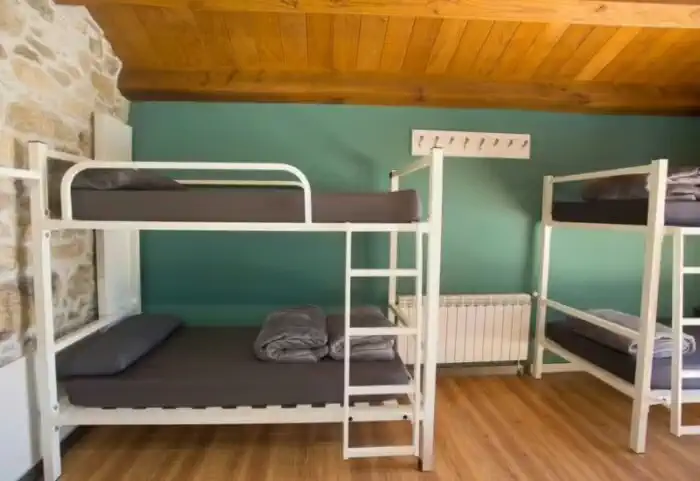
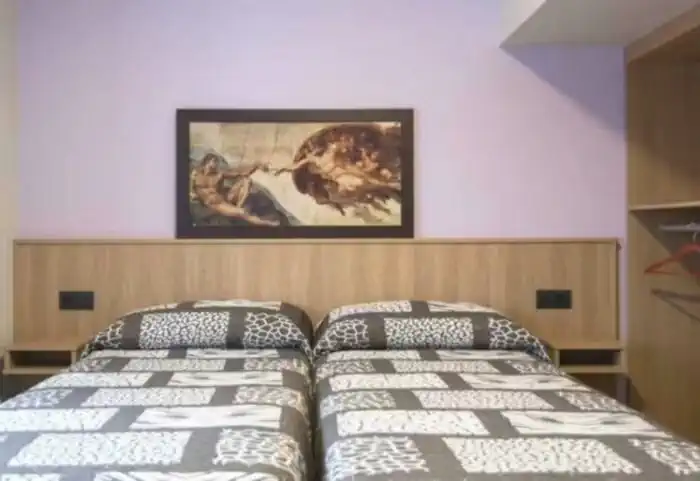
Hostels are the ideal option for those traveling on a tight budget, solo pilgrims, or those looking to experience the essence of the Camino de Santiago to the fullest. It is the accommodation par excellence for socializing and sharing the values of this ancient route.
- Most popular
Hostels, guesthouses, and rural houses
837,50 €
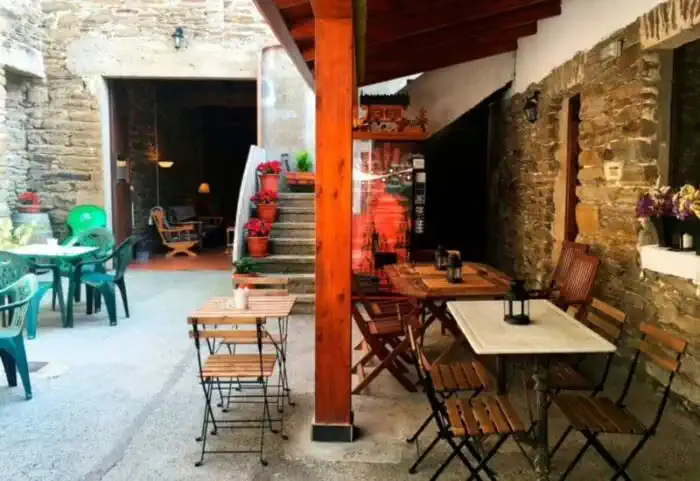
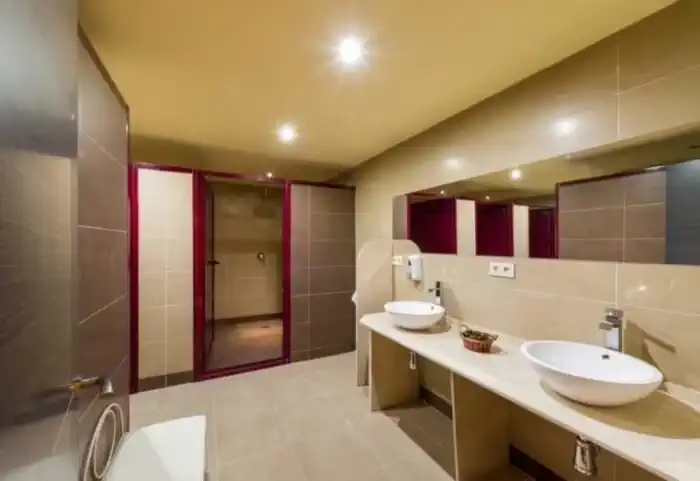
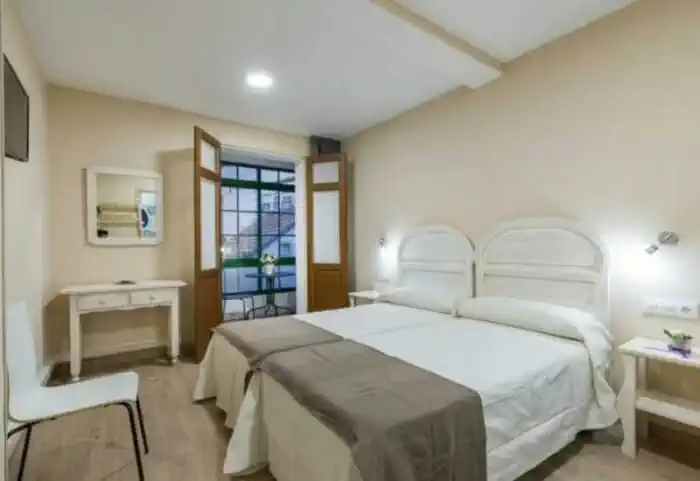
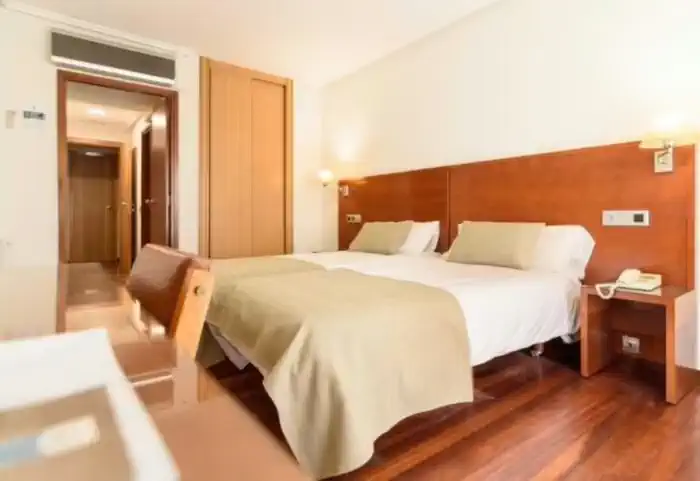
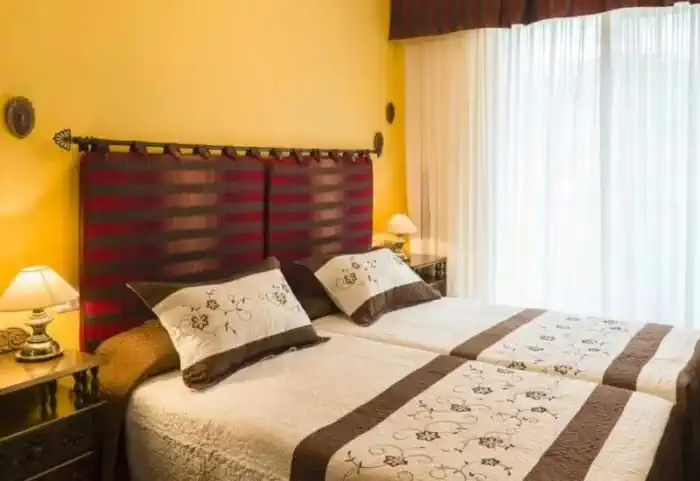
Hostels, Guesthouses, and Rural Houses are ideal in the towns of the Camino de Santiago. Simple and charming accommodations with private bathroom, TV, and impeccable cleanliness. Perfect for resting and enjoying the rural essence and tranquility at each stage.
Services
Included in all our routes
- Accommodation
11 days / 10 nights
- 11 days / 10 nights accommodation
- Complete documentation (Dossier and material for the Camino)
- Luggage transfer during the stages. (1 piece per person max 15 kgs)
- On-the-road emergency telephone assistance
- Pilgrim's Credential
- Travel insurance
Optional
- Extra night
- Supplement for single room
- Breakfast
- MP (Breakfast and dinner)
- Cancellation Insurance
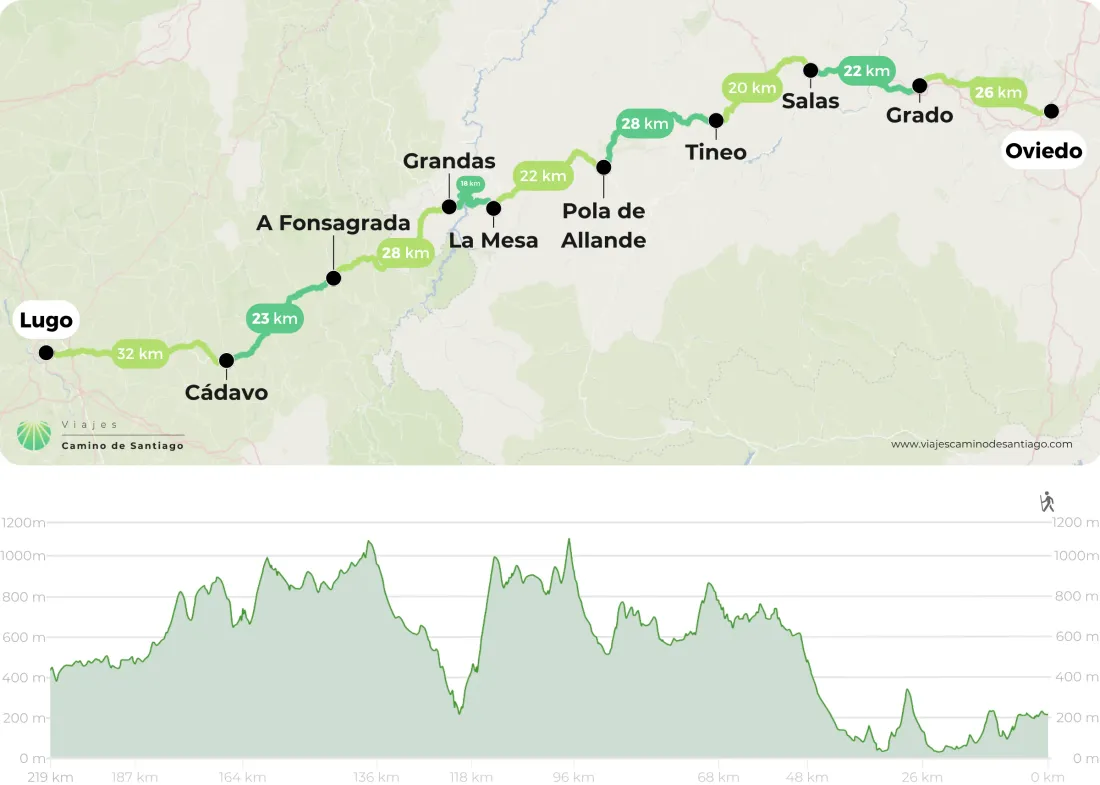
Map of the Primitive Way from Oviedo to Lugo
Stages
- day 1
Arrival at Oviedo
This is the queen stage of the Primitive Way from Oviedo to Lugo as it is the one that requires the most physical effort, but everything will be rewarded as it is one of the most beautiful. The ascent to Puerto del Palo can be done by road or by a dirt road. After reaching the top you will reach the abandoned village of Montefurado, from where it is worth stopping to contemplate the scenic spectacle in front of you. - day 2
Stage 1. Oviedo - Grado (25.2 km)
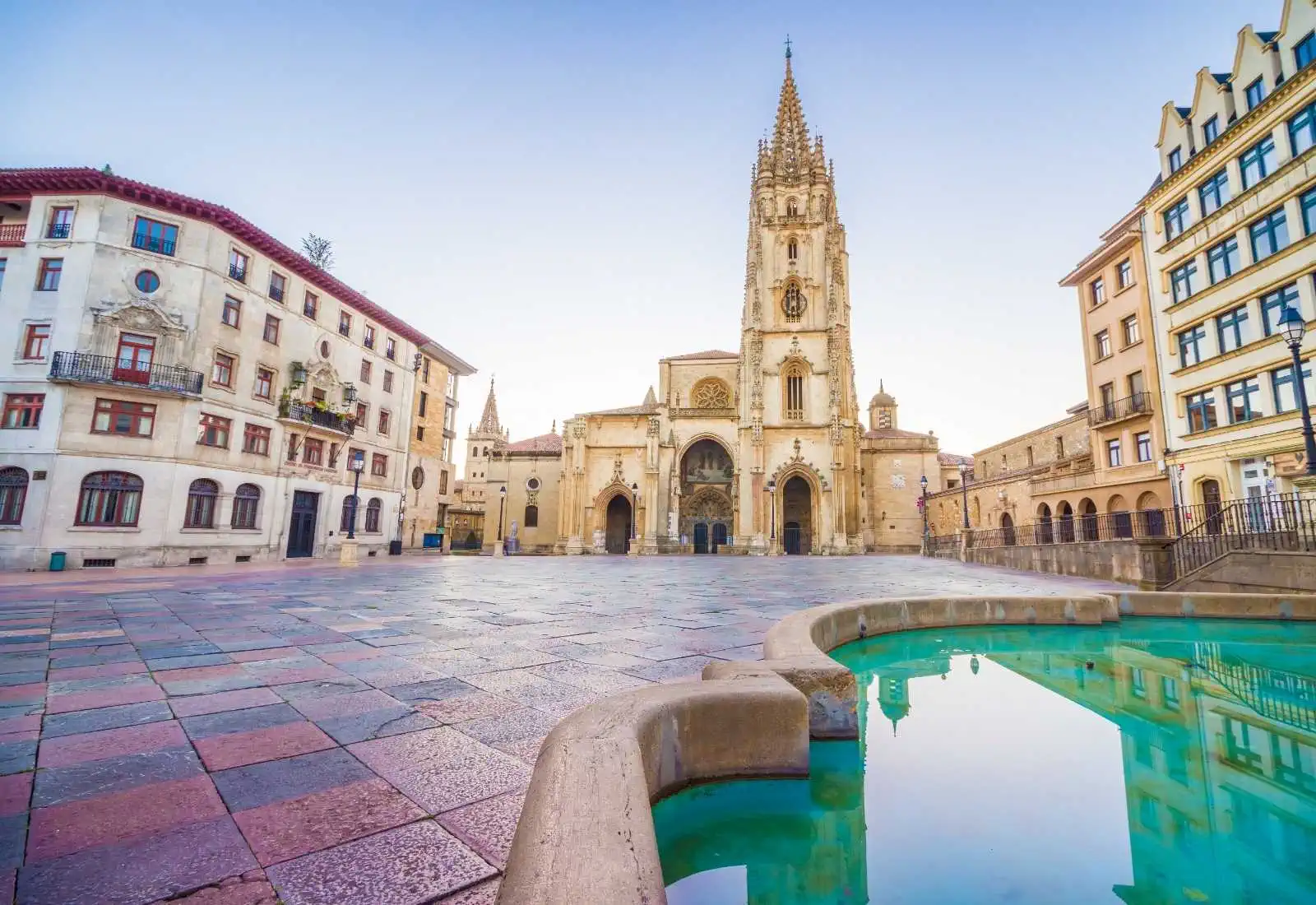
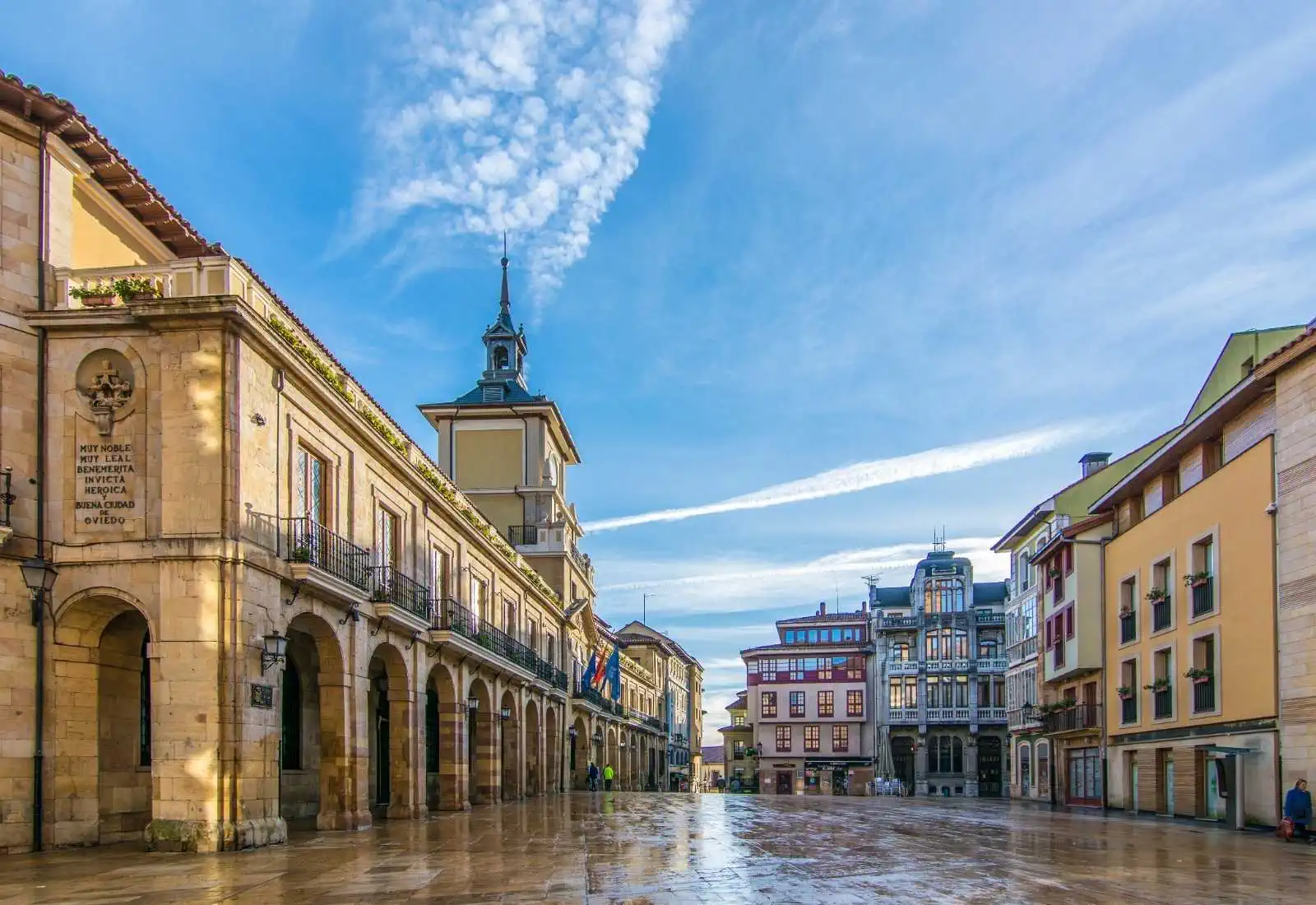
We start our pilgrimage adventure in front of the Cathedral of San Salvador. To leave the Asturian capital we must pay attention to the bronze scallops placed on the ground and arm ourselves with patience, as the way out of the city is long and tedious. You will pass through the streets of San Juan, La Luna, Covadonga, Melquíades Álvarez, Independencia and La Argañosa. After crossing the railway tracks over a footbridge you will cross a housing estate, which indicates that we are leaving Oviedo, and at the roundabout you must turn right to leave the city next to the "Camino de Santiago" park, in the direction of the town of Grado.We continue along a road until we reach the first village, San Lázaro de Paniceres.
We continue alternating dirt and asphalt roads with some unevenness, walking under the Naranco mountain range. When you get to Llampaxuga you will find the solitary chapel of the Virgen del Carmen, where you can get your credential stamped. We go down through a forest of eucalyptus trees and ascend to Lubrio and the parish of Lloriana.
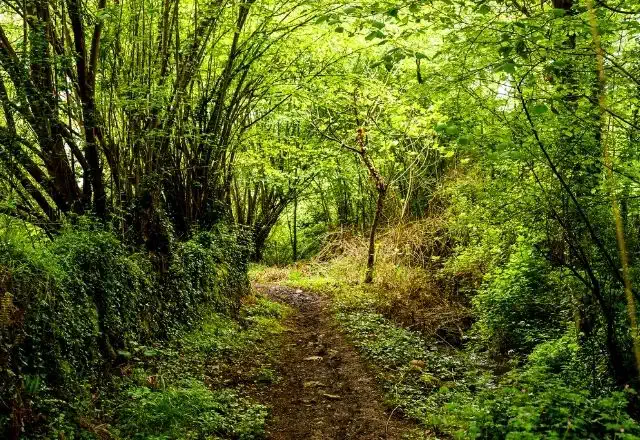
From Lloriana we follow the AS-232 road to Fabarín, we leave the asphalt and cross the medieval bridge of Gallegos over the river Nora. We cross the village of Gallegos and take a riverside path through a beautiful forest of chestnut and oak trees. The downhill path will end up becoming a hard climb that will test more than one. After overcoming it successfully we will arrive at Escamplero, which has a bar-restaurant where we can recover our strength.
We continue on the road, leave it to take a short cut and take it again at Valsera and the chapel of Fatima. We continue descending through the bucolic forest of the Andallón valley, crossing the river we will reach Premoño, where you will find a bar and an old pilgrims' hospital that worked until the 18th century, today converted into a chapel.
We leave Premoño and turn off onto a path that leads back to the road to Paladín, where there is a hostel. We continue crossing the Soto river and a path that goes along the Nalón river, the most important river in Asturias. We reach a stretch of road and cross the bridge over the river until we reach the village of Peñaflor.
We leave the village by crossing the railway tracks. The road begins to level out and we will see Grado in the distance. We finally arrive at the end of our stage where we will find all the services.To consider
Pilgrims have a discount to visit the Cathedral of Oviedo. The general visit with audioguide will cost 4€ and the partial visit 3€ (Holy Chamber, Museum and Cloister).
If you are going to visit Oviedo in the morning you can make the stage a little shorter by staying overnight in Paladín instead of in Grado. But if you feel strong enough you can also make it longer to the hostel of San Juan de Villapañada (public hostel).Places of interest
- Oviedo's historic centre and San Salvador Cathedral
- Llampaxuga, Lloriana and Premoño Chapels
- Valdecarzana Palace - Grado
- Chapel of Sorrows - Grado
- Butterfly Garden - Grado
- Ethnographic Museum - Grado
Typical dishes
- Afuega'l pitu cheese
- Tocinillo de cielo
- Gochu asturcelta
- Spelt
- Red meat
- Cider
- day 3
Stage 2. Grado - Salas (21.9 km)
We leave Grado by road in the direction of Salas until we reach a petrol station, past the bend we turn left and go up an ascending track whose slope becomes progressively gentler. We cross the access to the motorway over a bridge and gather strength to face the steep slope that leads us to the crossroads at the access to San Juan de Villapañada. We leave the village in a constant ascent until we reach the Allto del Fresno, where it is worth going off the 50 m of the path to visit the chapel. We continue straight ahead, contemplating what was once a magnificent landscape, today destroyed by the motorway that bleeds the valley from one end to the other.
We leave behind the bridge and the fountain of La Meredal, cross a bridge over the motorway and go down listening to the murmur of the river until Santa Eulalia de Dóriga. It is advisable to make a stop at the Ca Pacita winery (it serves breakfast, menus, dinners and has some bunk beds) and the Doriga Palace declared BIC.
We continue our route reaching the road, which we follow in parallel. We pass by Casas del Puente, cross the Narcea River over the bridge and shortly after we enter Cornellana, where we will find all the services. The itinerary takes us to the monastery of San Salvador and the hostel without entering the village. But we can continue along the road where all the bars and shops are as we will return to the road at the height of the monastery, perfectly indicated.We recommend making a stop in the village, as during the stage it is the only place where you will find services.
We follow the path around the monastery and go up a local road with good views. We cross the motorway again and pass the villages of Sobrerriba and Cermoño. The halfway point of the stage is a gift, we will advance through a wooded stretch that is undoubtedly the most beautiful of the day.
We border a quarry on the left until we pass the village of Llamas, advancing parallel to the national road and the river Nonaya. Here we will find a vending machine where we can stock up on cold drinks.
We continue along the Way passing by a beautiful dovecote, passing the church and the fountain of Santiago de Villazón until we take a beautiful forest path that will lead us to the bridge of Casazorrina, which we cross to access the village. (You can stop at the gas station bar).
We leave the village and meet the motorway again, which we cross through a tunnel. We continue in the same direction surprised by a wooded path to take the road again until we reach the welcoming village of Salas, which has all the services.To consider
Be careful in times of heavy rain, as the path down from Doriga to Cornellana, almost 8 kilometres from Grado, can be in a bad state, so we recommend caution to avoid slipping and to arrive safely in Salas.Places of interest
- Church of the Virgen del Fresno
- Church of Santa Eulalia de Doriga
- Monastery of San Salvador de Cornellana
- Collegiate Church of Santa María la Mayor - Salas
- Yew of San Martín - Salas
- Tower and Palace of Valdés - Salas
- Museum Didactic Classroom of the Pre-Romanesque - Salas
Typical dishes
- Salmon and trout from the Narcea River
- Aubergine Stew
- Bollos Preñaos and empanadas
- Fabada and tripe in Asturian style
- Menestra
- Roast meat
- Rice pudding
- Carajitos del Profesor (in Salas)
- day 4
Stage 3. Salas - Tineo (19.1 km)
We say goodbye to Salas passing under the arch that joins the Palace of Valdés with the medieval tower and we enter a pleasant path next to the river Noraya in the direction of Tineo, gaining altitude among oak and chestnut forests, crossing the bridges of Borra and Carcabón.
We start a quite hard ascent along the national road, passing several viaducts of the motorway and taking a path on the left hand side, paying attention to the signs. The ascent gets harder and harder until we reach the end of the climb along a track parallel to the motorway, arriving at the villages of Porciles and Bodenaya. Just before reaching the plain, under a mountain range covered with wind turbines, we will have the opportunity to see the source of the Nonaya River, which we crossed in the previous stage.
We continue along the national road and soon we reach La Espina, where we will find all the services, as well as a rest area called La Parada del Peregrino, with vending machines, sandwiches, parapharmacy.We leave La Espina at the roundabout, taking the road to the right. In a few minutes we reach La Pereda, where you will find the hermitage of Cristo de los Afligidos.
We pass through small villages without services, where we can photograph some hórreos. We walk through forests and dirt roads overcoming the occasional steep slope. We go down to the road again and we find another village, El Pedregal.
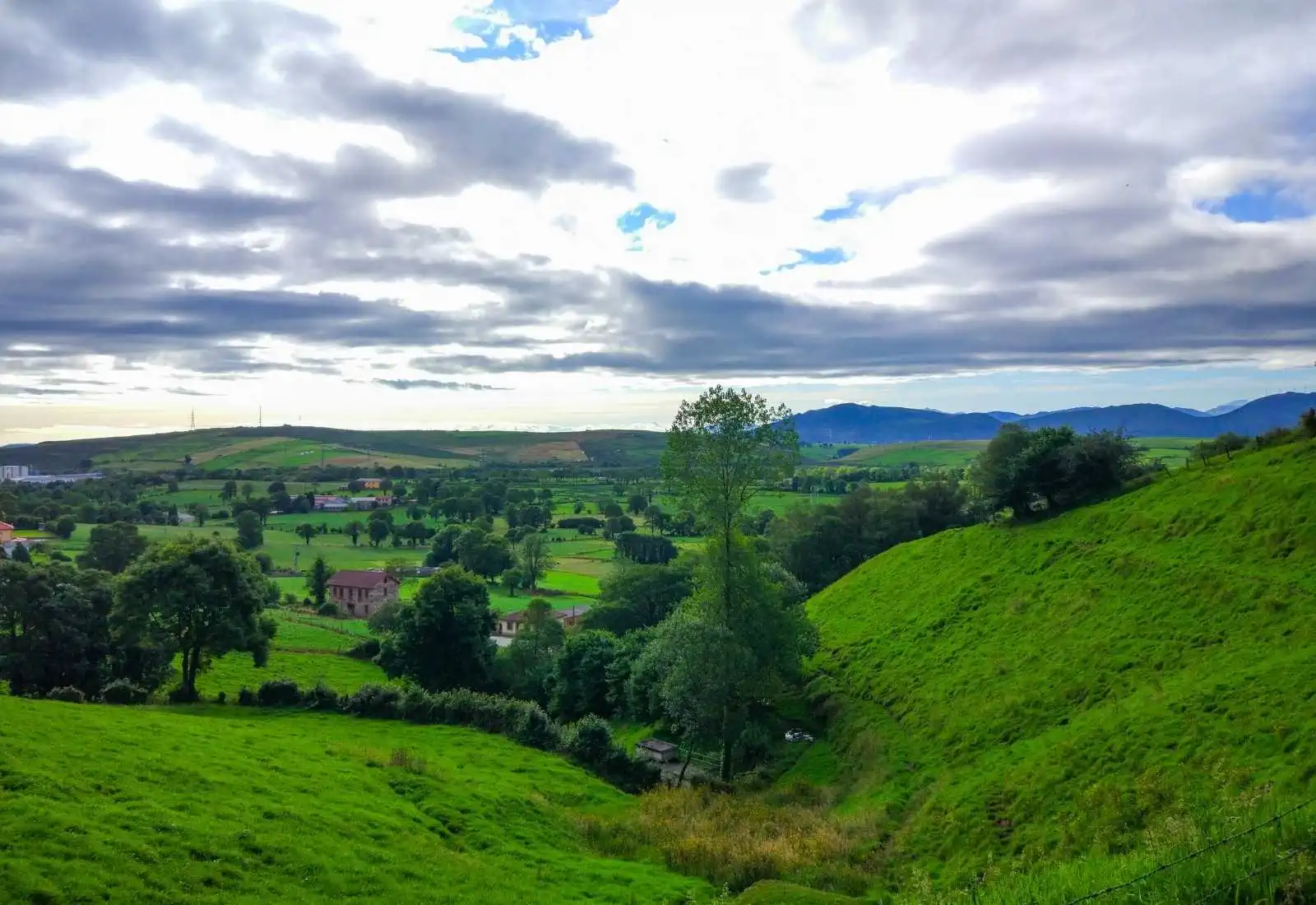
We leave the village by a path that goes up on the right hand side, through a thick forest. From this point the route to Tineo is beautiful and you will enjoy spectacular rural panoramic views.
We arrived at Tineo bordering the football field until arriving to the Campo de San Roque, where there is a chapel of the same name. Tineo is a beautiful village in which two different urban spaces can be distinguished, the lower area or Villa funds and the area of the pico or Cimadevilla, characterized by maintaining traditional rural typologies.To consider
As in the previous stage, in rainy seasons there is usually mud for quite a few kilometres. Therefore, before leaving Salas we must be sure to wear waterproof footwear and we must be careful about slipping along the way, and thus ensure that we reach Tineo without injury.Places of interest
- Church of San Pedro - Tineo
- Church and Monastery of Santa María la Real - Tineo
- Gold Museum - Tineo
- Palace of the García - Tineo
- Palace of Merás - Tineo
Typical dishes
- Charcuterie boards: chorizo, black pudding, loin, butiestso, andoya, chosco (pork sausage).
- Artisan cheeses (cabrales, gamoneu, afuega'l pitu, smoked, de pría)
- Asturian stew
- Beef stews and grills
- Game meats
- Caramietsa (traditional in Carnivals)
- Natas vaqueiras (typical dessert of Tineo)
- Natural curd
Rice pudding
Frixuelos
- day 5
Stage 4. Tineo - Pola de Allande (28.2 km)
We stand before the town hall of Tineo and, on the right hand side we go up a street that will take us to the church and a tile with scallop indicates us to take on the left hand side that continues uphill on an asphalted track that then turns into a dirt road in direction to Pola de Allande. We continue a few meters to the left and we will find a new detour to the right. We start a moderate descent contemplating a beautiful landscape and we come out to the road, at the height of the hamlet of Piedratecha.
We continue parallel to the road and leave it on the left shoulder. The path descends through a magnificent deciduous forest and leads us to the important monastery of Santa María Real de Obona, A highly recommended visit for which you will have to take a detour of about 800 meters from the Camino.We turn left to continue on our way, flattening out through a shady forest of oak and chestnut trees until we reach the small village of Villaluz, where we will find a picnic area and a fountain.
We continue walking along the road, crossing several villages until we reach Campiello, where Casa Ricardo or Casa Herminia are obligatory stops to have something to eat and drink.
After the break, we continue along the road, passing through El Fresno and El Espín, leaving it on the left. After 300 metres we take a nice path that will lead us to Borres, where the only services you will find are a public hostel and a bar called el Barín.
From the Barín, we go up to the race and ascend contemplating the fabulous landscape until we reach the perfectly signposted fork of the main path and the variant along the Hospitales Route. We continue towards Pola de Allande, descending and crossing the road again at the height of Samblismo, and continue along a beautiful path to the village of Mortera, where there is a small bar-shop.
We continue ascending and descending along paths and tracks, crossing streams and going in and out of the road several times until we reach the Alto de Porciles. Shortly after we will find the Church of San Roque and the village of Porciles, which also has a bar.
From Porciles to the top of the Lavadoira we can follow both the path, which has a steep descent with its corresponding ascent, and the AS-219 road, making the itinerary almost two kilometres longer but with a somewhat more moderate gradient.
At the top of Lavadoira begins the beautiful and hard descent to the end of the stage, Pola de Allande, passing through the village of Ferroy. In Pola you will find all kinds of services, with an obligatory stop at the Hostal La Nueva Allandesa, whose menu is one of the best in the area.To consider
Many pilgrims decide to divide the stage in two and spend the night in Borres or take the variant of the Ruta de los Hospitales, as we indicate in the itinerary. The total stage between Tineo and Pola de Allande is almost 30 km with steep slopes.Places of interest
- Church of Santa María - Borres
- Palace of Cienfuegos de Peñalba - Pola de Allande
- Church of San Andrés - Pola de Allande
Typical dishes
- Cabbage stew
- Cabbage stuffed with meat
- Vegetable and fish or meat pie
- Pitu caleya
- Fabada
- Rum omelette
- Rice pudding
- Frixuelos
- Cottage cheese
- day 6
Stage 5. Pola de Allande - La Mesa (22 km)
We leave Pola de Allande by the road to take the path that goes down to the fertile plain of the river Nisón, 1 km from the petrol station in the direction of La Mesa. In a slight ascent we leave behind the villages of El Teixu and Colobreu, under holly trees and strawberry trees. We cross the bridge over the Fonfaraón stream that takes us to the Reigada.
The ascent gets harder and harder and the feeling of loneliness is more and more evident. We crossed the river a couple more times over wooden bridges and climbed up to the road. After walking 100 metres, we leave the road on the right to take a stony path and begin the ascent to the Palo Pass. The ascent is hard but rewarding. A little before the top you will find a fountain that will quench your thirst.
From the top the scenery is breathtaking. After taking a well-deserved rest and enjoying the views, we continue along a path on the right hand side, crossing paths with the pilgrims coming from Borres through the variant of the Ruta de los Hospitales.Along the mountainside there are numerous ditches and scars, as well as an artificial lagoon, the result of excavations undertaken by the Roman Empire to supply itself with gold.
We continue along the stone path, the power line will accompany us until we reach Montefurado, a lonely but beautiful village of slate houses. Here you can visit the chapel of Santiago, which houses a curious carving of the Apostle.
We continue climbing towards the Sesto de la Fuente. Already at the top, we cross a small pass and start the descent towards Lago. At the entrance to the village, past the cemetery, there is an imposing yew tree, next to the parish church of Santa María.
Our next objective will be Berducedo, where we have 4 km soft, which we will be grateful. We pass a crossroads and reach again the AS-14, which we will leave on the left at the height of a pine forest.
We pass Berducedo and take an uphill path marked GR-109. When we reach the top we turn left and cross a pine forest that leads us to the local road that takes us to La Mesa, our end of the stage. Here we can visit the church of Santa María Magdalena, surrounded by a beautiful landscape disturbed by the installation of several wind farms.To consider
The ascent to Puerto del Palo (1,446 metres) is quite hard, especially from La Reigada onwards, with a drop of more than 600 metres. There are not many water points from Pola de Allande to La Mesa, so we recommend you stock up before you start walking.Places of interest
- Chapel of Santiago - Montefurado
- Church of Santa María Magdalena - La Mesa
Typical dishes
- Local sausages
- Broth and beans
- Cachola con cachelos
- Trout
- Oscos Cheese and Mantecadas (buttery cakes)
- Homemade pomace
- day 7
Stage 6. La Mesa - Grandas de Salime (18 km)
Although this is a short stage compared to the ones we have done before, it has a considerable effort in its route.
We say goodbye to La Mesa by road, starting a climb of approximately two kilometres until we reach the wind farm at the top, near the crag of the Coriscos, from where we will head towards Grandas de Salime, and we arm ourselves with patience. We have 760 metres of negative slope ahead of us until we reach the Salime dam. We start to descend and it is not long before we reach Buspol.After the chapel of Santa Marina begins a steep descent that reaches the dam of the river Navia that will give us amazing views and leafy groves.
We continue the descent until we reach a false flat where we continue along a forest track. On the left hand side we will see the detour that was formerly taken to cross the reservoir by boat from the vicinity of the flooded village of Salime. A kilometre further on, on the slope above a bend we will see a cortín, circular stone walls that were (and still are) used to protect the beehives from the bears. A little later we pass by a cross and take the detour to the right that will take us to a spectacular chestnut forest.
We follow a winding path until we reach the AS-14 road, which will lead us to the Salime Dam. Before arriving we can enter the Boca de la Ballena, a hanging viewpoint that offers incredible views of the 128-meter high dam.
Then we finally cross the reservoir and take the road again, which will guide our steps for 4.5 km. We pass next to the Hotel Las Grandas, located in the place of Vistalegre and we continue until the Pénjamo detour, where we will leave the road on the left.
After climbing a path, we continue along a pleasant wooded path that takes us to our longed-for end of the stage, Grandas de Salime.To consider
In spite of being a short stage, this stage from La Mesa presents intense descents in which we must be extremely careful, especially if it rains, if we want to arrive without mishaps or injuries to Grandas de Salime.Places of interest
- Chapel of Santa Marina de Buspol
- Chapel of Carmen de Grandas - Grandas de Salime
- Hermitage of Pedreira - Grandas de Salime
- Collegiate Church of El Salvador - Grandas de Salime
- Roman tunnels of Penafurada - Grandas de Salime
Typical dishes
- Sausages (chorizo, lacón and botelo)
- Carne roxa or maragata
- Pork claw with beans
- Cachola con cachelos
- Broth
- Kid
- Beef T-bone steak
- Conger eel
- Trout
- Oscos Cheese
- Mantecadas
- Roscones and doughnuts
- Gypsy's arm
- day 8
Stage 7. Grandas de Salime - A Fonsagrada (28 km)
We leave Grandas de Salime from the former collegiate church of San Salvador and cross the road that connects with A Fonsagrada, to head towards the street where the chapel of Carmen is located. The first kilometres are flat and without great difficulties, always close to the AS-28 road, which we cross several times, even walking along the shoulder of the road.
We pass through the villages of La Farrapa and Cereixeira, where there are a couple of bars: Casa Federico and La Parrilla. Along paths and trails, we reach the village of Castro, which has a youth hostel that admits pilgrims.
We continue straight on leaving on the right the ruins of the Chao Samartín castro, a Bronze Age settlement dating back to 800 BC and the access to its modern museum. We advance through a wooded area, passing by the rural hermitage of San Lázaro to rejoin the road again. From here the ascent to the Puerto de Acebo starts to become more evident.In Peñafonte we will see the church of Santa María Magdalena, and next to it a shady fountain that will invite you to refill your water bottle.
We go up the slope of the Zarro mountain, a quite bearable stretch. We cross the road towards Bustelo do Camín, open a gate and take a path that goes through the gorse trees. The ascent to the mountain of A Curiscada requires more effort and even more to reach the wind farms in the Alto del Acebo, at an altitude of 1,130 metres.
After a stop to regain strength, it's time for the descent. We leave Asturiasto welcome Galicia with joy. We will see the first Galician indicator and we will notice a small detail: the shell is upside down. Now we must look at the open part of the shell, which is the one that marks the direction to follow. We descend the path next to the Venta do Acebo, whose opening hours are unpredictable.
We finally see A Fonsagrada in the distance. We continue along a path full of holly trees, honouring the place name. After a short climb, the track approaches the LU-701 road, running parallel to it. We cross the tiny village of Cabreira before reaching Fonfría. Half a kilometre from Fonfría we turn off to the left of the road and go down to Barbeitos.If we get hungry we can stop at the Mesón Catro Ventos, where they make delicious grilled meats.
We continue along the right-hand side of the road, stop for Silvela and shortly after we turn off onto a path on the left-hand side of the road. We reach the hermitage of Santa Bárbara, and further on we reach Paradanova.
One last effort. Behind the chapel of the Holy Cross we are surprised by two signposts. In August 2017 the historic access road to A Fonsagrada was recovered, so we should not go out to the road, but take the path on the left hand side that will take us directly to the town. We ignore the signpost of Burón that invites us to cross the road.
In 2017, fortunately, the historical access road to A Fonsagrada has been recovered; therefore, we should not go out to the road, but take a path on the left hand side that takes us directly to the town, with a steep slope at the end. We have to ignore the signpost to Burón that invites us to cross the road. We finally arrive at the end of our stage, A Fonsagrada.To consider
When we enter Galicia, we change not only the community but also the indications. In Asturias the famous scallops or shells signaled the way to follow by its narrow part while in the lands of the apostle we must be guided by the open part of the same.
In Paradanova, someone has indicated A Fonsagrada at the milestone that leads to A Pobra de Burón and there are already several groups of pilgrims who have got lost. Once in Paradanova, seeing the next village at a height of several hundred metres, we must follow the milestone on the left of the road coming from Grandas de Salime, and this road will take us straight to A Fonsagrada.Of interest
- Chao Samartín Hillfort Museum
- Church of Peñafonte - Peñafonte
- Church of Santa Maria de Lamas de Moreira - A Fonsagrada
- Church of San Andrés de Logares - A Fonsagrada
- Granaries of Lamas de Moreira - A Fonsagrada
- Chapel of San José - A Fonsagrada
Typical dishes
- Octopus á feira
- Partridge and roe deer
- Chestnuts and mushrooms
- Veal meats
- Stew and broth
- Botelo and homemade sausages
- Filloas
- Mountain honey and cheese
- day 9
Stage 8. A Fonsagrada - O Cádavo (23.4 km)
We start this stage through the streets behind the church. We leave A Fonsagrada by the LU-530 provincial road until we reach the village of Padrón, where we will find a public hostel. and we will walk along comfortable forest tracks, crossing the road several times, in the direction of O Cádavo, until we reach the small village of Vilardongo, which we leave on the left. We go straight ahead and cross the LU-1906 road at Pedrafitelas, which we also leave on our left. We cross several streams and arrive at Montouto.
Here we must be attentive and take the exit that goes down to the left and then take the path that leads to the tiny village of Montouto, without services. On the right side of the LU-530 road, along dirt tracks, which can be muddy in some sections, and crossing some meadows, we will advance gaining altitude. Thus we arrive at the tiny village of Montouto, with no services.Near Montouto we can see the ruins of the Royal Hospital of Santiago de Montouto, from the middle of the 14th century, and of which one of its two chapels has been recovered.
A few metres away we can also see the large stones of a Neolithic dolmen. We start the descent down the opposite slope, on a dirt track and steep slope. From the top the panoramic view is amazing and we recommend a stop. A long descent awaits us to Paradavella, an old village with unique buildings of great ethnographic and traditional value.
We continue on our way taking a path on the right hand side that goes along the hillside, with continuous ups and downs, with abundant watercourses. We cross the road descending to the villages of A Calzada and Degolada, which we leave on the left.
We turn off at the next crossroads, taking the path on the left to Rego da Pasadiña, with a slight ascent to O Couto. Shortly after we will start the very hard ascent to A Lastra, known as Cuesta del Sapo, possibly the strongest of all the Primitive Way. In A Lastra we will find two small bars.
After passing the church of San Xoán, we will realise that the Camino is unforgiving and we take another very steep track on the left hand side. And if we think it is not enough of a climb, we continue ascending until we reach the top of Fontaneira, among pine trees and holding our strength until we reach the village, where there is a bar. From Fontaneira we continue ascending by open tracks to the left of the road, until we reach the Alto de Caballín. Turn right onto a forest track that crosses a pine forest.
Finally, after a steep descent, we finally arrive at O Cádavo, capital of the concello of Baleira, which has all the services.To consider
This is a hard and leg-breaking stage for most pilgrims, so we recommend you to take it easy and leave with time from A Fonsagrada, to enjoy nature as O Cádavo is the capital of the green council of Baleira. It is not uncommon, in Galicia, that capital and council have different names.
The Alto de Fontaneira could be divided into two parts. The first one up to A Lastra and the second one up to the same height. But at this stage of the Camino we're probably used to it and it's not worth it.Of interest
- Montouto Hospital
- Mámoas - Montouto
- Fraga da Marronda - O Cádabo
Typical dishes
- Botelo
- Galician broth
- Stew
- Lacón with turnip tops
- Cachola
- Chestnuts and mushrooms (in autumn)
- Cheese and honey
- day 10
Stage 9. O Cádavo - Lugo (32 km)
We cross O Cádavo following the same direction as on arrival and leaving the village square on the left, we go down an asphalted track to Pradela and start the gentle ascent along dirt tracks until we reach the Alto da Vacariza, last ascent until reaching Lugo, already in the council of Castroverde.
We enter Castroverde by the LU-530 road. Shortly after we leave the road to take a street on the left hand side until we come out next to the town hall and the church. Castroverde is the last place before Lugo where there are bars and shops, not to mention the 4 vending machines for drinks and food that we will find on the roadside.
Without crossing the road we find the fork between the official road to Vilalle and the old road to Vilabade, signposted as "Complementary Road". The latter is 500 meters longer, but it will be worth it to be able to visit the church of Santa María de Vilabade, known as the "Castroverde Cathedral". We enter Castroverde on the LU-530 road, which we leave shortly afterwards to take a street on the left that leads to the town hall and the church.This is the last village before Lugo where there are bars and shops, not counting the vending machines that we will find along the way.
We leave Castroverde through a beautiful forest, pass by a fountain and cross the road and a ring road. We always ride in the same direction, alternating asphalt and dirt in a placid rural environment.
From Gondar we go up the same road until we reach a quarry and take a path to the right, which leads back to the road. We walk along the shoulder for 1 km, which takes forever. We leave the LU-530 road, crossing it with caution and following the road to Manzoi for 250 metres, until we turn left onto a pleasant path.
We arrive at As Casas da Viña and continue along a dirt road, crossing a bridge over the A-6 motorway and, shortly afterwards, another bridge.
We go around the village of O Carqueixo and reach Castelo, from where we descend to the neighbourhood of A Chanca, the entrance to the city of Lugo. We cross the bridge over the river Rato, from where we go up to the town centre, passing under the railway tracks and going up the stairs of Fontiñas Street and Carril das Flores, until we reach the Roman wall.
We enter the old town through the Puerta de San Pedro until we reach the Plaza Mayor and the Cathedral of Santa Maria.To consider
The official route from O Cádavo has been modified and does not go through Vilabade, but through Vilalle, saving 500 metres but avoiding the church of Santa María de Vilabade, although in any case, the old route is still signposted as a "complementary route" at the milestones until reaching Lugo.Of interest
- Church of Santa María de Vilavade - Castroverde
- Roman Wall - Lugo
- Santa María Cathedral - Lugo
- Historic centre - Lugo
- House of Mosaics - Lugo
- Domus del Mitreo - Lugo
- Rosalía de Castro Park - Lugo
- Roman Bridge - Lugo
Typical dishes
Although it is a complex statement, Lugo is one of the cities with the best food in Galicia. All drinks are accompanied by a cold pincho and a hot tapa, plus in any bar or restaurant you can taste typical dishes at very cheap prices.- Pork and veal steaks
- Octopus á feira
- Lacón with turnip tops
- Galician broth
- Zorza
- Raxo
- Orella, snout and cachola
- Empanada
- After dinner with typical liqueurs: coffee liqueur, herbs and cream of orujo.
- Cake of Santiago, roscón, filloas
- Cheese with quince
- day 11
End of the Camino
After arriving... End of the Camino
Frequently Asked Questions
-
What is on-the-road telephone assistance?
In your travel documents, you'll find an emergency telephone number where we're accessible while you're on the road. This ensures you'll journey with peace of mind, knowin our team members will assist you with any problems, incidents, or questions you encounter along your Camino de Santiago.
-
What is travel insurance?
It is the guarantee that you can enjoy your Camino in a safe way. In our trips you already have an insurance included with your trip to be protected during the Camino de Santiago. We will send you the insurance policy along with all the documentation of your trip, so you will have everything you need to enjoy the Camino with peace of mind. Walk without worries! -
What does the private transfer service consist of?
We have a taxi service that you can hire whenever you need it. You can hire it, for example, to go from the airport to the start of your Camino, or to go from Santiago to your starting point to pick up your car once you finish the stage. The price of the transfers will depend on the distance from your point of origin to the destination. If you have any questions about this service do not hesitate to contact us. -
Where are the accommodations located?
In your travel documents, you will find the names of the accommodations assigned to you, as well as their contact telephone number and location. As a general rule, all accommodation are located in the centre of the different towns along the Pilgrims' Route to Santiago de Compostela, without the need to deviate too far from the route. But sometimes, due to lack of availability, it is possible that some accommodation may be a little far from the village or even in neighbouring towns. For all the accommodations that are at a considerable distance from the route of the Camino, we will provide you with a free taxi service that you can use to get to your accommodation and return to the Camino the next morning. In any case, these are exceptions that we will inform you at the time of booking. -
What coverage does the travel insurance have?
The basic travel insurance included in our packages offers extensive coverage against unforeseen events, ensuring you'll receive guaranteed medical assistance and numerous benefits. You can review the specifics in the General Conditions of Travel Insurance.
-
How do I make a reservation?
To make a reservation, you can follow these steps:
- Through our website: Select the route you want and follow the steps indicated in the form. Provide your personal information and that of your companions, choose the type of accommodation, room distribution, meals, transfers, bike rental, etc.
- By email: If you prefer to make the reservation by email or need a personalized trip, you can send us an email to info@viajecaminodesantiago.com. We will provide you with the necessary information to complete the reservation via email.
It is important to note that if the routes or services available on the website do not meet your specific needs, you can request a personalized quote by sending an email to info@viajescaminodesantiago.com.
-
Can I choose the dates I want?
Yes, you will have total freedom to choose your departure date. However, if you want to do your Camino de Santiago in the months of December, January and February, we recommend that you check availability before making your reservation. At this time of year most accommodation is closed and many services may not be available. -
What does Camino de Santiago on your own mean?
In this modality you will do the Camino de Santiago at your own pace and you will only have to worry about choosing the route you like the most, the type of accommodation and your departure date. If you choose this option you will travel alone or with the people that appear in your reservation, and you will have all the services included so that you only have to worry about walking and enjoying the experience. -
What is luggage transport and how does it work?
Luggage transport service by default is included in all our trips and it is not necessary to request it. You can enjoy the Camino de Santiago without the burden of carrying your luggage on your back, knowing that your suitcase will be waiting for you at your next accommodation upon your arrival. Along with your credential, you'll also receive stickers. Cover these stickers with the requested information and stick them in a visible place on your suitcase. Upon arrival at your accommodation, we suggest asking at the reception where you can leave your luggage. You'll need to leave your luggage at the designated spot early in the morning for our carrier to pick it up. This ensures that when you arrive at your next accommodation, your luggage will already be waiting for you. -
What services are included in the Camino de Santiago on your own?
The Camino de Santiago at your own pace includes the following services:
- Accommodation for resting.
- Luggage transport so you do not have to carry it.
- An informative dossier with details about the stages.
- The Pilgrim Passport.
- A 24-hour assistance phone number available at all times.
- A travel insurance for your peace of mind.
Additionally, you have the option to customize your experience by adding extra services:
- You can choose whether to include breakfast or half board.
- We offer private transfers to take you to the start of the stage from Santiago de Compostela, from its airport, or any other point.
- We can take your vehicle from the starting point to the end of your Camino.
- You have the option to book extra nights at the beginning or end of your trip.
Unlike group trips, we do not include a guide or support vehicle between stages. However, we provide you with a 24-hour assistance phone number to resolve any issues or unforeseen events you may encounter on your journey.
Primitive Way from Oviedo to Lugo
From 453 €


Reviews
Elena Rubio Méndez
Óscar Fuentes Gallego
Iván Cortés Navarro
Claudia Peña Ortega