


Attention: Route not available for walking between November 1st and January 15th
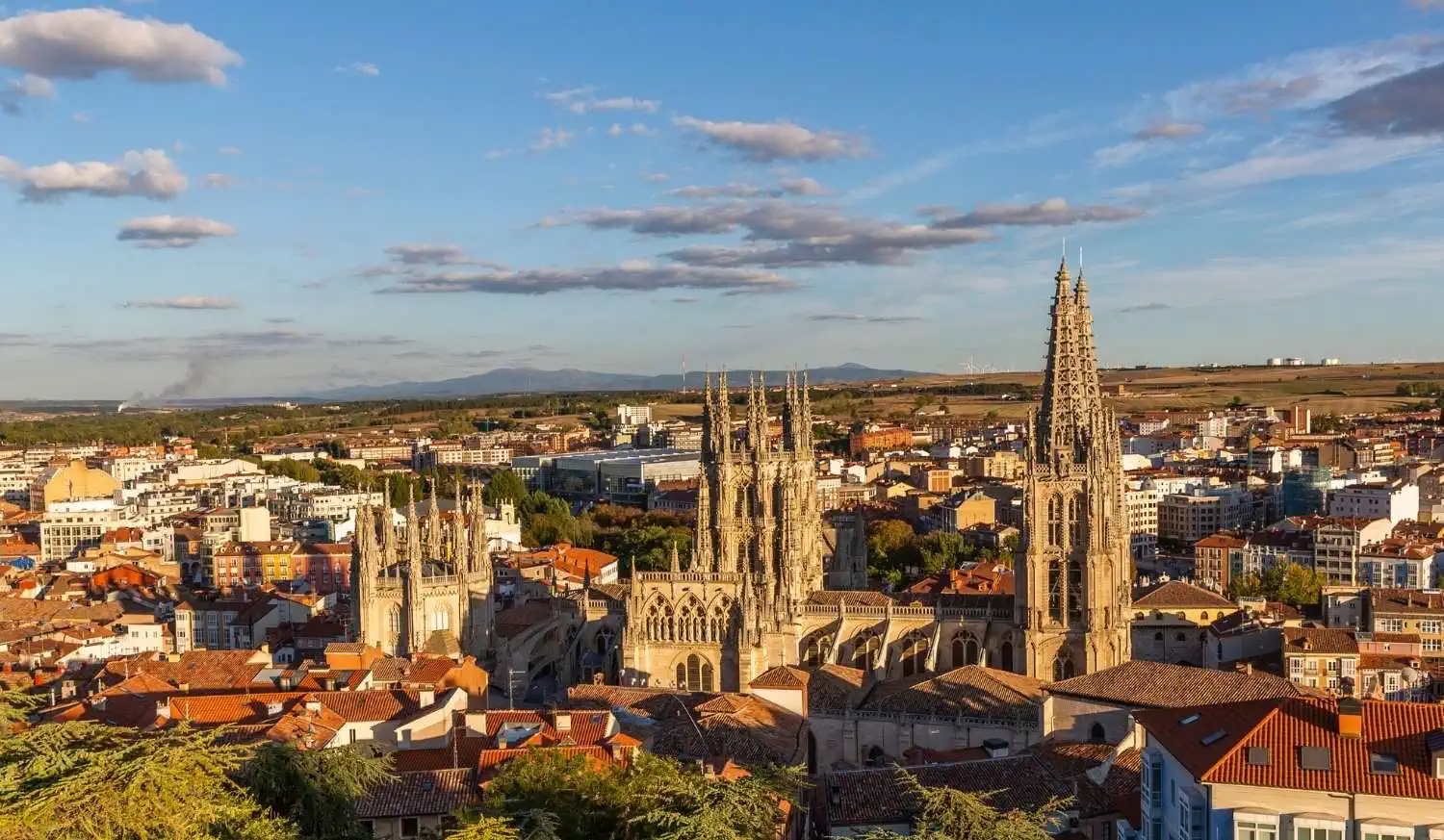
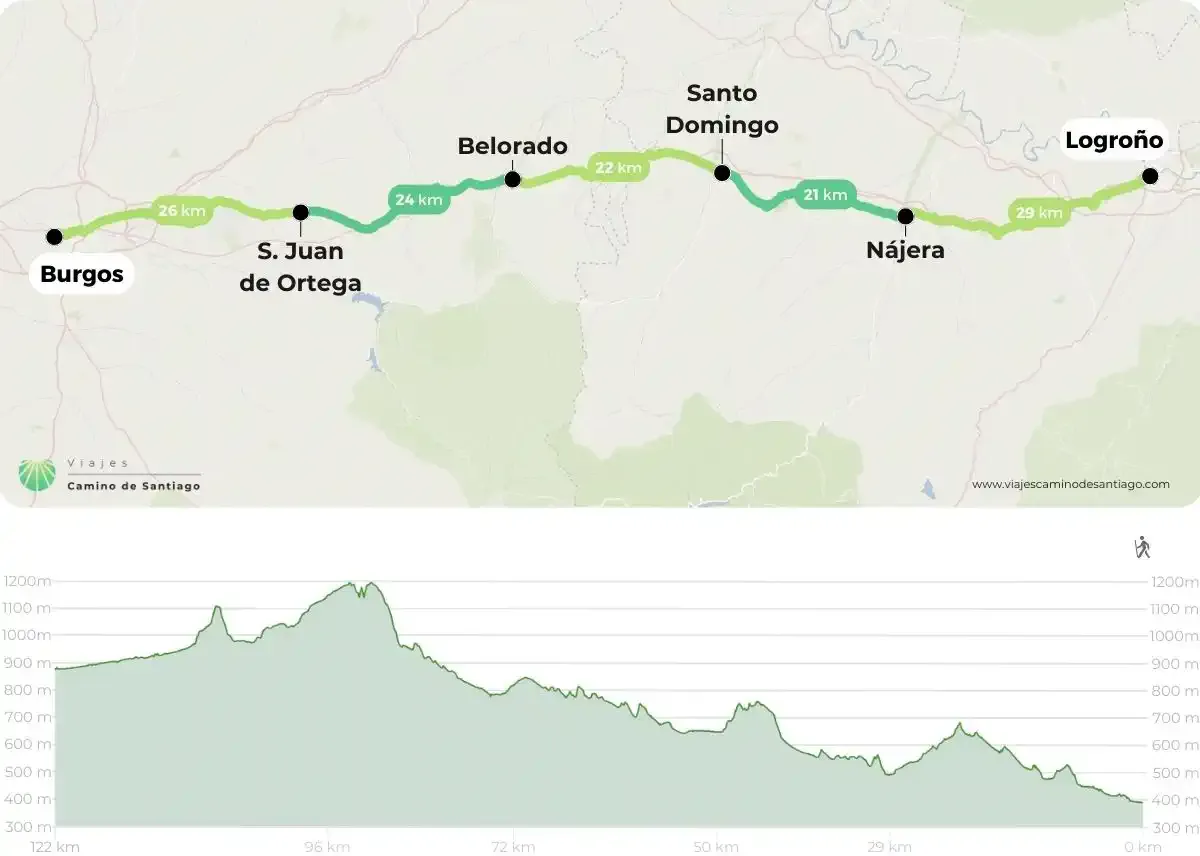
On this section of the French Way, you will cover the 125 km that separate Logroño from Burgos. An easy journey with few elevation changes that will take you through the vineyards of La Rioja, crossing the solitary Montes de Oca until reaching the city of Burgos. A truly varied landscape where you will discover small towns with a rich Jacobean culture, dinosaur footprints, wineries, monasteries, and one of the most impressive cathedrals in our country.
Photos


Accommodations
- Most popular
Private Hostels
288 €
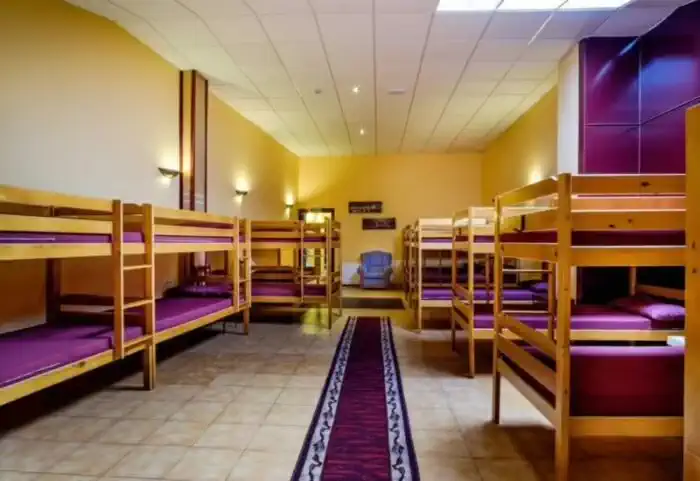
Hostels are the ideal option for those traveling on a tight budget, solo pilgrims, or those looking to experience the essence of the Camino de Santiago to the fullest. It is the accommodation par excellence for socializing and sharing the values of this ancient route.
- Most popular
Hostels, guesthouses, and rural houses
500 €
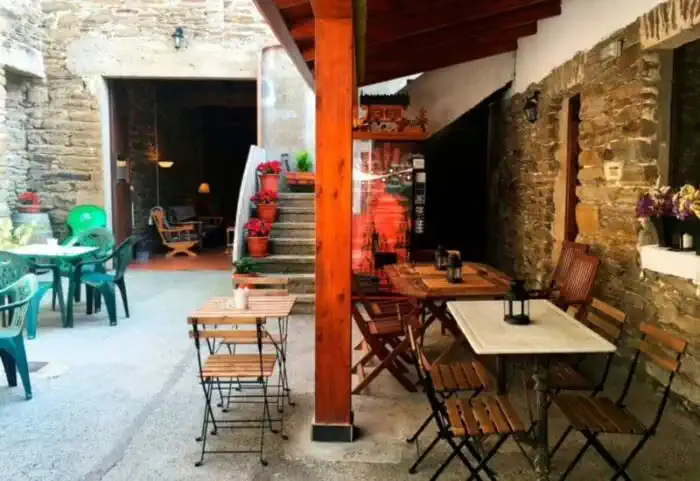
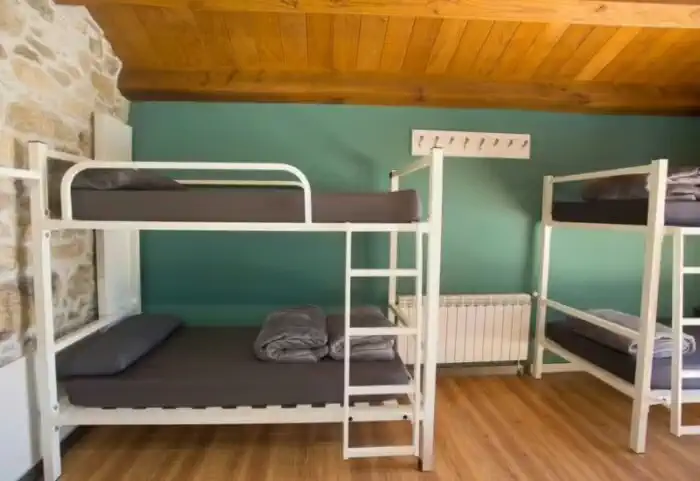
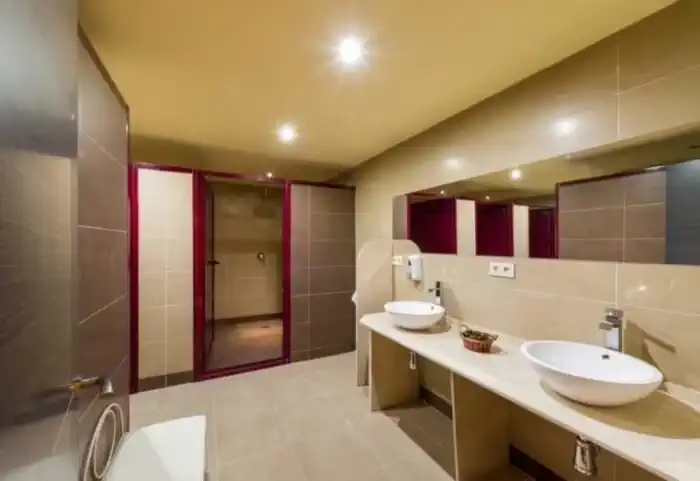
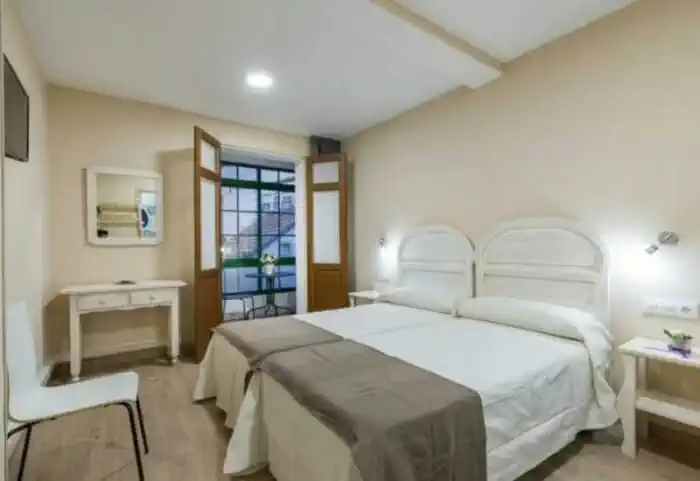
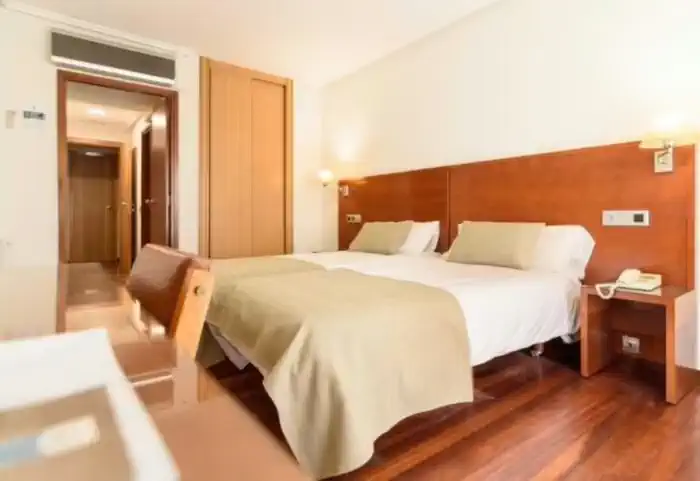
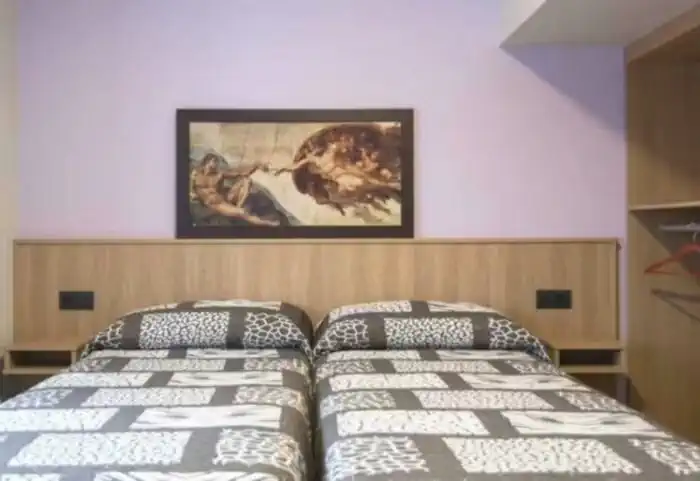
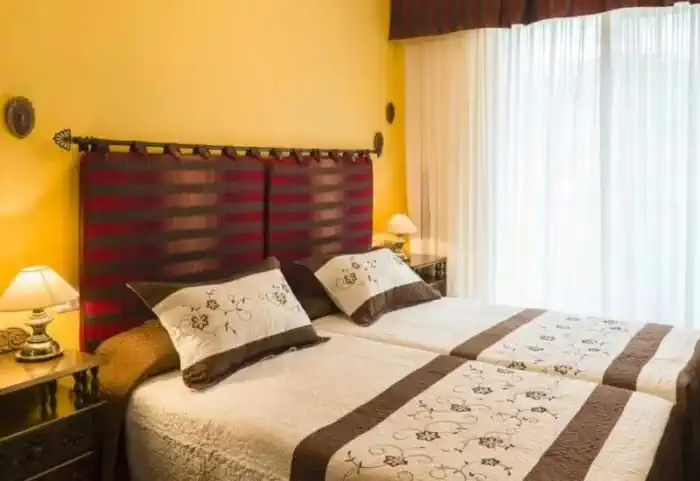
Hostels, Guesthouses, and Rural Houses are ideal in the towns of the Camino de Santiago. Simple and charming accommodations with private bathroom, TV, and impeccable cleanliness. Perfect for resting and enjoying the rural essence and tranquility at each stage.
Services
Included in all our routes
- Accommodation
7 days / 6 nights
- 7 days / 6 nights accommodation
- Complete documentation (Dossier and material for the Camino)
- Luggage transfer during the stages. (1 piece per person max 15 kgs)
- On-the-road emergency telephone assistance
- Pilgrim's Credential
- Travel insurance
Optional
- Extra night
- Supplement for single room
- Breakfast
- MP (Breakfast and dinner)
- Cancellation Insurance
Map of the French Way from Logroño to Burgos
Stages
- day 1
Arrival at Logroño
We will start our stage towards the capital of La Rioja leaving behind the chapel of San Lázaro. The first village we will find after leaving Los Arcos on our way to Logroño will be Sansol, where we will find a pharmacy, a hostel and a bar. We leave the village crossing the road and descend to a solitary house located in the middle of a bend. An arrow guides us to the left down a cobbled chute. We go through a tunnel, over a bridge and find a fountain that offers us water at the gates of Torres del Río.
Torres del Río is a small town famous for the church of the Holy Sepulchre (12th century) which has a tower attached to it that may have been used as a lighthouse to guide pilgrims in the Middle Ages.
After the stop, we continue to Viana on a steep and uncomfortable climb with a road surface that varies between asphalt, flagstones, gravel and dirt. We cross the road with caution several times until we reach the hermitage of the Virgen del Poyo. We go down again to the road that takes us to Bargota, where it is said that a sorcerer who was condemned by the Inquisition was given shelter. We continue straight on and descend to the Cornava ravine, with a steep slope of more than 125 metres, where we must take extreme precautions.
We continue along a path of pines and fruit trees, at the bottom of the ravine we see some plots of vineyards and olive trees. We continue between slides until we reach Viana, where we can visit the fabulous Gothic church of Santa Maria, which has an original Renaissance façade.
The stretch from Viana to Logroño is a walk for our already tired legs, although with more asphalt than we would like, forcing us to cross the road several times and extreme caution.
As a curiosity, in this section we will find the stall of another of these endearing characters of the Camino, Mrs. Felisa. Felisa was a hospitalera who lived her life on the edge of the Camino de Santiago, welcoming pilgrims from all over, offering them water and a snack (usually figs from her own fig tree). After Felisa's death in 2002, her affectionate character and her willingness to help others remained so strong in her family that one of her daughters, Mari, has been doing this work for some time.
After the last road crossing, a comfortable path leads us to the entrance of Logroño, which we enter through a park. We cross the Ebro by the bridge of San Juan de Ortega and we put an end to our stage enjoying the attractions of this emblematic historical capital.
To consider
The stage between Los Arcos and Logroño runs between quite a few gravel roads that can be a bit desperate if you don't step firmly on it.
Places of interest
- Church of the Holy Sepulchre - Torres del Río
- Hermitage of the Virgin of Poyo - Bargota
- Viana Town Hall
- Church of San Bartolomé - Logroño
- Co-cathedral of La Redonda - Logroño
Typical dishes
- Wines D.O. La Rioja
- Potatoes and eggs Rioja style
- Lamb chops
- White tuna with tomato Rioja style
- Tapeo in the streets Laurel and San Juan in Logroño
- day 2
Stage 1. Logroño - Nájera (29 km)
Crossing the square of Santiago, we say goodbye to Logroño to get back on the Camino in the direction of Nájera. We pass under the Puerta del Camino and walk for quite a while until we reach the Parque de San Miguel and enter the Parque de la Grajera, at the foot of the reservoir. This magnificent spot is home to numerous animal species, from friendly squirrels to majestic swans, which will delight the most curious.
We walk uphill along dirt tracks and crop fields to reach the Alto de la Grajera, which will lead us to the road to Navarrete, but not before we see the emblematic Osborne bull.
Once in Navarrete we can enjoy the town that once served as a border with the Kingdom of Navarre, where the Castilian kings of the twelfth century defended their territory. After visiting the Renaissance church of La Asunción, we cross the old town to return to the Camino.
We leave Navarrete behind and head towards Ventosa, where the church of San Saturnino stands out. Next to the wineries a stony path leads us to the Alto de San Antón, with an easy and short ascent. From the top we can contemplate the valley of the Najerilla and the town of Nájera, apparently close but really distant.
We go down to the crossroads of the N-120 road and continue to the Poyo de Roldán, where the legendary combat between Roldán and the giant Ferragut took place.
Beyond this point, we will continue along a path that leads to a bridge over the Yalde River, where, after a kilometre and a half, we will reach the Poema del Camino Park, where we can take a break along the way. We continue along the same path until we reach the river Najerilla, which will welcome us to the historic town of Nájera.
To consider
The stage can be shortened by spending the night in the small village of Ventosa; on the other hand, we can save 600 metres without passing through this village by taking a shortcut that is well signposted.
Places of interest
- Remains of the church of San Juan de Acre - Navarrete
- Church of San Saturnino - Ventosa
- Monastery of Santa María la Real - Nájera
- Najerillense Historical Museum - Nájera
- Convent of Santa Elena - Nájera
Typical dishes
- Pocha beans with quail eggs
- Broths
- Artichokes sautéed with ham
- Suckling pig
- Grilled lamb chops
- Homemade spicy chorizo
- Snails Rioja style
- Stuffed peppers
- day 3
Stage 2. Nájera - Santo Domingo de la Calzada (20.7 km)
The stage begins bordering Santa María la Real, which houses the Cloister of the Knights, where the nobles were buried since the 16th century. We leave Nájera behind in the direction of Santo Domingo de la Calzada, and after crossing the Valdecañas stream we reach Azofra via an asphalted road, where we should stock up on supplies as we will not find any more services for another ten kilometres. This town of Arab origin had a pilgrims' hospital until the 19th century, and still has the Church of Nuestra Señora de los Ángeles, where we find a carving of the Apostle Santiago.
Detour to San Millán de la Cogolla: 15 km off the Camino we will find San Millán de la Cogolla, with its famous monasteries of Suso and Yuso, cradle of the Castilian language and declared World Heritage Site.
Those interested in visiting them should take the detour at the exit of Azofra, the road towards Alesanco, Cañas and continue to San Millán. To return we can follow the road from Villar de Torres to Cirueña, where we will find the yellow arrows.
We continue our route and reach the Cerro de los Templarios. As if it were a dream, we begin to leave behind the vines of La Rioja, and we enter the vast seas of cereals of Castile. A long and eternal stretch without refreshment points, where the heat and the absence of shade will become our worst enemy. We will arrive at a newly built residential area surrounded by a golf course. After this walk through the farmland of the Castilian plateau, and after having walked quite a few kilometres from Nájera, we will be able to see for the first time the cathedral of Santo Domingo de la Calzada, where we will enter through an area that is more asphalted than we would like.
We crown our stage arriving at Santo Domingo de la Calzada, but we cannot say goodbye without visiting its co-cathedral of different architectural styles. Legend has it that a pilgrim who was travelling with his parents was unjustly executed, so Santo Domingo himself granted him life after the gallows. When the news reached the local magistrate, who was eating some roast fowl, he said, incredulously to his parents, "Your son is as much alive as this cock and hen which I was about to eat before you troubled me." Then the birds were resurrected, regaining their feathers and their flesh, and began to fly and sing around the table, thus giving rise to the saying.
To consider
On this day we will face long stretches without being able to protect ourselves from the sun, so it is advisable to wear a hat or cap and apply sunscreen, especially in the summer months.
Places of interest
- Church of Our Lady of the Angels - Azofra
- Monasteries of Suso and Yuso - San Millán de la Cogolla
- Cathedral - Santo Domingo de la Calzada
- Paseo del Espolón - Santo Domingo de la Calzada
Typical dishes
- Potatoes Rioja style
- Chickpeas with meat and vegetables
- Ahorcaditos (small puff pastries filled with almond cream)
- day 4
Stage 3. Santo Domingo de la Calzada - Belorado (22 km)
We leave Santo Domingo de la Calzada early in the morning towards Belorado. We leave the village through the old quarter, crossing the bridge over the river Oja. Here we will find the hermitage of the Bridge, from 1917, rebuilt here since the flow of the river swept away the old hermitage. We continue on to reach the road, which we will have to cross to continue for several kilometres parallel to the N-120, which will take us to the town of Grañón, the last village in La Rioja. We are welcomed by the Cross of the Brave, which recalls the conflict between the inhabitants of Grañón and Santo Domingo.
On leaving Grañón, we walk again between fields of land consolidation that furrow the cereal, relieved of the monotony by rows of poplars that grow on the banks of rivers and streams.
Two kilometres further on, an information panel welcomes us to Castilla y León, the community that will accompany us for two weeks.
From the panel we can already see Redecilla del Camino, the first Castilian village we reach after overcoming a long straight road. In the church of Redecilla we will find one of the most elaborate baptismal fonts of all the Way of St. James. We continue parallel to the N-120 until we cross the river Relachigo, to later reach the municipality of Castildelgado, with a fountain where we can refresh ourselves.
We go 2 km further until we find Viloria de Rioja, birthplace of Santo Domingo, where the Brazilian writer Paulo Coelho sponsored a small hotel. We will continue a few more kilometres until we reach Villamayor del Río, which is said to be a village of the three lies, as it is neither a town, nor is it a major town, nor does it have a river. We will continue for about 5 km until we reach Belorado, putting an end to our hike.
To consider
In all the villages, except in Viloria, we will find bars and restaurants where we can make stops. There are several sections of the Camino that cross the road, so we must be extremely cautious and watch out for traffic.
Places of interest
- Grañón Bakery - Grañón
- Church of San Juan Bautista - Grañón
- Hermitage of Nuestra Señora de la Calle - Redecilla del Camino
- Church of the Assumption - Viloria de Rioja
- Remains of the Castle - Belorado
Typical dishes
- Products from the Beliforian garden (onions, garlic, peppers...)
- Caparron
- Black pudding from Belorado
- Suckling lamb
- day 5
Stage 4. Belorado - San Juan de Ortega (23.9 km)
We will start the stage leaving Belorado in the direction of San Juan de Ortega through the main gate until we reach a road that will take us to Tosantos, the first village of this stage. Here we find the hermitage of Virgen de la Piedra, built inside the mountain. We follow the road to the village of Villambistia.
Not even two kilometres will pass until we reach Espinosa del Camino. We continue ascending a small hill and on the way down we see the apse of the Mozarabic monastery of San Félix, where some chronicles place the tomb of Diego Porcelos, founder of Burgos.
We continue parallel to the road and crossing the river Oca before reaching Villafranca. From here the itinerary changes its profile completely. We have ahead of us a wonderful three-hour ride through the Montes de Oca, so feared in the Middle Ages for the presence of evildoers.
We start from Villafranca, on the right of the church in a climb without contemplations. We pass the Mojapán Fountain, where there is a rest area and soon we see a monument to those shot in the Civil War. We cross the ravine of the river Catarrón and continue the ascent to the Alto de la Pedraja (1,157 m), the highest point. We ride along a wide track through an oak forest and, after a long descent, we arrive at the end of the stage, San Juan de Ortega.
To consider
We have the option of extending this stage by staying overnight in Agés or Atapuerca, a perfect option if we want to spend the next day in Burgos.
There are bars and restaurants in all the towns along the stage, although with a limited offer. In Villafranca Montes de Oca you will find all the services.Places of interest
- Hermitage of Nuestra Señora de la Peña - Tosantos
- Church of Santiago Apóstol - Villafranca Montes de Oca
- Monastery - San Juan de Ortega
- Atapuerca
- Romanesque Church of San Miguel - Agés
- Parish Church of Agés
Typical dishes
- Suckling lamb
- Burgos black pudding
- Fresh cheese from Burgos
- Honey from Merindades
- Yolks
- Fried Bones
- day 6
Stage 5. San Juan de Ortega - Burgos (25.8 km)
We leave San Juan de Ortega in the direction of Burgos along a dirt track through a pine forest and arrive at Agés. From here we continue by road to Atapuerca, where we can visit the interesting archaeological site.
We begin the ascent to the Sierra de Atapuerca along a stony track. At the top we can already see Burgos in the background. We go down to Villabal and we get to a local road, practically without traffic.
Just at the exit of the village we turn left to take a track and start the ascent by the Atapuerca Mountains. We will continue the ascent to the Alto de Atapuerca, not very steep, but not very firm, so, with care, we will ascend until we reach the Cruz de Madera, from where we can see the city of Burgos. It was on the plain that we can see from here that the battle of Atapuerca was fought, which would govern the distribution of the Spanish kingdoms in the 11th century.
From here we will begin to descend through a complicated area until we reach Cardeñuela Riopico, right next to the river, where we will find a place to rest. We continue towards Burgos, passing through Orbajena Riopico, to reach the crossroads that will decide our entry into the Castilian city.
Here you can decide whether to take a shorter route, but through a completely urban and industrial area, or take the longer route that will take us around the airport, but we will enter Burgos through a beautiful park. And now we are in Burgos, where we will find the Cathedral of Santa María de Burgos, one of the most imposing in the country, as well as the home of the tomb of Rodrigo Díaz de Vivar, the Cid Campeador.
To consider
If on our way from San Juan de Ortega to Burgos we take the variant of Castañares We must cross a pedestrian crossing of the national road N-120, take Óbidus street until the end, skirt a big factory on the right, and cross the Arlanzón river by a pedestrian bridge; from there, and until the Old Town of Burgos itself, we follow a pedestrian walk along the Arlanzón river.
Pilgrims wishing to visit the Atapuerca Archaeological Site should make their reservation in advance at http://www.atapuerca.org/.
Places of interest
- Atapuerca Archaeological Site
- Burgos Cathedral - Burgos
- Church of San Nicolás - Burgos
- The Castle and its Viewpoint - Burgos
Typical dishes
- Suckling lamb
- Grilled cutlets
- "Rotten pot"
- Burgos black pudding
- Burgos Cheese
- Castilian soup
- Crayfish
- day 7
End of the Camino
After arriving... End of the Camino
Frequently Asked Questions
-
What is on-the-road telephone assistance?
In your travel documents, you'll find an emergency telephone number where we're accessible while you're on the road. This ensures you'll journey with peace of mind, knowin our team members will assist you with any problems, incidents, or questions you encounter along your Camino de Santiago.
-
What is travel insurance?
It is the guarantee that you can enjoy your Camino in a safe way. In our trips you already have an insurance included with your trip to be protected during the Camino de Santiago. We will send you the insurance policy along with all the documentation of your trip, so you will have everything you need to enjoy the Camino with peace of mind. Walk without worries! -
What does the private transfer service consist of?
We have a taxi service that you can hire whenever you need it. You can hire it, for example, to go from the airport to the start of your Camino, or to go from Santiago to your starting point to pick up your car once you finish the stage. The price of the transfers will depend on the distance from your point of origin to the destination. If you have any questions about this service do not hesitate to contact us. -
Where are the accommodations located?
In your travel documents, you will find the names of the accommodations assigned to you, as well as their contact telephone number and location. As a general rule, all accommodation are located in the centre of the different towns along the Pilgrims' Route to Santiago de Compostela, without the need to deviate too far from the route. But sometimes, due to lack of availability, it is possible that some accommodation may be a little far from the village or even in neighbouring towns. For all the accommodations that are at a considerable distance from the route of the Camino, we will provide you with a free taxi service that you can use to get to your accommodation and return to the Camino the next morning. In any case, these are exceptions that we will inform you at the time of booking. -
What coverage does the travel insurance have?
The basic travel insurance included in our packages offers extensive coverage against unforeseen events, ensuring you'll receive guaranteed medical assistance and numerous benefits. You can review the specifics in the General Conditions of Travel Insurance.
-
How do I make a reservation?
To make a reservation, you can follow these steps:
- Through our website: Select the route you want and follow the steps indicated in the form. Provide your personal information and that of your companions, choose the type of accommodation, room distribution, meals, transfers, bike rental, etc.
- By email: If you prefer to make the reservation by email or need a personalized trip, you can send us an email to info@viajecaminodesantiago.com. We will provide you with the necessary information to complete the reservation via email.
It is important to note that if the routes or services available on the website do not meet your specific needs, you can request a personalized quote by sending an email to info@viajescaminodesantiago.com.
-
Can I choose the dates I want?
Yes, you will have total freedom to choose your departure date. However, if you want to do your Camino de Santiago in the months of December, January and February, we recommend that you check availability before making your reservation. At this time of year most accommodation is closed and many services may not be available. -
What does Camino de Santiago on your own mean?
In this modality you will do the Camino de Santiago at your own pace and you will only have to worry about choosing the route you like the most, the type of accommodation and your departure date. If you choose this option you will travel alone or with the people that appear in your reservation, and you will have all the services included so that you only have to worry about walking and enjoying the experience. -
What is luggage transport and how does it work?
Luggage transport service by default is included in all our trips and it is not necessary to request it. You can enjoy the Camino de Santiago without the burden of carrying your luggage on your back, knowing that your suitcase will be waiting for you at your next accommodation upon your arrival. Along with your credential, you'll also receive stickers. Cover these stickers with the requested information and stick them in a visible place on your suitcase. Upon arrival at your accommodation, we suggest asking at the reception where you can leave your luggage. You'll need to leave your luggage at the designated spot early in the morning for our carrier to pick it up. This ensures that when you arrive at your next accommodation, your luggage will already be waiting for you. -
What services are included in the Camino de Santiago on your own?
The Camino de Santiago at your own pace includes the following services:
- Accommodation for resting.
- Luggage transport so you do not have to carry it.
- An informative dossier with details about the stages.
- The Pilgrim Passport.
- A 24-hour assistance phone number available at all times.
- A travel insurance for your peace of mind.
Additionally, you have the option to customize your experience by adding extra services:
- You can choose whether to include breakfast or half board.
- We offer private transfers to take you to the start of the stage from Santiago de Compostela, from its airport, or any other point.
- We can take your vehicle from the starting point to the end of your Camino.
- You have the option to book extra nights at the beginning or end of your trip.
Unlike group trips, we do not include a guide or support vehicle between stages. However, we provide you with a 24-hour assistance phone number to resolve any issues or unforeseen events you may encounter on your journey.
French Way from Logroño to Burgos
From 288 €


Reviews
Álvaro Prieto
Raúl Domínguez