Camino to Finisterre and Muxía (A Picota) - 116 km

Camino to Finisterre and Muxía (A Picota) - 116 km - Paquete turístico

Photos

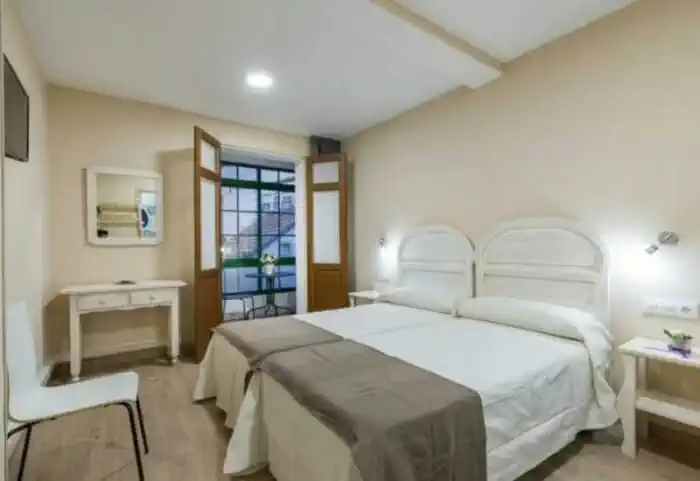
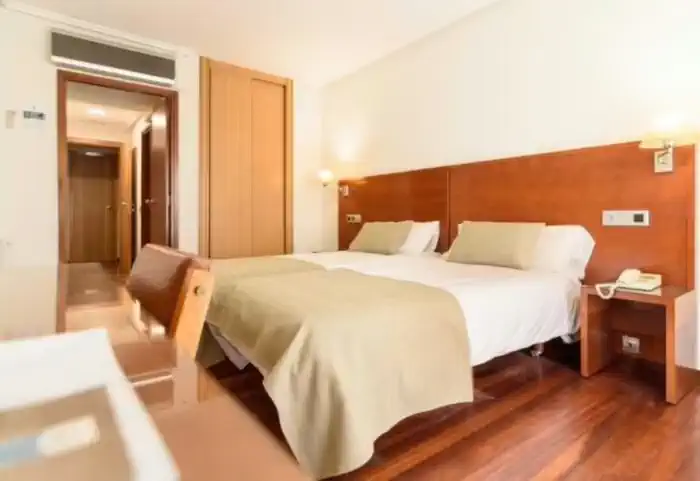
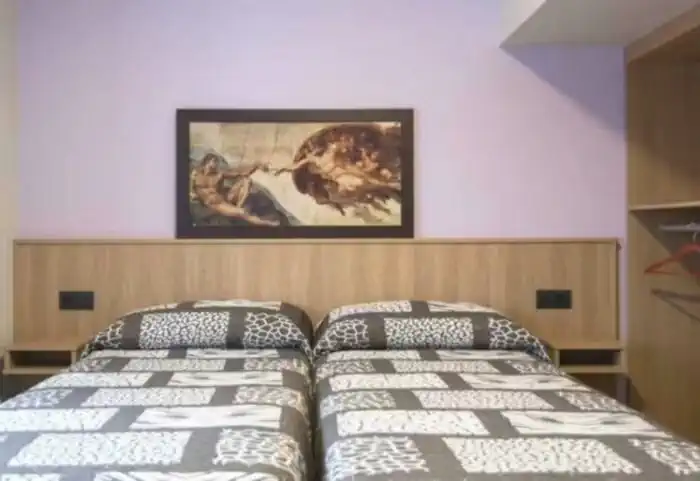
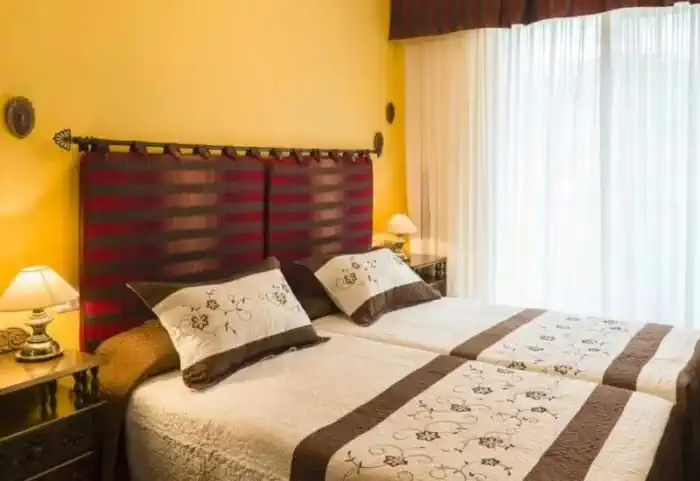
Accommodations

Services

Included in all our routes

  • Accommodation

    7 days / 6 nights

  • 7 days / 6 nights accommodation

  • Complete documentation (Dossier and material for the Camino)

  • Luggage transfer during the stages. (1 piece per person max 15 kgs)

  • On-the-road emergency telephone assistance

  • Pilgrim's Credential

  • Travel insurance

Optional

  • Extra night
  • Breakfast
  • MP (Breakfast and dinner)
  • Cancellation Insurance

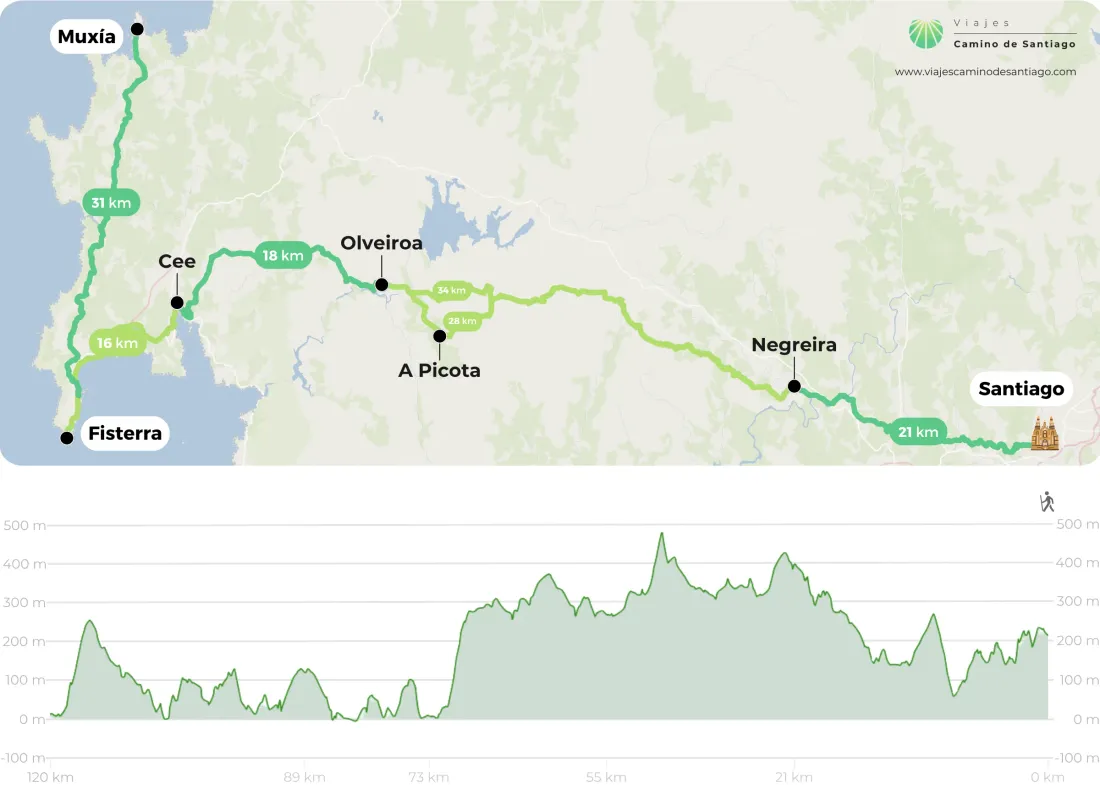
Map of the Camino to Finisterre and Muxía (A Picota) - 116 km

Mapa Camino Finisterre Y Muxia Jpg BenjN

Stages

  • day 1

    Arrival at Santiago de Compostela

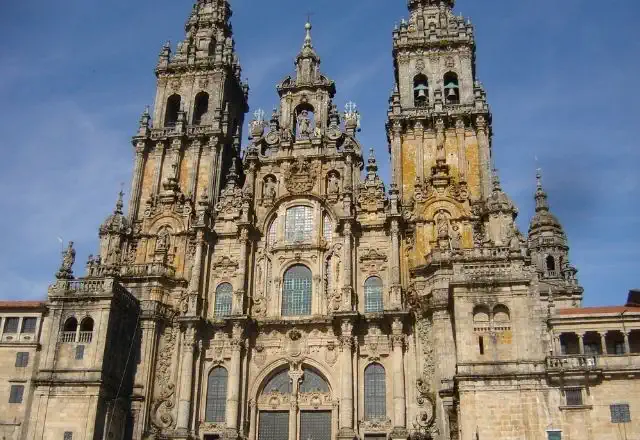
    Santiago de Compostela, kilometre zero of the Jacobean routes, becomes the starting point of your Way to Finisterre and Muxía. No pilgrim leaves Santiago without passing through the Plaza del Obradoiro, attending the pilgrim’s mass and visiting its imposing Cathedral. It is customary to embrace the Apostle, see the Botafumeiro and contemplate the spectacular Pórtico de la Gloria. But without a doubt, Santiago is much more than its Cathedral; a stroll through its squares is enough to realize that it is a really lively city. Live music concerts, performances for children, parks, monuments, charming viewpoints, markets and a thousand other things that will make you fall in love with this fairytale city.
  • day 2

    Stage 1. Santiago de Compostela - Negreira (20.6 km)

    We start our Way to Finisterre and Muxía from the very Plaza del Obradoiro in Santiago de Compostela and we follow the arrows that lead us down the Costa do Cristo and the Rúa das Hortas towards Negreira. We cross Calle Galeras and continue until we reach a large oak grove, the Carballeira de San Lourenzo. After a steep descent, we cross a stone bridge over the river and take a dirt track that leads us to Sarela de Abaixo, from where we can enjoy an excellent panoramic view of Santiago de Compostela.

    We continue our way through forests of carballos, pines and eucalyptus, passing through small villages and urbanizations until we reach Quintans, where we have a bar.

    We continue without complications until we reach the Mesón Alto do Vento, where we find a restaurant with a terrace, highly recommended for our first stop.

    Leaving the restaurant, we go down the sidewalk and take a street on the right that takes us to the village of Ventosa.

    We continue along the road until we reach Augapesada, where we turn left onto a cobbled street. After passing a stone bridge we start a steep slope for 2 km until we reach the Alto do Mar de Ovellas. We continue along the road, going down to Caraballedo and Trasmonte, where there is a bar.

    From here it doesn't take long to reach Ponte Maceira, considered one of the most beautiful villages in Spain. A spectacular stone village where we will be struck by its magnificent medieval bridge.

    Ponte Vella Ponte Maceira

    After the stop and the usual photos, we cross the bridge over the river Tambre and continue along a street on the left, following a track between chalets and corn fields. We turn off onto a wooded path next to the river bank, which takes us to Barca and then to A Chancela, where there is a private hostel. From Chancela the itinerary continues straight ahead and without loss to Negreira, our end of the stage.

    To consider

    Some pilgrims decide to start walking towards Negreira at midday and take advantage of the morning in Santiago de Compostela. It can be done without problems as the stage is relatively short. It is also a good option to stop for lunch at the Alto do Vento inn ( 8 km from Santiago), which has excellent grilled meats and a good menu.

    Places of interest

    • Ponte Maceira
    • Pazo de Cotón - Negreira
    • Chapel of San Mauro
    • Pazo de Chancela
    • Pazo de Baladrón
    • Chapel of San Brais

    Typical dishes

    • Grilled meat
    • Trout
    • Empanadas
    • Fish stew
    • Octopus á feira
    • Santiago's cake
  • day 3

    Stage 2. Negreira - A Picota (31 km)

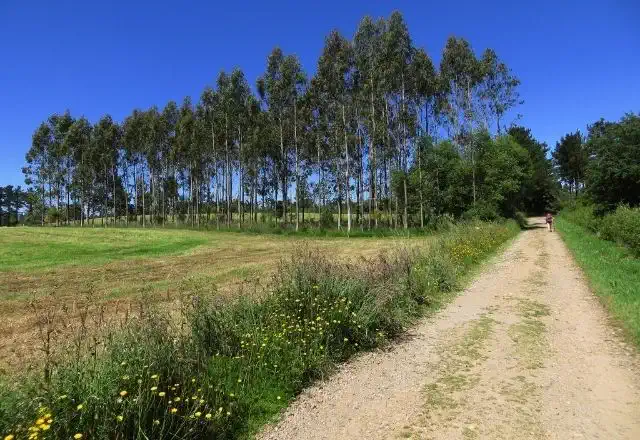
    This is the longest stage of the Way to Finisterre, as there are more than 30 kilometres between Negreira and Olveiroa. Although long, this stage is not very difficult, as it runs over gently sloping terrain. Throughout the route you will enjoy a totally rural landscape, crossing large meadows, huge forests of native trees and small villages where the kindness of its people will give you momentum to reach the goal. A few kilometres before reaching the end, you can admire the incredible views of the A Fervenza reservoir, on the descent of Monte Aro. Olveiroa has all the services to rest and recover after this long stage. Olveiroa is a rural environment that has suffered for years the evils of depopulation. Today, however, it has become a renewed environment with the restoration of its heritage. The most outstanding heritage elements are its centenary granaries. Note: Olveiroa is a small village with little accommodation. If there is no availability at the time of booking, you will finish your stage earlier, specifically in A Picota, shortening the walk by 4 kilometres.
  • day 4

    Stage 3. A Picota - Cee (26 km)

    From Olveiroa you will direct your steps towards Cee to finally meet the Atlantic Ocean, a sign that the goal is getting closer and closer. The route starts at the Castrelo reservoir and continues uphill until it reaches spectacular views of the Xallas river. At 5 kilometres from the start, you will find the village of Hospital, where we recommend stopping before continuing, as the rest of the route runs along lonely rural paths until you reach the fork Fisterra and Muxía. Once you reach this fork, you will have to take the option on the left to continue descending towards Cee, your end of the stage. Cee, located between Cape Touriñán and Cape Fisterra, is part of A Costa da Morte. Relax and enjoy its privileged natural environment and beautiful beaches.
  • day 5

    Stage 4. Cee - Fisterra (16 km)

    We leave from the Market Square, on the way to Finisterre, taking the shortcut along the promenade on the banks of the estuary, avoiding the detour that gives the official road through the shopping streets of Cee. After ten minutes we arrive to Corcubión and we accede to the old town, with its beautiful stone houses and glass windows. This town has been declared a Historic-Artistic Site, so it is worth a brief visit before continuing with the stage.

    From the church of San Marcos we follow the signs until we reach a large yellow arrow that leads us along a path that goes into the mountain. In slight ascent we arrive at the top of a hill from where we have an excellent panoramic view of Corcubión and the sea. We descend and arrive at Estorde, with its beautiful beach. We pass Estorde and we enter a path covered by flowering xestas, whose yellow stands out against the blue of the sea in the background.

    We continue along the coast until we reach a steep descent that will make us take out our cane to relieve our knees.

    Passing Estorde, we entered a path covered by broom in bloom, an explosion of yellow that stood out even more with the blue of the sea in the background. We continue to Sardiñeiro Beach, where we have benches to rest. We pass Sardiñeiro de Abaixo and continue along the sidewalk of the road until we take a street that goes up on the right. The signs lead us to a dirt road that runs through pine and eucalyptus forests until it offers a spectacular view of Finisterre. We continue along the shoulder of the road, except for a short stretch along a path next to the guardrail of a roundabout.

    Then the arrows indicate us to cross the road and to take an inner street behind the houses until Sardiñeiro, in whose beach we have benches to rest.

    After a steep descent, we return to the road and follow a path that leads to the secluded cove of Talón, avoiding a stretch of road. We return to the asphalt walking along the shoulder until we reach Langosteira Beach, an oasis of white sand where many pilgrims take a dip.

    We follow the beach of Langosteira to the neighborhood of San Roque and we arrived, finally, to the long-awaited Finis Terrae, Finisterre.

    How to get to Finisterre lighthouse

    lighthouse stage cee finisterre way finisterre muxia

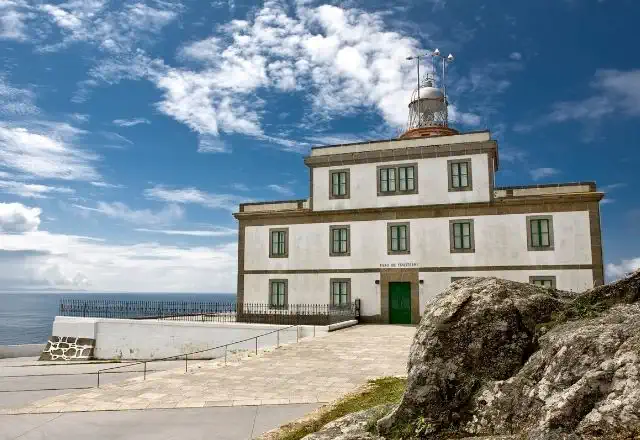
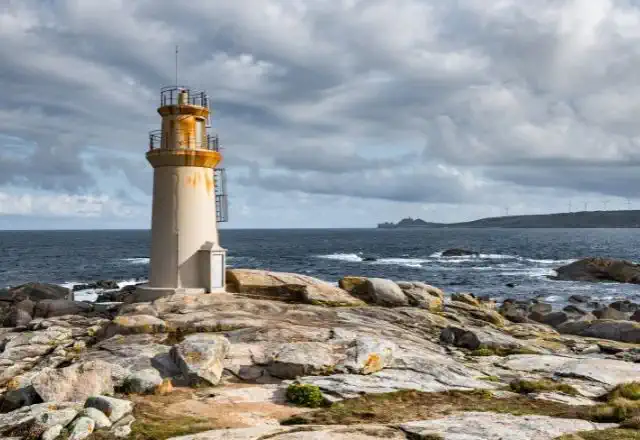
    As you know, for all pilgrims who come to Finisterre it is essential to reach the lighthouse to contemplate one of the most beautiful sunsets in the world and enjoy the magnetism with which the waves break over the cliff.

    There are two ways to get to the Finisterre lighthouse: by road or by taking the old road that goes up the Facho mountain, a much more pleasant way with great panoramic views. If you are going to see the sunset, the route down will be easier by road, as there is no risk of getting lost.

    Ascent to Finisterre lighthouse by road (3,2 km)

    From the centre of the village we go up Federico Águila street and take the AC-445 road, which runs along a pleasant walkway with views of the sea. If we follow the asphalt we arrive without loss to the same lighthouse.

    Ascent to Finisterre lighthouse by Monte do Facho (4.4 km)

    Although the path is not signposted, you can't get lost. We go up Federico Ávila Street and cross the road, going up Pontiña Street towards Mar de Fora Beach. We continue along a cobbled path that leads us to the Insua neighbourhood. We ascend along a stone track that goes into the forest until we reach a clearing with good views over the sea.

    When we reach the first fork, we turn left towards the mountain and the hermitage of San Guillerme. We can also continue to the right on a longer route but with excellent views, parallel to the coast.

    We continue along the dirt road that leads to Monte Facho, which is not necessary to climb. We join an asphalt track and zigzag down towards the lighthouse.

    To consider

    Don't forget to pick up the Fisterrana the diploma that certifies that you have done the Way to Finisterre. You can pick it up at the Tourist Information Office located in the Plaza de la Constitución. Remember that the original stage of the road to Finisterre begins in Corcubión, 2 kilometres from Cee.

    For those pilgrims who decide not to continue to Muxía and want to return to Santiago by bus, they can take it at the bus shelter located in Federico Ávila street. The bus company that makes the route is Monbus and you can check the timetables here.

    Places of interest

    • Historic centre of Corcubion
    • Talon Cove
    • Langosteira Beach - Finisterre
    • Sardiñeiro Beach - Finisterre
    • Rostro Beach - Finisterre
    • Finisterre Lighthouse
    • Port of Finisterre
    • Food Market - Finisterre
    • Museum of the Sea - Finisterre
    • Empty cemetery - Finisterre

    Typical dishes

    • Barnacles
    • Longueiróns, clams, scallops, cockles, crawfish
    • Fish stew
    • Seafood (crabs, spider crabs and lobsters)
    • Pulpo á feira or octopus in vinaigrette
    • Galician beef
  • day 6

    Stage 5. Fisterra - Muxía (31 km)

    We say goodbye from the magical Finisterre returning again towards the beach of Langosteira in the direction of Muxía. At the cross of Baixar, we take the road and follow the indications of the landmark next to the Arenal hotel. Soon we arrived at the village of San Martiño de Duio. We take a small detour and pass the villages of Escaselas and Hermedesuxo de Baixo.

    Here the road forks.

    The official route continues through San Salvador while the alternative route goes straight along the road, without much charm. We continue to the right towards San Salvador, cross the forest to Rial and go down to Buxán. Afterwards we head towards Suarriba, Castrexe and Padrís, where the two paths meet.

    At the exit of Padrís, we enter a beautiful path that ends in Canosa, where we find a picnic area. We go down to Lires close to the river and at the entrance of the village we find the temple of San Estevo. Lires is the only town with services during the stage, so if we need to stop, this is the time.

    We said goodbye to Lires saving a bridge.

    After a short detour we take an asphalted track that leads us to Frixe, where we find vending machines, tables and a toilet. On the left we take a track through a pine forest, cross the road and return to the track towards Guisamonde.

    We return again to the asphalt and go up to the parish of Morquintián. Passing this last village we find a double signpost.

    The official path is marked on the left towards a variant that is not signposted. We advise you to continue to the right following the yellow arrows painted on the road. A few meters away, the path deviates to the left and climbs to the Facho de Lourido, the highest point of this stage.

    We descend until we reach Xurantes and take a local track that leads us to a new fork. The yellow arrows lead us to Lourido beach after a stretch of dunes, from where we must continue by road. The official itinerary skirts the beach following the road. From the beach we continue without loss until we enter Muxía and we end our Way to Finisterre and Muxía.

    To consider

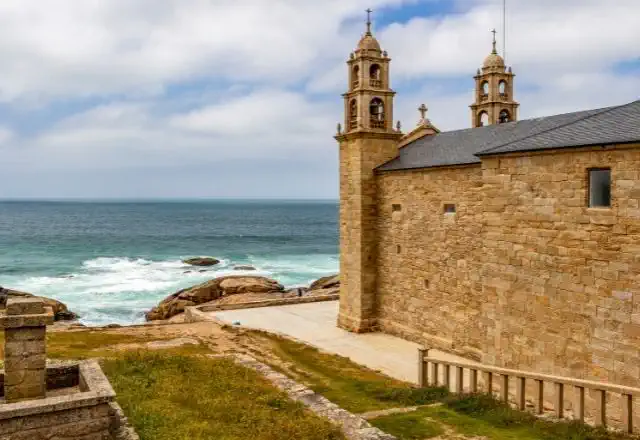
    In this route from Finisterre, we cannot forget to ask for our Muxiana when you arrive in the town of Muxía.

    It is the document that proves that you have finished this route and you can get it for free at the tourist office and the municipal hostel.

    Places of interest

    • Hórreo of San Martiño de Ozón - Muxía
    • Church of A Nosa Señora da Barca - Muxía
    • To pedra de Abalar - Muxía
    • A pedra dos Cadrís -Muxía

    Typical dishes

    • Longueiron
    • Caldeiradas of fish and seafood
    • Mollusks
    • Grilled fish
    • Octopus á feira
  • day 7

    End of the Camino

    After arriving... End of the Camino

Frequently Asked Questions

  • What is on-the-road telephone assistance?

    In your travel documents, you'll find an emergency telephone number where we're accessible while you're on the road. This ensures you'll journey with peace of mind, knowin our team members will assist you with any problems, incidents, or questions you encounter along your Camino de Santiago.

  • What is travel insurance?

    It is the guarantee that you can enjoy your Camino in a safe way. In our trips you already have an insurance included with your trip to be protected during the Camino de Santiago. We will send you the insurance policy along with all the documentation of your trip, so you will have everything you need to enjoy the Camino with peace of mind. Walk without worries!
  • What does the private transfer service consist of?

    We have a taxi service that you can hire whenever you need it. You can hire it, for example, to go from the airport to the start of your Camino, or to go from Santiago to your starting point to pick up your car once you finish the stage.   The price of the transfers will depend on the distance from your point of origin to the destination. If you have any questions about this service do not hesitate to contact us.
  • Where are the accommodations located?

    In your travel documents, you will find the names of the accommodations assigned to you, as well as their contact telephone number and location.   As a general rule, all accommodation are located in the centre of the different towns along the Pilgrims' Route to Santiago de Compostela, without the need to deviate too far from the route. But sometimes, due to lack of availability, it is possible that some accommodation may be a little far from the village or even in neighbouring towns.   For all the accommodations that are at a considerable distance from the route of the Camino, we will provide you with a free taxi service that you can use to get to your accommodation and return to the Camino the next morning.   In any case, these are exceptions that we will inform you at the time of booking.
  • What coverage does the travel insurance have?

    The basic travel insurance included in our packages offers extensive coverage against unforeseen events, ensuring you'll receive guaranteed medical assistance and numerous benefits. You can review the specifics in the General Conditions of Travel Insurance.

  • How do I make a reservation?

    To make a reservation, you can follow these steps:

  • Through our website: Select the route you want and follow the steps indicated in the form. Provide your personal information and that of your companions, choose the type of accommodation, room distribution, meals, transfers, bike rental, etc.
  • By email: If you prefer to make the reservation by email or need a personalized trip, you can send us an email to info@viajecaminodesantiago.com. We will provide you with the necessary information to complete the reservation via email.
  • It is important to note that if the routes or services available on the website do not meet your specific needs, you can request a personalized quote by sending an email to info@viajescaminodesantiago.com.

  • Can I choose the dates I want?

    Yes, you will have total freedom to choose your departure date. However, if you want to do your Camino de Santiago in the months of December, January and February, we recommend that you check availability before making your reservation. At this time of year most accommodation is closed and many services may not be available.
  • What does Camino de Santiago on your own mean?

    In this modality you will do the Camino de Santiago at your own pace and you will only have to worry about choosing the route you like the most, the type of accommodation and your departure date. If you choose this option you will travel alone or with the people that appear in your reservation, and you will have all the services included so that you only have to worry about walking and enjoying the experience.
  • What is luggage transport and how does it work?

    Luggage transport service by default is included in all our trips and it is not necessary to request it. You can enjoy the Camino de Santiago without the burden of carrying your luggage on your back, knowing that your suitcase will be waiting for you at your next accommodation upon your arrival.   Along with your credential, you'll also receive stickers. Cover these stickers with the requested information and stick them in a visible place on your suitcase.   Upon arrival at your accommodation, we suggest asking at the reception where you can leave your luggage. You'll need to leave your luggage at the designated spot early in the morning for our carrier to pick it up. This ensures that when you arrive at your next accommodation, your luggage will already be waiting for you.
  • What services are included in the Camino de Santiago on your own?

    The Camino de Santiago at your own pace includes the following services:

    • Accommodation for resting.
    • Luggage transport so you do not have to carry it.
    • An informative dossier with details about the stages.
    • The Pilgrim Passport.
    • A 24-hour assistance phone number available at all times.
    • A travel insurance for your peace of mind.

    Additionally, you have the option to customize your experience by adding extra services:

    • You can choose whether to include breakfast or half board.
    • We offer private transfers to take you to the start of the stage from Santiago de Compostela, from its airport, or any other point.
    • We can take your vehicle from the starting point to the end of your Camino.
    • You have the option to book extra nights at the beginning or end of your trip.

    Unlike group trips, we do not include a guide or support vehicle between stages. However, we provide you with a 24-hour assistance phone number to resolve any issues or unforeseen events you may encounter on your journey.

Camino to Finisterre and Muxía (A Picota) - 116 km

From 529 €

Reviews from our users
Calculate your budget
Request a quote
Organised Trips
Rafael Sánchez López - Kaufmännischer Leiter - Agentur Viajes Camino de Santiago